Pizzato Vinhas e Vinhos

Falstaff Winery - Listed
Pizzato Vinhas e Vinhos suits travelers who want Vale dos Vinhedos through the lens of place rather than spectacle. The estate format is small-scale and tasting-led, with Merlot, Cabernet Sauvignon, Cabernet Franc, Tannat, Chardonnay, Riesling Itálico, Pinot Noir and sparkling styles framed by vineyard views, guided visits, pairings and a relaxed veranda setting.

Pearl is the En Primeur Club membership app, where members save venues, book tables and use the concierge.

The approach to Pizzato Vinhas e Vinhos sets the tone before the first glass: countryside roads, vineyard rows, a modern winery building, and a veranda that looks back across the valley rather than inward toward a stage-managed tasting room. Vale dos Vinhedos rewards that slower register. The region’s wine culture is not built around urban glamour; it is built around Serra Gaúcha slopes, family estates, cellar-door hospitality, and the question of how Brazilian wine explains itself when the glass is poured within sight of the vines.
That matters because Vale dos Vinhedos D.O. occupies a particular place in Brazil’s wine conversation. The country’s wine tourism is often introduced through sparkling wine and Italian-Brazilian heritage, but the more interesting cellar-door visits ask what ripens well here and what a producer chooses to emphasize. At Pizzato, the answer is broad but focused: Merlot, Cabernet Sauvignon, Cabernet Franc, Tannat, Chardonnay, Riesling Itálico and Pinot Noir sit alongside still red, still white, rosé, sparkling and dessert styles. The draw is not a single trophy label narrative; it is the chance to read a working regional vocabulary across several grape families.
Vale dos Vinhedos in the glass, not just on the label
Brazilian wine is too often treated abroad as a novelty category. Vale dos Vinhedos argues for a more precise reading. Serra Gaúcha’s wine country combines altitude, humidity, varied exposure and a long immigrant farming culture; the resulting wines are better understood through structure, freshness, ripeness management and hospitality format than through easy Old World comparisons. Pizzato Vinhas e Vinhos fits the estate-visit model that makes the region legible: guided tastings, vertical tastings, food pairings, and vineyard-oriented visits give context to grapes that can otherwise look familiar on a list but behave differently in Brazilian conditions.
Merlot is the useful reference point here. In Vale dos Vinhedos, the grape has become a serious marker for regional identity, particularly when producers use it to show balance rather than sheer weight. Cabernet Sauvignon, Cabernet Franc and Tannat broaden the red-wine frame, while Chardonnay, Riesling Itálico, Pinot Noir and sparkling production keep the visit from narrowing into a single-variety exercise. For travelers building a wider itinerary, this is the kind of stop that pairs well with restaurant and hotel planning rather than sitting apart from it; see Our full Vale Dos Vinhedos wineries guide, then cross-reference Our full Vale Dos Vinhedos restaurants guide and Our full Vale Dos Vinhedos hotels guide if the day is built around lunch, dinner and a rural overnight.
The production scale also shapes the experience. A medium-sized family estate working roughly a few hundred thousand bottles annually from about 55 to 60 hectares is large enough to offer range, but small enough that the visit remains anchored in estate identity rather than mass tourism. That balance is important in a region where cellar doors can lean either toward polished group throughput or intimate technical explanation. Here, the format is better suited to travelers who want a tasting with structure, conversation and a sense of surrounding land.
A tasting room built for measured hospitality
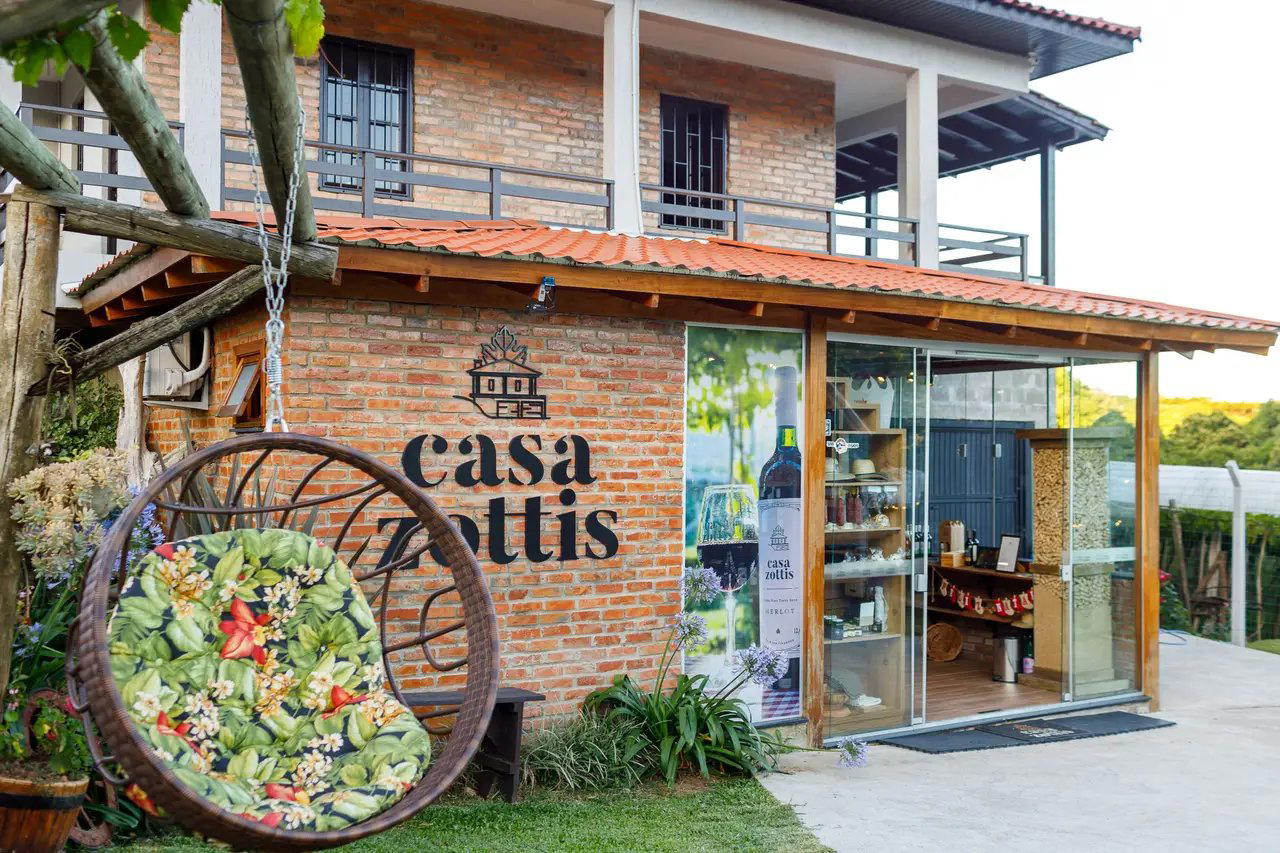
The room language is calm: shop, indoor tasting room, veranda, vineyard and valley views, conversational noise levels. This is not the address for a loud bus-tour mood. The format points instead to guided tasting, private tasting, vineyard tour possibilities, terrace time and pairings. The setting has enough polish for a celebration or romantic rural afternoon, but the dress code and atmosphere remain casual. That combination is common in the stronger parts of Brazilian wine tourism: serious enough to discuss terroir, relaxed enough that the visit does not feel like a performance of expertise.
Food pairing is part of the estate’s appeal because it moves the tasting away from isolated pours. In wine regions with high humidity and mixed ripening challenges, food often clarifies why acidity, tannin and texture matter. A structured pairing can make Merlot feel less like an international grape pasted onto Brazil and more like a regional argument. Vertical tasting serves a different purpose, showing how bottle age, vintage variation and house choices register over time. Those two formats, pairing and vertical, give the estate more editorial weight than a simple bar pour.
The visit profile is also practical for small groups. On-site parking, outdoor seating, a countryside estate setting and Portuguese and English tour language options broaden access without changing the underlying mood. Children and dogs are not the natural audience here, which helps explain the quieter tone. For a fuller regional circuit, build the day around wine first, then use Our full Vale Dos Vinhedos experiences guide for non-cellar-door pacing and Our full Vale Dos Vinhedos bars guide for evening planning.
How to place it inside a wider wine itinerary
Pizzato Vinhas e Vinhos opened in 1999, which places it within the modern chapter of Vale dos Vinhedos wine tourism rather than the purely historical one. That timing matters. The late-20th and early-21st-century evolution of Brazilian estate hospitality brought more formal tastings, cleaner visitor architecture and clearer varietal messaging. The estate’s modern building, shop, guided formats and veranda-facing landscape all belong to that shift.
Travelers comparing wine regions across EP Club will notice different kinds of cellar-door identity. A cachaça-focused stop such as Alambique Paratiana in Paraty speaks to Brazilian distillation rather than wine. Larger-format winery tourism appears in entries such as Casa Valduga in Bento Goncalves and Miolo in Candiota. Outside Brazil, compact European and New World references, from »der Steiner« Hans Steiner in Podersdorf am See and & Handwein in Mannheim to ®walzer in Gneixendorf Bei Krems, 00 Wines in Carlton, 13th Vineyard in Angwin, 1516 Brewing Company Distillery in Vienna and 180°Süd in Frick, show how much a visit format changes the way a place is understood.
The editorial case for Pizzato is therefore not excess. It is proportion: a countryside estate, a defined appellation, a Merlot-led regional conversation, multiple tasting formats and enough hospitality infrastructure to make the land readable without drowning it in ceremony.
Recognition history
Dated appearances from independent guides and award organizations, with the underlying list record or original source where available.
Falstaff Winery - Listed
Falstaff
Continue exploring
More in Vale Dos Vinhedos
Wineries in Vale Dos Vinhedos
All wineries in Vale Dos Vinhedos →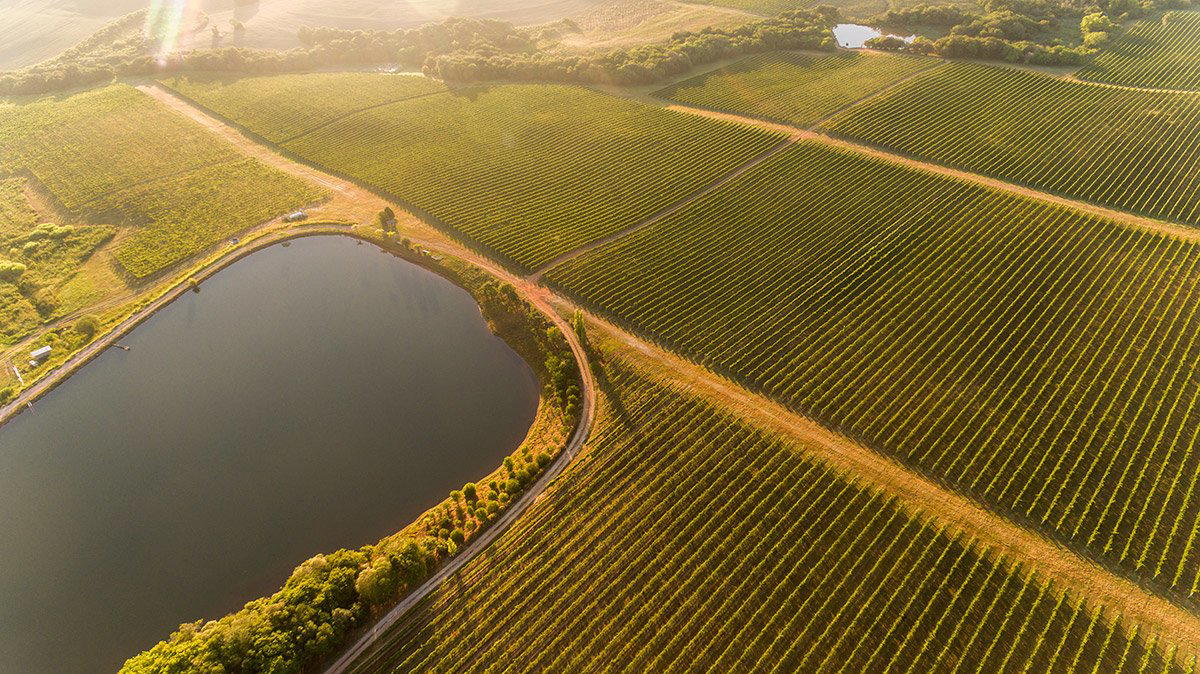
Details
- Scenic
- Rustic
- Romantic
- Cozy
- Classic
- Romantic Getaway
- Group Outing
- Celebration
- Wine Education
- Special Occasion
- Estate Grounds
- Vineyard Tour
- Terrace
- Panoramic View
- Private Tasting
- Sustainable
- Vineyard
- Mountain
- Garden
- Merlot
- Cabernet Sauvignon
- Cabernet Franc
- Tannat
- Chardonnay
- Riesling Itálico
- Pinot Noir
- Still Red
- Still White
- Sparkling
- Still Rosé
- Dessert
- Bar Tasting
- Guided Tasting
- Vertical Tasting
- Food Pairing
- Portuguese
- English
Family-run winery with a modern, tasteful building that includes a shop, indoor tasting room, and a veranda overlooking the vineyards; atmosphere is relaxed, scenic, and oriented to guided tastings and pairings rather than large, noisy crowds.