Via Carota






Via Carota has anchored the West Village's Italian dining scene since 2014, earning a James Beard Foundation Award in 2019 and a place on Opinionated About Dining's North America list every year since. The menu reads like a lesson in seasonal restraint: crisp fried olives, hand-cut pastas, and vegetable dishes that carry the weight of the meal. Reservations are scarce and the room fills fast, so plan accordingly.
Pearl is the En Primeur Club membership app — saves, bookings, and concierge access live there. Same editors, same standards.
- Address
- 51 Grove St, New York, NY 10014
- Phone
- +1 212-255-1962
- Website
- viacarota.com
- Directions
- Get directions
 Saves & bookings on Pearl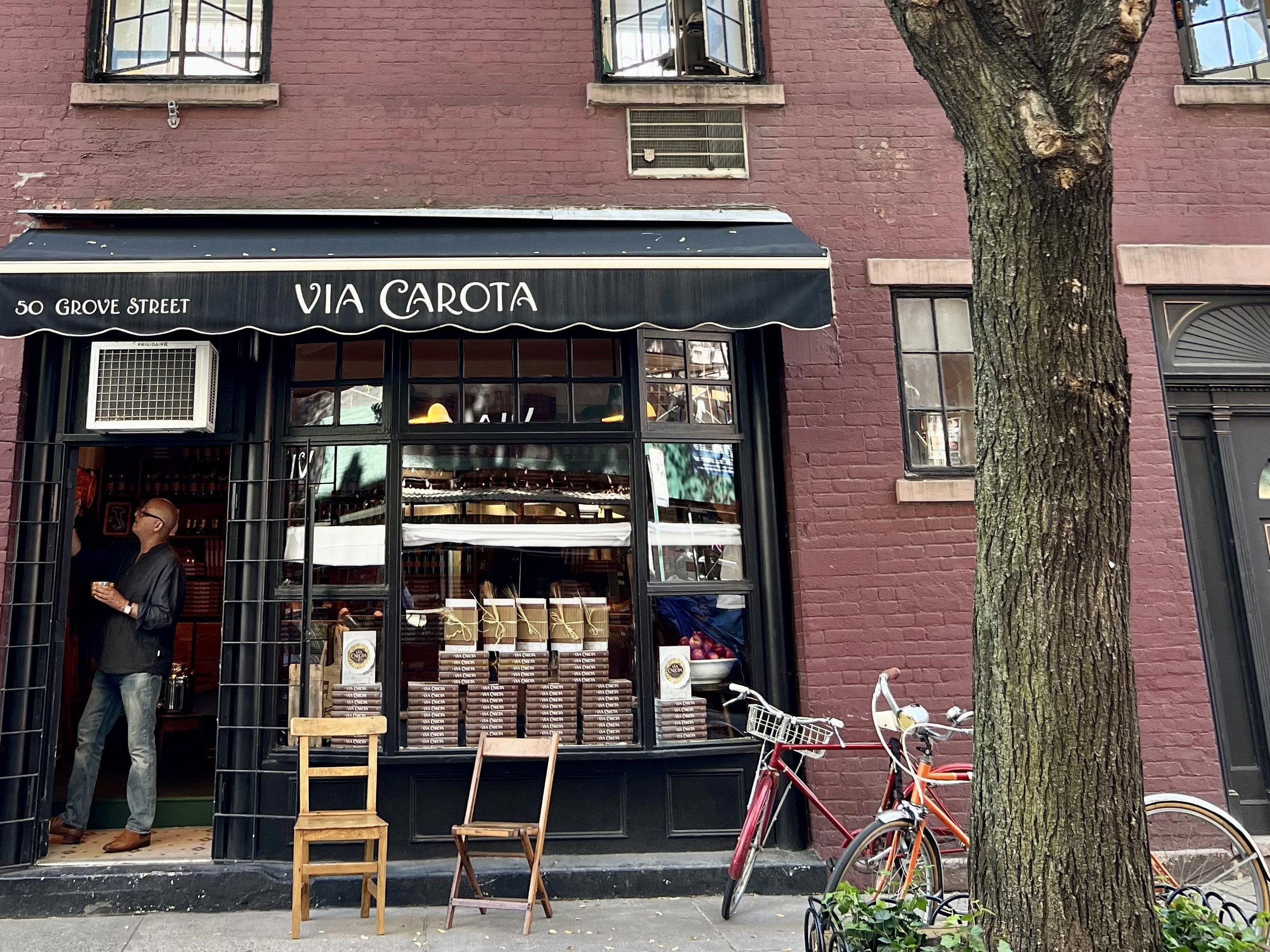
What the Menu Tells You About the Restaurant
Some menus are arguments. Via Carota's is a position. Arranged without theatrical flourish across salads, vegetables, pasta, and protein, it reads as a quiet statement about what Italian cooking at its most considered looks like in New York City. There is no tasting menu, no amuse-bouche procession, no chef's-table tier. The architecture is horizontal rather than hierarchical: a salad can be the point of the meal, a plate of braised fennel can outshine the protein course, and the pasta section offers depth rather than novelty. That structure, held consistently since the restaurant opened on Grove Street in 2014, is what separates Via Carota from the broader category of West Village Italian.
Italian-American dining in New York has long operated on two tracks: the red-sauce institution and the contemporary tasting-room format. Via Carota occupies a third register that has become more crowded in the decade since it opened, yet the restaurant remains a reference point for how seasonal, ingredient-led Italian cooking functions at the casual end of the premium market. The menu's restraint is not minimalism for its own sake. It reflects a culinary logic in which the quality of a single vegetable or the precision of a pasta cut does more work than a complex sauce or a theatrical plating.
The Room and What It Sets Up
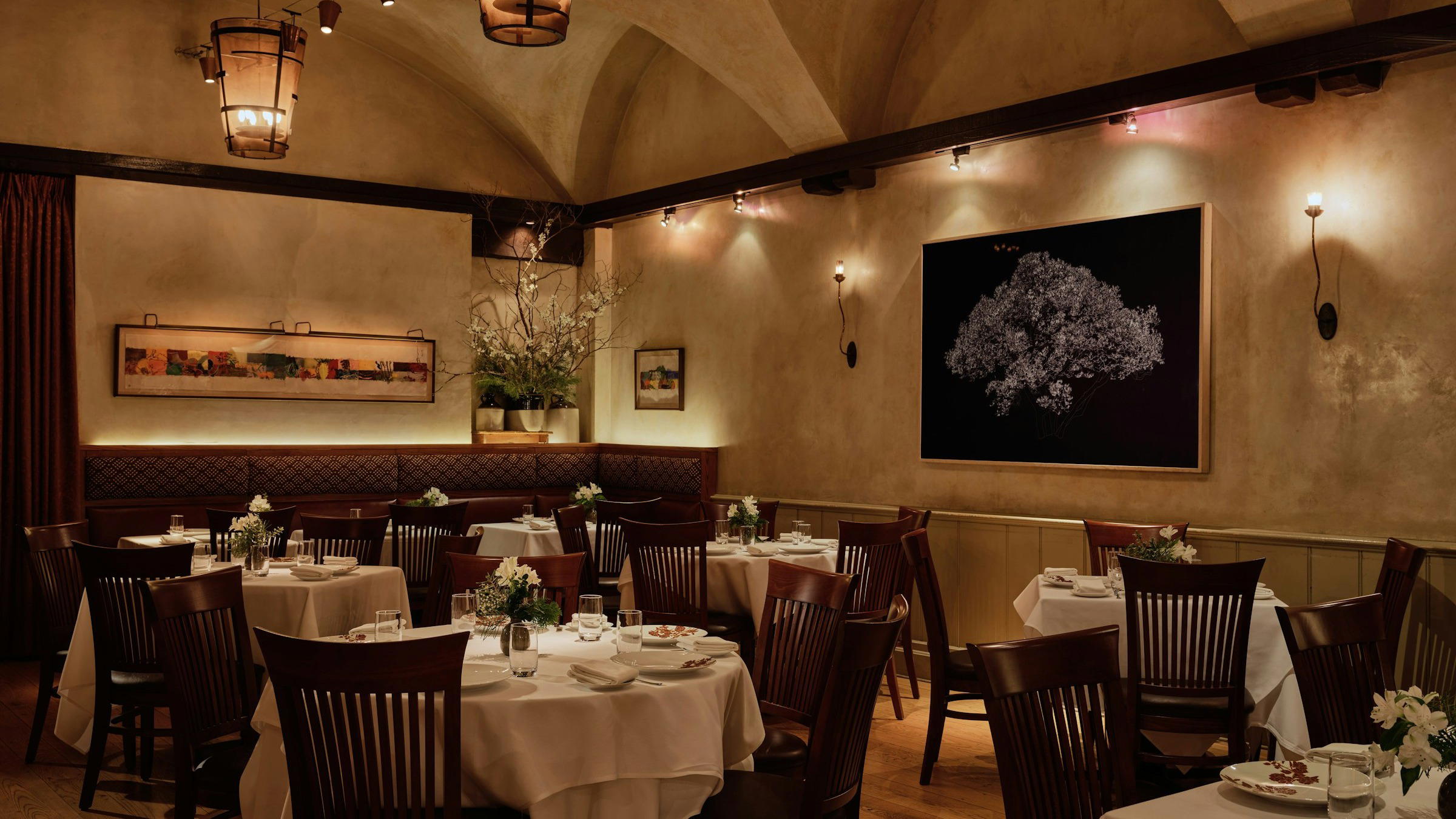
The dining room at 51 Grove Street in the West Village runs on a particular kind of intentional informality. Antique wooden farm tables, whitewashed brick, dim lighting, vintage glassware, and mismatched plates create a space that reads as European without performing it. The effect is a room that asks little of the diner in terms of ceremony, which in turn frees the food to be the entire conversation. In cities where Italian restaurants frequently anchor their identity in either the trattoria throwback or the sleek modern format, this middle register of worn-in comfort with precise cooking is harder to sustain than it looks.
The practical reality of getting in reflects the room's reputation. Via Carota is open seven days a week, from 11am on weekdays and 10am on Fridays through Sundays, running through to 11pm each night. Reservations move quickly and many tables operate on a walk-in basis, which has produced a recognisable ritual among regulars: arriving early, waiting at the bar with an aperitivo, and treating the queue as part of the experience rather than an obstacle. That pattern, European in cadence, is not common in New York's current reservation culture, where most premium casual restaurants now operate almost entirely through advance booking platforms.
The Menu in Detail
Insalata verde has become one discussed dish in the room, which is itself a statement about the menu's orientation. A dressed green salad as a restaurant's signature dish only makes sense when the underlying logic is one of technique applied to simplicity rather than complexity applied to luxury. The salad's continued reputation across more than a decade of service signals that the kitchen's relationship with vegetables is structural, not decorative.
Fried olives stuffed with pork sausage arrive deep-fried, plump, and hot, functioning as an opener that establishes the kitchen's register: confident, grounded, not shy about fat or texture. The risotto cacio e pepe loads pecorino and fresh pepper into a format more associated with pasta, which is a lateral move that works precisely because the kitchen understands the flavour logic of both dishes rather than treating the combination as a novelty. Hand-cut pappardelle with rabbit ragu represents the pasta section's capacity for depth: the cut is deliberate, the ragu has structural weight, and the dish earns its place among what Opinionated About Dining has repeatedly recognised as some of the stronger casual Italian cooking in North America.
Vegetable courses do significant work here. Caramelised salsify, poached fennel with orange, and similar preparations reflect a culinary vocabulary drawn from seasonal Italian tradition rather than the imported-luxury-produce model that drives much of New York's premium dining. The flourless chocolate cake closes the meal at the same register it began: familiar in concept, precise in execution.
The cocktail list is streamlined, with multiple Negroni variations anchoring the aperitivo section. That choice is consistent with the menu's overall architecture: offer depth within a narrow, well-defined range rather than breadth across a diffuse selection.
Where Via Carota Sits in New York's Italian Dining Scene
New York's Italian restaurant category spans an enormous price and format range, from white-tablecloth tasting rooms to neighbourhood red-sauce institutions that have operated under the same name for fifty years. The restaurant positions itself within the premium casual tier, where the reference points include Altro Paradiso, which operates in a comparable register of seasonal Italian with serious wine, and Babbo, Mario Batali's Greenwich Village anchor, which set an earlier template for Italian cooking that took its ingredient sourcing seriously without adopting a formal tasting-menu format. At the more elaborate end of Italian in New York, Ai Fiori demonstrates what the cuisine looks like when pushed toward the fine-dining tier.
Globally, the Italian casual format that restaurant represents has found expression in different contexts. 8 1/2 Otto e Mezzo Bombana in Hong Kong shows how Italian cooking translates into a luxury hotel context with Michelin validation, while cenci in Kyoto demonstrates the format's adaptation into a Japanese sensibility around seasonal ingredients. Neither comparison diminishes the restaurant; both illustrate that the underlying logic of ingredient-led Italian cooking travels, and that the West Village version has a specific local character that is tied to its neighbourhood and its decade of consistent operation.
For readers comparing the restaurant to the upper tier of New York dining more broadly, the contrast is worth making explicit. Restaurants such as Le Bernardin, Per Se, or Eleven Madison Park operate in a different category entirely: multi-course tasting formats, formal service structures, and price points that place them in a separate decision set. The restaurant's awards history does not compete in that space. Its Opinionated About Dining rankings, which placed it at #42 in casual North America in 2023 and #82 in 2025, and its James Beard Foundation Award in 2019, position it within a specific tier of serious casual dining where the comparison set is closer to Ammazzacaffè and Bad Roman than to the city's tasting-room tier.
Outside New York, the casual-serious dining category has produced recognised names across American cities. Lazy Bear in San Francisco, Providence in Los Angeles, Emeril's in New Orleans, Alinea in Chicago, The French Laundry in Napa, and Single Thread Farm in Healdsburg each define their markets at the formal end of the spectrum. The restaurant's durability in the casual tier, across more than a decade with consistent ranking recognition, suggests its model is not dependent on the novelty cycle that drives much of the American restaurant market.
Rita Sodi and Jody Williams bring distinct culinary histories to the restaurant: Sodi's background is rooted in Tuscan cooking, Williams's in French-influenced bistro work at Buvette. That combination shapes the menu's character without being legible as fusion. The result is a kitchen that applies rigour to familiar Italian forms without treating tradition as a constraint. Their wider West Village presence, which includes Bar Pisellino and Commerce Inn, has created a small neighbourhood ecosystem in which the restaurant functions as the anchor.
Planning Your Visit
The restaurant is at 51 Grove Street in the West Village, walkable from the Christopher Street–Sheridan Square subway stop on the 1 line. The restaurant holds,000 reviews, which is consistent with the Opinionated About Dining assessments over the same period. Reservations fill quickly; early arrivals and bar waiting are both standard practice. For a fuller picture of where the restaurant sits within New York's dining scene, see our full New York City restaurants guide. Further planning resources include our New York City hotels guide, our New York City bars guide, our New York City wineries guide, and our New York City experiences guide.
Accolades, Compared
Comparable venues nearby, for context on price, style, and recognition.
| Venue | Cuisine | Price | Awards | Notes |
|---|---|---|---|---|
| Via CarotaThis venue — the venue you are viewing | Rustic Italian Trattoria | $$$ | Michelin Plate, World's 50 Best #18 | Not listed |
| Sushi Noz | Edomae Omakase | $$$$ | Michelin 2 Star | Upper East Side-Carnegie Hill |
| Atera | Modern American Fine Dining | $$$$ | Michelin 2 Star | Tribeca-Civic Center |
| Kono | Modern Yakitori Omakase | $$$ | World's 50 Best #23 | Chinatown-Two Bridges |
| Semma | Authentic South Indian | $$$ | Michelin 1 Star | West Village |
| Aquavit | Contemporary Swedish Fine Dining | $$$$ | Michelin 2 Star | Midtown-Times Square |
Recognition history
Dated appearances from independent guides and award organizations, with the underlying list record or original source where available.
Eater 38 #16
Eater
James Beard Award Semi Finalist
James Beard Award
New York Times Best Restaurants in New York City #13
New York Times
Opinionated About Dining Casual in North America Ranked #103
Opinionated About Dining
Michelin Plate
Michelin
New York Times Best Restaurants in New York City
New York Times
Opinionated About Dining Casual in North America Ranked #82
Opinionated About Dining
World's 50 Best North America's Best Restaurants #18
World's 50 Best
Opinionated About Dining Casual in North America Ranked #86
Opinionated About Dining
Opinionated About Dining Casual in North America Ranked #42
Opinionated About Dining
Opinionated About Dining Gourmet Casual Dining in North America Ranked #107
Opinionated About Dining
Robb Report 100 Greatest American Restaurants of the 21st Century #46
Robb Report
Continue exploring
More in New York City
Restaurants in New York City
Browse all →
Bars in New York City
Browse all →
Hotels in New York City
Browse all →


Wineries in New York City
Browse all →


At a Glance
- Rustic
- Cozy
- Classic
- Elegant
- Intimate
- Date Night
- Special Occasion
- Open Kitchen
- Extensive Wine List
Current opening hours
- Monday
- 11 AM–11 PM
- Tuesday
- 11 AM–11 PM
- Wednesday
- 11 AM–11 PM
- Thursday
- 11 AM–11 PM
- Friday
- 10 AM–11 PM
- Saturday
- 10 AM–11 PM
- Sunday
- 10 AM–11 PM
Hours can change for holidays and private events. Last verified .
Dimly lit Renaissance still-life room with mood lighting evoking a warm Florentine villa, rustic wooden tables, antique cabinets, and vintage dishware creating a timeless trattoria atmosphere.