Uncle Paulies Deli
Our verdict
Uncle Paulies Deli on West 3rd Street brings the rhythm and ritual of a New York deli to Los Angeles. The format is deliberate: proper cold cuts, stacked sandwiches, and the counter-culture sensibility that LA's casual dining scene has largely traded away. It sits on one of the city's most food-dense corridors, surrounded by a very different class of restaurant.

Pearl is the En Primeur Club membership app, where members save venues, book tables and use the concierge.
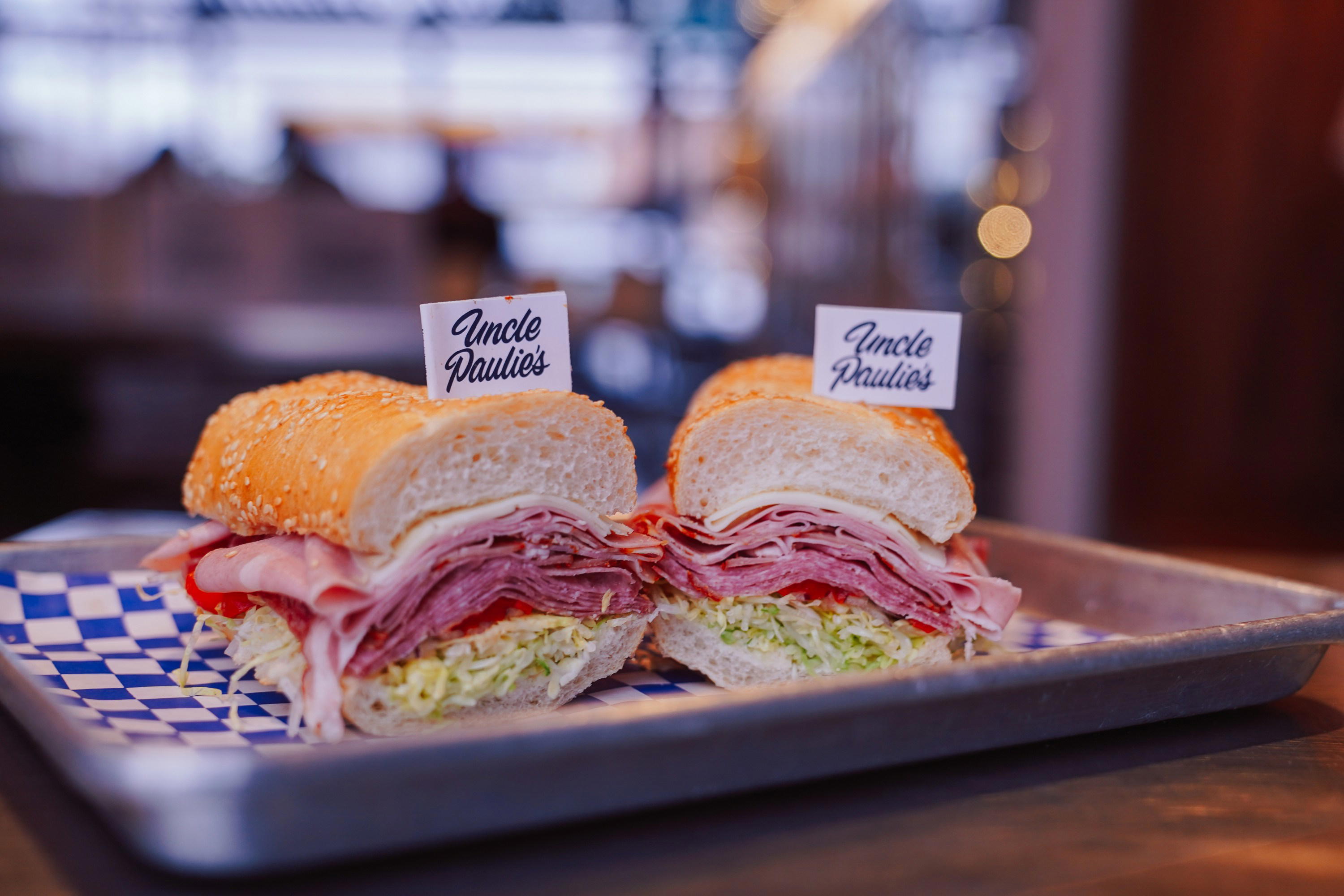
The menu
What to order
- Italian combo
- Artichoke caprese
- Chicken pesto sandwich
The Deli Counter as Cultural Anchor
The deli, in its New York sense, is a format that Los Angeles has historically under-served. The city built its casual dining identity around tacos, ramen, and health-forward bowls, leaving a gap that a handful of transplant operators have moved into over the past decade. Those numbers, across a format that rarely attracts the awards circuit's attention, say something about how well the deli sensibility translates when executed with discipline.
West 3rd Street is one of LA's most instructive dining corridors precisely because of its range. Within a short walk, you move from neighborhood lunch counters to the kind of fine dining addresses that demand weeks of advance planning. The New York deli doesn't compete with Osteria Mozza or the omakase format at Hayato. It answers a different appetite entirely.
What a Deli Actually Sounds and Smells Like
The sensory register of a proper deli is specific enough to be diagnostic. The smell arrives first: cured meat, sharp pickle brine, bread at room temperature. Then the sound, the compression of a sandwich press, the thud of a cleaver on a cutting board, the low-frequency noise of a room where everyone is eating rather than performing. Uncle Paulies trades in that register, and in Los Angeles, where restaurant design often prioritizes visual theater over these more elemental cues, that restraint functions as its own kind of statement.
The deli counter format demands attention to texture and temperature in ways that more composed cuisine obscures. A properly built cold-cut sandwich lives and dies on the proportion of meat to bread, the temperature differential between protein and bread, and the acidity of whatever condiment anchors it. These are craft questions without the soft lighting of fine dining to cover for lapses.
New York deli tradition that Uncle Paulies draws from has roots in the Eastern European Jewish immigrant communities of the late 19th and early 20th centuries, with pastrami, corned beef, and rye bread as its canonical vocabulary. That tradition took hold in Manhattan's Lower East Side and spread outward, producing institutions that operated as much as social spaces as food destinations. The West Coast never fully absorbed the format, the climate, the produce abundance, and the cultural demographics pulled California cuisine in different directions. What operations like Uncle Paulies represent is less a transplant than a translation: the sensory logic of the deli counter, applied in a city that came to it late.
Where Uncle Paulies Sits in the LA Casual Dining Picture
Los Angeles in 2025 has a well-documented concentration of fine dining ambition. Providence and Kato represent the city's tasting-menu tier. Somni operates at the molecular end. The city draws comparison to Le Bernardin in New York City and Alinea in Chicago for the ambition of its upper tier. But LA's casual register, its lunch culture, its daytime eating, is equally serious about the quality of its ingredients and the specificity of its formats.
The deli sits below that fine-dining tier not in seriousness of execution but in register. It is a daytime format, a counter format, a place where the quality signal is the sandwich itself rather than the ceremony surrounding it.
The mention of uncle paulie's echo park in local search traffic reflects an interesting pattern: LA's deli hunger spans neighborhoods. Whether the association is with the 3rd Street address or a broader sense of the brand's reach across the city, the demand signal is real and consistent.
Planning a Visit
Uncle Paulies Deli is located at 8053 W 3rd Street, Los Angeles, CA 90048, in the stretch of West 3rd between La Cienega and Fairfax that concentrates some of the city's most active casual dining. Parking on 3rd Street runs tight during peak hours; the side streets off Fairfax generally offer better options. The format, counter service, deli-style, means the experience moves faster than a sit-down restaurant, which has implications for both midday visit planning and group logistics.
For visitors building a broader LA itinerary, the neighborhood places Uncle Paulies within reach of the city's broader West Side dining circuit. EP Club's full Los Angeles restaurants guide maps the city's dining across formats and price tiers. The Los Angeles bars guide, hotels guide, wineries guide, and experiences guide cover the rest of the city's premium circuit. For those arriving from or departing to other US food cities, the deli format has strong counterparts at the fine-dining end in operations like Lazy Bear in San Francisco and, at the opposite register, the Korean fine-dining precision of Atomix in New York City, though the comparison is more about the seriousness brought to a specific culinary tradition than about price or ceremony. International visitors with a reference point in destinations like 8½ Otto e Mezzo Bombana in Hong Kong or Emeril's in New Orleans will find Uncle Paulies operating in a completely different register, but the underlying logic of a format executed with conviction holds across the price spectrum.
Frequently asked questions
How would you describe the vibe at Uncle Paulies Deli?
Uncle Paulies runs the sensory script of a proper New York deli: cured meat, pickle brine, bread at counter temperature. On West 3rd Street, a corridor that already concentrates casual and specialty dining between La Cienega and Fairfax, it reads as a deliberate counter-programming move against LA's taco-and-ramen casual baseline. The format is utilitarian with purpose, not dressed up for Instagram.
What's the must-try dish at Uncle Paulies Deli?
The menu specifics aren't documented here, but the format is New York deli, which means the case, cured meats, housemade or sourced pickles, sandwich builds, is the point of the operation. Pearl's 2025 recommendation signals the kitchen is executing that format at a level worth the detour to 8053 W 3rd St.
How do I find Uncle Paulies Deli?
Uncle Paulies Deli is located at 8053 W 3rd St, Los Angeles, CA 90048, Los Angeles.
Who is the chef or culinary lead at Uncle Paulies Deli?
The chef associated with Uncle Paulies Deli is Tsujita LA Artisan Noodles: Not Available.
How hard is it to get a table at Uncle Paulies Deli?
Deli counters by format don't typically require advance reservations the way tasting-menu rooms do, and Uncle Paulies follows that walk-in tradition. Peak hours on West 3rd can move quickly given the neighborhood density, so timing outside the lunch rush is the practical move. The Pearl 2025 recommendation has likely raised the profile.
A Pricing-First Comparison
A quick snapshot of similar venues for side-by-side context.
| Venue | Cuisine | Price | Awards | Notes |
|---|---|---|---|---|
| Uncle Paulies DeliThis venue (the venue you are viewing) | Italian-American Deli | $10–20 | Not listed | Not listed |
| Kato | Modern Taiwanese Fine Dining | $300–500 | 2 Michelin Stars · World's 50 Best #49 | New Taiwanese, Asian |
| Hayato | Traditional Japanese Kaiseki | $300–500 | 2 Michelin Stars · La Liste Top Restaurants | Japanese |
| Vespertine | Avant-Garde Tasting Menu | $200–300 | 2 Michelin Stars · La Liste Top Restaurants | Progressive, Contemporary |
| Camphor | Modern French with Southeast Asian influences | $150–200 | Michelin Plate · World Best Burgers World's 101 Best Burgers #15 | French-Asian, French |
| Gwen | Contemporary American Steakhouse | $50–100 | Michelin Plate · Wine Spectator Best of Award of Excellence | New American, Steakhouse |