Tokyo Bay Bonita Springs
Our verdict
Tokyo Bay sits on South Tamiami Trail in Bonita Springs, bringing a Japanese-inflected dining format to a stretch of Southwest Florida better known for Italian and steakhouse anchors. The menu structure positions it as a distinct alternative within the local dining corridor, where seafood-forward cooking and pan-Asian influence read differently against the region's predominantly European restaurant lineup.

Pearl is the En Primeur Club membership app, where members save venues, book tables and use the concierge.
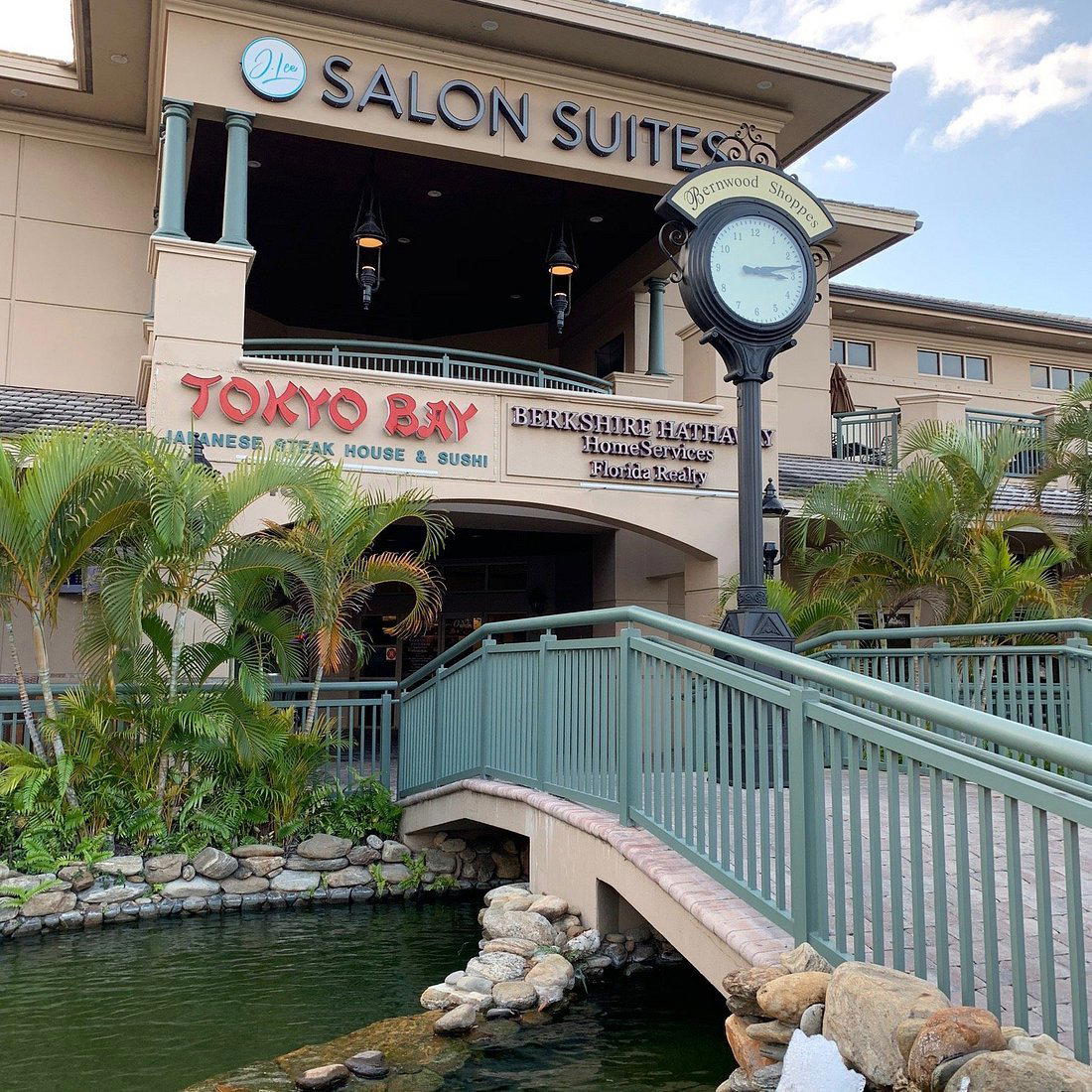
Where the Menu Tells the Story
South Tamiami Trail in Bonita Springs runs through a dining corridor that skews heavily toward Italian red-sauce traditions and American steakhouse formats. Restaurants like Angelina's Ristorante, La Fontanella Ristorante, and Manhattan Steakhouse define the competitive mainstream here. Against that backdrop, Tokyo Bay occupies a different register: a Japanese-inflected kitchen on a strip that does not see much of it, which is precisely what gives the address its editorial interest.
The name signals the orientation clearly enough. Tokyo Bay, as a culinary reference point, points toward the seafood-centric traditions of Tokyo's inner harbor districts, where the menu has historically been built around what arrived that morning rather than around a fixed seasonal template. Whether the kitchen here pursues that logic in full or adapts it for a Southwest Florida audience is the question that shapes how the menu should be read.
Reading the Menu Structure
In Japanese restaurant formats transplanted to American markets, the menu architecture tends to reveal the kitchen's actual ambitions faster than the decor does. The split between purist omakase-style counters and broader pan-Asian formats that fold in rolls, hibachi stations, and fusion crossovers is, at this point, a well-established divide in the American market. Tightly curated menus with limited categories suggest a kitchen focused on technique and sourcing. Expansive menus spanning multiple protein categories, hybrid rolls alongside traditional nigiri, and cooked appetizers alongside raw preparations suggest a different priority: accessibility and throughput.
For a venue on South Tamiami Trail serving a mixed local and seasonal visitor population, a broader format has genuine logic. Bonita Springs draws a significant winter-season influx from the Northeast and Midwest, a demographic that responds to familiar anchor dishes alongside less common offerings. The menu structure at Tokyo Bay, read in that context, likely reflects a calibration between what the local market expects and what a Japanese-inflected kitchen can credibly deliver at this scale and address.
That kind of calibration is not a compromise in the pejorative sense. Some of the more interesting Japanese-American dining formats in the country, from mid-tier urban sushi bars to coastal Florida destinations, have built durable followings precisely by holding the quality floor on core raw preparations while giving less adventurous diners a path in through cooked and hybrid formats. The editorial question for Tokyo Bay is whether the kitchen uses the broader menu as a scaffold for quality work or as a default toward lowest-common-denominator production.
The Southwest Florida Seafood Context
Florida's Gulf Coast has a credible claim on fresh seafood supply chains that many interior American markets cannot match. The proximity to Gulf fisheries means that grouper, snapper, amberjack, and shellfish arrive with a freshness profile that can support serious raw preparation if a kitchen chooses to pursue it. For a Japanese-influenced restaurant in this geography, that supply context is an asset that the leading operators in the region treat as foundational rather than incidental.
The contrast is worth stating plainly: a sushi or Japanese seafood kitchen in a landlocked Midwestern city is working against the grain of its supply chain in ways that a Gulf Coast kitchen simply does not have to. Restaurants at the level of Le Bernardin in New York City or Providence in Los Angeles have built their reputations on seafood sourcing as a first principle. A well-run Japanese kitchen in Southwest Florida, regardless of its price tier or format, has access to the same coastal supply logic, even if the execution ambition is pitched differently.
That regional context matters for how Tokyo Bay should be understood relative to its Bonita Springs peers. Figs Grille and El Basque operate in Mediterranean and Basque registers that treat seafood differently, as a secondary or equal protein rather than the organizing principle of the kitchen. Tokyo Bay's Japanese framing, if executed with any fidelity to the tradition, positions seafood differently: as the lens through which the menu is organized and the preparation technique is chosen.
Placing Tokyo Bay in a National Frame
The American dining scene has produced a narrow tier of Japanese and Japanese-influenced restaurants that operate at a nationally recognized level. Atomix in New York City and the format discipline seen at counters like Alinea in Chicago or The French Laundry in Napa represent one end of the precision-and-sourcing spectrum. At the other end sit the volume-oriented Japanese-American chains that have proliferated across suburban markets. Tokyo Bay on South Tamiami Trail sits somewhere in the middle of that spectrum, which is where most of the actual dining decisions in this country get made.
That middle tier is not a consolation bracket. Restaurants like Emeril's in New Orleans and, in a different register, operations as regionally specific as Single Thread Farm in Healdsburg or Blue Hill at Stone Barns in Tarrytown demonstrate that serious food thinking happens at many price points and in many formats. For a Japanese-focused kitchen in Bonita Springs, working in an underserved niche on the Trail, the ceiling is set more by kitchen ambition than by market constraints.
Planning a Visit
Tokyo Bay is located at 24880 S Tamiami Trail, Suite 2, Bonita Springs, FL 34134, a retail-adjacent address that shares the format of many of the mid-market dining destinations along this stretch. For visitors unfamiliar with the Trail's layout, the address places it in the southern section of Bonita Springs, accessible by car from both Naples to the south and Estero to the north. Current hours, booking availability, and contact details are best confirmed directly with the venue, as the available public record does not specify these details at this time.
For visitors building a broader Bonita Springs itinerary, the full Bonita Springs restaurants guide maps the dining corridor with more context on how the Italian, steakhouse, and international formats distribute across the market. Those planning the kind of high-investment dining trip that might also include Addison in San Diego, The Inn at Little Washington, or Lazy Bear in San Francisco will find Tokyo Bay an interesting data point: a Japanese-inflected kitchen in a Gulf Coast market where the raw material conditions are genuinely favorable, even if the format operates at a different scale than those benchmark destinations. The visit is worth making with that framing in mind rather than a direct comparison to destination-tier operations.
Frequently asked questions
Where do I go for Tokyo Bay Bonita Springs?
Tokyo Bay Bonita Springs is located at 24880 S Tamiami Trl #2, Bonita Springs, FL 34134, Bonita Springs.
How does Tokyo Bay Bonita Springs compare to other Japanese restaurants in Southwest Florida?
Southwest Florida outside Naples and Fort Lauderdale has a thin bench of Japanese restaurant options, which positions Tokyo Bay at 24880 S Tamiami Trail as one of the more accessible Japanese-format kitchens in the Bonita Springs area. The Gulf Coast seafood supply chain gives any kitchen here a sourcing advantage over interior Florida markets. Visitors arriving from cities with deep Japanese dining infrastructure should calibrate expectations to a regional format rather than a major metropolitan one.
What's the signature dish at Tokyo Bay Bonita Springs?
At Tokyo Bay's address on South Tamiami Trail in Bonita Springs, the kitchen's Japanese-inflected format is what separates it from the predominantly Italian and steakhouse options in the same corridor. Checking directly with the restaurant will confirm what's driving the menu at any given time.
Do I need a reservation for Tokyo Bay Bonita Springs?
Bonita Springs dining demand runs sharply higher between November and April, when seasonal residents and visitors from northern U.S. markets fill the area and compress table availability across the whole South Tamiami Trail corridor. Booking ahead during the winter season is the practical default.
What's the signature at Tokyo Bay Bonita Springs?
The defining characteristic of Tokyo Bay in Bonita Springs is its Japanese-inflected format in a dining market that skews heavily toward Italian and American steakhouse. That format distinction, placed on the Gulf Coast where fresh seafood supply is a credible operational asset, is the clearest identifier of what the kitchen is doing relative to its immediate competition on South Tamiami Trail.
Where the Accolades Land
Comparable venues nearby, for context on price, style, and recognition.
| Venue | Cuisine | Price | Notes |
|---|---|---|---|
| Tokyo Bay Bonita SpringsThis venue (the venue you are viewing) | Japanese Hibachi & Sushi | Not listed | Not listed |
| El Basque | Basque & Spanish Tapas with French Influences | $30–50 | Prado Shopping Center |
| Naples Coastal Kitchen | Coastal Seafood & American Grill | $30–50 | Bonita Springs |
| Figs Grille | Mediterranean Fusion | $30–50 | Bonita Springs |
| Mel's Diner Bonita | Classic American Diner | $20–30 | Bonita Springs |
| La Fontanella Ristorante | Authentic Italian Fine Dining | $30–50 | Shoppes at Pelican Landing |
Continue exploring
More in Bonita Springs
Restaurants in Bonita Springs
All restaurants in Bonita Springs →

Bars in Bonita Springs
Browse all →

Details
- Lively
- Energetic
- Group Dining
- Celebration
- Family
- Open Kitchen
- Sake Program
- A La Carte
- Counter Dining
- Vegetarian Friendly
- Vegan Options
- Gluten Free Options
Current opening hours
- Monday
- 4–9 PM
- Tuesday
- 11:30 AM–9 PM
- Wednesday
- 11:30 AM–9 PM
- Thursday
- 11:30 AM–9 PM
- Friday
- 11:30 AM–10 PM
- Saturday
- 11:30 AM–10 PM
- Sunday
- 4–9 PM
Hours can change for holidays and private events. Hours as of .
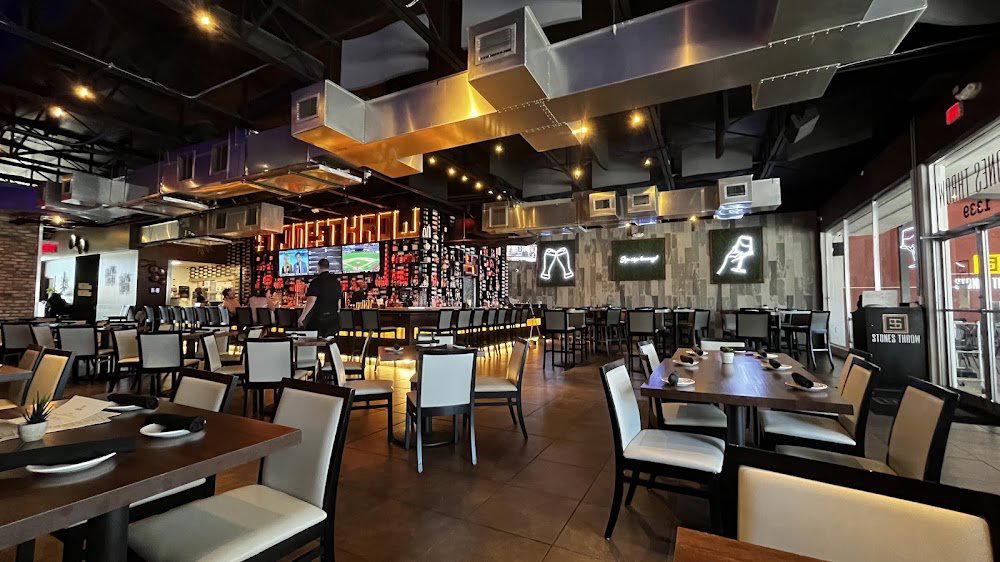
Fun and entertaining hibachi atmosphere with chef performances at tables, complemented by a distinctive outdoor tiki lounge.