


1 Michelin Star · Tabelog 100 #5
Our verdict
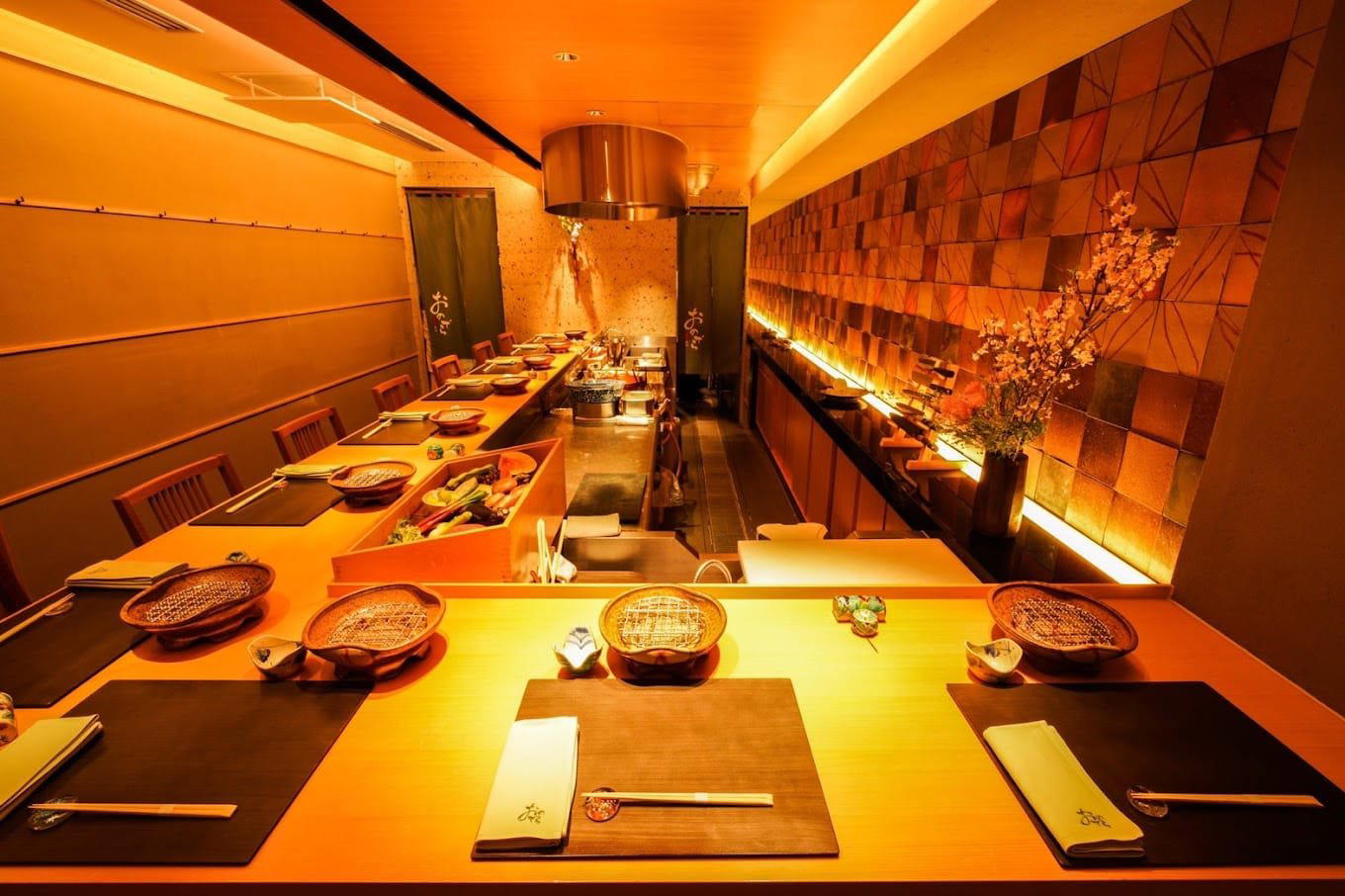
Tempura Miyashiro in Kamimeguro operates at the intersection of classical tempura and kaiseki tradition, where chef Naoki Miyashiro applies cross-disciplinary Japanese technique to a daily-changing set menu. Wagyu tempura, abalone shabu-shabu, and the signature 'Tenbara' rice dish signal a kitchen that treats the deep-fry medium as a starting point rather than a boundary. Ranked #594 in Japan by Opinionated About Dining (2025).

Pearl is the En Primeur Club membership app, where members save venues, book tables and use the concierge.
The menu
What to order
- Shrimp tempura nori wrap
- Wagyu tempura
- Tenbara
Where Tempura Ends and Kaiseki Begins
A single dish captures what Tempura Miyashiro is attempting: abalone, prepared shabu-shabu style in liver broth, before the leftover broth is folded into rice and served as a warm, seasoned gruel. This is not the grammar of standard tempura dining. It is the sequencing logic of kaiseki applied to a counter that ostensibly fries things for a living. That collision of disciplines, staged carefully across a daily-changing set menu, is the editorial premise of this Kamimeguro address and the reason it occupies a distinct position among Tokyo's serious tempura houses.
Tokyo Tempura's Expanding Registers
Tokyo has long maintained a tiered tempura culture that runs from the workaday tendon bowl to the multi-course counter where a single piece of sillago arrives at a precise moment in the sequence. The top tier of that structure, represented by counters like Tempura Kondo and Tempura Motoyoshi, tends to emphasise technical control, oil management, and the quality of sourced ingredients as primary differentiators. A smaller subset of that tier, however, has moved toward what might be called a cross-referencing approach: borrowing preparation logic from other Japanese disciplines and folding it into the tempura sequence. Miyashiro sits firmly in that smaller subset. The kitchen's use of sesame oil blended with rice oil is a considered choice for lightness rather than richness, which keeps the palate receptive across a longer sequence. That technical decision matters when you are asking a diner to move from nori-wrapped shrimp through bamboo shoots boiled before frying to Wagyu tempura in a single sitting.
For a wider orientation across the city's leading tables, the EP Club Tokyo restaurants guide maps the full range of serious dining formats currently operating in the city.
The Beverage Frame: Why Sake Pairings Matter Here
Any serious tempura counter in the ¥¥¥¥ tier is, implicitly, a sake counter. The relationship between well-fried tempura and a clean, dry sake is one of the more reliable pairings in Japanese dining: the delicacy of the batter and the clarity of a junmai daiginjo pull in the same direction, with neither overwhelming the other. At a kitchen like Miyashiro's, where the menu crosses into kaiseki territory, the beverage pairing becomes correspondingly more complex. Kaiseki-influenced courses tend to require sake with broader register, capable of handling the umami depth of abalone liver broth as readily as the clean crispness of a freshly fried sillago. A well-selected junmai (no added alcohol, rice-forward, often with more body) can anchor both ends of that range in a way that daiginjo cannot. Shochu also has a role at this kind of table, particularly the cleaner rice-based varieties, which offer neutrality without the sweetness that sake occasionally brings to richer preparations like the Wagyu tempura course. The integration of drinks into a meal of this structure is not a secondary consideration; it is part of how the sequence coheres. Diners who approach the menu as a pairing exercise, rather than ordering ad hoc, are likely to get significantly more out of the experience. Comparable cross-disciplinary Japanese menus in other cities, such as Gion Sasaki in Kyoto and HAJIME in Osaka, have demonstrated how a considered beverage programme can reframe the entire meal rather than simply accompany it.
The Menu's Architecture
The set menu changes daily, which is worth taking seriously as a structural commitment rather than treating it as a marketing note. A daily-rotating sequence at this price tier requires consistent market sourcing and re-sequencing decisions every service. The effect on the diner is that the menu cannot be pre-researched in the way a stable tasting menu can: what arrives is the kitchen's current reading of what is available and how it fits the intended arc.
The sequencing appears to follow a kaiseki-influenced logic of tone and pace, moving between familiar and surprising. Recognisable tempura staples like conger eel and sillago, which carry with them the deep registers of Edo-era tempura tradition, provide structural anchors. Against them, the more inventive preparations, nori-wrapped shrimp, bamboo shoots that have been boiled before frying, the Wagyu course, create contrast without abandoning the coherence of a Japanese meal. The closing dish, Tenbara, rice cooked with tomatoes and topped with kakiage (a combined seafood and vegetable tempura), functions as a compression of the meal's themes into a single bowl. That tomato-and-kakiage combination reflects a sensibility that treats Western ingredients as valid raw material for Japanese technique, a position held by a number of the country's more inventive kitchens, including akordu in Nara and Goh in Fukuoka.
Kakiage as a closing move also echoes the broader Tokyo tempura tradition of ending a counter meal with ten-don or seasoned rice, a format explored in different registers by counters including Tempura Ginya and Fukamachi. Miyashiro's version uses tomato in the rice base, which shifts the finish from the purely savoury into something slightly brighter in acidity.
Kamimeguro as a Context
Kamimeguro address places the restaurant outside the traditional tempura geography of central Tokyo, where counters in Ginza, Nihonbashi, and the surrounding neighbourhoods have historically defined the high-end format. Meguro as a district has accumulated a density of serious independent dining over the past decade, attracting kitchens that operate at full-price tiers without the overhead logic of a Ginza location. That pattern is visible elsewhere in Tokyo's dining geography, with technically serious kitchens distributed across residential and semi-commercial neighbourhoods rather than concentrated in the traditional luxury corridors. For visitors using Tokyo as a base to explore Japan's broader dining circuit, the 1000 in Yokohama and 6 in Okinawa represent the geographical spread of that serious-independent model. Within the tempura format specifically, the cross-disciplinary approach Miyashiro practices has regional parallels: Mudan Tempura in Taipei and Numata in Osaka both demonstrate how the deep-fry tradition travels and adapts beyond its Tokyo origins.
That is, practically, useful information: the restaurant is accessible to serious diners who plan ahead but does not require the same booking calculus as the most oversubscribed kaiseki or sushi counters.
Planning Your Visit
Tempura Miyashiro operates at the ¥¥¥¥ price tier, consistent with Tokyo's serious counter-format tempura houses. The address is 2 Chome-18-11 Kamimeguro, Meguro City, Tokyo 153-0051. Given the daily-changing set menu and the kitchen's evident seriousness about sequencing, this is not a meal to approach without appetite and time. Advance reservations are the expected method for a counter at this tier. Those assembling a broader Tokyo itinerary will find relevant context in the EP Club Tokyo hotels guide, the Tokyo bars guide, and the Tokyo experiences guide, as well as the Tokyo wineries guide for those pursuing the sake and Japanese wine circuit more systematically. For Edomae-tradition context within the same neighbourhood tier, Edomae Shinsaku provides a useful counterpoint to Miyashiro's cross-disciplinary model.
What Should I Order at Tempura Miyashiro?
The set menu is the only format and it changes daily, so specific ordering decisions are not available in advance. That said, the meal is built around a progression: early-sequence pieces establish the kitchen's technical baseline through familiar tempura items like sillago and conger eel, while mid-sequence surprises, including the Wagyu tempura course and whatever the current inventive preparation is, carry the meal's creative argument. The closing Tenbara, rice cooked with tomatoes and topped with kakiage, is the signature end point and the dish most directly associated with Naoki Miyashiro's approach. For beverages, a dry junmai sake or a rice shochu will track the meal's range from the lighter early pieces through to the richer mid-section without overloading the palate, which the kitchen's choice of sesame-rice oil blend has been calibrated to protect.
Frequently asked questions
What price level is Tempura Miyashiro?
Pricing at Tempura Miyashiro is listed as ¥¥¥¥.
Does Tempura Miyashiro have a Michelin star or similar recognition?
Tempura Miyashiro has received recognition including: Tempura at its most colourful, drawing from various disciplines in Japanese cuisine. Tempura shrimp is wrapped in nori; bamboo shoots are boiled, then deep-fried. Other ideas are borrowed from kaiseki tradition. Wagyu tempura and ‘Tenbara’,….
What should I order at Tempura Miyashiro?
There are no à la carte choices: the set menu is the only format, and it changes daily. The menu is built around signatures documented across visits, Wagyu tempura, abalone prepared shabu-shabu style in liver broth, and Tenbara, rice cooked with tomatoes and topped with kakiage. The closing Tenbara course is the structural anchor of the meal, so arriving hungry through the mid-sequence is worth planning for.
Comparable Spots, Quickly
| Venue | Cuisine | Price | Awards | Notes |
|---|---|---|---|---|
| Tempura MiyashiroThis venue (the venue you are viewing) | Michelin-Starred Tempura | $200–300 | 1 Michelin Star · Tabelog 100 #5 | Not listed |
| Harutaka | Edo-Style Omakase Sushi | $200–300 | 3 Michelin Stars · World's 50 Best #76 | Sushi |
| RyuGin | Modern Kaiseki | $500+ | 3 Michelin Stars · World's 50 Best #41 | Kaiseki, Japanese |
| L'Effervescence | Modern French with Japanese Influences | $200–300 | 3 Michelin Stars · World's 50 Best #69 | French |
| HOMMAGE | Modern French with Japanese Influences | $150–200 | 2 Michelin Stars · World's 50 Best #78 | Innovtive French, French |
| MAZ | Innovative Peruvian-Japanese Fusion | $150–200 | 2 Michelin Stars · World's 50 Best #28 | Innovative |
Recognition history
Dated appearances from independent guides and award organizations, with the underlying list record or original source where available.
Michelin 1 Star
Michelin
Opinionated About Dining Top Restaurants in Japan Recommended
Opinionated About Dining
Tabelog 100 #5 · No. 5
Tabelog · Tabelog 100 - Tempura - 2025
Full recognition history (5 entries)
Opinionated About Dining Top Restaurants in Japan Ranked #594
Opinionated About Dining
Michelin 1 Star
Michelin
Continue exploring
More in Tokyo
Restaurants in Tokyo
All restaurants in Tokyo →



Bars in Tokyo
All bars in Tokyo →




Details
- Intimate
- Elegant
- Cozy
- Date Night
- Special Occasion
- Business Dinner
- Chefs Counter
- Sake Program
- Omakase
- Counter Dining
- Sake Program
Current opening hours
- Monday
- Closed
- Tuesday
- 12–2 PM, 6–11 PM
- Wednesday
- 12–2 PM, 6–11 PM
- Thursday
- 12–2 PM, 6–11 PM
- Friday
- 12–2 PM, 6–11 PM
- Saturday
- 12–2 PM, 6–11 PM
- Sunday
- 12–2 PM, 6–11 PM
Hours can change for holidays and private events. Last verified .
Cozy counter seating in a renovated traditional house with a relaxing, stylish atmosphere focused on the chef's work.