Restaurante Chikalango
Our verdict
Restaurante Chikalango sits inside Chitengo Camp within Gorongosa National Park, one of Africa's most ambitious wildlife restoration projects. Dining here places you inside the park's broader story of ecological recovery, with sourcing shaped by the landscape surrounding the table. It is a rare case where the restaurant's context does more editorial work than any single dish.

Pearl is the En Primeur Club membership app, where members save venues, book tables and use the concierge.
Eating Inside a Rewilded Continent
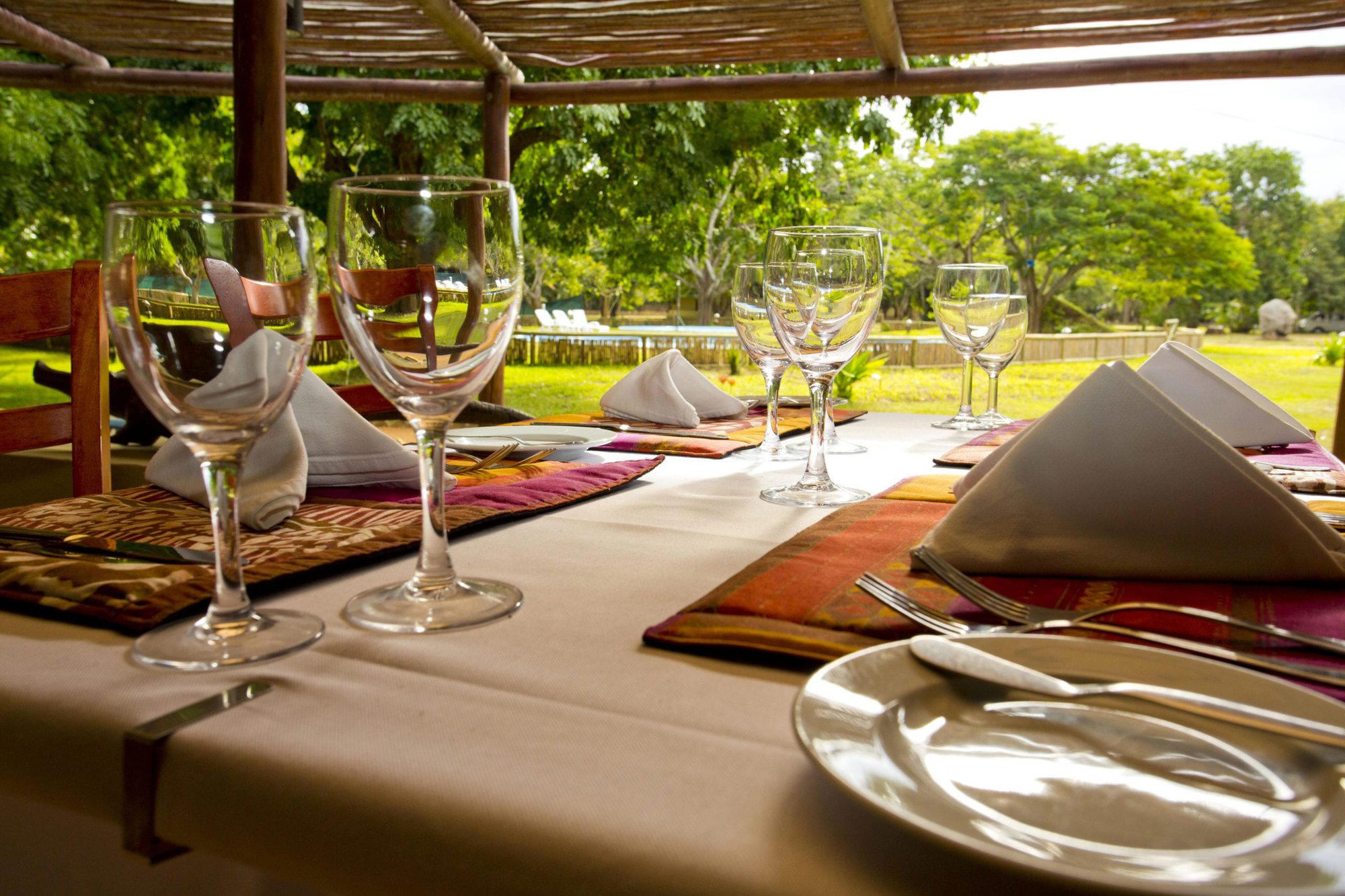
There is a particular quality of silence that settles over Chitengo Camp as the light drops in Gorongosa National Park. The sounds that replace it, the low percussion of insects, the occasional distant call from the bush, are not background noise but the whole point. Restaurante Chikalango sits within that environment, operating as the primary dining option for guests staying at the camp. The physical setting does work that no urban restaurant can manufacture: you are eating at the edge of one of sub-Saharan Africa's most closely watched ecological restoration projects, and the food, whatever form it takes on a given evening, arrives inside that frame.
Gorongosa suffered catastrophic wildlife losses during Mozambique's civil war, which ended in 1992. The recovery since then, supported by a long-running partnership with the Carr Foundation, has become a reference point in conservation circles. That context is not decorative. It shapes what is available, what is logistically possible, and what the act of eating here actually means. If you have been following similar territory in global dining, the farm-provenance arguments at places like Arpège in Paris or the ecological sourcing commitments at Azurmendi in Larrabetzu, Chikalango offers a rawer, less theorized version of the same underlying question: what does it mean for food to come from exactly here?
Where the Ingredients Come From, and Why That Is the Story
In destination restaurants that operate within protected areas internationally, sourcing is rarely incidental. The logistics of supplying a remote camp inside a national park determine the menu more directly than any chef philosophy. Produce that cannot travel from Beira or Chimoio without spoiling does not appear. Local agricultural relationships, with small-scale farmers in the communities surrounding the park's buffer zones, fill the gaps. This pattern, common across remote African safari dining, means the food on the table at Chitengo has a shorter and more legible supply chain than almost anything served at a tasting-menu counter in a capital city.
Gorongosa's conservation model is explicitly linked to the welfare of communities surrounding the park. The Gorongosa Project's community development work includes agricultural programs designed to reduce pressure on park resources by improving local food production. That infrastructure, even when not formalized into a restaurant sourcing policy, tends to influence what camp kitchens can access. Fresh vegetables, local grains, and proteins sourced through park-sanctioned channels are the practical expression of that model at the table level. Contrast this with the supply chain complexity behind a restaurant like Le Bernardin in New York City, where sourcing precision is a deliberate editorial choice, at Chikalango, the constraints themselves impose the localism.
This is a different kind of ingredient story than the ones told by starred restaurants in Europe or Asia. It is not about rare varietals or named producers with cult followings. It is about what the land around a recovering ecosystem can actually yield, and what arrives on the plate as a result. That is, in some ways, a more honest version of farm-to-table than the term usually delivers in more accessible dining markets.
The Camp Setting and How Dining Fits Into It
Chitengo Camp is the operational hub of Gorongosa National Park, housing research facilities, accommodation, and the park's primary visitor infrastructure. Chikalango functions within that ecosystem, serving guests who are typically in the park for multi-day stays structured around game drives and guided walks. The dining rhythm follows that structure. Breakfast before drives, meals timed around activity schedules, the restaurant exists in service of a broader itinerary rather than as a standalone destination in the way that a Maputo fine-dining address might position itself.
That distinction matters for expectations. Guests arriving from Maputo, where a property like the Radisson Blu Hotel, Maputo anchors a more conventional urban hospitality experience, will find a different register entirely. The comparison is not a criticism, it reflects what remote national park dining is and what it is not. The value here is proximity to the park, the sourcing story embedded in that proximity, and the fact that the meal is part of a larger encounter with a genuinely significant landscape.
For readers familiar with destination formats where the setting does the heavy lifting, the kind of experience closer in spirit to Lazy Bear in San Francisco or Atelier Crenn in San Francisco in terms of context-dependent meaning, if not format, Chikalango operates on a version of that logic at a different scale and in a radically different geography.
Planning a Visit: What to Know Before You Go
Access to Gorongosa National Park involves either a drive from Beira, approximately 180 kilometres to the southeast, or small aircraft connections from Maputo. The park entrance and Chitengo Camp are reachable by road, though the condition of routes varies seasonally. The dry season, broadly May through October, is the standard window for wildlife viewing and the period when the camp operates at peak capacity. Dining at Chikalango is effectively part of a camp booking rather than a standalone reservation, guests staying at Chitengo are the primary audience, and walk-in access from outside the park is not a realistic scenario given the logistics involved.
Booking a stay at Chitengo Camp should be done in advance, particularly for the peak dry-season months when the park sees its highest visitor numbers and accommodation fills. The camp's own channels are the appropriate booking route; no third-party restaurant reservation platforms apply here. Visit our full Parque Nacional De Gorongosa restaurants guide for broader context on dining within the park and surrounding area.
Frequently asked questions
Is Restaurante Chikalango good for families?
Chitengo Camp is Gorongosa National Park's primary visitor hub, and the restaurant functions as the camp's central dining facility, making it accessible to family groups staying in the park. Children who are already on a wildlife visit to the park will find the setting, open-air camp infrastructure surrounded by the sounds of the bush, more meaningful than a conventional restaurant outing. Families should plan around park operating hours and confirm access with accommodation staff at Chitengo before arrival, as remote park logistics require advance coordination.
Is Restaurante Chikalango better for a quiet night or a lively one?
Chitengo Camp sits inside a protected wilderness area of Gorongosa National Park, and the atmosphere after dark reflects that: the sounds are largely ecological rather than social. This is a destination for those who want to eat with the park around them, not a venue that generates its own energy through crowd or cocktail culture. Visitors seeking a lively evening should adjust expectations accordingly, the draw here is context, not scene.
Can you eat at Restaurante Chikalango without staying overnight in Gorongosa National Park?
Day visitors to Gorongosa National Park pass through Chitengo Camp as the park's operational and visitor centre, which positions the restaurant as accessible to non-overnight guests during park hours. Access requires either the drive from Beira, approximately 180 kilometres to the southeast, or a small aircraft connection, so the logistics favour those already committing to a full day in the park. Confirming dining availability for day visitors directly with Chitengo Camp before travel is advisable, as remote-area facilities can prioritise resident guests.
What do regulars order at Restaurante Chikalango?
In comparable remote conservation camp restaurants across southern Africa, menus typically rotate around what can be reliably supplied to a location roughly 180 kilometres from the coastal city of Beira. Staff at Chitengo Camp are the most reliable source for current menu information.
What's the address for Restaurante Chikalango?
Restaurante Chikalango is located at Chitengo Camp Site, Parque Nacional De Gorongosa, Parque Nacional De Gorongosa.
Quick Comparison
| Venue | Cuisine | Price |
|---|---|---|
| Restaurante ChikalangoThis venue (the venue you are viewing) | International Cuisine | Not listed |
| Radisson Blu Hotel, Maputo | Italian & Mozambican-International | $30–50 |
| Korean Restaurant | Authentic Korean | $10–20 |
| BBQ House | American BBQ & Grill | $10–20 |
| Spicy Thai Restaurant Maputo | Authentic Thai Cuisine | $10–20 |
Details
- Scenic
- Rustic
- Family
- Casual Hangout
- Garden
- Hotel Restaurant
- Garden
- A La Carte
Serene retreat atmosphere with garden views and elegant dining.