Reserve
Reserve occupies a deliberate position in Grand Rapids' maturing dining scene, sitting at 201 Monroe Ave NW in the heart of the city. Where much of West Michigan dining still defaults to broad crowd-pleasing formats, Reserve signals a tighter, more considered approach to what ends up on the plate. For visitors tracking ingredient-forward restaurants across the Midwest, it belongs in the conversation.
- Address
- 201 Monroe Ave NW, Grand Rapids, MI 49503, USA
- Phone
- +1 616 855 9463
- Website
- alloragr.com
- Directions
- Get directions
Where Grand Rapids Gets Serious About the Plate
Grand Rapids has spent the better part of a decade shedding its reputation as a craft beer city with decent food. The brewery corridor still defines the visitor shorthand, but a quieter shift has been running in parallel: a handful of restaurants at the upper end of the Monroe Avenue corridor have begun operating with the same rigor you'd expect from a Chicago or San Francisco kitchen. Reserve is a restaurant in Grand Rapids, Michigan, serving modern Italian with coastal influences at a price point around $45 per person. Reserve, at 201 Monroe Ave NW, sits inside that shift. The address alone puts it in the densest stretch of the city's dining district, where foot traffic from the Van Andel Arena and the convention center can work against the kind of focused room a serious restaurant requires. That Reserve holds its own in that context says something about how it positions itself.
The broader pattern in American fine-casual dining over the past decade has moved away from vertical presentations and sauce-heavy technique toward something more horizontally sourced: the question isn't what the kitchen can do to an ingredient, but where the ingredient comes from and how little interference it actually needs. That shift is visible at restaurants like Single Thread Farm in Healdsburg, where the sourcing network is the menu's organizing principle, and at Blue Hill at Stone Barns in Tarrytown, where the farm is the premise. Reserve operates at a different scale and price tier, but the directional alignment with that sourcing-first sensibility is part of what distinguishes it from the broader Grand Rapids dining field.
The Midwest Sourcing Advantage
Michigan's agricultural geography is an underused argument in national dining conversations. The state produces more varieties of tree fruit than almost anywhere in the continental United States, and its proximity to the Great Lakes moderates temperatures in ways that extend growing seasons for specialty crops. West Michigan in particular sits in a corridor of sandy loam and lake-effect climate that supports cherry, peach, and blueberry production at a density few other regions can match. For a restaurant operating at the quality tier Reserve occupies, that geography is a structural advantage rather than a marketing talking point.
The ingredient-sourcing frame matters here because it shifts how you evaluate a menu. A kitchen drawing from regional producers in this part of Michigan isn't performing localism for effect; it's working with genuinely differentiated raw material. The same logic applies to restaurants like Smyth in Chicago, which has built a national reputation partly on the quality of its sourcing relationships, and Addison in San Diego, where the California growing belt gives the kitchen a similarly deep bench of seasonal produce. In Grand Rapids, that sourcing advantage is less expected, which is part of why it registers as a differentiator.
For visitors coming from markets where ingredient-focused restaurants are densely concentrated, Reserve points outward to places like Providence in Los Angeles on the seafood-sourcing side, or Le Bernardin in New York City for the discipline of letting primary product carry the dish. Those are larger operations with more recognized profiles, but the underlying philosophy of treating sourcing as the first creative decision connects them to what Reserve is doing at a Midwest scale.
The Room and the Rhythm
Downtown Grand Rapids dining rooms tend to split between high-volume formats built around pre-show traffic and smaller, quieter operations that depend on destination diners. The Monroe Avenue address means Reserve manages both pressures. What separates the serious rooms from the event-adjacent ones is usually a combination of service pace and menu architecture: whether the kitchen is building toward something or simply cycling through covers. The more considered rooms in this city, including Bistro Bella Vita a short distance away, have found ways to hold that focus even on high-traffic nights.
The experiential model that works in these conditions typically relies on a tighter menu rather than a broad one, with seasonal rotations that signal to returning guests that the kitchen is actively engaged with what's available rather than running a fixed program year-round. That seasonal discipline is also what makes a restaurant like Reserve worth revisiting across different parts of the year: a spring visit organized around Michigan asparagus and ramps produces a materially different meal than one anchored to late-summer stone fruit or autumn root vegetables.
Placing Reserve in Its comparable set
Within Grand Rapids' restaurant field, Reserve occupies a different register than the neighborhood spots along the lake drive corridor, including 1001 Lake Dr SE and 1345 Lake Dr SE, which serve different neighborhood functions. It also separates from more casual formats like Bobarino's and Blue Water, which operate at higher volume and broader price accessibility. That positioning puts Reserve in a smaller competitive cluster: the half-dozen or so Grand Rapids restaurants where the dining decision requires advance thought and where the kitchen is operating with genuine ambition.
Nationally, that cluster maps to mid-market cities where one or two restaurants carry the weight of representing serious dining without the institutional support of a major food media market. Lazy Bear in San Francisco built a national profile from a similar position of operating outside the expected fine-dining format. Emeril's in New Orleans demonstrated how a regional city could sustain serious culinary ambition over decades. The Inn at Little Washington operates in a market even smaller than Grand Rapids yet maintains a national reference point. The pattern holds: sustained quality in a secondary market is harder to execute than in a major food city, and the restaurants that manage it tend to be more deliberately focused as a result.
Atelier Moessmer Norbert Niederkofler in Brunico has built a serious reputation around Alpine sourcing in a remote location, proving that geographic remove from major dining capitals doesn't preclude serious kitchen work. Atomix in New York City demonstrates what happens when a non-Western sourcing philosophy is applied with technical precision. Both sit at the far end of the ambition scale from Reserve, but they illustrate the range of what ingredient-first thinking can produce across different contexts.
Planning a Visit
Reserve is located at 201 Monroe Ave NW, placing it within walking distance of most downtown Grand Rapids hotels and a short drive from the airport. For those building a broader dining itinerary around the city, the EP Club's full Grand Rapids restaurants guide covers the wider field with context on neighborhoods and format. Given the restaurant's position in the smaller, more focused tier of Grand Rapids dining, booking ahead is the sensible approach, particularly for weekend evenings.
Comparable Options
Comparable venues nearby, for context on price, style, and recognition.
| Venue | Cuisine | Price | Notes |
|---|---|---|---|
| ReserveThis venue — the venue you are viewing | Modern Italian with Coastal Influences | $$$ | Not listed |
| Noto's Old World Italian Dining | Southern Italian Trattoria | $$$ | Cascade Township |
| Osteria Rossa | Italian Trattoria | $$ | downtown |
| Lucy's | American Brunch Cafe | $$ | Creston |
| Bobarino's | Wood-Fired Pizza & American Comfort Food | $$ | Downtown Grand Rapids |
| Leo's | Seafood and Steakhouse | $$$ | downtown |
Continue exploring
More in Grand Rapids
Restaurants in Grand Rapids
Browse all →
Bars in Grand Rapids
Browse all →

At a Glance
- Elegant
- Sophisticated
- Modern
- Intimate
- Date Night
- Business Dinner
- After Work
- Special Occasion
- Wine Cellar
- Historic Building
- Design Destination
- Private Dining
- Extensive Wine List
- Craft Cocktails
- Sommelier Led
- Local Sourcing
Current opening hours
- Monday
- Closed
- Tuesday
- 4:30–10 PM
- Wednesday
- 4:30–10 PM
- Thursday
- 4:30–10 PM
- Friday
- 4:30–11 PM
- Saturday
- 4:30–11 PM
- Sunday
- Closed
Hours can change for holidays and private events. Last verified .
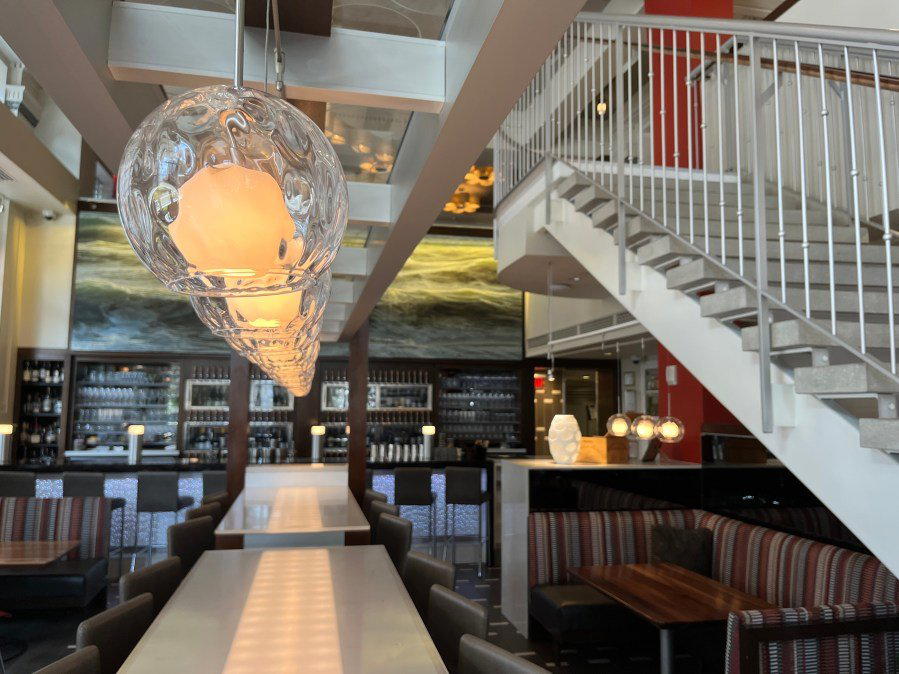
Bright, clean modern bar area with sophisticated design; intimate upstairs dining with cozy atmosphere; historic bank vault elements integrated into contemporary aesthetic.