PrimoHoagies
Our verdict
On Chestnut Street in Philadelphia's Rittenhouse corridor, PrimoHoagies represents the serious end of the city's hoagie tradition: Italian-American deli craft applied with consistency and without compromise. The format is counter service, the ritual is deliberate, and the result belongs in any honest accounting of what Philadelphia actually eats.

Pearl is the En Primeur Club membership app — saves, bookings, and concierge access live there. Same editors, same standards.
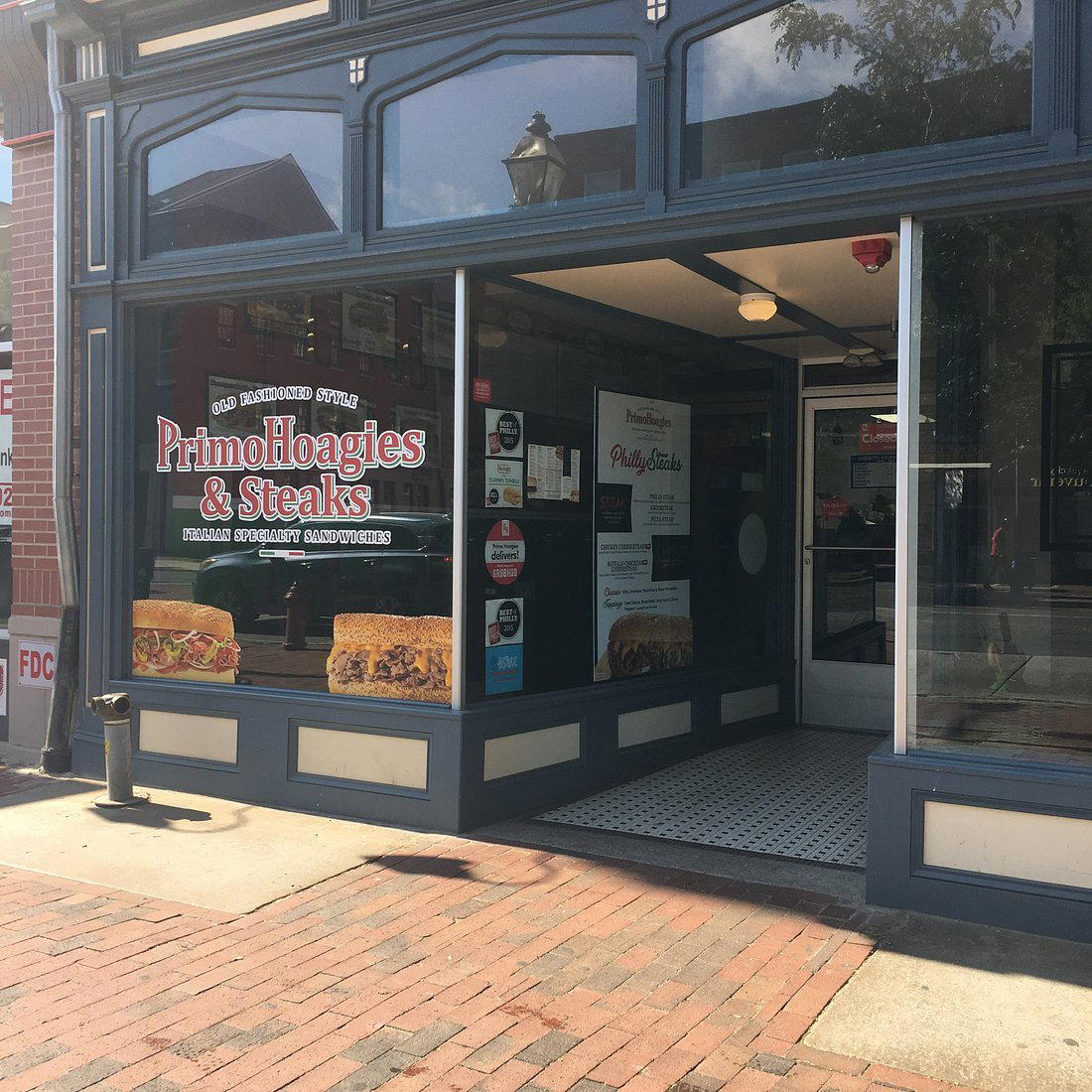
The Counter as Ceremony
There is a particular ritual embedded in the Philadelphia hoagie that separates it from the sandwich cultures of other American cities. The order placed at the counter is not casual: bread choice, meat selection, the layering of sharp provolone, the question of oil and oregano, the precise moment when shredded iceberg and tomato enter the equation. At PrimoHoagies on Chestnut Street in the Rittenhouse corridor, that ritual is taken seriously. The counter format demands that a diner arrive knowing what they want, or be prepared to learn quickly by watching those ahead of them in line. This is not a venue that packages indecision as a virtue.
Philadelphia's relationship with the hoagie is long-standing and locally specific in ways that often get flattened in national food coverage. The city distinguishes between the hoagie and the cheesesteak with the same territorial clarity that New Orleans applies to po'boys, or New York to deli sandwiches. PrimoHoagies sits within the hoagie tradition specifically, positioning itself at the more deliberate, ingredient-forward end of a category that runs from convenience-store grab-and-go to the kind of counter operation where the cold cuts are sliced to order.
The Ritual of the Build
The editorial angle that makes a venue like PrimoHoagies worth examining is not the sandwich itself in isolation, but what the ordering sequence reveals about the culture around it. Counter-service sandwich culture in Philadelphia operates on a set of unwritten rules that locals absorb by exposure: you know your order before you reach the front, you specify the dressing clearly, and you do not ask for modifications that require a separate conversation. The pace is part of the ritual. A well-run hoagie counter in this city moves with efficiency that feels choreographed, and the measure of a regular is how cleanly they slot into that choreography.
The Chestnut Street location places PrimoHoagies in a stretch of central Philadelphia that draws office workers at lunch and Rittenhouse-adjacent residents in the afternoon. That mixed audience is instructive: hoagie culture in Philadelphia is genuinely democratic in a way that the city's fine-dining scene, which includes ambitious kitchens like Fork and Friday Saturday Sunday, is not. The same basic format serves the same broad cross-section of the city, and the quality floor matters more here than any individual flourish.
Where PrimoHoagies Sits in Philadelphia's Eating Map
Philadelphia's food identity is more layered than the cheesesteak shorthand suggests. The city supports serious tasting-menu ambition at places like My Loup, tradition-rooted ethnic cooking at South Philly Barbacoa, and progressive Asian formats at Mawn. But the connective tissue of how Philadelphians actually eat day-to-day runs through the hoagie counter, the corner Italian deli, and the lunch spots on Market and Chestnut. PrimoHoagies is part of that connective tissue, operating across multiple Philadelphia locations with enough consistency to function as a benchmark for the category.
That consistency is a credential in itself. In a city where neighborhood deli culture can be hyperlocal and variable, a multi-location operation that maintains a recognizable standard of cold-cut quality and bread integrity is making a structural argument: that the hoagie format is worth systematizing at a level above convenience. The comparison set here is not the white-tablecloth dining rooms that appear in awards cycles. It is the competing hoagie counters within a few blocks, and the question of whether the build, the bread, and the ratio of filling to structure hold up against them.
For a broader view of where Philadelphia's dining scene places against other American cities with defined regional food cultures, our full Philadelphia restaurants guide maps the range from counter-service to destination dining. The gap between a PrimoHoagies lunch and a reservation at one of Philadelphia's ambitious tasting rooms is significant, but both reflect different facets of the same city's appetite. The hoagie counter has its own integrity, and it is worth understanding on those terms rather than as a lesser category.
The Bread Question
Any serious accounting of a Philadelphia hoagie operation has to address bread, because the local standard is demanding. Philadelphia hoagie rolls have a crust that holds its structure under the weight of wet ingredients without going rigid, and a crumb that does not compete with the filling. The roll is load-bearing architecture, not an afterthought. This distinguishes the Philadelphia tradition from submarine sandwich cultures in other cities, where the bread often plays a secondary role. The bread question is, in fact, the primary quality signal at any serious hoagie counter, and it is the factor that most quickly separates the operations taking the format seriously from those that are not.
Planning Your Visit
PrimoHoagies operates as a counter-service format, which means the practical logistics are direct: no reservation is needed, the pace is fast, and the decision-making happens at the counter rather than over a table. The Chestnut Street location at 2043 West Chestnut puts it within walking distance of Rittenhouse Square, making it a practical option for a working lunch or an afternoon stop. For visitors moving between Philadelphia's dining registers, it is worth treating a PrimoHoagies visit as part of understanding the city's food culture rather than as a concession to time or budget. The leading comparative frame is not what you are forgoing by eating here instead of somewhere with a wine list, but what you learn about Philadelphia by eating here at all.
Those interested in how regional American food traditions compare to the destination-dining tier should note that Philadelphia's ambitious restaurant scene operates at a level competitive with peer cities. Le Bernardin in New York City, The French Laundry in Napa, and Smyth in Chicago represent the national tasting-menu tier; Philadelphia has its own entries in that conversation. But the city's hoagie tradition operates in a separate register that is no less locally defining, and PrimoHoagies is a functional entry point into it.
Frequently asked questions
What is the signature dish at PrimoHoagies?
Can I walk in to PrimoHoagies?
What is the defining dish or idea at PrimoHoagies?
Is PrimoHoagies good for vegetarians?
Does PrimoHoagies justify its prices?
How does PrimoHoagies fit into Philadelphia's Italian-American deli tradition?
Side-by-Side Snapshot
| Venue | Cuisine | Price | Awards |
|---|---|---|---|
| PrimoHoagiesThis venue — the venue you are viewing | Italian Hoagies | $10–20 | Not listed |
| Friday Saturday Sunday | Modern American Tasting Menu | $100–150 | 1 Michelin Star · World's 50 Best #40 |
| Fork | Seasonal New American | Not listed | James Beard Award Outstanding Restaurateur #1 · Wine Spectator Award of Excellence |
| South Philly Barbacoa | Authentic Mexican Barbacoa Taqueria | $10–20 | James Beard Award Best Chef: Mid Atlantic · Chef's Table Featured on Chef's Table |
| Jean-Georges Philadelphia | Modern French Fine Dining | $200–300 | La Liste Top Restaurants · Wine Spectator Best of Award of Excellence |
| Helm | Seasonal New American Small Plates | $50–100 | Not listed |
Continue exploring
More in Philadelphia
Restaurants in Philadelphia
All restaurants in Philadelphia →
Bars in Philadelphia
All bars in Philadelphia →
Details
- Classic
- Casual Hangout
- A La Carte
- Vegetarian Friendly
Current opening hours
- Monday
- 9 AM–9 PM
- Tuesday
- 9 AM–9 PM
- Wednesday
- 9 AM–9 PM
- Thursday
- 9 AM–9 PM
- Friday
- 9 AM–9 PM
- Saturday
- 10 AM–9 PM
- Sunday
- 10 AM–8 PM
Hours can change for holidays and private events. Last verified .
Casual counter-service spot with a classic deli atmosphere focused on fresh sandwich preparation.