A local dining fixture in Ölgii, western Mongolia's Kazakh-majority provincial capital, Pamukkale Restaurant occupies a city where the supply chain itself is the story. Ingredients travel long distances across the Altai steppe before reaching the table, and the cooking reflects the pastoral economy that surrounds it. For travellers passing through one of Central Asia's most remote urban centres, it offers a grounded alternative to the standard guesthouse fare.
Pearl is the En Primeur Club membership app — saves, bookings, and concierge access live there. Same editors, same standards.
- Address
- 11-66 5-r bag, Hovd Gol, Ölgii, Bayan-Ölgii 83120, Mongolia
- Phone
- +976 8595 9944
- Website
- facebook.com
- Directions
- Get directions
 Saves & bookings on Pearl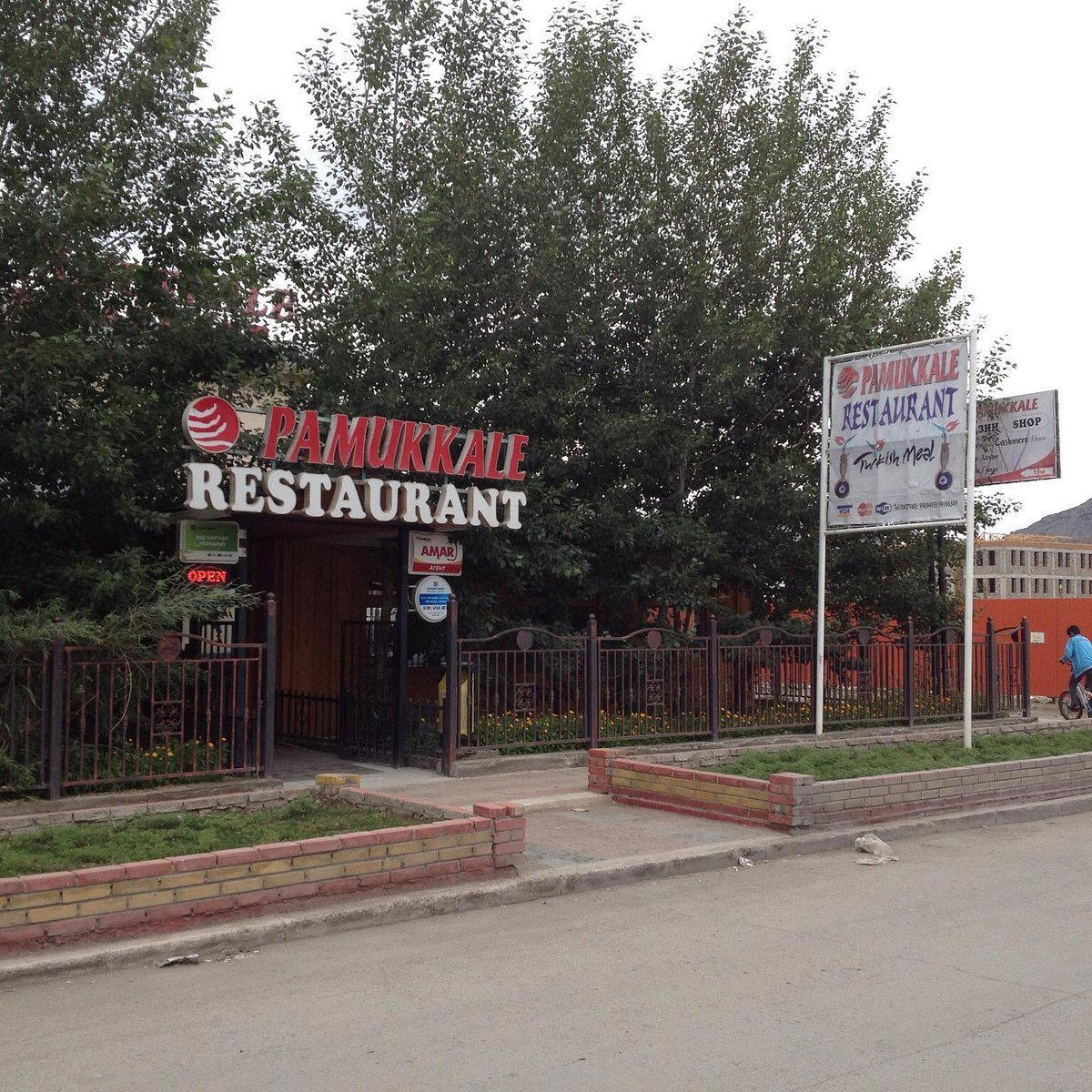
Where the Steppe Meets the Table
Ölgii sits at roughly 1,700 metres above sea level in Mongolia's westernmost province, Bayan-Ölgii, pressed against the borders of Russia, China, and Kazakhstan. The city of around 30,000 people is predominantly Kazakh in language, culture, and food tradition, which means its restaurants operate in a culinary register that most visitors arriving from Ulaanbaatar or from abroad have not encountered before. The dominant logic of the local food economy is pastoral: mutton, horse meat, and dairy products form the nutritional backbone of the region, supplemented by whatever can survive the journey in from Hovd or Ulaanbaatar along roads that are, at their worst, seasonal.
Pamukkale Restaurant, located on Hovd Gol street in the 5th bag (sub-district) of the city, operates inside that supply reality. Its address places it within walking range of the town centre, but the more relevant geography is the distance between Ölgii and the nearest freight hub. That distance shapes every kitchen in the city, and understanding it is the first step toward reading a menu here with any accuracy.
The Ingredient Logic of the Altai Steppe
Western Mongolia's food sourcing works on a different calendar than urban restaurant culture elsewhere. Seasonal slaughter, particularly in late autumn when animals are at peak weight before winter, concentrates the availability of fresh meat. Cold storage capacity in a city like Ölgii is limited, which means the freshest product is often the most local product: mutton from herder families operating within the immediate province, dairy from small-scale producers in the surrounding valleys, and root vegetables where the short growing season permits.
This is not farm-to-table as a marketing position; it is farm-to-table as a logistical condition. For a restaurant like Pamukkale, that means the sourcing story is embedded in the very constraints of geography. The name itself, borrowed from the famous Turkish thermal site, gestures toward a Kazakh cultural connection to Turkic heritage that is woven through the province's identity. Bayan-Ölgii's Kazakh community has maintained language, craft, and food traditions with a continuity unusual for a diaspora group, and that continuity shows up in the preference for slow-cooked meat dishes, fermented mare's milk (koumiss), and flatbreads that echo Central Asian cooking across several borders.
For travellers cross-referencing this kind of sourcing discipline against what they might know from venues like Arpège in Paris or Aponiente in El Puerto de Santa María, the comparison illuminates just how varied the concept of ingredient integrity can be. Those kitchens operate with sourcing as a deliberate philosophy within a system of abundance; kitchens in Ölgii operate with sourcing as an imposed condition within a system of scarcity. The result is often food that is honest in a way that scarcity tends to produce.
The Dining Scene in Ölgii
Ölgii's restaurant offering is thin by the standards of any major city, but that framing misses the point. This is a provincial capital at the end of a long supply chain, and the relevant comparison is not Ulaanbaatar's growing dining scene, anchored by venues like Casablanca or Bayangol Restaurant, but rather the handful of local establishments that keep the city fed through harsh winters when temperatures drop well below minus 30 degrees Celsius.
The western aimag (province) also hosts Хишиг ресторан in neighbouring Hovd Aimag, which gives some indication of the sparse but functional dining infrastructure across this region. Travellers who have visited Argali Restaurant in Terelj National Park will recognise the pattern: remote Mongolian dining is less about the menu and more about the logistics of getting food to the table at all.
What to Expect When You Arrive
The physical setting in the 5th bag is functional rather than designed. Ölgii's architecture reflects Soviet-era planning overlaid with more recent construction, and the dining rooms that operate in this neighbourhood tend toward the practical: tiled floors, tables set close together, and windows that in winter are doing serious insulation work. The atmosphere is local and unhurried, oriented around families and working people rather than tourists passing through on eagle hunting expeditions or Altai trekking circuits, though both of those visitor groups do find their way here.
Expect Kazakh and broadly Central Asian cooking as the frame of reference, with mutton appearing in multiple preparations, soup as a serious course rather than a preamble, and bread served as a staple rather than an amenity. The pace of service reflects the pace of the city: deliberate, without the pressure of table turns.
Planning Your Visit
Ölgii is reached most efficiently by air from Ulaanbaatar; the flight takes roughly two hours and operates several times per week, with scheduling subject to seasonal and weather conditions. The alternative is a multi-day overland journey that is genuinely formidable in winter months. Once in the city, Pamukkale's address on Hovd Gol street in the 5th bag is navigable on foot from the centre. No booking contact or website is currently listed in public records, which is consistent with how most local restaurants in Ölgii operate; walk-in is the standard approach. For broader orientation to what the city offers, our full Ölgii restaurants guide maps the options in more detail.
Travellers arriving from contexts like Le Bernardin in New York or 8½ Otto e Mezzo Bombana in Hong Kong should recalibrate expectations entirely. The value here is not technical refinement but geographic and cultural specificity: food eaten in a city that most travellers will never reach, cooked from ingredients that arrived here against considerable odds.
At a Glance
- Lively
- Rustic
- Well Known
- Group Dining
- Family
- Casual Hangout
- Solo
- Standalone
Current opening hours
- Monday
- 10 AM–10 PM
- Tuesday
- 10 AM–10 PM
- Wednesday
- 10 AM–10 PM
- Thursday
- 10 AM–10 PM
- Friday
- 10 AM–10 PM
- Saturday
- 10 AM–10 PM
- Sunday
- 10 AM–10 PM
Hours can change for holidays and private events. Last verified .
Warm and welcoming with a notably decorated gold dining room; popular with local crowds creating a busy, authentic atmosphere.
Know Before You Go
- Getting there
- 11-66 5-r bag, Hovd Gol, Ölgii, Bayan-Ölgii 83120, Mongolia