OK Omens

On SE Hawthorne, OK Omens occupies a particular corner of Portland's dining scene where Pacific Northwest sourcing meets a menu architecture designed for curiosity rather than category. Pearl-recommended in 2025 and holding, the restaurant under chef Thomas Gerber makes a strong case for how a neighbourhood room can carry serious culinary intent without the formality of a destination address.
Pearl is the En Primeur Club membership app — saves, bookings, and concierge access live there. Same editors, same standards.
- Address
- 1758 SE Hawthorne Blvd, Portland, OR 97214
- Phone
- (503) 231-9959
- Website
- okomens.com
- Directions
- Get directions
 Saves & bookings on Pearl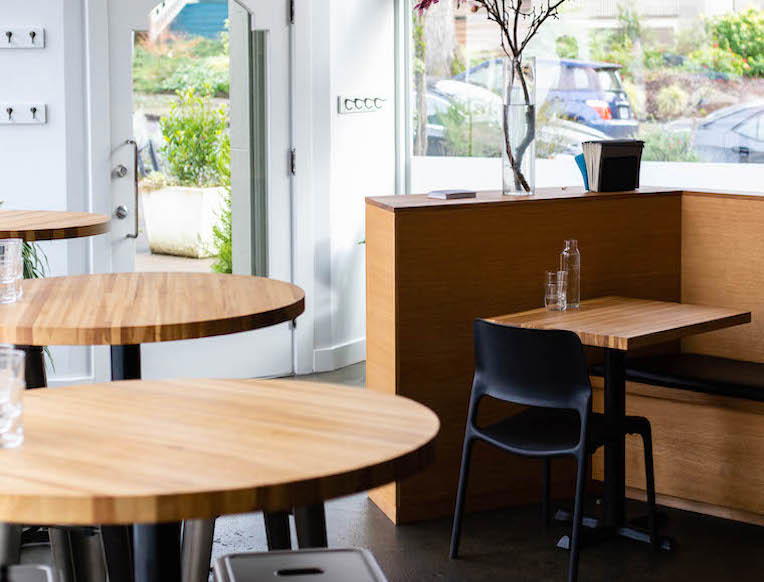
Hawthorne's Quiet Frequency
SE Hawthorne Boulevard has long functioned as Portland's most casually committed dining corridor, the kind of street where a serious kitchen can operate without the pressure of a Pearl District showcase address. The neighbourhood draws a crowd that expects substance over spectacle, and the restaurants that hold on here tend to earn their following through consistency rather than opening-night momentum. Those signals, read together, point to a room that has settled into its identity rather than one still auditioning for it.
Portland's Pacific Northwest scene is now well past the phase where local sourcing alone distinguished a restaurant. The regional vocabulary, Cascadian mushrooms, Willamette Valley produce, Pacific seafood, is broadly spoken, and the question that separates kitchens is what they do with it. At the level OK Omens occupies, the answer tends to live in menu structure: how ingredients are organised into a dining arc, what the pacing implies about the kitchen's confidence, and whether the format serves the food or merely frames it. For how that conversation plays out across Portland more broadly, our full Portland restaurants guide maps the range from neighbourhood rooms to destination dining.
Reading the Menu as Architecture
Menu architecture, the sequencing, proportion, and internal logic of what a kitchen offers, communicates intent before a single dish arrives. Menus that cluster proteins in a single column and list sides separately tend to signal a certain transaction-oriented model. Menus that blur the boundary between vegetable and protein courses, that allow a light course to precede rather than follow a dense one, suggest a kitchen thinking about rhythm. Pacific Northwest cuisine, at its most articulate, tends toward the latter: the season's weight determines the menu's centre of gravity, and that centre shifts month by month.
Thomas Gerber operates within that tradition at OK Omens. In Portland's mid-tier to upper-neighbourhood bracket, reliability is not a backhanded compliment, it is the harder achievement. Many rooms in this city open with strong menus and lose altitude within eighteen months. A 4.4 across 300 reviews over time suggests that OK Omens has avoided that drift.
The Pacific Northwest framework is also, structurally, one of the more demanding menu philosophies to execute. It resists fixed recipes, because the ingredients it depends on are seasonal by nature. A kitchen building around what is actually available from Willamette Valley farms, Oregon coast fisheries, or local foragers cannot standardise in the way a concept-driven kitchen can. The menus that work within this framework tend to have a clear editorial voice, a point of view about what to do with abundance, and what to leave out.
Where OK Omens Sits in the Portland Conversation
Portland's dining scene has diversified considerably in the past decade, but a few structural tiers remain legible. At the formal end, restaurants like clarklewis operate as destination rooms with deliberate tasting formats. In the wine-country orbit, Jory at the Allison Inn and Restaurant Beck at Whale Cove Inn anchor a different Pacific Northwest tradition, one tied to resort hospitality and estate viticulture rather than urban neighbourhood character. At the other end, rooms like Sweedeedee operate within a deliberately casual register, and ingredient-driven concepts like Berlu pursue a distinct cultural vocabulary through Vietnamese technique.
The restaurant occupies the territory between: a neighbourhood restaurant with enough culinary seriousness to earn external recognition, operating without the overhead or the ticket price of a destination address. That zone is, in many ways, the competitive in Portland, and the representative of what the city's dining culture actually prizes.
For comparison at a national register, consider what similar menu philosophies have achieved at different scales: the seasonally rigorous formats of Single Thread Farm in Healdsburg or the produce-forward discipline at Lazy Bear in San Francisco represent what Pacific-leaning kitchens look like when they expand into destination formats. The architecture at the restaurant operates in a different register, closer to the neighbourhood than the destination, but the underlying commitment to seasonal structure is part of the same regional argument. The high-end anchors of American fine dining, from Le Bernardin in New York City to Alinea in Chicago to The French Laundry in Napa, set the formal ceiling; the restaurant works deliberately below that ceiling, in the zone where Portland's food culture is most distinctly itself.
The Seattle side of the Pacific Northwest comparison is also worth noting. Archipelago in Seattle and Matt's in the Market demonstrate how the region's ingredient logic translates into different urban formats. Portland's version of this tradition, as expressed on Hawthorne, tends toward a more compressed, less self-conscious format, the region's abundance presented without ceremony. That tendency is precisely what the restaurant's neighbourhood position enables.
For readers extending their Portland visit beyond restaurants, the city's hospitality infrastructure is mapped across our full Portland hotels guide, full Portland bars guide, full Portland wineries guide, and full Portland experiences guide. If Emeril's classic American anchor in New Orleans represents one model of regional identity at scale, Portland's neighbourhood rooms represent the opposite pole: smaller, quieter, and more dependent on the kitchen's ability to let the season speak clearly.
Know Before You Go4 / 5 (300 reviews)Booking Contact the restaurant directly; reservations are recommended Hours Mon: Closed; Tue: 5–9 PM; Wed: 5–9 PM; Thu: 5–9 PM; Fri: 5–9 PM; Sat: 5–9 PM; Sun: 5–9 PM Price Approximately $70 per person
Category Peers
Comparable venues nearby, for context on price, style, and recognition.
| Venue | Cuisine | Price | Notes |
|---|---|---|---|
| OK OmensThis venue — the venue you are viewing | Seasonal Contemporary American | $$$ | Not listed |
| Meat Cheese Bread | Creative American Sandwiches | $$ | Belmont District |
| Pipsqueak | New York-Style Bagels | $$ | Southeast Portland |
| Tin Shed Garden Cafe | American Brunch Cafe | $$ | Alberta Arts District |
| Cadillac Cafe | Classic American Breakfast & Lunch | $$ | Irvington |
| The Paladins League | American Board Game Comfort Food | $$ | Cully |
Recognition history
Dated appearances from independent guides and award organizations, with the underlying list record or original source where available.
Opinionated About Dining Casual in North America Recommended
Opinionated About Dining
Continue exploring
More in Portland
Restaurants in Portland
Browse all →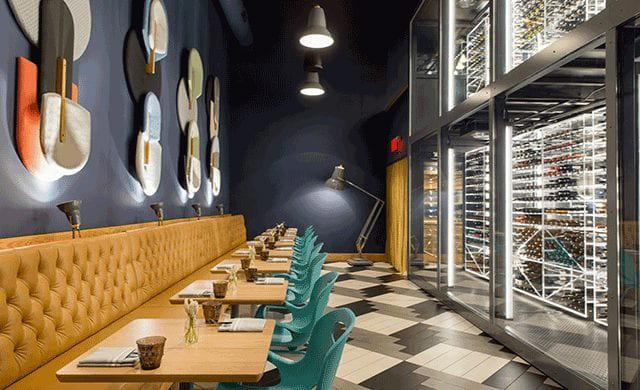
Bars in Portland
Browse all →
Hotels in Portland
Browse all →
At a Glance
- Trendy
- Cozy
- Modern
- Intimate
- Date Night
- Special Occasion
- Open Kitchen
- Extensive Wine List
- Natural Wine
- Sommelier Led
- Local Sourcing
Current opening hours
- Monday
- Closed
- Tuesday
- 5–9 PM
- Wednesday
- 5–9 PM
- Thursday
- 5–9 PM
- Friday
- 5–9 PM
- Saturday
- 5–9 PM
- Sunday
- 5–9 PM
Hours can change for holidays and private events. Last verified .
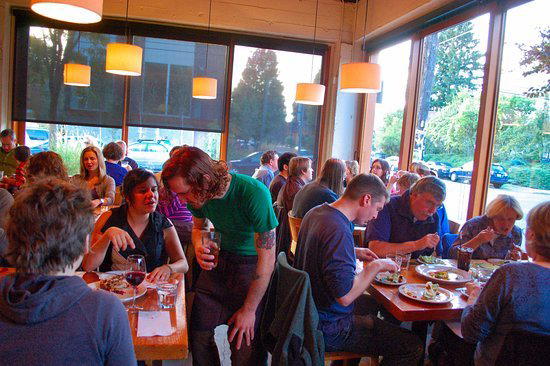
Cozy interior with candlelit ambiance, lively atmosphere during peak hours, and cute outdoor dining bays with screens and heaters.