Nam Ngiao Yong

Michelin Plate
Our verdict
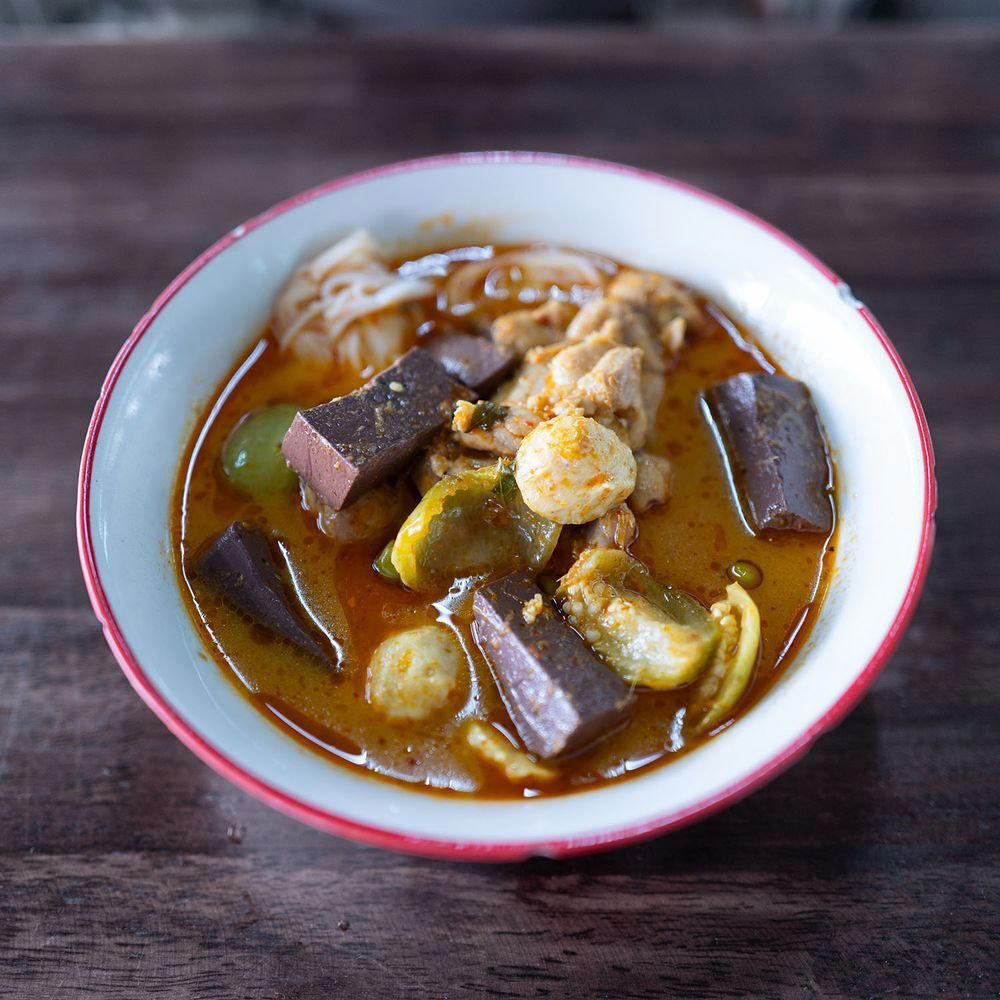
At Siri Watthana Market in Chang Phueak, Nam Ngiao Yong has built a reputation on two dishes: khanom chin nam ngiao, a tangy tomato-and-pork-rib broth, and khanom chin with red curry chicken in coconut milk. Seating is limited and crowds are consistent. For anyone tracing northern Thai noodle traditions through Chiang Mai's market circuit, this stall is a reference point.

Pearl is the En Primeur Club membership app, where members save venues, book tables and use the concierge.
The menu
What to order
- Khanom chin nam ngiao
- Khanom chin red curry chicken
Where the Broth Does the Talking
Siri Watthana Market operates on the northern edge of Chiang Mai's old city grid, in the Chang Phueak district, where the morning light filters through corrugated awnings and the smell of simmering pork bone broth reaches you before any signage does. This is not the tourist-facing market circuit of the Night Bazaar or the weekend walking streets. Chang Phueak draws a local crowd: residents from surrounding neighbourhoods, market vendors eating between shifts, and the kind of regulars who have sat at the same plastic stool for years. Nam Ngiao Yong operates inside this context, a stall with limited seating and a menu narrowed to two dishes, which is precisely the point.
Across northern Thailand, the most durable market stalls tend to be specialists. The logic is simple: a cook who has spent years perfecting one or two preparations will produce something qualitatively different from a stall running fifteen dishes. Nam Ngiao Yong belongs to this tradition. Its two offerings, khanom chin nam ngiao and khanom chin with red curry chicken, represent distinct registers of northern Thai noodle cookery, and the stall's sustained reputation in Chiang Mai's competitive market scene reflects that focus.
Two Dishes, Two Traditions
Khanom chin nam ngiao is among the more distinctive preparations in northern Thai cooking. The broth carries a sour, tomato-forward profile that separates it from the coconut-heavy curries more commonly associated with Thai food outside the region. Dried chillies, fermented soybean paste, and pork ribs contribute depth and a slight fermented tang; the tomato brings acidity that cuts through the fat. The noodles themselves, khanom chin, are fermented rice noodles pressed through a mould into soft, springy coils. They absorb broth differently from flat noodles or egg-based varieties, holding the liquid in a way that makes each bite carry the full weight of the sauce.
The second preparation, khanom chin with red curry chicken, moves into different territory. Coconut milk softens the curry's heat and rounds the flavour profile; fish balls add a secondary textural note. Where the nam ngiao leans sour and fermented, the red curry version is richer and more aromatic. The two dishes function almost as a study in contrast, and ordering both in a single sitting, which the limited seating quietly encourages, gives a useful cross-section of what fermented rice noodles can do across different sauce traditions.
For context on where northern Thai cooking sits within Thailand's broader culinary geography, the gap between Chiang Mai's market food and the southern Thai preparations available at places like Sorn in Bangkok or the produce-driven format at PRU in Phuket is significant. Northern Thai food carries Burmese, Shan, and Yunnanese influences that produce flavour profiles largely absent from central and southern Thai cooking. The fermented, sour, and dried-chilli notes in nam ngiao reflect those cross-border connections directly.
The Market Setting
Siri Watthana Market has the texture of a working local market that has not recalibrated itself for outside visitors. The seating at Nam Ngiao Yong is functional rather than comfortable: small tables, plastic stools, the ambient noise of neighbouring stalls and passing foot traffic. This is characteristic of the broader Chang Phueak market scene, where the transactional efficiency of the format is part of its appeal. You order, you eat, you leave. The stall's limited seating creates a secondary effect worth noting: turnover is fast, but so is demand. Arriving during peak morning hours means joining a queue; arriving at the edges of the morning service reduces the wait without guaranteeing a seat.
This format pattern appears across Chiang Mai's most-followed market stalls. Compare it to the approach at Aunt Aoy Kitchen or the northern Thai focus at Baan Suan Mae Rim, both of which operate with more structured seating but maintain similar commitments to regional specificity. The market stall and the sit-down restaurant occupy different positions in Chiang Mai's food ecosystem, but the underlying logic of specialisation connects them. For a fuller picture of where Nam Ngiao Yong fits within the city's dining options, see our full Chiang Mai restaurants guide.
Planning the Visit
Siri Watthana Market is in Tambon Chang Phueak, in the northern section of Chiang Mai, accessible by tuk-tuk or songthaew from the old city in under fifteen minutes. The market operates on a morning schedule, which is the norm for fresh-food markets in northern Thailand; arriving before 10am gives the leading chance of finding both dishes available and the stall at its busiest. No reservation is possible or necessary. No website or phone number is publicly listed for this stall, which is typical of Chiang Mai's embedded market vendors. Cash is the assumed payment method throughout Siri Watthana Market.
For those building a broader itinerary around Chiang Mai's food scene, the market-and-specialist-restaurant circuit is the most coherent way to approach the city. Baan Landai and Aeeen offer alternative angles on the city's northern Thai and vegetarian cooking respectively, while Aquila and Ekachan represent the city's range beyond regional Thai. For planning accommodation and evening programming, our Chiang Mai hotels guide, bars guide, and experiences guide cover the city's other tiers. Further afield, AKKEE in Pak Kret and Angeum in Phra Nakhon Si Ayutthaya offer points of comparison for Thailand's regional food culture beyond the major centres.
Frequently asked questions
What's the must-try dish at Nam Ngiao Yong?
How far ahead should I plan for Nam Ngiao Yong?
What makes Nam Ngiao Yong worth seeking out?
Do they accommodate allergies at Nam Ngiao Yong?
Is Nam Ngiao Yong suitable for first-time visitors to northern Thai noodle dishes?
Comparable Venues
Comparable venues nearby, for context on price, style, and recognition.
| Venue | Cuisine | Price | Awards | Notes |
|---|---|---|---|---|
| Nam Ngiao YongThis venue (the venue you are viewing) | Northern Thai Khanom Chin Nam Ngiao | $1–10 | Michelin Plate | Not listed |
| Thana Ocha | Hakka-Style Thai Noodles | $1–10 | Michelin Plate | Mueang Chiang Mai |
| Khao Soi Lung Prakit Kad Kom | Traditional Northern Thai Khao Soi | $1–10 | Michelin Plate | Mueang Chiang Mai |
| Kiti Panit | Modern Northern Thai Lanna | $20–30 | Michelin Plate | Mueang Chiang Mai |
| Baan Suan Mae Rim | Northern Thai | $10–20 | Michelin Plate | Mae Rim |
| Kang | Southern Thai, Indonesian & Malaysian Flavors | $10–20 | Michelin Plate | Mueang Chiang Mai |
Recognition history
Dated appearances from independent guides and award organizations, with the underlying list record or original source where available.
Michelin Plate
Michelin
Continue exploring
More in Chiang Mai
Restaurants in Chiang Mai
All restaurants in Chiang Mai →
Bars in Chiang Mai
All bars in Chiang Mai →


Details
- Rustic
- Casual Hangout
- Standalone
- A La Carte
Current opening hours
- Monday
- 8 AM–3:30 PM
- Tuesday
- 8 AM–3:30 PM
- Wednesday
- 8 AM–3:30 PM
- Thursday
- 8 AM–3:30 PM
- Friday
- 8 AM–3:30 PM
- Saturday
- 8 AM–3:30 PM
- Sunday
- 8 AM–3:30 PM
Hours can change for holidays and private events. Hours as of .
Compact market stall with limited seating around a counter and market tables, offering a purposeful local street food atmosphere.