
Michelin Plate
Our verdict
Set within Domaine de Murtoli's vast estate in the hills above Sartène, La Table de la Grotte holds a Michelin Plate for Corsican cooking built almost entirely from what the property produces: vegetables, cheeses, eggs, honey, veal, lamb and olive oil. The menu moves between a short à la carte and a tasting format, with dishes like aziminu and Bonifacio-style preparations that anchor the cooking firmly in regional tradition.

Pearl is the En Primeur Club membership app, where members save venues, book tables and use the concierge.
The menu
What to order
- Courgette à la Sartenaise
- Confit shoulder of lamb
- Wild boar ragu
- Chestnut gnocchi
Where the Estate Feeds the Table
There is a particular logic to estate dining that only works when the land is genuinely productive. At Domaine de Murtoli, a large private property in the Ortolo Valley outside Sartène, that logic holds. The kitchen at La Table de la Grotte draws its vegetables, cheeses, eggs, honey, veal, lamb and olive oil from the surrounding land, meaning the supply chain between soil and plate is measured in walking distance rather than logistics. In a region where Corsican cuisine has long been defined by its insularity and self-sufficiency, this arrangement is less a marketing position than a continuation of how the island has always eaten.
The broader context matters here. Corsica's culinary identity sits apart from mainland French gastronomy in ways that go beyond geography. The island's cheesemaking traditions, its charcuterie culture, its use of aromatic scrubland herbs, and the specific varieties of livestock it raises all produce ingredients that cannot be replicated by sourcing from the continent. Restaurants in the Sartène area that work with genuinely local produce are working with a pantry that has no direct equivalent elsewhere in France. La Table de la Grotte benefits from this, and the Michelin Plate recognition it has held through both the 2024 and 2025 guides reflects a kitchen that treats this sourcing advantage with appropriate seriousness.
The Architecture of a Corsican Menu
The choice between a short à la carte and a tasting menu is itself telling. Many estate restaurants default to tasting formats because they allow the kitchen to control the narrative, but offering both formats suggests a confidence that individual dishes hold up without the scaffolding of a set sequence. The Corsican dishes named in the Michelin annotation carry geographic specificity that matters: Bonifacio-style aubergine and capon reference the cooking of Corsica's southernmost town, with its distinct Genovese influence; Sartène-style courgette grounds the menu in the local territory; and aziminu, the Corsican fish soup related in spirit to bouillabaisse but distinct in its aromatics and construction, positions the kitchen within a tradition that stretches back centuries along these coastlines.
That the cooking applies what Michelin describes as a subtle modern spin, with careful plating, places La Table de la Grotte in a specific tier of regional French dining: kitchens that understand their tradition well enough to work with it rather than merely reproduce it. The approach is different from the high-intervention creative cuisine found at places like Alléno Paris au Pavillon Ledoyen or Mirazur in Menton, and different again from the classical continuity of Auberge de l'Ill or Paul Bocuse. The reference points for La Table de la Grotte are closer to what Bras in Laguiole represents for the Aubrac: a kitchen that is inseparable from its terroir and uses technique to sharpen rather than obscure what that terroir produces.
For other Corsican kitchens working in this tradition, A Mandria di Pigna in Pigna and A Pignata in Levie represent the same broadly regional commitment, each in their own village context. The difference at La Table de la Grotte is the estate infrastructure behind the sourcing.
Arriving at Murtoli
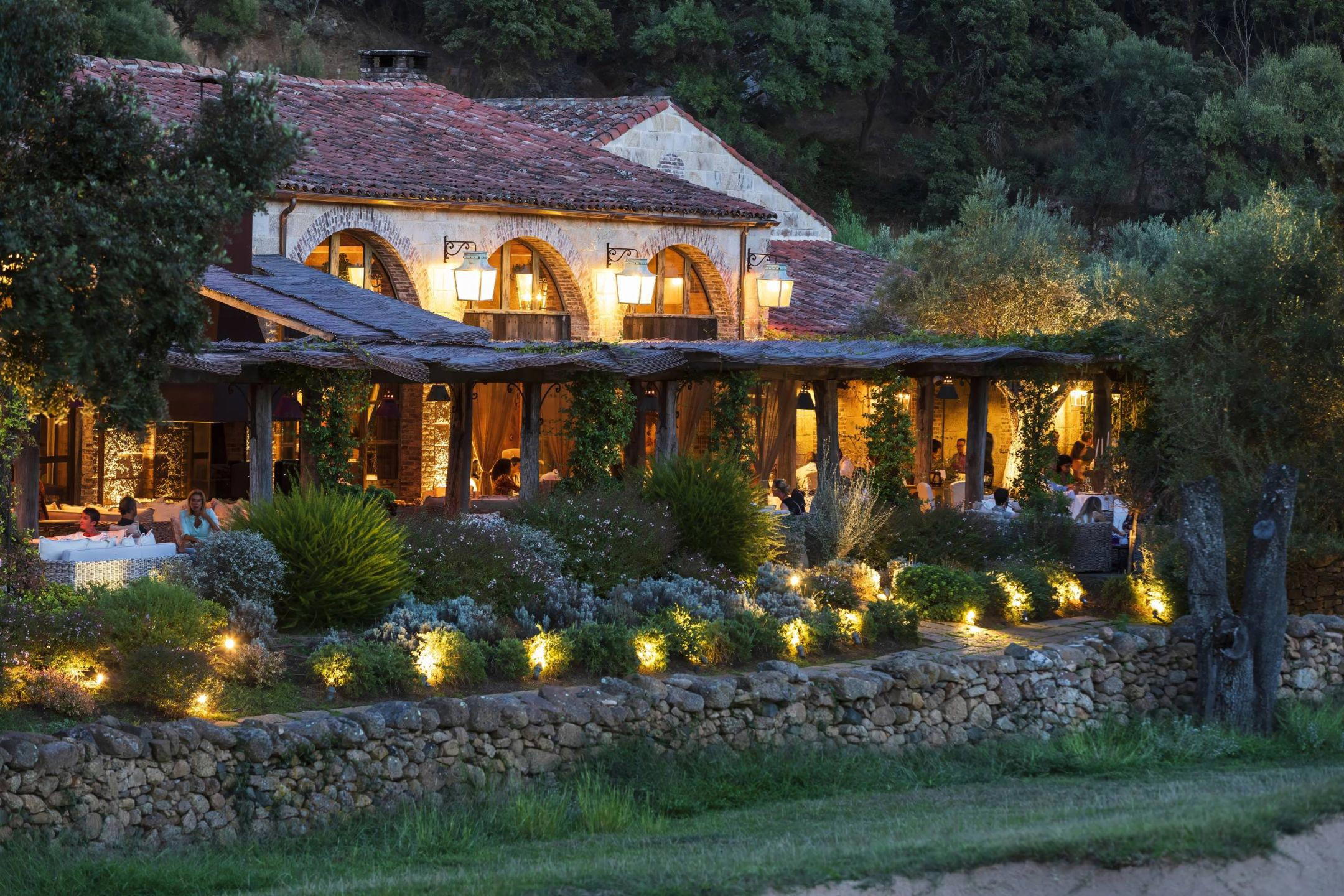
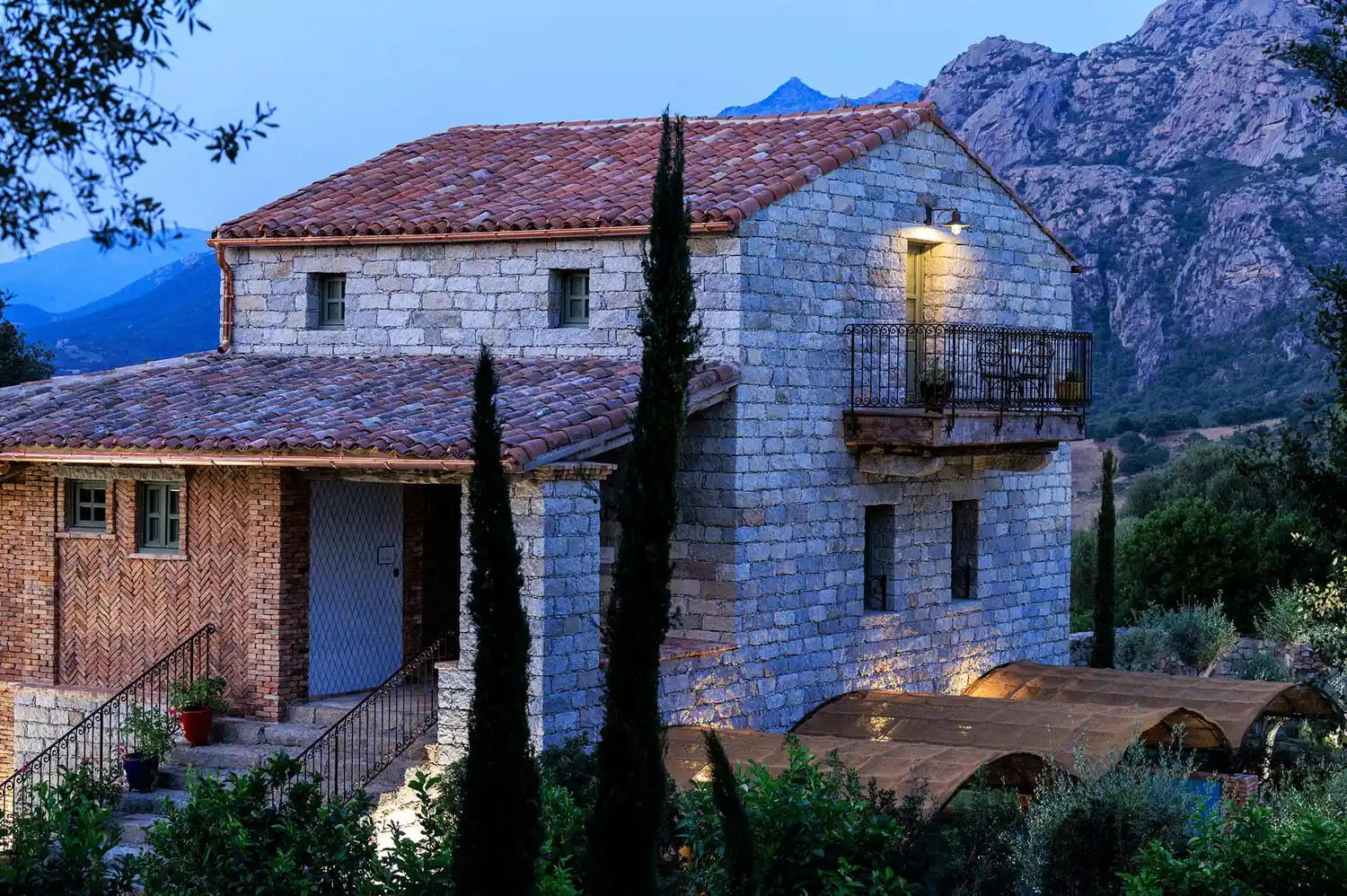
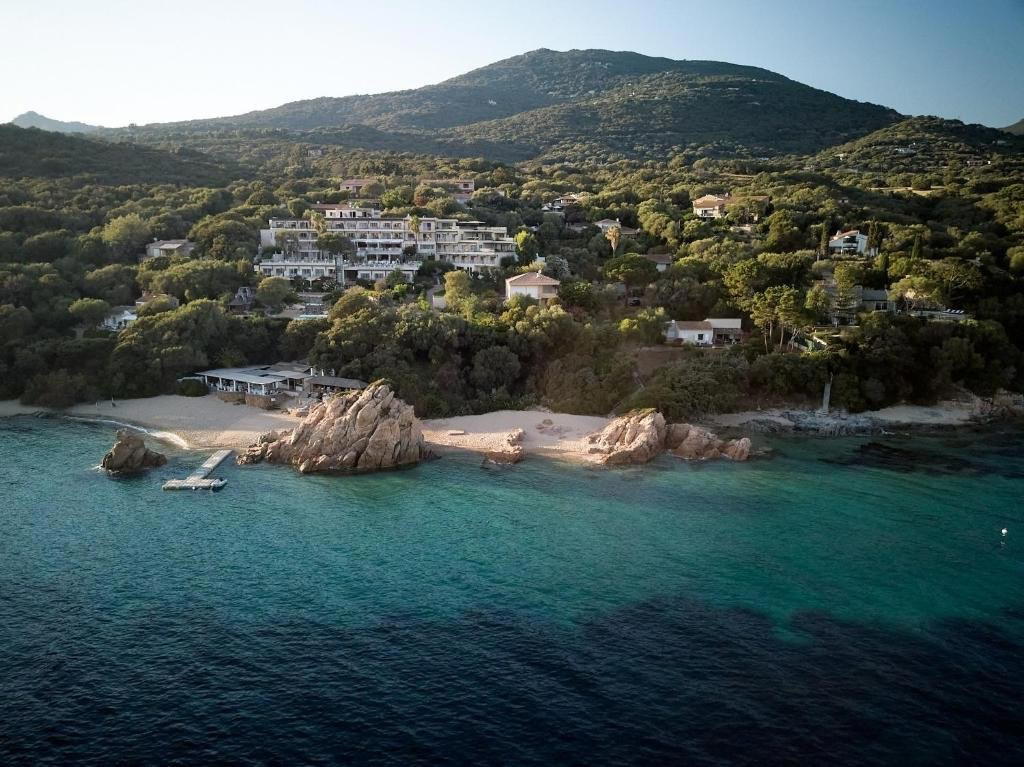
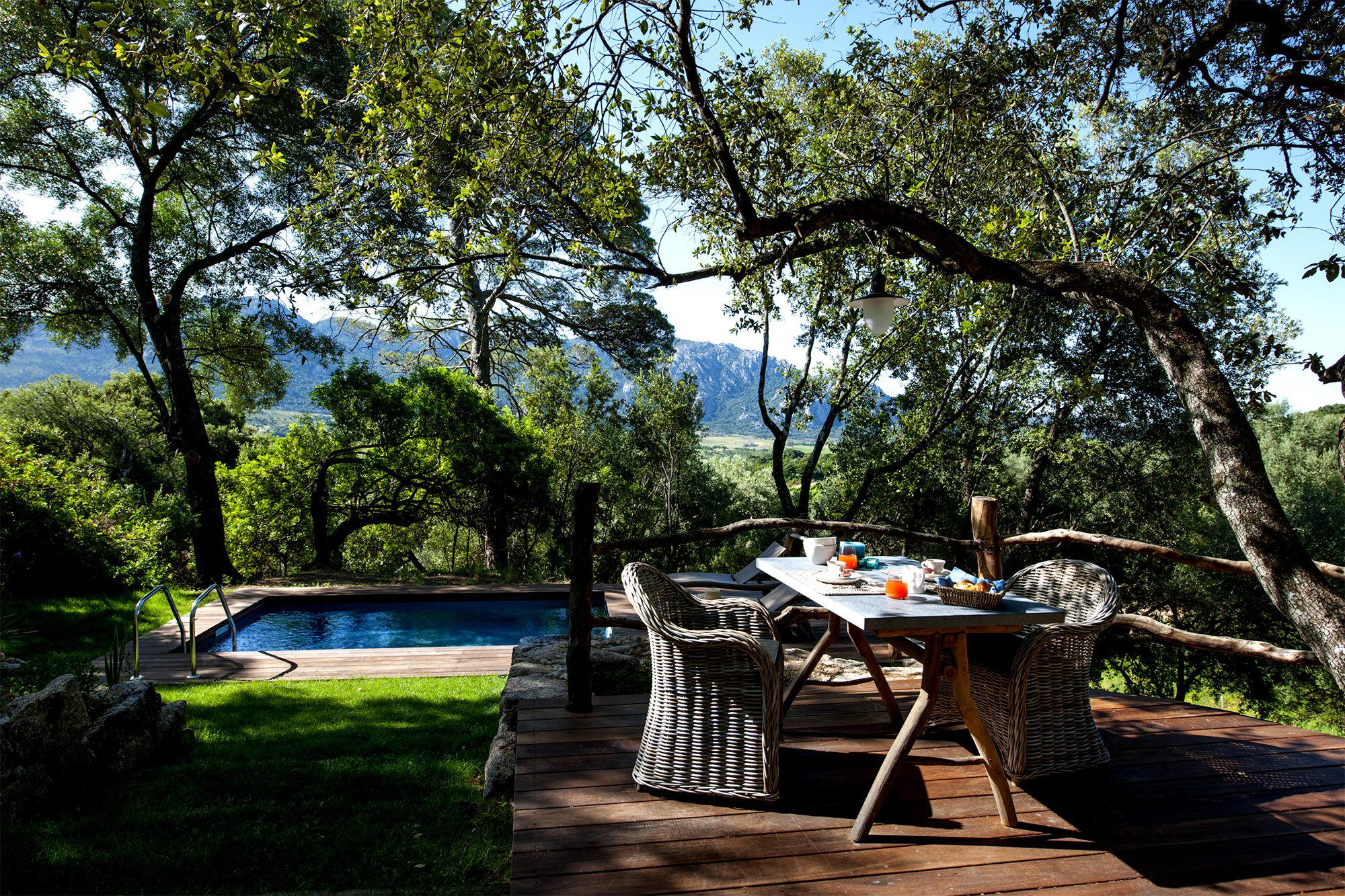
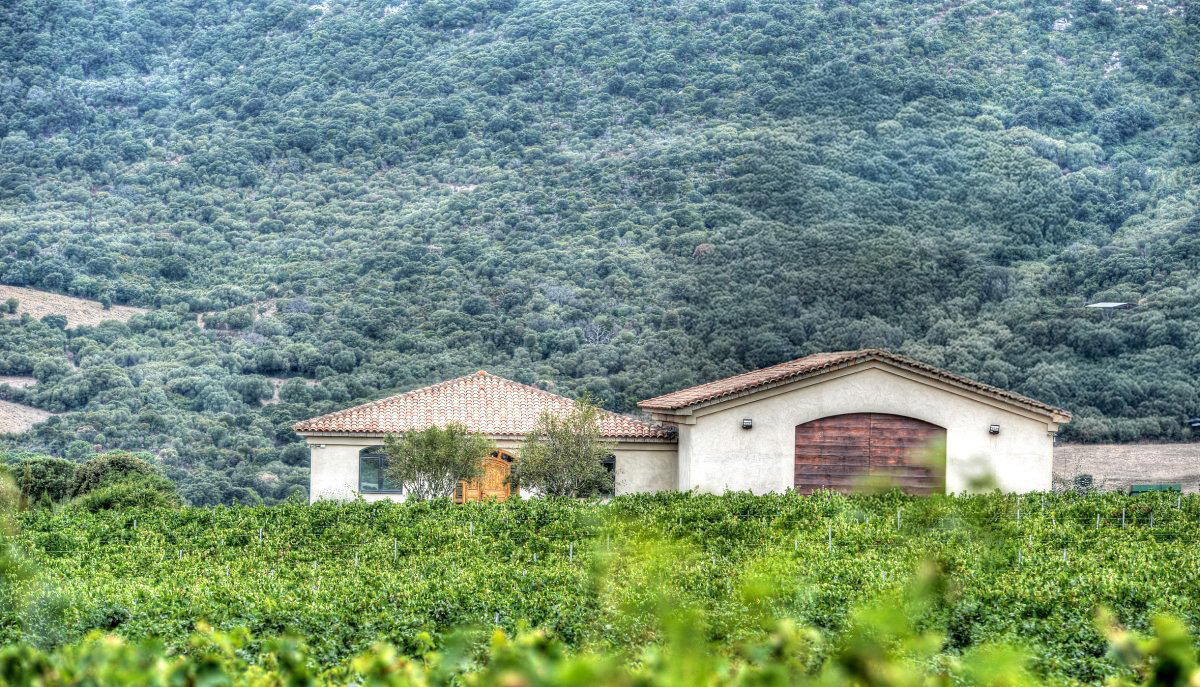
The setting shapes the experience before a dish arrives. Domaine de Murtoli occupies a large stretch of land between the sea and the inland hills, accommodating overnight guests in converted sheepfolds and villas with private pools, in an architectural idiom that uses traditional Corsican building forms rather than working against them. The restaurant itself operates in this same register: a patio shaded by olive trees is not a decorative afterthought but an extension of the estate's agricultural character. The olive trees overhead are producing the oil on the table.
The front-of-house operation is described in the Michelin annotation as attentive, which in this context means service attuned to guests who may be staying on the property and treating the meal as part of a longer immersion rather than a standalone reservation. The hours run from 8 AM to 10 PM seven days a week, covering breakfast through to dinner, which reflects the estate's ambition to function as a complete hospitality environment rather than a destination restaurant with fixed meal services.
Placing It in Sartène's Dining Scene
Sartène occupies a particular position in Corsican geography and culture: inland, refined, historically one of the island's most insular towns, with a food culture that reflects that self-containment. The restaurants here draw on a different repertoire from the coastal seafood-dominated menus of Ajaccio or Bonifacio's tourist circuit. For a broader sense of what the area offers at table, the full Sartène restaurants guide maps the range. La Table de la Plage covers the Mediterranean side of the local repertoire, while Santu Pultru represents the traditional Corsican strand. La Table de la Grotte occupies the estate-driven, produce-first position in that local hierarchy.
For those building a longer stay around the area's food and drink, the Sartène wineries guide covers the Figari and Sartène AOC productions that pair naturally with cooking of this kind, and the Sartène hotels guide includes context for where to base a longer visit. The Sartène bars guide and experiences guide round out what the area can offer beyond the table.
Among Michelin-recognised tables in the south of France, AM par Alexandre Mazzia in Marseille represents what ambitious southern French cooking looks like when it pushes toward maximum creative ambition; La Table de la Grotte sits at the opposite end of that spectrum, where the ambition is to disappear into the place rather than stand apart from it.
Planning Your Visit
The restaurant operates at Domaine de Murtoli in the Ortolo Valley, on the road toward Sartène at the address in the valley below the town. Hours run daily from 8 AM to 10 PM, covering all meal services. Given the estate context, guests staying overnight on the property will find the most natural relationship with the restaurant, but the table is not exclusive to residents. The €€€ pricing means a tasting menu or a full à la carte dinner will sit in the range typical of serious regional French tables at this recognition level. No booking method is listed in public records, so contacting the estate directly through available channels is the practical route to securing a reservation, particularly in high summer when the property operates at full capacity.
Frequently asked questions
Can I bring kids to La Table de la Grotte?
At the €€€ price point within a Michelin Plate-recognised estate property, La Table de la Grotte is a sit-down restaurant rather than a casual family bistro. The setting at Domaine de Murtoli and the attentive front-of-house service noted in the Michelin annotation suggest an environment better suited to older children who are comfortable at a composed table.
Is La Table de la Grotte formal or casual?
The restaurant occupies a working estate in the Ortolo Valley outside Sartène, and the Michelin annotation describes an olive-tree-shaded patio with attentive service rather than a starched dining room. The €€€ pricing and Michelin Plate recognition place it above casual, but the rural Corsican setting pulls against strict formality, think considered rather than ceremonial.
Is La Table de la Grotte award-winning?
La Table de la Grotte has received recognition including: Michelin Plate (2025); Murtoli defies classification in the usual tourist terms. Poised between the sea and the hills, this huge property accommodates overnight guests in the height of rural luxury in converted sheepfolds or villas with pri….
What dish is La Table de la Grotte famous for?
The Michelin annotation singles out the aziminu, a Corsican fish soup, describing it as colourful and striking, making it the most documented centrepiece of the kitchen's output. The estate-sourced menu also features Bonifacio-style aubergine and Sartène-style courgette, both of which use produce grown on the Murtoli property itself.
What price level is La Table de la Grotte?
Pricing at La Table de la Grotte is listed as €€€.
In Context: Similar Options
| Venue | Cuisine | Price | Awards |
|---|---|---|---|
| La Table de la GrotteThis venue (the venue you are viewing) | Traditional Corsican | $50–100 | Michelin Plate |
| Alléno Paris au Pavillon Ledoyen | Modern French Fine Dining | $150–200 | 3 Michelin Stars · World's 50 Best #79 |
| Kei | Contemporary French, Modern Cuisine | Not listed | Not listed |
| L'Ambroisie | Classic French Haute Cuisine | $300–500 | 2 Michelin Stars · World's 50 Best #23 |
| Le Cinq - Four Seasons Hôtel George V | Modern French Fine Dining | $300–500 | 3 Michelin Stars · World's 50 Best #24 |
| Plénitude | Modern French Sauce-Led Fine Dining | $300–500 | 3 Michelin Stars · World's 50 Best #10 |
Recognition history
Dated appearances from independent guides and award organizations, with the underlying list record or original source where available.
Michelin Plate
Michelin
Full recognition history (2 entries)
Michelin Plate
Michelin
Continue exploring
More in Sartène
Restaurants in Sartène
All restaurants in Sartène →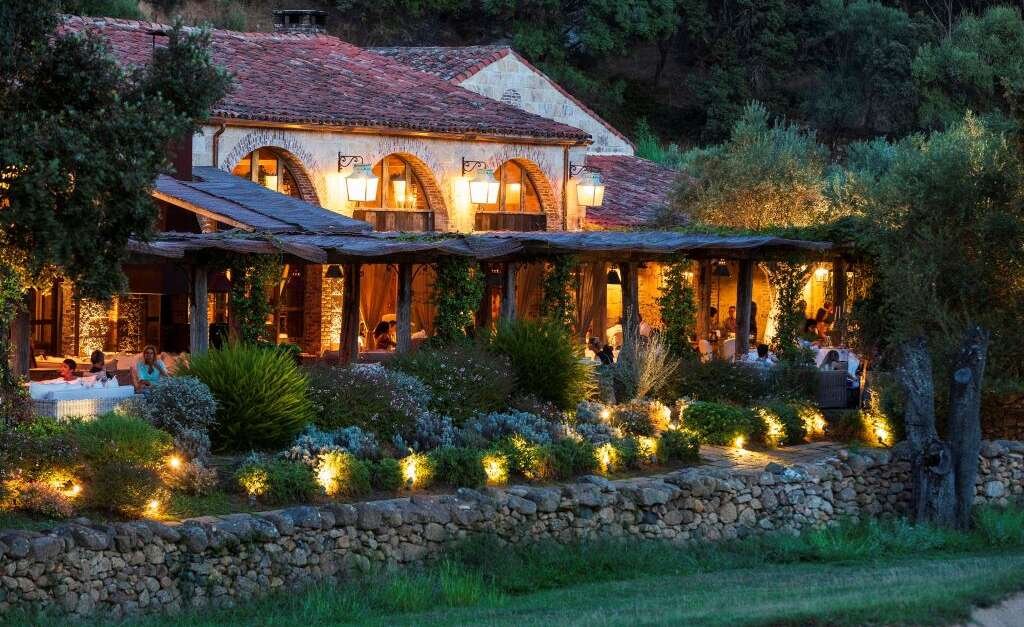
Bars in Sartène
Browse all →

Details
- Romantic
- Rustic
- Intimate
- Scenic
- Cozy
- Date Night
- Special Occasion
- Family
- Celebration
- Historic Building
- Terrace
- Open Kitchen
- Extensive Wine List
- Local Sourcing
- Mountain
- Garden
- Set Menu
- Wine
Current opening hours
- Monday
- Closed
- Tuesday
- Closed
- Wednesday
- 7:30–11:30 PM
- Thursday
- 7:30–11:30 PM
- Friday
- 7:30–11:30 PM
- Saturday
- 7:30–11:30 PM
- Sunday
- 7:30–11:30 PM
Hours can change for holidays and private events. Hours as of .
Romantic candlelit atmosphere in a natural grotto with a large fireplace, warm convivial setting enhanced by polyphonic music on Thursdays.