
Michelin Plate
Our verdict
A Michelin Plate holder tucked into Corte Sgarzarie, La Loggia Bistrò earns its loyal following through seasonally driven contemporary cooking served in a courtyard setting and an intimate, low-lit interior decorated with old wine bottles. At a €€€ price point it sits a tier below Verona's starred rooms, offering the kind of considered cooking that rewards repeat visits rather than one-time tourism.

Pearl is the En Primeur Club membership app, where members save venues, book tables and use the concierge.
The menu
What to order
- Braised beef cheek
- Tortello with ricotta and mint
- Gnocchi with lamb
- Spaghetti with smoked butter and prawns
A Courtyard in the Centre, Away from the Crowd
Most of Verona's tourist-facing dining concentrates along the corridors radiating from the Arena and Piazza Bra, where the economics of high footfall tend to flatten menus toward safe familiarity. Corte Sgarzarie operates differently. The address sits within the historic centre but off the primary pedestrian flow, which means the clientele arriving at La Loggia Bistrò has generally made a deliberate choice rather than a chance detour. That distinction shapes the room before the first course arrives.
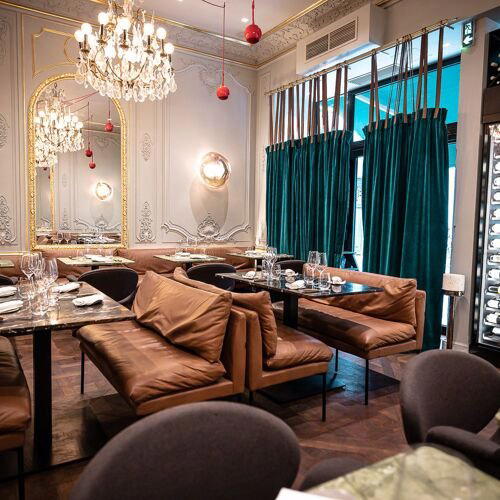
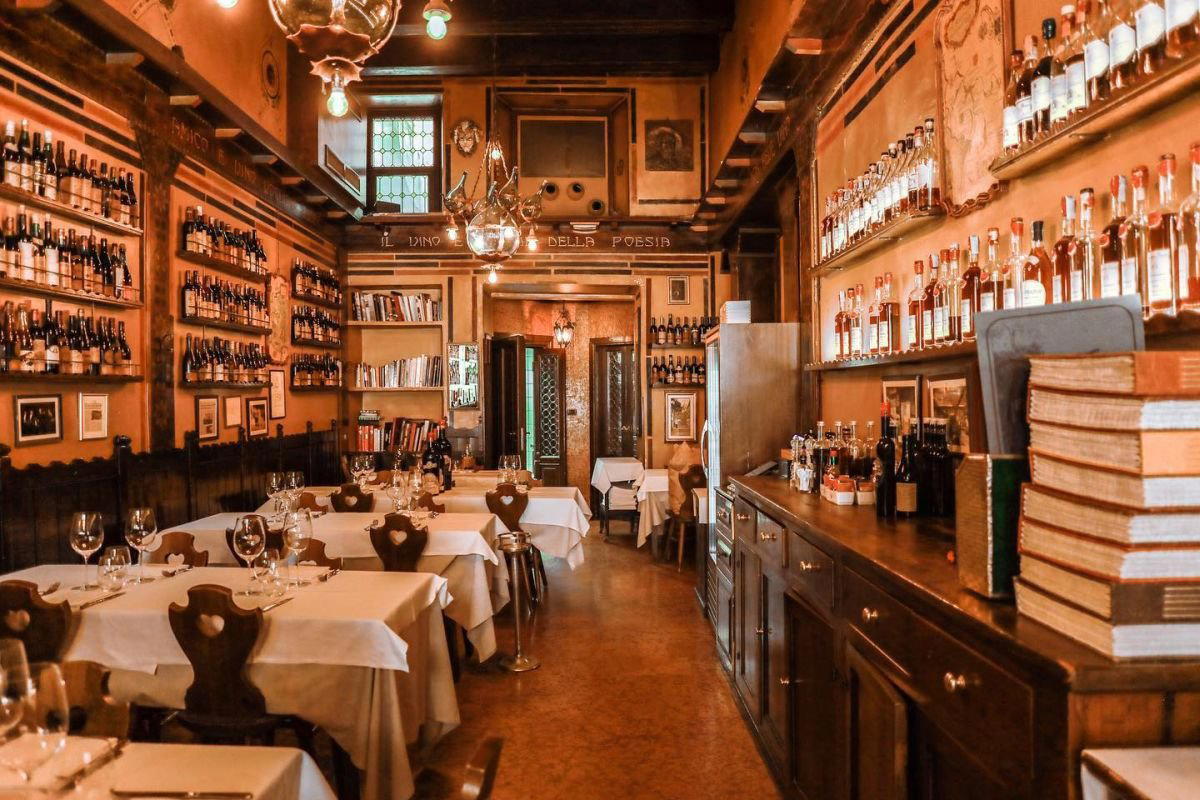
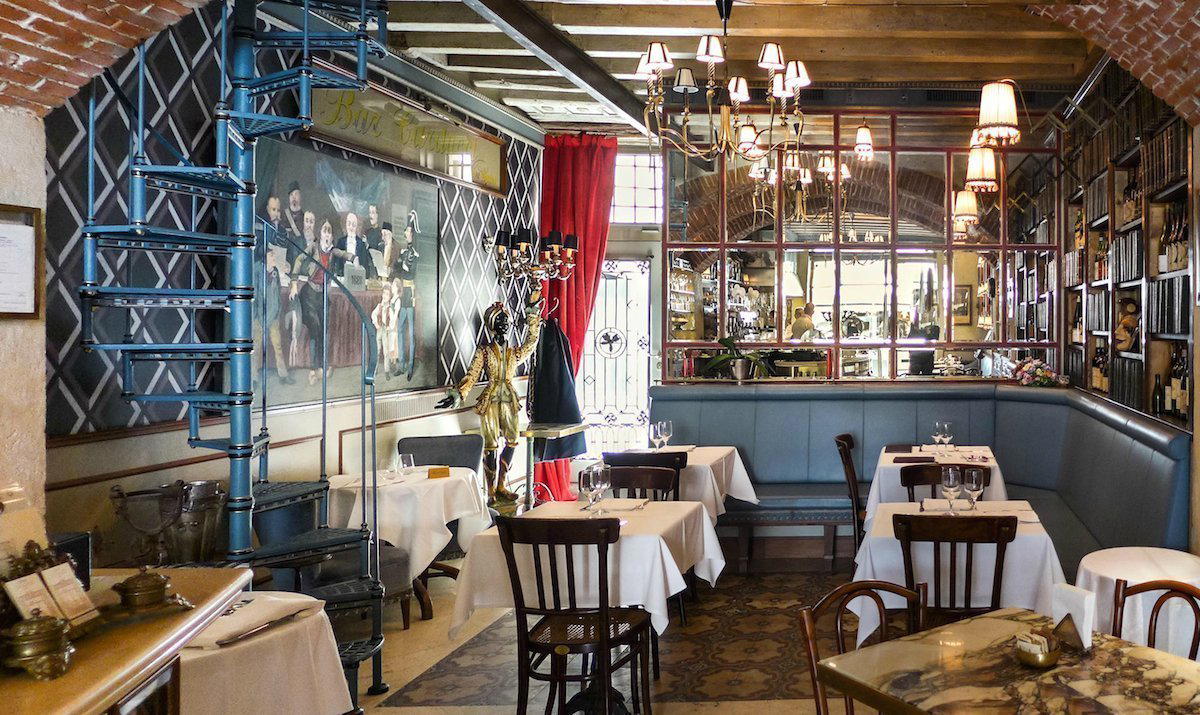
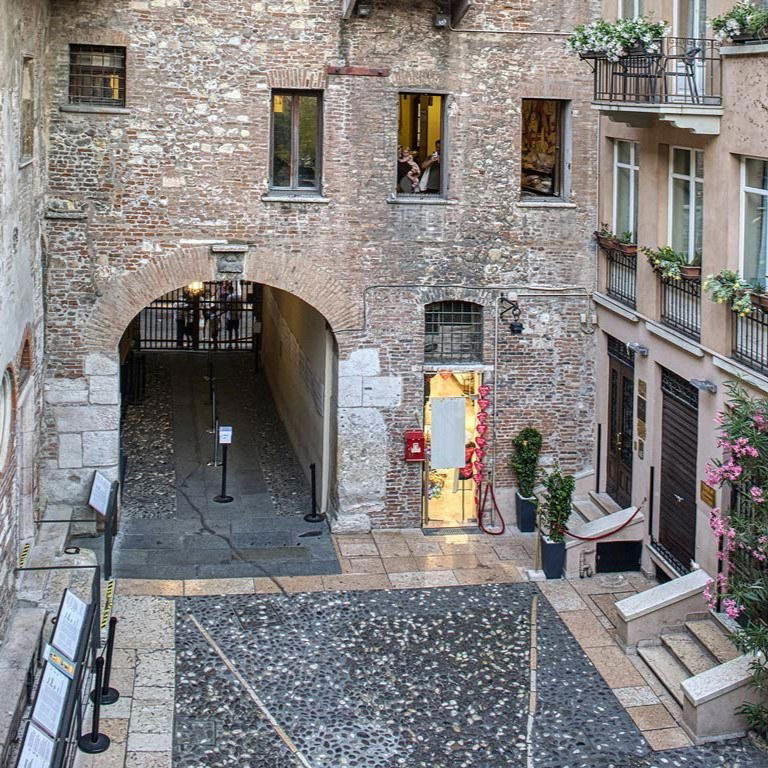
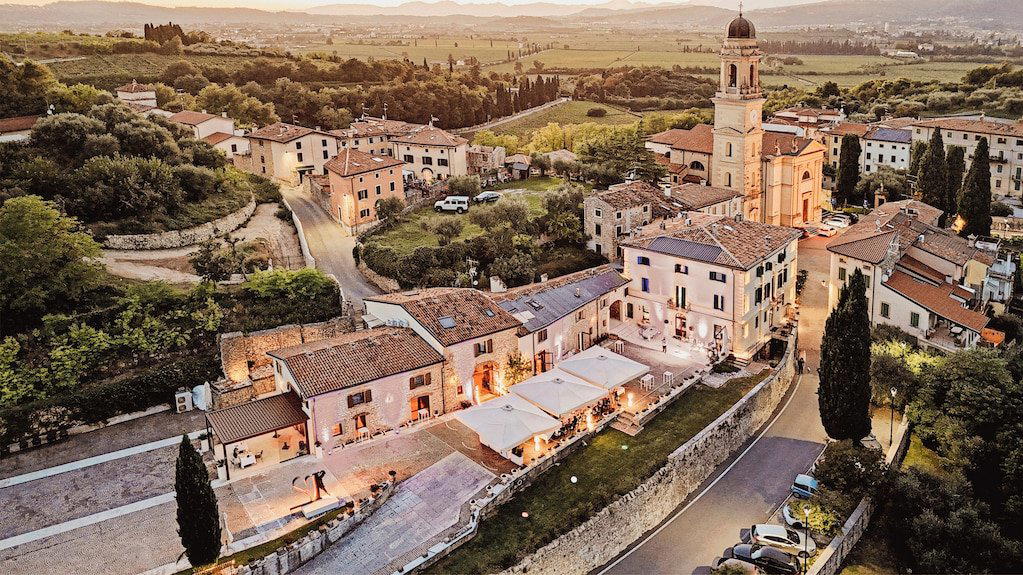
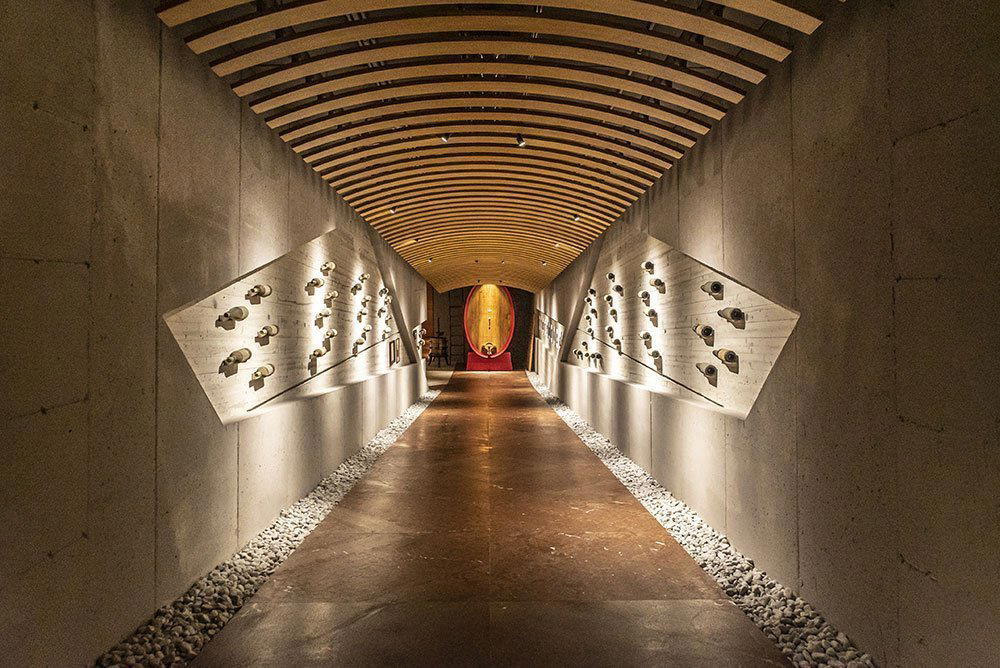
The physical setting reinforces it. In warmer months, tables extend into an open courtyard, one of the more considered al fresco configurations in the city centre. The interior is compact, a few small square tables arranged under subtle lighting with old wine bottles forming the decorative register. It is the kind of room that discourages turnover by design: there is no obvious pressure to move, and regulars tend to settle in.
What Contemporary Cooking Means at This Price Point in Verona
Verona's fine dining hierarchy has a clear internal logic. At the leading sit Casa Perbellini 12 Apostoli and Il Desco, both operating at the €€€€ tier with Michelin star recognition and the tasting-menu formats that come with it. Below them, a broader middle band covers trattoria cooking of varying ambition: Al Bersagliere at the accessible end, Iris Ristorante in a neighbouring bracket. La Loggia Bistrò occupies an interesting position in this structure: the €€€ price range and consecutive Michelin Plate recognitions in 2024 and 2025 place it inside the quality tier without the formality or pricing ceiling of the starred rooms.
The Michelin Plate is a specific signal worth reading correctly. It marks a restaurant the Guide considers worth eating in, distinct from a star but not incidental. Two consecutive Plate entries suggest consistency rather than a single strong season, which matters in a city where some contemporary rooms struggle to hold editorial attention across multiple cycles. Comparable Italian regional contemporaries acknowledged at this level, such as Dal Pescatore in Runate or the broader northern Italian contemporary tradition that extends through venues like Le Calandre in Rubano, work within the same credentialing framework, though at different price tiers and scales.
The cuisine approach here is described by the Guide itself as imaginatively presented and focused on seasonal ingredients, a positioning that separates it from the classic tourist repertoire available in many of Verona's central addresses. Seasonality at this level means the menu shifts with supply rather than running as a fixed document, which is partly why regulars return more frequently than the typical visitor cycle might suggest.
The Regulars' Logic
Restaurants that build loyal local followings in mid-sized Italian cities tend to share certain structural qualities: they are close enough to the centre to be convenient without being fully exposed to tourism economics, they price in a range that allows monthly rather than annual visits, and they cook in a way that rewards familiarity with the menu's rhythms. La Loggia Bistrò fits that pattern with some precision.
Volume at that number eliminates the distortion of a small, enthusiast-heavy sample, and the score suggests a kitchen that delivers consistently across varied expectations. What regulars tend to report in venues of this type is a kitchen attuned to seasonal opportunity, where returning over several months produces a materially different experience from a single visit. The combination of a changing seasonal approach and a small, stable interior creates the conditions for that kind of relationship between a restaurant and its neighbourhood clientele.
The courtyard adds a second variable: the warm-season version of a meal here, with tables in the open air of Corte Sgarzarie, differs meaningfully from the winter interior. That seasonal bifurcation, common to many northern Italian towns with a strong al fresco culture, means the restaurant effectively offers two distinct settings within the same address. Regulars tend to account for that in how they plan visits.
Placing La Loggia Bistrò in a Wider Italian Contemporary Frame
The northern Italian contemporary tradition that La Loggia Bistrò operates within has notable expressions at various scales across the region. At the far end of the ambition spectrum, Osteria Francescana in Modena and Enoteca Pinchiorri in Florence represent the international benchmark tier. Enrico Bartolini in Milan and Atelier Moessmer Norbert Niederkofler in Brunico anchor the north's more experimental directions. The bistrot-scale contemporary format, operating without tasting-menu structure and at a price point accessible for regular attendance, is a different register entirely. It is also, arguably, where Italian regional cooking does some of its most honest work: the creative energy of fine dining applied to portion sizes and service pacing that allow a table to linger without the weight of ceremony.
Internationally, the format has direct parallels. César in New York City and Jungsik in Seoul represent how contemporary cooking at smaller, more intimate scales operates in other urban markets, though both of those addresses work at higher price ceilings. The Veronese context keeps La Loggia Bistrò in a more neighbourhood-facing register, which is consistent with the city's dining culture and with the address itself.
For visitors working through Verona's wider restaurant options, the bistrot sits in a clearly defined slot: more ambitious than the trattoria tier, less formal than the starred rooms, and operating with a seasonal logic that makes repeat visits sensible rather than. Seafood-focused alternatives nearby, including Al Capitan della Cittadella, offer a different product at roughly the same price tier, but the contemporary-seasonal positioning of La Loggia Bistrò doesn't have a direct substitute within the centre.
Planning a Visit
The address at Corte Sgarzarie 7 sits inside the historic centre and is walkable from both the Arena and the key accommodation zones covered in our Verona hotels guide. Given the small interior, with just a few tables, booking ahead is advisable, particularly in the summer months when courtyard seating becomes the more sought-after option. The €€€ price range positions it as an occasion meal rather than a casual drop-in, though not at the level of investment required by the starred rooms. Those planning a fuller itinerary around the city's drinking and wine scene will find complementary options across our Verona bars guide and our Verona wineries guide. For a broader view of what the city offers beyond the table, our Verona experiences guide covers the main cultural and activity options.
Frequently asked questions
What dish is La Loggia Bistrò famous for?
No single signature dish is documented publicly, but the Michelin Plate recognition in both 2024 and 2025 consistently points to imaginative presentation and a clear reliance on seasonal ingredients as the kitchen's defining characteristic. The cooking sits in the contemporary Italian register rather than a specific regional speciality, which gives the menu room to shift with the seasons. Expect the produce on the plate to reflect what is current rather than a fixed house classic.
What's the price range at La Loggia Bistrò?
Pricing at La Loggia Bistrò is listed as €€€.
Where exactly is La Loggia Bistrò?
La Loggia Bistrò is located at Corte Sgarzarie, 7, 37121 Verona VR, Italy, Verona.
How far ahead should I plan for La Loggia Bistrò?
The interior holds only a handful of small square tables, and consecutive Michelin Plate recognition since 2024 means the room fills reliably. Booking at least one to two weeks in advance is a reasonable baseline for weeknight visits; weekends during Verona's peak opera and tourism season warrant earlier planning. Walk-ins are a gamble given the limited covers.
What has La Loggia Bistrò built its reputation on?
Two consecutive Michelin Plates (2024 and 2025) confirm a kitchen that has held its identity across seasons: contemporary Italian cooking, imaginatively presented, with seasonal ingredients at the centre. The setting at Corte Sgarzarie 7 places it inside the historic centre but away from the tourist corridors, which has helped it build a clientele oriented around the food rather than the address. At the €€€ price point, that combination of positioning and consistency is what separates it from the volume-driven competition nearby.
Credentials Lens
| Venue | Cuisine | Price | Awards | Notes |
|---|---|---|---|---|
| La Loggia BistròThis venue (the venue you are viewing) | Modern Italian Bistro | $50–100 | Michelin Plate | Not listed |
| L'Oste Scuro | Classic Italian Seafood | $100–150 | Michelin Plate · Star Wine List | Seafood Trattoria, Seafood |
| Trattoria al Pompiere | Traditional Veneto Trattoria | $100–150 | Michelin Plate · Star Wine List | Veronese Trattoria, Venetian |
| Casa Perbellini 12 Apostoli | Modern Italian Fine Dining | $200–300 | 3 Michelin Stars · La Liste Top Restaurants | Creative |
| Il Desco | Modern Italian Fine Dining | $150–200 | 1 Michelin Star · Star Wine List | Italian Contemporary |
| Al Bersagliere | Traditional Veronese Trattoria | $30–50 | Michelin Bib Gourmand | Venetian |
Recognition history
Dated appearances from independent guides and award organizations, with the underlying list record or original source where available.
Michelin Plate
Michelin
Full recognition history (3 entries)
Michelin Plate
Michelin
Michelin Plate
Michelin
Continue exploring
More in Verona
Restaurants in Verona
All restaurants in Verona →
Bars in Verona
All bars in Verona →
Details
- Elegant
- Romantic
- Intimate
- Cozy
- Sophisticated
- Date Night
- Special Occasion
- Courtyard
- Historic Building
- Extensive Wine List
- A La Carte
- Tasting Menu
- Vegetarian Friendly
- Allergy Accommodating
Current opening hours
- Monday
- 12–2:30 PM, 7–10:30 PM
- Tuesday
- 12–2:30 PM, 7–10:30 PM
- Wednesday
- 12–2:30 PM, 7–10:30 PM
- Thursday
- 12–2:30 PM, 7–10:30 PM
- Friday
- 12–10:30 PM
- Saturday
- 12–10:30 PM
- Sunday
- 12–10:30 PM
Hours can change for holidays and private events. Hours as of .
Warm, elegant atmosphere with subtle lighting, refined decor, and a relaxing courtyard setting.