Kyochon Chicken
Our verdict
Kyochon Chicken on W 6th Street brings the Korean fried chicken chain format to the heart of Koreatown.For the Koreatown corridor, it occupies the reliable, fast-casual end of a neighbourhood with a serious range of Korean dining options.

Pearl is the En Primeur Club membership app, where members save venues, book tables and use the concierge.
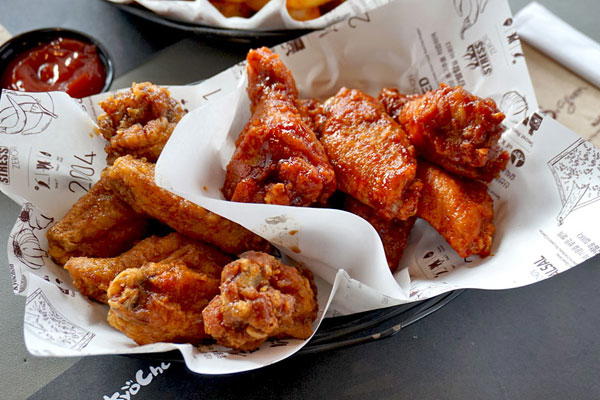
The menu
What to order
- Honey Wings
- Soy Garlic Wings
- Chicken Wing Combo
Koreatown's Fried Chicken Corridor
Los Angeles's Koreatown is one of the densest concentrations of Korean dining outside Seoul, and its fried chicken scene sits at the practical, high-repetition end of that spectrum. The neighbourhood's appetite for chimaek, fried chicken paired with beer, has made W 6th Street and its surrounding blocks a reliable testing ground for Korean fried chicken chains making their US push. Kyochon Chicken, operating at 3833 W 6th St, is one of the more established names in that field, with a global footprint built on a consistent double-fry method and a controlled glaze application that distinguishes it from American-style battered birds.
The double-fry technique, which first cooks the chicken at a lower temperature to render fat and then finishes it at higher heat for crispness, is the structural logic behind most premium Korean fried chicken. It produces a thinner, crackling crust rather than a thick batter shell, and it is this difference that has driven the category's growth in US cities with Korean communities. Kyochon is credited as one of the original Korean chains to codify this approach commercially, and its presence in Koreatown carries the weight of that origin story.
Where It Sits in the Los Angeles Korean Food Scene
Los Angeles's Korean food range spans a wide price and formality spectrum. At the high end, restaurants drawing on Korean technique and premium ingredients have earned recognition at the level of Atomix in New York City, a benchmark for how Korean culinary tradition translates into fine-dining formats. Within LA itself, Kato (New Taiwanese, Asian, Michelin one star) and Hayato (Japanese, Michelin two stars) represent the city's serious tasting-menu tier, where Asian culinary traditions are handled with the precision that earns multi-season recognition. Kyochon operates at the opposite end: it is a fast-casual chain format where the editorial interest lies not in tasting menus or individual creativity but in how a global chain maintains product consistency and whether its sustainability and sourcing model holds up in the US context.
For visitors building a broader picture of where to eat across the city, our full Los Angeles restaurants guide maps the range from Michelin-starred counters to neighbourhood staples. Those looking beyond restaurants will find further context in our full Los Angeles bars guide, our full Los Angeles hotels guide, our full Los Angeles wineries guide, and our full Los Angeles experiences guide.
The Sustainability Question in Fast-Casual Fried Chicken
The environmental calculus of fried chicken is not direct. High-volume frying operations generate significant cooking oil waste, packaging demand, and supply-chain pressure on poultry sourcing. These are category-wide issues that apply to every chain operating at scale in the US market, and they are worth naming directly because consumers in LA's Koreatown corridor have become more attentive to where their food comes from than the fast-casual price point might suggest.
Korean fried chicken chains like Kyochon have, by design, a relatively lean menu, fewer SKUs, fewer ingredients in circulation, and a format that reduces kitchen complexity compared to broader-menu fast-casual operators. That menu restraint has an indirect sustainability benefit: less food waste from unsold components, more predictable ordering cycles, and a smaller cold-chain footprint per dish.
Restaurants operating at the fine-dining level, such as Single Thread Farm in Healdsburg or Providence here in Los Angeles, have built explicit sustainability frameworks into their sourcing and waste-reduction programs, and those commitments are now part of how the industry benchmarks itself. Fast-casual operators are under growing pressure to articulate similar commitments, even at a different price tier and volume scale.
The Neighbourhood Context
The W 6th Street address places Kyochon in the commercial heart of Koreatown, a neighbourhood that functions as both a residential community and a destination dining corridor. Foot traffic on this stretch is driven by a mix of Korean-American residents, food-focused visitors from other parts of the city, and the after-hours crowd that keeps Koreatown's late-night dining economy running well past the hours most other LA neighbourhoods go quiet. Fried chicken, with its relatively fast preparation time and low barrier to casual consumption, fits the neighbourhood's pacing at those hours more naturally than a sit-down Korean barbecue session or a multi-course meal.
Compared to the tasting-menu tier, Somni, Osteria Mozza, or the kind of concentrated fine-dining programs that define nights out at Le Bernardin in New York City, Alinea in Chicago, or The French Laundry in Napa, Kyochon's value to the neighbourhood is functional and communal. It feeds a crowd efficiently, replicates a product that has broad cultural familiarity, and does so at a price point that keeps the transaction uncomplicated. That is a different kind of restaurant contribution but not a lesser one. Koreatown would not function as a dining destination without both ends of the spectrum present and operating well.
For those mapping comparable moments across other US cities, Lazy Bear in San Francisco and Emeril's in New Orleans illustrate how different cities anchor their dining identity around signature formats. 8 1/2 Otto e Mezzo Bombana in Hong Kong is a useful reference point for how Asian cities have developed premium Western-format dining alongside fast and casual local traditions, a dual-track model that Koreatown replicates in compressed form.
Planning Your Visit
Address: 3833 W 6th St, Los Angeles, CA 90020. Dress: Casual. Budget: Fast-casual pricing consistent with Korean fried chicken chain formats.
Frequently Asked Questions
Frequently asked questions
What do people recommend at Kyochon Chicken?
Kyochon's reputation across its global locations centres on two preparations: soy-garlic glazed chicken and red pepper glazed chicken, both produced via a double-fry method that renders the skin crisp while keeping the interior moist. The soy-garlic variant draws the more consistent praise for its balance of sweetness and savoury depth.
Cuisine and Credentials
| Venue | Cuisine | Price | Awards | Notes |
|---|---|---|---|---|
| Kyochon ChickenThis venue (the venue you are viewing) | Korean Fried Chicken | $20–30 | Not listed | Not listed |
| Kato | Modern Taiwanese Fine Dining | $300–500 | 2 Michelin Stars · World's 50 Best #49 | New Taiwanese, Asian |
| Hayato | Traditional Japanese Kaiseki | $300–500 | 2 Michelin Stars · La Liste Top Restaurants | Japanese |
| Vespertine | Avant-Garde Tasting Menu | $200–300 | 2 Michelin Stars · La Liste Top Restaurants | Progressive, Contemporary |
| Camphor | Modern French with Southeast Asian influences | $150–200 | Michelin Plate · World Best Burgers World's 101 Best Burgers #15 | French-Asian, French |
| Gwen | Contemporary American Steakhouse | $50–100 | Michelin Plate · Wine Spectator Best of Award of Excellence | New American, Steakhouse |
Continue exploring
More in Los Angeles
Restaurants in Los Angeles
All restaurants in Los Angeles →
Bars in Los Angeles
All bars in Los Angeles →

Hotels in Los Angeles
All hotels in Los Angeles →


Wineries in Los Angeles
All wineries in Los Angeles →
Details
- Lively
- Trendy
- Group Dining
- Family
- Casual Hangout
- Late Night
- Open Kitchen
- A La Carte
Current opening hours
- Monday
- 11 AM–12 AM
- Tuesday
- 11 AM–12 AM
- Wednesday
- 11 AM–1 AM
- Thursday
- 11 AM–12 AM
- Friday
- 11 AM–2 AM
- Saturday
- 11 AM–2 AM
- Sunday
- 11 AM–12 AM
Hours can change for holidays and private events. Hours as of .
Lively and modern counter-service spot with a lively atmosphere that gets packed and loud during peak hours.