Huit 100 Vingt

Michelin Plate
Our verdict
Loïc Leperlier's timber-barn dining room in Lanaudière runs a single set menu built around what the farm yields that week—free-range birds, house-made maple syrup, and vegetables from the surrounding land. The approach leans instinctive rather than formal, with nods to Leperlier's Réunion Island background shaping how he handles Québec produce. Jessica Grégoire manages service.

Pearl is the En Primeur Club membership app, where members save venues, book tables and use the concierge.
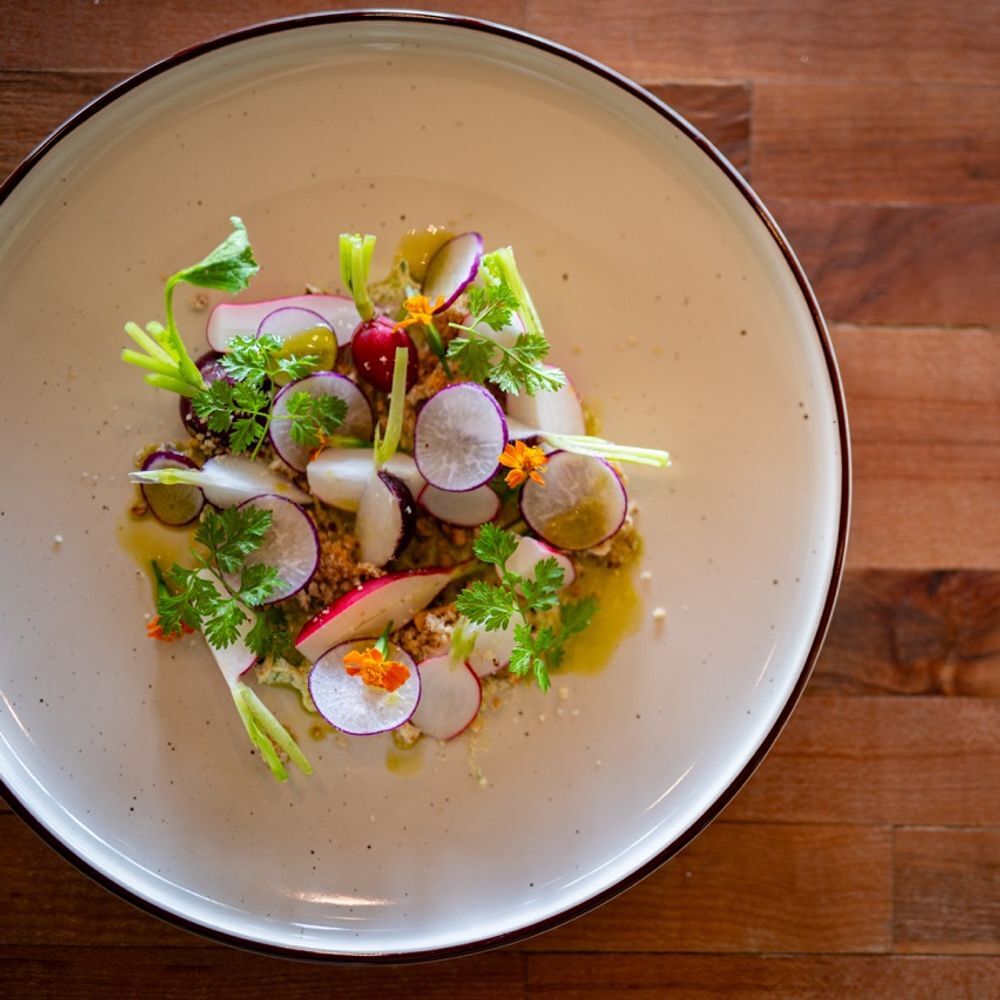
The menu
What to order
- Seasonal farm-raised meats from the farm
- Dishes featuring maple syrup aged in bourbon barrels
- Cabane à sucre revisited seasonal menu
Lanaudière's culinary identity has historically revolved around large-scale maple operations and market-garden produce destined for Montréal, but a small group of farmstead dining rooms now operates where field meets kitchen without a supply chain in between. Huit 100 Vingt runs that model from a timber barn on a working farm at 820 9e rang in Saint-Ambroise-de-Kildare, about 70 kilometres north of Montréal. Loïc Leperlier cooks a single set menu shaped by what the property and surrounding farms deliver: free-range poultry, house-made maple syrup, vegetables, and herbs cut to order. The barn overlooks open countryside, and the format is fixed-menu only, made to order rather than plated in advance.
Leperlier's cooking draws from Réunion Island techniques, spice layering, aromatic reduction, tropical-fruit acidity, but applies them to Québec ingredients. The result is a menu that shifts with the harvest calendar rather than following a signature-dish structure. Spring might bring fiddlehead ferns with ramp-butter emulsion; late summer focuses on tomatoes, squash, and berries; winter leans on root vegetables, preserved fruit, and cured meats. The maple syrup is tapped and reduced on-site, and Leperlier uses it as a seasoning agent rather than a dessert sweetener, pairing it with duck, pork, and glazed vegetables. The instinctive approach means the menu is written weekly, and dish descriptions remain loose rather than téchnically annotated.
Farm-to-Plate Infrastructure and What It Means for the Menu
The venue sources from its own land and a small network of Lanaudière producers within 20 kilometres. That proximity allows Leperlier to adjust the menu based on morning harvest rather than pre-ordering weeks ahead. Free-range birds are processed on-site, vegetables are picked the day they're cooked, and herbs are cut to order. The model limits menu complexity, there are no imported seafood, no out-of-season citrus, no tropical garnishes, but it also means the kitchen operates with near-zero waste and full ingredient traceability. For diners accustomed to metropolitan tasting menus with global larder access, the constraint is noticeable; for those interested in regional foodshed discipline, the format offers a clear alternative.
House-made maple syrup appears in multiple courses, and Leperlier uses it as a glaze, marinade base, and finishing agent. The syrup is tapped from sugar maples on the property, boiled down in small batches, and graded by colour and flavour intensity. Darker syrups are reserved for savoury applications, duck confit, braised pork, roasted root vegetables, while lighter grades finish desserts or balance vinaigrettes. The approach reflects Québec's broader shift from maple as a tourist commodity to maple as a seasonal cooking fat and sweetener with varietal characteristics.
Service Format and Dining Room Context
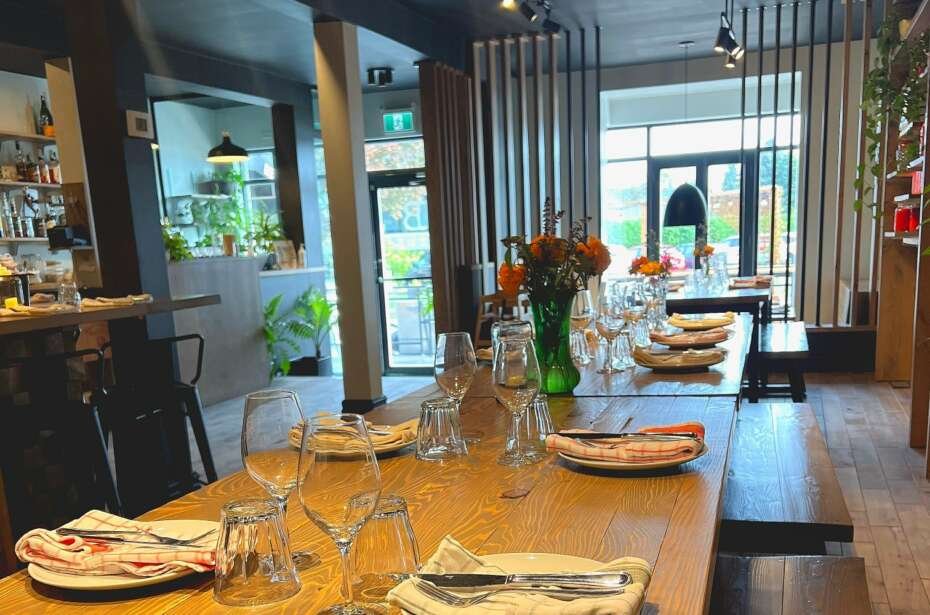
Jessica Grégoire manages front-of-house and shapes the service tone, which skews informal and conversational rather than scripted. The barn setting, exposed timber, open views, limited acoustic buffering, means the room reads as rustic rather than refined, and service follows that cue. Tables are spaced widely, and the pace is unhurried; expect two to two-and-a-half hours for the full menu. The format is set-menu only, with no à la carte or substitution options, and dietary restrictions require advance notice. The kitchen can accommodate vegetarian requests if flagged when booking, but the default menu is omnivorous and bird-forward.
The barn seats roughly 30 to 40 guests across communal and individual tables, and the layout is open-plan rather than divided into dining sections. Noise levels rise when the room is full, particularly during weekend service, and the acoustic character is barn-like rather than dampened. For diners seeking quiet, early-week reservations or off-peak times offer better conditions. The room is heated but not climate-controlled, and late spring through early autumn offers the most comfortable thermal range. Winter service runs with the understanding that the space is a working barn rather than a temperature-regulated dining room.
The wine list is Québec-focused, with a small selection of natural and low-intervention bottles from l'Orpailleur, Vignoble de la Bauge, and a handful of smaller Cantons-de-l'Est producers. The selection is minimal, expect 12 to 15 bottles rather than a cellar program, and pairings are offered as a set flight rather than course-by-course customization. Beer is locally sourced from Lanaudière microbreweries, and non-alcoholic options include house-pressed apple juice and herbal infusions made from farm-grown herbs.
For broader Saint-Ambroise-de-Kildare dining, the town itself offers limited infrastructure beyond Huit 100 Vingt; for additional context, consult our full Saint Ambroise De Kildare restaurants guide. Regional alternatives in Lanaudière include Bistro à Champlain near Estérel Resort and a handful of farm-table venues in Saint-Jean-de-Matha and Sainte-Émélie-de-l'Énergie. Montréal remains the closest metropolitan dining hub, with farmstead-model counterparts including Restaurant El Catrin and 3 Pierres 1 Feu, though both operate in urban contexts rather than on-farm settings. For accommodation, check our full Saint Ambroise De Kildare hotels guide; nearby options cluster in Joliette and Rawdon.
Frequently asked questions
Would Huit 100 Vingt be comfortable with kids?
The timber barn is set on working farmland in the Lanaudière region, and the single set menu is prepared to order by chef Loïc Leperlier. Jessica Grégoire's informal, conversational service suggests flexibility, though the format requires all diners to eat the same harvest-driven progression. Families looking for a rural experience rather than a separate children's menu will find the setting accommodating.
What's the vibe at Huit 100 Vingt?
The dining room occupies a timber-built barn overlooking countryside in Saint-Ambroise-de-Kildare. Jessica Grégoire runs front-of-house with a personal, conversational approach rather than formal service conventions. The single set menu, cooked instinctively by Loïc Leperlier from vegetables and free-range birds raised on-site, reinforces the working-farm context.
Is Huit 100 Vingt award-winning?
Huit 100 Vingt has received recognition including: a farm in the Lanaudière region, this country restaurant delivers a full farm-to-plate experience. In a timber-built barn overlooking the countryside, Loïc Leperlier cooks instinctively with local produce: vegetables, herbs,….
What part of town is Huit 100 Vingt in?
Huit 100 Vingt is located at 820 9e rang, Saint-Ambroise-de-Kildare, Quebec, J0K 1C0, CAN, Saint Ambroise De Kildare.
Comparable venues by cuisine and price in the same metro.
| Venue | Cuisine | Awards |
|---|---|---|
| Huit 100 VingtThis venue (the venue you are viewing) | Seasonal farm-to-table Québécois country table | Michelin Plate |
Recognition history
Dated appearances from independent guides and award organizations, with the underlying list record or original source where available.
Michelin Plate
Michelin
Continue exploring
More in Saint Ambroise De Kildare
Details
- Rustic
- Cozy
- Scenic
- Intimate
- Romantic
- Date Night
- Family
- Celebration
- Special Occasion
- Group Dining
- Brunch
- Garden
- Panoramic View
- Standalone
- Farm To Table
- Local Sourcing
- Organic
- Garden
- Mountain
- Tasting Menu
- Prix Fixe
- Set Menu
- Wine
- Beer
- Organic Focus
Warm and rustic barn setting overlooking the countryside, with an intimate, country-table feel; the atmosphere is cozy yet refined, centered on long, leisurely seasonal meals rather than fast service.