Cienfuegos
Our verdict
Cienfuegos belongs to the Pérez Zeledón side of Costa Rican dining: rural, ingredient-led, and shaped by the farms and highland valleys around San Isidro rather than by resort polish. With no public awards or chef-led mythology to lean on, the draw is context: a restaurant in Santa Teresa de Cajón that sits closer to local supply routes than to the country’s coastal dining circuit.

Pearl is the En Primeur Club membership app, where members save venues, book tables and use the concierge.
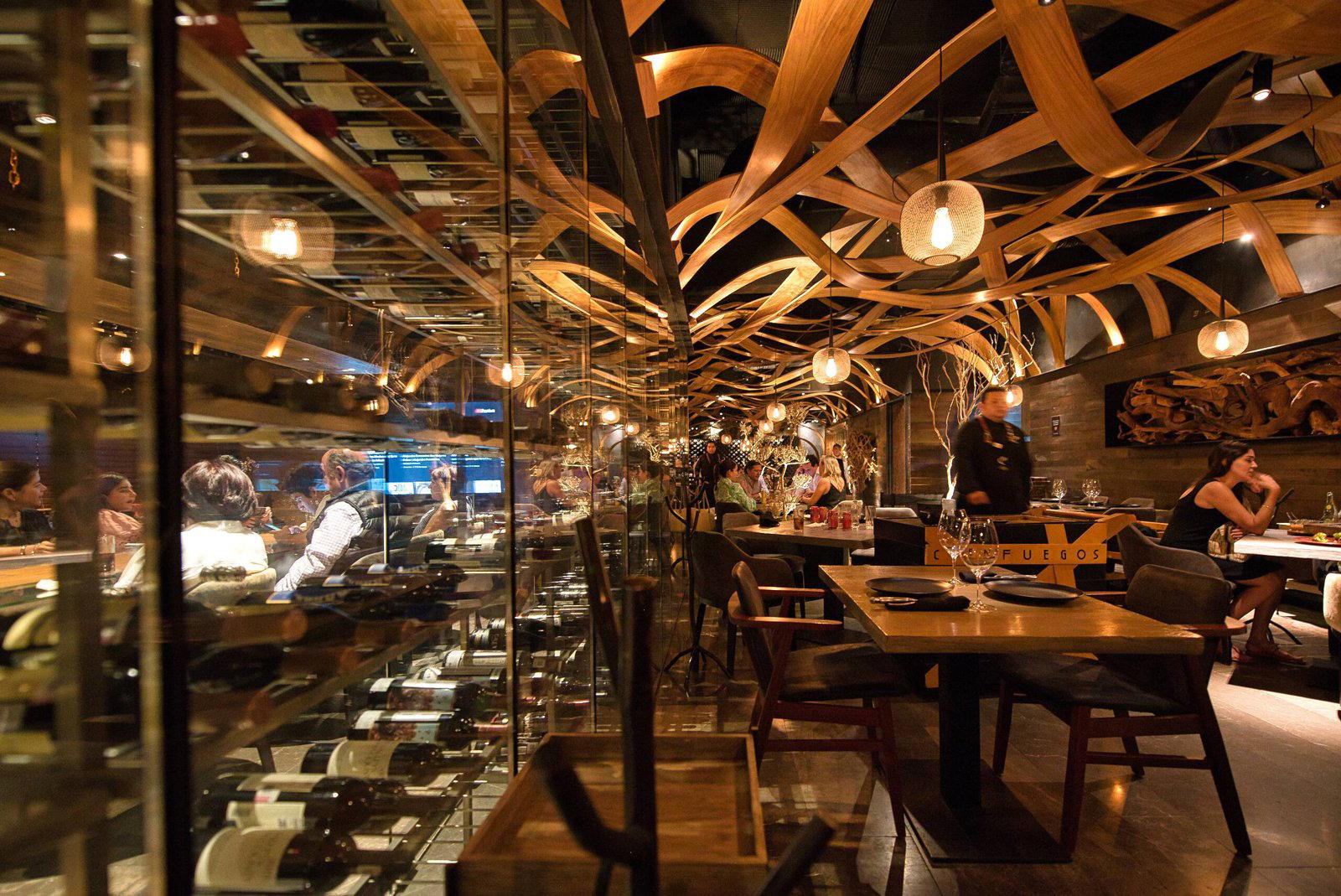
The menu
What to order
- Mixed land and sea cuts over coconut-husk fire
- Assorted small salads and vegetables
- Fermented larder accompaniments
- Grains and beans with grilled meats and seafood
The approach to Pérez Zeledón changes the frame before a menu ever appears. Pérez Zeledón is not the Costa Rica of beachfront dining rooms and hotel tasting menus; it is a southern highland setting where the surrounding landscape shapes how travelers read a meal. In that context, Cienfuegos reads less as a destination built for culinary spectacle and more as part of a regional dining culture where place matters before any more specific claim about the kitchen is made.
That matters because Costa Rican dining is often flattened into two images: the coastal plate for visitors and the capital-city restaurant for critics. Pérez Zeledón complicates both. The canton’s table is often understood through local routines, small dining rooms, roadside stops, community addresses, and family gatherings. A restaurant here is judged differently from one in larger urban or resort settings. The question is not how aggressively it signals modernity, but whether it understands where it is.
Highland Costa Rica, not resort Costa Rica
Cienfuegos sits in Pérez Zeledón, and that geography is the central editorial fact. This is a part of Costa Rica where food conversations often begin with the surrounding area before technique: local agriculture, markets, and everyday ingredients sit close to the table. Even without a declared cuisine category, the location pushes expectations toward ingredient immediacy and a slower regional rhythm rather than a heavily scripted fine-dining format.
For travelers building a Pérez Zeledón itinerary, the comparison is less about star ratings and more about format. Grano, Mercado, and Picoteo help sketch the local restaurant field, but the broader point is that this canton does not behave like a single dining strip. Meals are dispersed across communities and local centers. That spread rewards travelers who plan around geography rather than assuming every serious meal sits in one compact urban core.
The sourcing angle is especially relevant here because Costa Rica’s southern zone has a different culinary tempo from the Pacific resort towns. In coastal areas, menus often translate local produce into an international leisure language. In Pérez Zeledón, the surrounding food culture can feel more directly tied to nearby growing conditions and everyday supply. Cienfuegos belongs to that second conversation, where the canton supplies much of the context a menu would otherwise need to explain.
What the room signals before the plate
Without specific public detail around awards, named tasting menus, or a chef-driven format, the critical read should stay grounded. Cienfuegos is not a restaurant to assess through the grammar of destination gastronomy. It is better understood as a local dining address in Pérez Zeledón, a canton with a strong regional identity. That changes the reader’s expectations: look for regional fluency, seasonality by circumstance, and a sense of place carried through the setting rather than through formal choreography.
This also places Cienfuegos outside the usual Costa Rica luxury circuit. A traveler comparing it with other polished dining rooms in larger cities, resort towns, or beach destinations is comparing different propositions. Resort-area restaurants often sell polish, views, and international familiarity. Pérez Zeledón asks for a more grounded reading: access, local cadence, and the relationship between a restaurant and the surrounding canton.
That distinction is useful, not limiting. Many of Costa Rica’s better food experiences happen away from the places that receive the louder travel attention. In Pérez Zeledón, the value is often in how a restaurant reflects nearby conditions through everyday hospitality. Cienfuegos should be approached through that lens: not as a trophy reservation, but as a marker of how a local highland restaurant can be tied to place rather than spectacle.
How to place it in a Pérez Zeledón itinerary
Planning around Cienfuegos should start with the canton, not the meal alone. Pérez Zeledón works for travelers who are already moving through the southern highlands, using the area as a base for a broader regional route. The restaurant’s Pérez Zeledón setting makes it better suited to a deliberately routed day than to a casual add-on from a distant beach town.
For a fuller read on the area, use our full Pérez Zeledón restaurants guide alongside our full Pérez Zeledón hotels guide, our full Pérez Zeledón bars guide, our full Pérez Zeledón wineries guide, and our full Pérez Zeledón experiences guide. Travelers extending the research beyond Costa Rica’s southern zone can also compare how narrower formats read in other markets, where specificity may come from format rather than geography.
The verdict is practical: Cienfuegos is most compelling for travelers who care about regional context and place. If the itinerary is built around Pérez Zeledón rather than a quick transit stop, it offers a useful window into the canton’s dining culture. If the goal is formal awards, published tasting-menu detail, or a named chef narrative, the stronger play is to treat this as a local highland restaurant and judge it by how clearly it reflects the place around it.
Frequently asked questions
Is Cienfuegos a family-friendly restaurant?
Cienfuegos sits in Pérez Zeledón, so it reads as a local stop rather than a formal destination room. Families passing through the area can plan it as part of a Pérez Zeledón itinerary.
What should I expect atmosphere-wise at Cienfuegos?
The Pérez Zeledón setting points to a grounded local restaurant rather than a polished resort dining room. That makes the room feel tied to the area’s everyday rhythm more than to staged hospitality.
Where is Cienfuegos in Pérez Zeledón?
Pérez Zeledón.
How hard is it to get a table at Cienfuegos?
Specific reservation details are not provided here, so planning around Pérez Zeledón is the sensible approach. Travellers moving through the area should allow some flexibility.
What is Cienfuegos known for?
Cienfuegos is identified by its Pérez Zeledón setting rather than by specific public detail around chef credits or a formal tasting format. That places it in the category of a local restaurant rooted in place.
How does Cienfuegos handle allergies?
Guests with allergies should state them clearly when ordering at Cienfuegos in Pérez Zeledón. A direct conversation on arrival is the safest way to handle ingredient concerns.
Comparable Spots, Quickly
Comparable venues by cuisine and price in the same metro.
| Venue | Cuisine | Price | Awards |
|---|---|---|---|
| CienfuegosThis venue (the venue you are viewing) | Costa Rican land-and-sea live-fire BBQ with Korean influences | Not listed | Not listed |
| Grano | Authentic Calabrian Italian with handmade pasta | $30–50 | Michelin Plate · The Sunday Times Ireland’s 100 Best Restaurants |
| Mercado | Municipal market | Not listed | Not listed |
| Picoteo | Fresh Poolside Shared Plates | Not listed | Not listed |
Continue exploring
More in Pérez Zeledón
Restaurants in Pérez Zeledón
All restaurants in Pérez Zeledón →


Details
- Lively
- Rustic
- Energetic
- Cozy
- Scenic
- Group Dining
- Celebration
- Special Occasion
- Date Night
- Open Kitchen
- Garden
- Design Destination
- Hotel Restaurant
- Local Sourcing
- Mountain
- Garden
- Family Style
- Set Menu
- Small Plates
- Cocktails
- Beer
- Wine
- Pescatarian Friendly
A lively, social open‑air dinner setting near the stables of a luxury hacienda, with the glow and aroma of live fire, rustic details evoking Costa Rican rodeo culture, and an upscale yet relaxed resort feel.