Café César
Our verdict
Café César belongs to the quieter side of Lucerne dining: lake-adjacent, city-centre in reach, and better read through Swiss café culture than trophy-dining signals. The useful context is not awards or chef mythology, but how Lucerne’s restaurants balance visitors, local routines, Alpine produce, and the city’s compact geography.

Pearl is the En Primeur Club membership app — saves, bookings, and concierge access live there. Same editors, same standards.
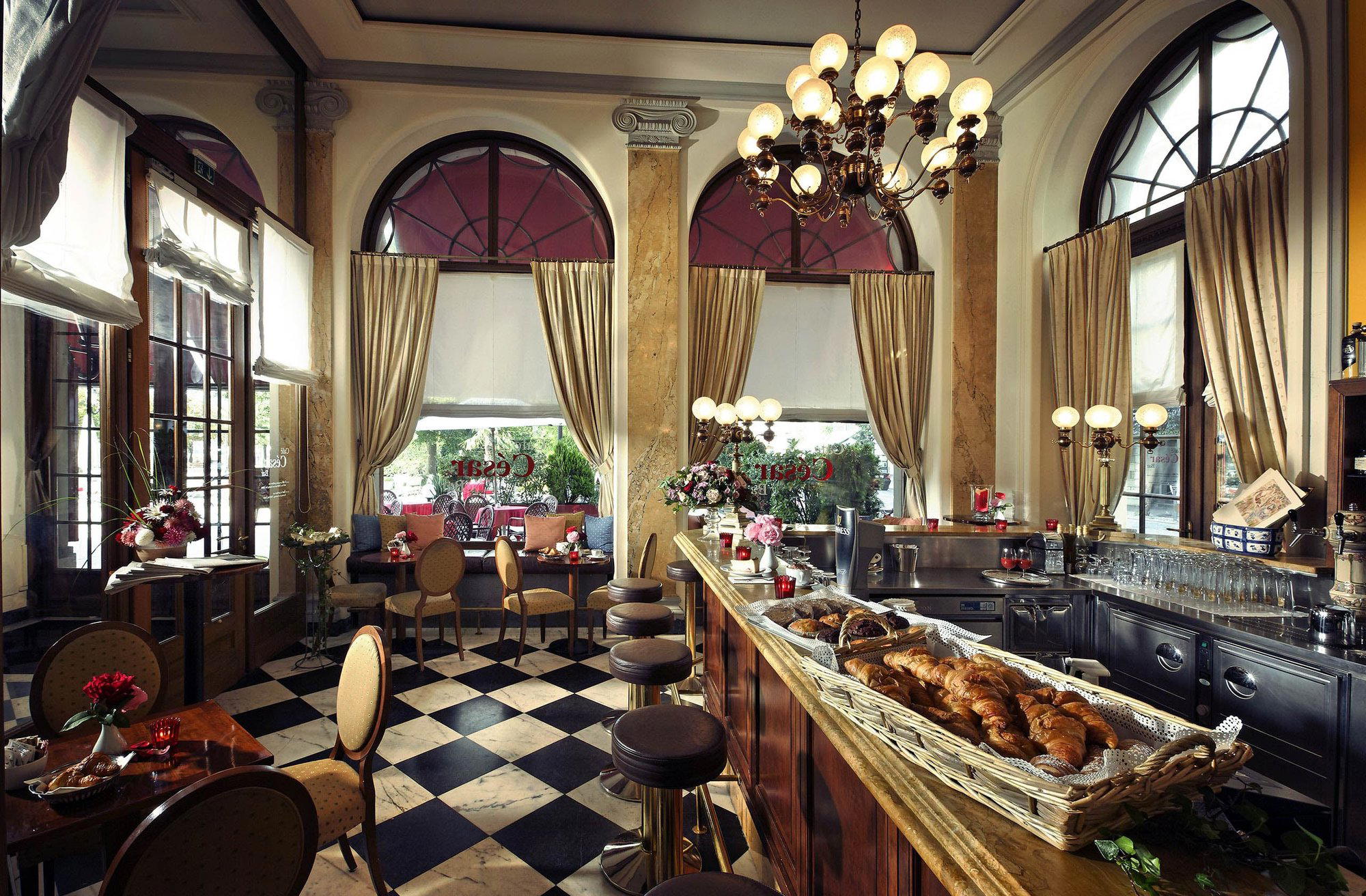
The menu
What to order
- Freshly baked croissants
- Homemade cakes
- Salads
- Fondue (seasonal, lunchtime)
Approaching Lucerne, the city changes register: traffic thins, the water and mountains shape the sightline, and dining becomes less about grand gestures than timing, produce, and restraint. Café César sits in that part of the city conversation. Lucerne is not a metropolis where every meal needs a manifesto; its stronger tables often work by fitting into the rhythm of the city without turning dinner into theatre.
That matters because Swiss café culture is easy to misread from outside. The category can cover a quick coffee, a composed lunch, a terrace meal, or a full evening table, depending on the room and the kitchen behind it. In Lucerne, the format often has to serve several audiences at once: residents using the city as a daily routine, visitors arriving for the lake and mountains, and hotel guests who want something grounded without committing to a long tasting menu. Café César is better understood inside that flexible café-restaurant tradition than as a destination built around a single narrow dining script.
Lucerne's café table is shaped by the lake, the Alps, and short supply lines
The ingredient story in central Switzerland starts with geography. Seasonal produce, Alpine dairy, preserved vegetables, meats, mushrooms, fruit, and cold-weather greens all sit close to the city’s culinary vocabulary, even when a restaurant does not announce a strict locavore program. Lucerne’s dining culture has long been practical about sourcing: the region rewards kitchens that can cook seasonally without turning provenance into performance.
Café César’s appeal sits in that expectation. Rather than leaning on a detailed public chef narrative, the reader’s useful question is simpler: does the room fit the city’s tempo, and does the cooking belong to the surrounding region rather than to a generic tourist script? In Lucerne, that distinction counts. The city has enough visitors to support polished dining, but the better everyday rooms avoid overcomplication. They let Swiss ingredients, café pacing, and city leisure carry the meal.
The local comparison is instructive. CAAA by Pietro Catalano sits in a different decision set. Other Lucerne dining rooms show how broad the Lucerne table has become: brasserie polish, international influence, and neighbourhood utility all compete within a compact city. Café César belongs to the quieter end of that spread, where a meal is judged less by ceremony than by whether the format feels right for the hour.
The case for restraint in a visitor-heavy Swiss city
Lucerne’s restaurant economy has to absorb heavy visitor demand without losing local usefulness. That pressure can flatten menus into safe international templates, especially in a city where visitors move through the same compact routes. The better counterargument is restraint: fewer claims, clearer cooking, and a room that does not need to over-explain itself. Café César fits that reading because the useful public signals are modest and practical, with the café-restaurant format doing more work than any grand positioning language.
For travellers, that can be an advantage if expectations are set correctly. This is not the page for a trophy reservation or a chef-led dégustation. It is a Lucerne café-restaurant to consider when the day calls for a grounded meal between city time, walking, or a hotel-based itinerary. The editorial value is in its position: useful within Lucerne’s visitor circuit, but better framed through the city’s everyday dining habits than through special-occasion ranking language.
That restraint also affects how to compare across Switzerland. Larger Swiss cities compete in bigger urban markets, while mountain and resort dining carries different seasonal expectations. Other everyday formats underline another point: Swiss dining is not one category, but a set of formats shaped by city scale, tourism, neighbourhood demand, and price discipline.
How to place Café César in a Lucerne itinerary
The practical read is simple: use Café César for the part of a Lucerne trip that needs location sense and a Swiss café pace rather than a long-form dining commitment. Its Lucerne setting makes it relevant for travellers moving through the city’s compact cultural and hotel routes. Since current service details can change, the smarter planning move is to treat timing as flexible rather than build a rigid evening around it without checking first.
For a fuller city map, use Our full Lucerne restaurants guide alongside Our full Lucerne hotels guide, Our full Lucerne bars guide, Our full Lucerne wineries guide, and Our full Lucerne experiences guide. For readers extending the trip beyond Switzerland, the contrast with tighter specialist formats in larger international cities shows why Lucerne’s café mode should not be judged by metropolitan trend logic. Its strength is scale: water, mountains, short routes, and a table that does not have to shout.
Frequently asked questions
Is Café César suitable for children?
As a Lucerne café, it should suit families looking for a casual stop rather than a formal dining room. The city setting makes it practical for a daytime break with children.
How would you describe the vibe at Café César?
Expect a café setting, with its Lucerne location placing it in a city context. That usually means an easygoing pace suited to a pause between sightseeing stops.
What part of town is Café César in?
Café César is located in Lucerne.
What's the best way to book Café César?
The practical first step is to check current details for Café César in Lucerne and plan accordingly. For a café in Lucerne, that usually means verifying current availability before arriving. Check the venue's official channels for the latest details.
What has Café César built its reputation on?
The clearest credential here is location: Café César sits in Lucerne, a city where convenient placement matters for both locals and visitors. That kind of setting is often the main reason a café becomes part of an itinerary.
Can Café César handle vegetarian requests?
Those details are not published. In Lucerne, the safest approach is to treat Café César as a café stop and ask on arrival about suitable options. Check the venue's official channels for the latest details.
At-a-Glance Comparison
Comparable venues by cuisine and price in the same metro.
| Venue | Cuisine | Price | Awards | Notes |
|---|---|---|---|---|
| Café CésarThis venue — the venue you are viewing | Self-service lakeside café & bistro | $20–30 | Not listed | Not listed |
| CAAA by Pietro Catalano | Transalpine Fine Dining | $200–300 | Michelin Plate · Pinnacle Guide 2 Pins | Modern Cuisine |
| Franz | Authentic Austrian Viennese | Not listed | Michelin Plate | Austrian |
| Jialu | Authentic Northern Chinese and Sichuan | $50–100 | Not listed | Not listed |
| National Brunch | Classic Hotel Brunch | $50–100 | Not listed | Not listed |
| Klingler's Ristorante Luzern | Mediterranean-Italian Fine Dining | Not listed | Not listed | Not listed |
Continue exploring
More in Lucerne
Restaurants in Lucerne
All restaurants in Lucerne →
Bars in Lucerne
All bars in Lucerne →

Details
- Scenic
- Classic
- Elegant
- Cozy
- Casual Hangout
- Solo
- After Work
- Brunch
- Waterfront
- Terrace
- Panoramic View
- Hotel Restaurant
- Historic Building
- Waterfront
- Mountain
- Street Scene
- A La Carte
- Coffee
- Tea
- Wine
- Champagne