The Sanderling Resort



Michelin Selected · AHEAD Awards AHEAD Americas Resort Shortlist · Conde Nast Best Resorts #38
Ranked #38 on Condé Nast's 2025 Best Resorts list, The Sanderling Resort sits on the northern Outer Banks in Duck, North Carolina, where the Atlantic meets the Currituck Sound. The property occupies a stretch of barrier island terrain that defines the character of this quiet coastal enclave, positioning it among the most-recognized resort addresses on the East Coast's mid-Atlantic shore.

Pearl is the En Primeur Club membership app, where members save venues, book tables and use the concierge.
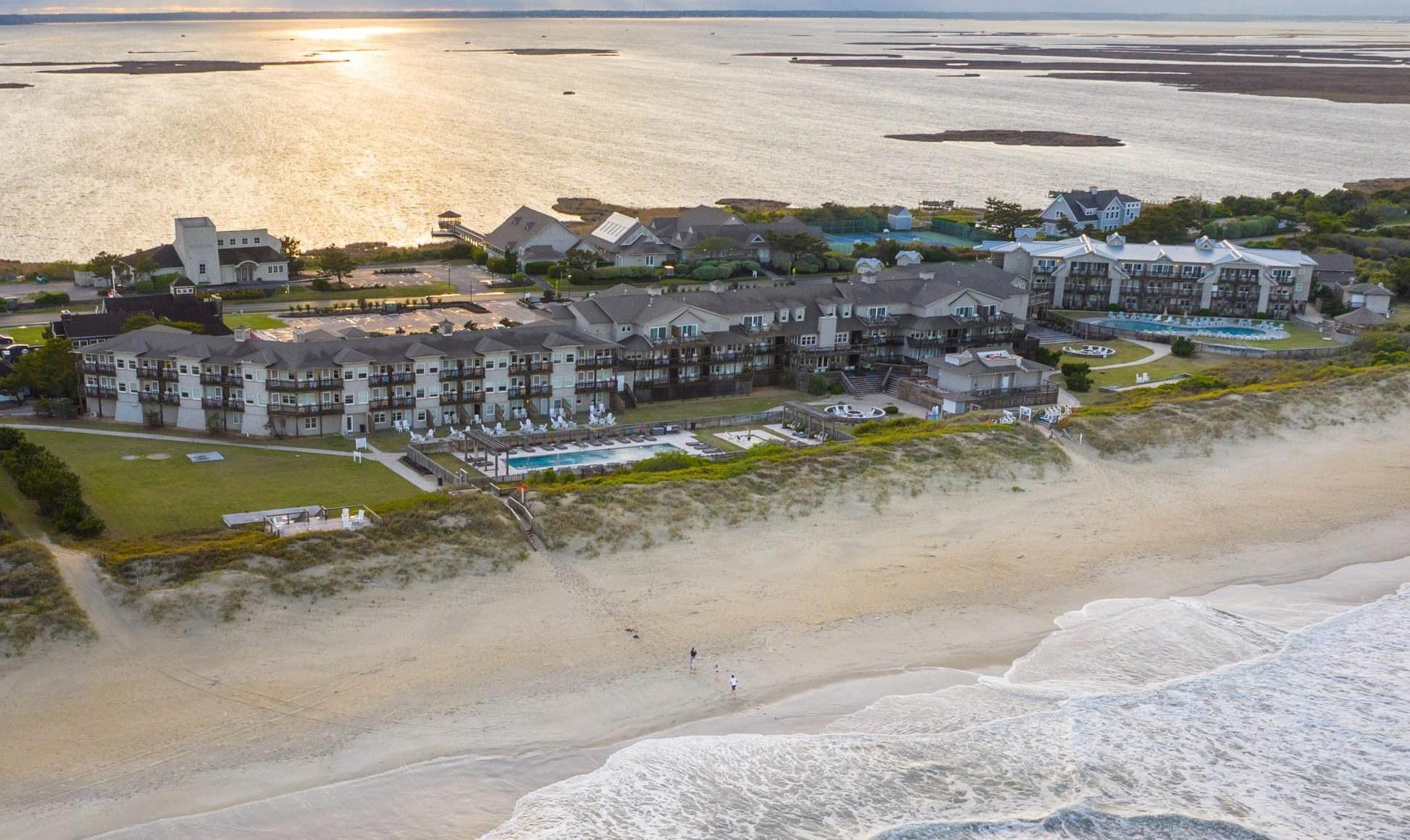
Where the Outer Banks Meets the Sound
Duck sits at the narrow northern end of North Carolina's Outer Banks, a barrier island strip where the Atlantic Ocean lies to the east and Currituck Sound stretches west. The town itself is small, low-rise, and deliberately so: zoning has kept the commercial strip compact, which means the surrounding dune vegetation and maritime forest remain intact on either side of Duck Road. Arriving at The Sanderling Resort along that road, what registers first is not a building but a shift in scale. The Atlantic-facing dunes are broad here, the sky opens in three directions, and the architecture holds back from asserting itself against that horizon.
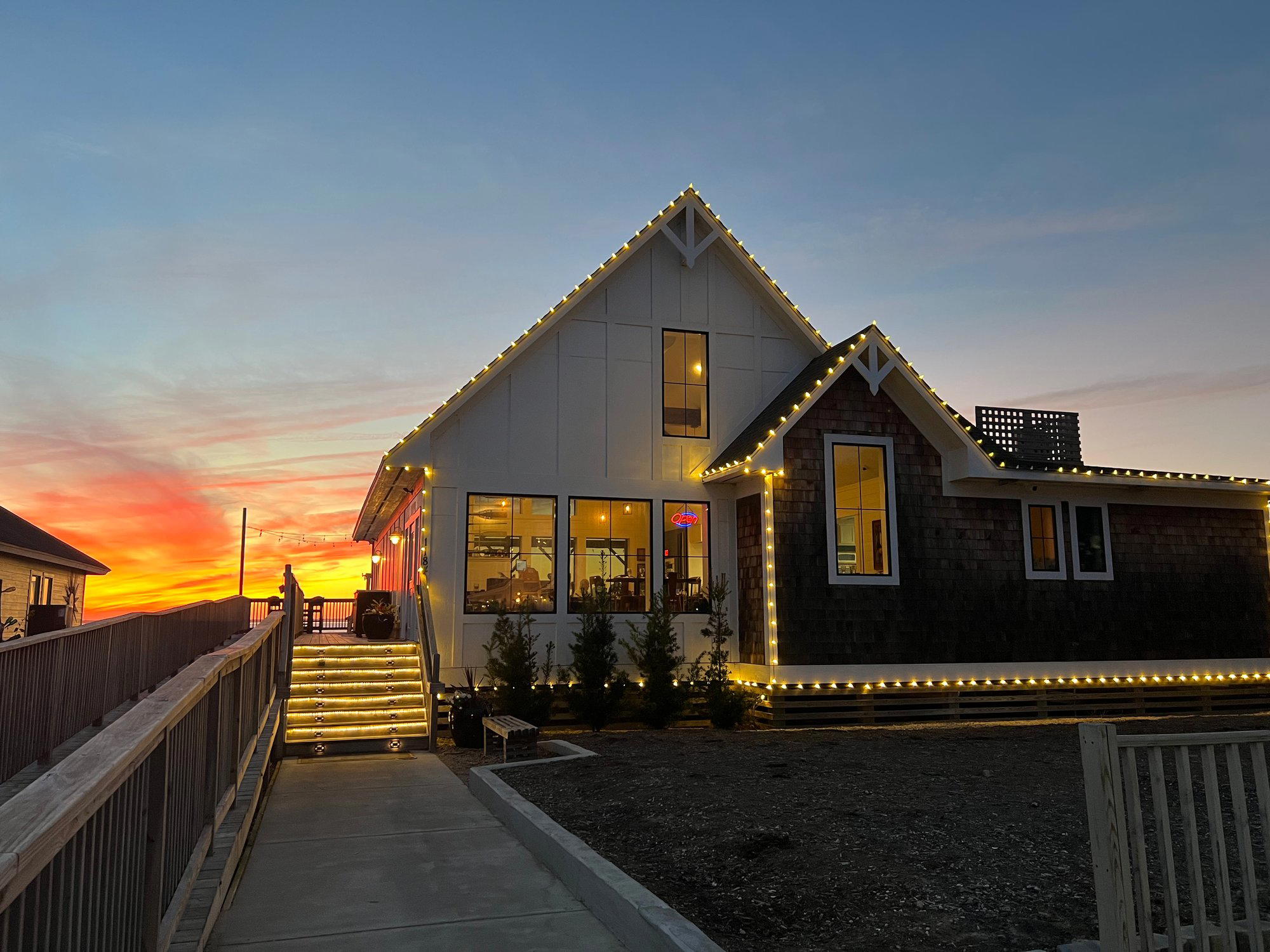
That restraint is not incidental. The Outer Banks has developed two distinct hospitality registers over the decades: the high-density vacation rental model that dominates much of Nags Head and Kill Devil Hills, and a quieter, lower-footprint approach that has taken hold in Duck and Corolla to the north. The Sanderling sits firmly in the latter category. Its buildings follow the shingle-and-cedar vernacular that has defined coastal Carolina construction for over a century, a style that reads as functional rather than decorative and ages into the landscape rather than resisting it. Compare this to the design-forward structural drama of Amangiri in Canyon Point or the cliff-edge integration of Post Ranch Inn in Big Sur, and the Sanderling occupies a different position entirely: it is vernacular architecture taken seriously, not signature architecture deployed for effect.
Design Logic: Cedar, Sound, and Sightline
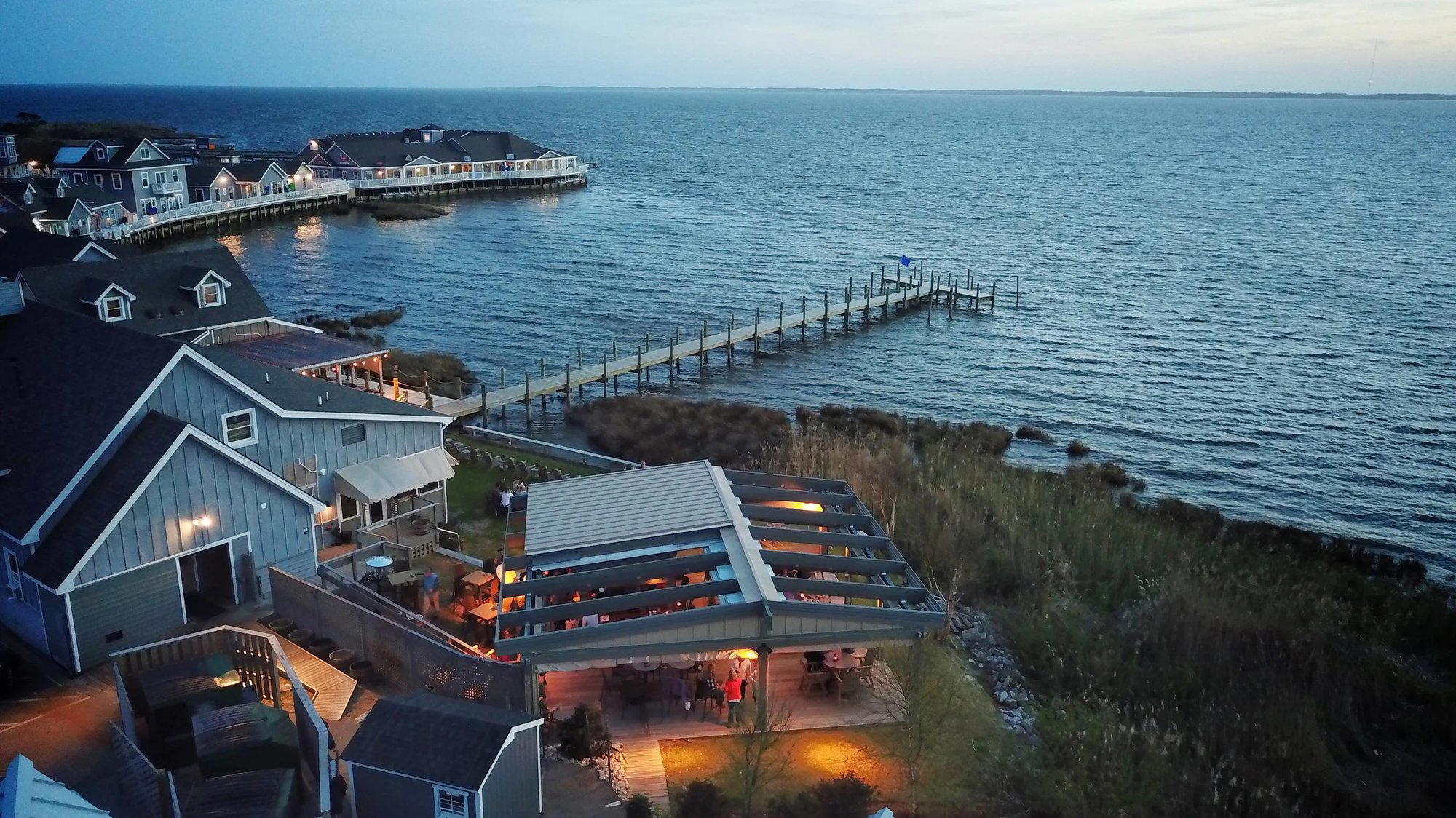
The property addresses both water bodies, which is the physical fact that most defines the guest experience here. Accommodations on the sound side catch the western light across the water and position guests for some of the most dramatic sunsets on the East Coast's barrier island chain, while the Atlantic-facing orientation delivers the surf and the beach access. This dual-exposure setup is rare in Outer Banks lodging; most properties commit to one side or the other. At the Sanderling, the planning decision to span the width of the island gives guests an unusual degree of choice in how they spend their time and where they orient themselves across the day.
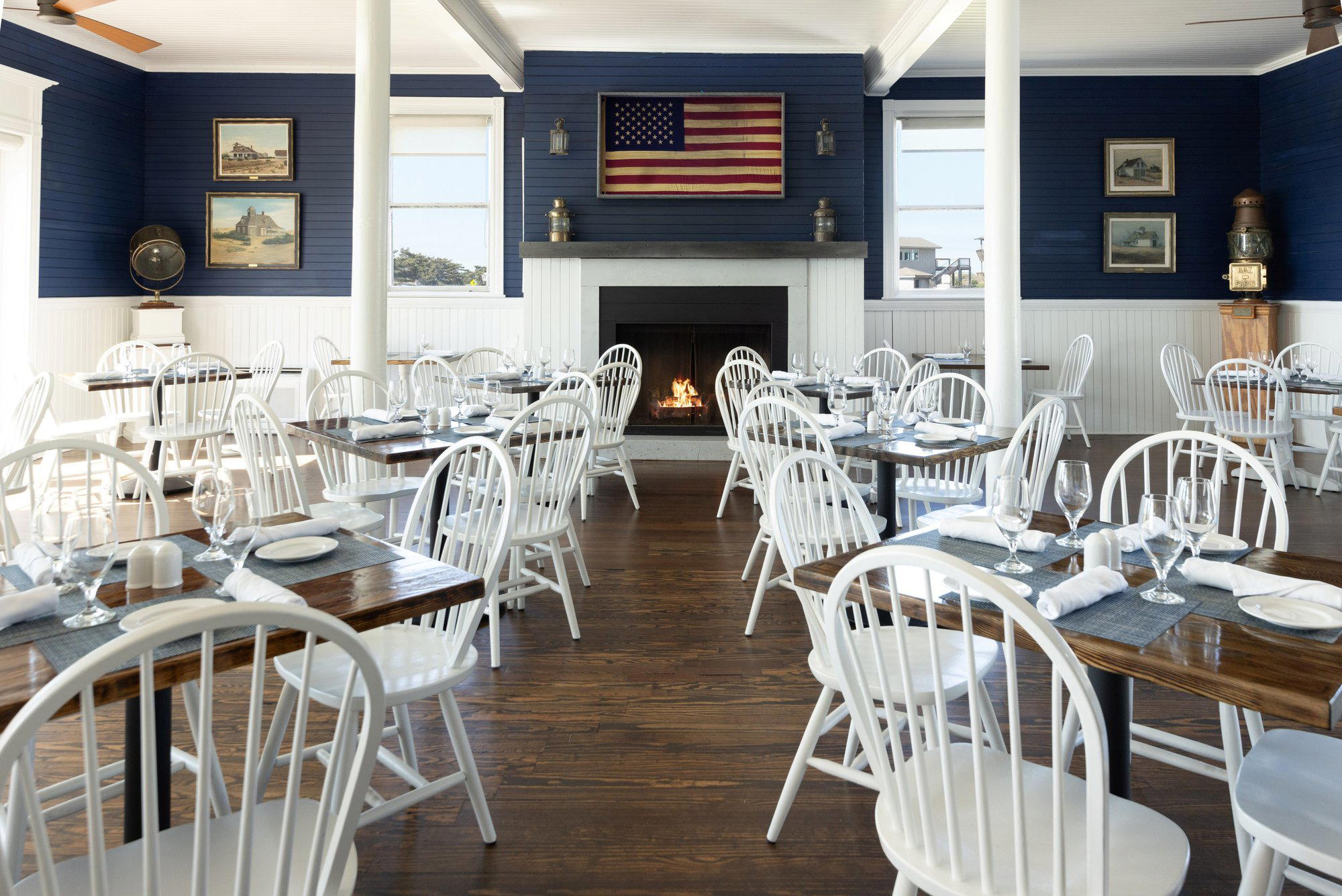
The buildings themselves reference the working architecture of the Carolina coast rather than the resort aesthetic of, say, a Four Seasons at The Surf Club in Surfside. Exposed timber framing, covered porches, and pitched rooflines with deep overhangs are the main visual vocabulary. These are not decorative choices: the overhangs manage direct sunlight and coastal wind, the raised foundations acknowledge storm surge potential, and the covered porches create transitional spaces between conditioned interiors and an exterior climate that can shift quickly in spring and fall shoulder seasons. For guests accustomed to design-led properties like Ambiente in Sedona or Amangani in Jackson Hole, the Sanderling reads as less architecturally assertive but more environmentally resolved.
The Conde Nast Signal and What It Implies
That ranking is worth reading carefully: Conde Nast's reader-driven methodology skews toward experiential satisfaction over architectural pedigree or brand affiliation, which means the Sanderling is being evaluated on how well it delivers against guest expectations, not on how it performs against a design brief. For a property on North Carolina's Outer Banks, rather than a more globally recognized resort corridor, that ranking represents meaningful signal about consistent execution.
Properties at this tier on similar rankings tend to share certain characteristics: they perform on service-to-price ratio, they occupy settings with intrinsic environmental interest, and they manage the logistics of their location well enough that guests don't feel stranded. The Outer Banks geography matters here. Duck is accessible primarily by car, and the island's single-road structure means that local knowledge and resort-level amenity provision make a practical difference to the stay. For comparison, smaller-footprint coastal properties like Little Palm Island Resort in Little Torch Key solve a similar logistical challenge with full-service isolation; the Sanderling's approach is more integrated with its small-town setting.
The Outer Banks Context: Timing and Access
The Outer Banks operates on a pronounced seasonal rhythm. Summer, roughly June through August, brings peak capacity across Duck, with families dominating the vacation rental market and traffic on Duck Road becoming genuinely constrictive on weekend arrival days. The Sanderling benefits from resort-level amenity density that makes it less dependent on leaving the property during peak periods. Shoulder seasons, particularly late April through early June and September through October, offer the more compelling calculus: ocean temperatures that still support swimming, significantly reduced road and beach congestion, and the migratory bird activity that makes Currituck Sound one of the more watched waterfowl corridors on the East Coast.
The property's address at 1461 Duck Road places it in the northern residential section of town, past the main commercial cluster. Access from the south via the Wright Memorial Bridge from the mainland is the standard arrival route; from the north, visitors coming down from Corolla approach through residential Duck. There is no commercial airport with direct service to the Outer Banks; Norfolk International, roughly 75 miles north, is the practical hub for most fly-in visitors. For the Northeast corridor traveler, this is a longer ground transfer than alternatives like the Troutbeck in Amenia or a weekend at Blackberry Farm in Walland, but the payoff is a coastal environment with no urban adjacency and no credible airport-proximity alternative.
For a fuller picture of what Duck offers beyond the resort, see our full Duck restaurants guide. The town's dining scene has grown considerably in the last decade, with locally focused kitchens operating in the same low-profile vernacular as the Sanderling's architecture. Visitors treating Duck as a destination rather than a waypoint will find the food and drink ecosystem proportionate to a small town doing its leading work, rather than a resort city trying to overreach.
Those calibrating the Sanderling against other American coastal and nature-adjacent resort options might also consider the wellness-forward model at Canyon Ranch Tucson, the wine-country integration of Bernardus Lodge in Carmel Valley, or the farm-to-table immersion of SingleThread Farm Inn in Healdsburg. Each represents a different resolution to the question of what a destination resort owes its setting. The Sanderling's answer is architectural deference and direct beach and sound access, which is a coherent answer even if it's a quieter one than some alternatives.
In Context: Similar Options
Comparable venues nearby, for context on price, style, and recognition.
| Venue | Cuisine | Price | Awards | Notes |
|---|---|---|---|---|
| The Sanderling ResortThis venue (the venue you are viewing) | Full-service oceanfront resort with reimagined coastal accommodations and awe-inspiring grounds. | $200–300 | Michelin Selected · AHEAD Awards AHEAD Americas Resort Shortlist | Not listed |
| 21c Museum Hotel Durham | Historic Art Deco landmark reimagined as contemporary art museum-hotel hybrid | $100–200 | Michelin Selected | Downtown Durham |
| Kimpton Tryon Park Hotel | Sophisticated Southern style blending cosmopolitan vibe with lush greenery. | $100–200 | Michelin Selected | Uptown 3rd Ward |
| The Reynolds Mansion | Historic bed and breakfast inn in a landmark mansion | Not listed | Not listed | Woodfin |
| Hive House | Boutique extended-stay suites blending residential comfort with hotel convenience near central Cary. | $100–200 | Not listed | Cary |
| Kimpton Cardinal Hotel | Historic Art Deco landmark reimagined as a modern boutique hotel. | $200–300 | Michelin Selected | Downtown |
Recognition history
Dated appearances from independent guides and award organizations, with the underlying list record or original source where available.
Michelin Selected
Michelin
AHEAD Awards AHEAD Americas Resort Shortlist
AHEAD Awards · AHEAD Americas Awards 2026 Shortlist - Resort
Conde Nast Best Resorts #38
Conde Nast
Continue exploring
More in Duck
Bars in Duck
Browse all →

Details
- Scenic
- Elegant
- Cozy
- Sophisticated
- Quiet
- Romantic Getaway
- Family Vacation
- Wellness Retreat
- Weekend Escape
- Beachfront
- Infinity Pool
- Destination Spa
- Golf Course
- Waterfront
- Wi Fi
- Pool
- Spa
- Fitness Center
- Room Service
- Concierge
- Beach Access
- Waterfront
- Wheelchair Accessible
Relaxed coastal elegance with timeless sophistication, warm friendly service, and serene natural surroundings enhanced by ocean breezes and sunset views.