

Set on Nandi Hills Road in Devanahalli Taluk, roughly 40 kilometres north of Bengaluru's city centre, the JW Marriott Bengaluru Prestige Golfshire Resort & Spa occupies a position where a championship golf course meets the storied hillscape once used as a summer retreat by Indian royalty. The property holds a Star Wine List recognition for 2026, signalling serious beverage programming within its resort format.
Pearl is the En Primeur Club membership app — saves, bookings, and concierge access live there. Same editors, same standards.
- Address
- Nandi Hills Road, Devanahalli Taluk
- Phone
- 91-080-45059999
- Website
- marriott.com
- Directions
- Get directions
 Saves & bookings on Pearl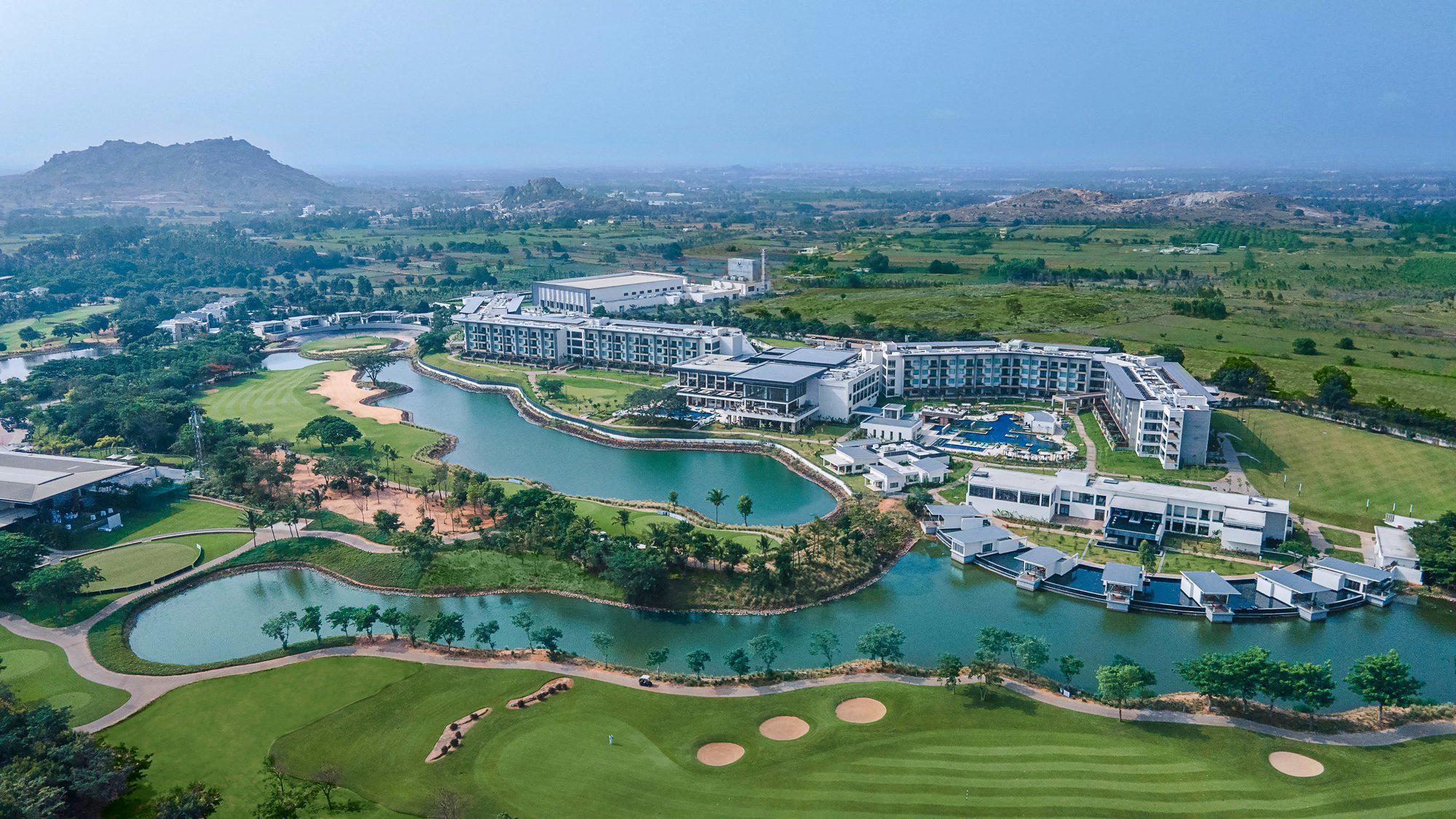
A Different Kind of Bengaluru Property
Bengaluru's hotel market has long split along two axes: business-district towers that prioritise conference infrastructure, and a smaller cohort of resort-format properties that trade on landscape escape and leisure programming. The JW Marriott Bengaluru Prestige Golfshire Resort & Spa sits firmly in the second group, positioned on Nandi Hills Road in Devanahalli Taluk, a corridor that has attracted resort development partly because of its proximity to Kempegowda International Airport and partly because the surrounding terrain is among the more dramatic within an hour of the city. Nandi Hills itself carries historical weight: the hill range served as a fortress site and, during the reign of Tipu Sultan, as a summer retreat for Indian royalty. That backdrop isn't incidental to how the property functions, it sets the terms for why guests make the trip at all.
Within Bengaluru's broader accommodation picture, this format occupies a distinct niche. Properties like The Leela Palace Bengaluru and The Leela Bhartiya City Bengaluru anchor the luxury tier closer to the city's commercial and residential belts. The Golfshire property, by contrast, is explicitly designed for the guest who wants physical distance from Bengaluru's traffic density and who will treat the property itself as the destination rather than a base for city exploration. That positioning shapes everything from arrival logistics to how the food and beverage program is structured.
Arrival and Setting
The approach along Nandi Hills Road gives the property much of its character before the lobby appears. The terrain rises steadily, and the air quality shifts noticeably from the lower-altitude suburban sprawl near Devanahalli. For travellers arriving from the airport, less than 30 kilometres away, the transition from terminal to resort feels compressed in a way that works. Those driving from central Bengaluru should account for roughly 50 to 60 minutes depending on traffic conditions on NH44 and the Bellary Road corridor, which feeds into the Devanahalli zone.
The golf course is central to the property's spatial identity. Championship-format courses in Indian resort properties typically serve a dual function: they are amenities for guests who play, and they are visual infrastructure that defines the scale and greenery of the grounds for everyone else. At Golfshire, the course establishes the sense of open space that differentiates the property from the denser, vertically arranged hotels closer to Bengaluru's Indiranagar or MG Road districts.
The Wine Program and What It Signals
2026 Star Wine List recognition is the property's most concrete public credential and deserves close reading. Star Wine List is a specialist editorial platform that evaluates wine lists on depth, range, and pricing integrity rather than on the volume of labels. Recognition from this programme signals that the beverage team has assembled a list with genuine structure: coverage across regions, appropriate depth in key categories, and a selection that goes beyond the standard five-label-per-varietal format that marks most resort hotel wine programs in India.
For a resort property situated in Karnataka rather than Maharashtra or the Napa-adjacent hills of Nashik, maintaining a wine list of this standard requires deliberate curation and consistent supply chain management. The award signals a beverage program with real structure and depth. For guests who treat wine as part of how they measure a stay rather than an afterthought, this is meaningful pre-arrival intelligence.
Service Orientation at Scale
JW Marriott as a brand operates within the upper tier of the Marriott International portfolio, positioned above Marriott Hotels and below the Ritz-Carlton in the group's segmentation. In practice, this means the service model is structured around a staff-to-guest ratio and training framework that goes beyond the baseline of a four-star business hotel. At a resort format, where guests are on property for extended periods rather than overnighting between meetings, the service philosophy shifts accordingly: anticipatory service matters more when the staff have time to observe guest patterns across a full day.
Resort-format service in this category typically emphasises what hospitality operators call preference capture: the process of noting and acting on guest habits without requiring repeat requests. This is the operational detail that often shows up in small, cumulative ways, from a remembered coffee order to towels arranged without prompting. The JW Marriott service framework at its stronger properties builds these systems deliberately rather than leaving them to individual staff intuition.
For context on how this resort sits within the wider register of Indian luxury hotel service, it is worth considering peer properties in different geographies. Properties like The Oberoi Amarvilas in Agra, Amanbagh in Ajabgarh, or Suján Jawai in Pali each operate with different ownership frameworks and guest-to-staff ratios, but they share an orientation toward the guest experience as the primary design constraint. The Golfshire property brings a branded-hotel reliability to that ambition, which for some travellers represents the right trade-off between consistency and independence.
Planning Your Stay
The property's Devanahalli location makes it most accessible for travellers arriving through Kempegowda International Airport, for whom it functions as a genuine first or last night option that avoids the drive into central Bengaluru entirely. For city residents or guests with business in Bengaluru's northern tech corridors, the resort-as-weekend-retreat model is direct: the distance provides the separation that makes a two-night stay feel restorative rather than merely geographic. Those combining the Golfshire stay with broader Karnataka or South India travel should note that Bengaluru serves as a hub with onward connections to Mysuru, Coorg, and coastal Karnataka.
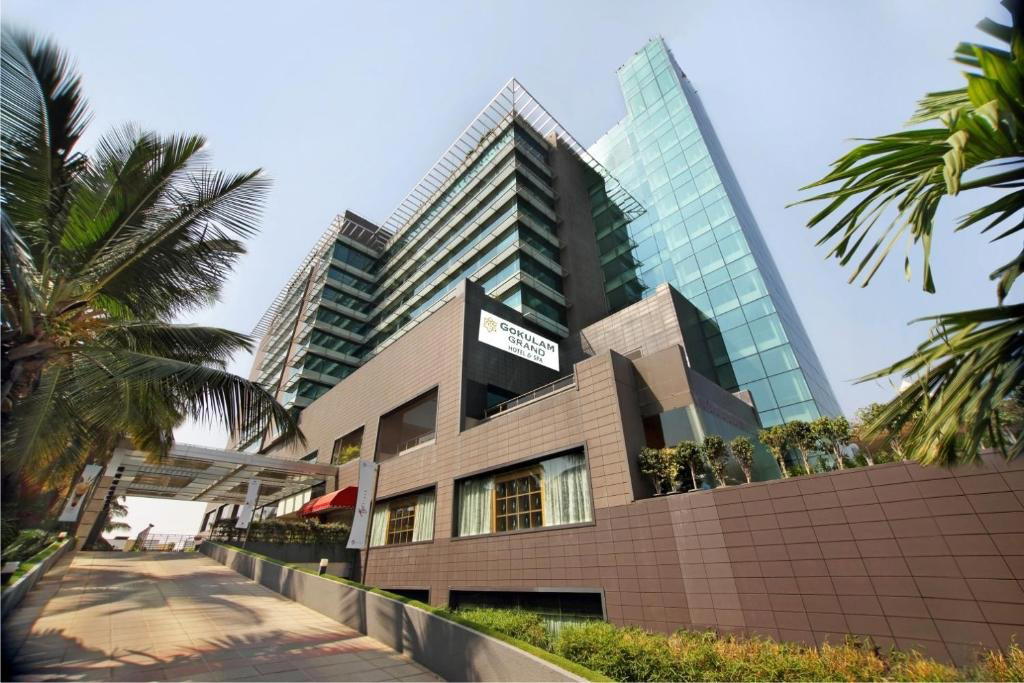
Travellers building a longer India itinerary who want to extend beyond Bengaluru have substantial options. The Leela Palace New Delhi and The Taj Mahal Palace in Mumbai represent the urban palace tier in their respective cities, while those seeking a more remote register might consider Aman-i-Khas in Ranthambore or Alila Fort Bishangarh in Manoharpur for a different kind of landscape-driven stay. Within Bengaluru itself, guests who prefer to be closer to the city's restaurant and nightlife core should look at THE Park Bangalore or Gokulam Grand Hotel & Spa, both of which position differently from the Golfshire's resort model. Hyatt House Bengaluru Devanahalli and The Zuri Whitefield Bengaluru offer further comparison points for travellers weighing Bengaluru's northern and eastern corridors against a central-city base.
Style and Standing
Comparable venues nearby, for context on price, style, and recognition.
| Venue | Cuisine | Price | Awards | Notes |
|---|---|---|---|---|
| JW Marriott Bengaluru Prestige Golfshire Resort & SpaThis venue — the venue you are viewing | Luxury resort with private villas and expansive golf course integration | $$$$ | 5-Star | Not listed |
| The Zuri Whitefield Bengaluru | Contemporary luxury hotel optimized for business and leisure travelers | $$$$ | 5-Star | Whitefield |
| The Leela Palace Bengaluru - Garden City's Only Modern Palace Hotel | Modern palace hotel inspired by Art Deco and Vijayanagara Empire. | $$$$ | 5-Star | HAL Airport Road |
| THE Park Bangalore | Luxury boutique hotel with state-of-the-art technology and leisure facilities. | $$$$ | 5-Star | MG Road |
| Gokulam Grand Hotel & Spa | Contemporary luxury business hotel with Art Deco architecture | $$$ | 5-Star | BEL Circle |
| The Leela Bhartiya City Bengaluru | Modern luxury urban resort | $$$$ | 5-Star | Thanisandra |
Recognition history
Dated appearances from independent guides and award organizations, with the underlying list record or original source where available.
Forbes Recommended
Forbes
Star Wine List
Star Wine List
Continue exploring
More in Bengaluru
Hotels in Bengaluru
Browse all →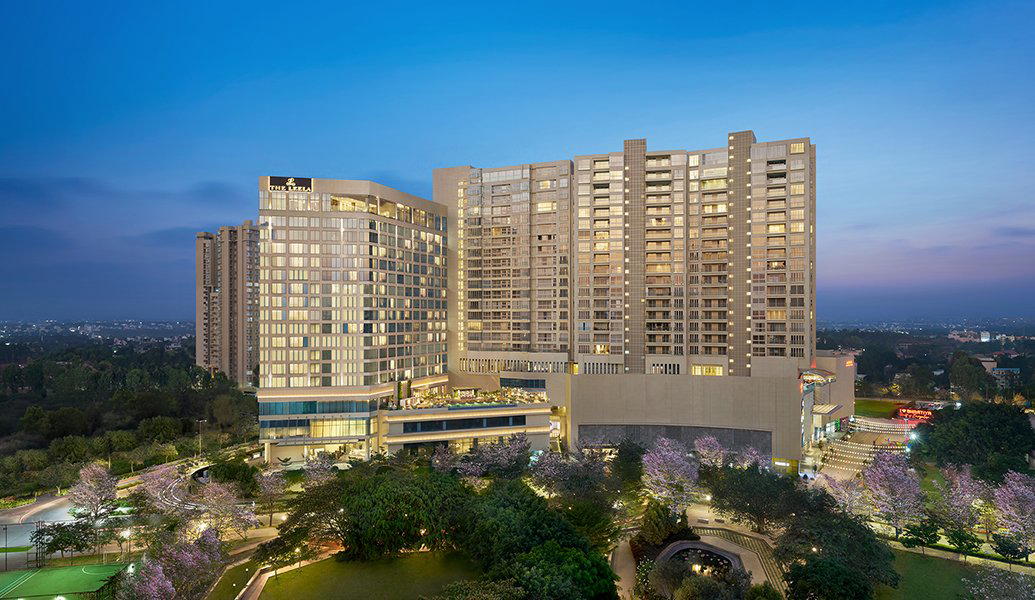
Bars in Bengaluru
Browse all →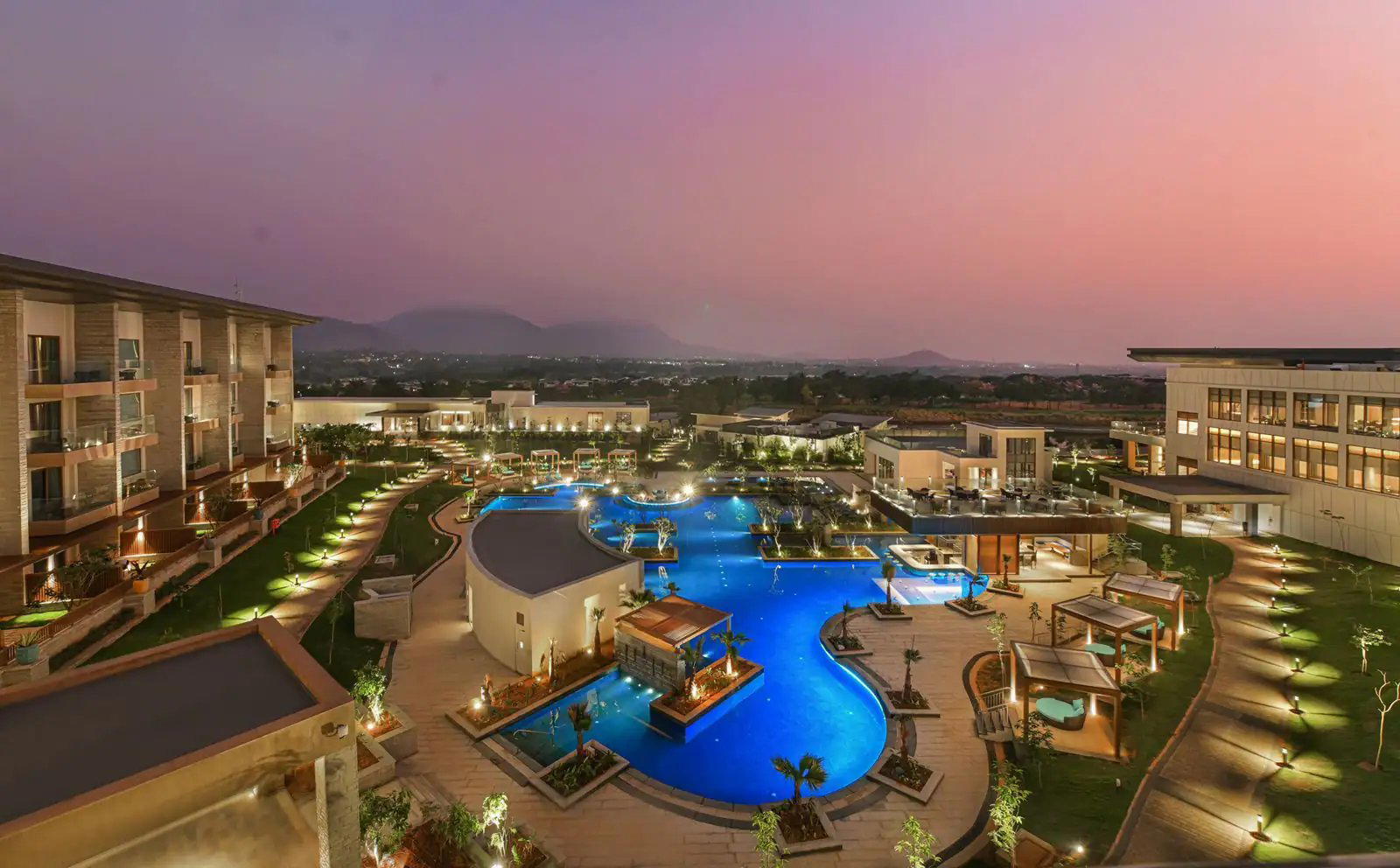
Restaurants in Bengaluru
Browse all →

Wineries in Bengaluru
Browse all →
At a Glance
- Elegant
- Scenic
- Sophisticated
- Ornate
- Honeymoon
- Romantic Getaway
- Family Vacation
- Wellness Retreat
- Weekend Escape
- Golf Course
- Infinity Pool
- Private Villa
- Destination Spa
- Panoramic View
- Pool
- Spa
- Fitness Center
- Room Service
- Concierge
- Business Center
- Valet Parking
- Kids Club
- Golf Course
- Garden
- Mountain
- Pool
- Spa
- Fitness Center
- Room Service
- Concierge
- Business Center
- Valet Parking
- Kids Club
- Golf Course
Serene and tranquil atmosphere with natural light, verdant gardens, golf greens, and water features creating a calming, luxurious retreat.