Boutique Hotel at Villages of Springhill
Boutique Hotel at Villages of Springhill belongs to Mobile’s quieter hospitality tier, away from the downtown convention-hotel rhythm and closer to the residential scale of Spring Hill. With no public star rating, awards, room count, price band, or booking details in the available record, it is best read through setting and likely use case: a smaller Mobile stay where neighbourhood context matters more than brand spectacle.

Pearl is the En Primeur Club membership app — saves, bookings, and concierge access live there. Same editors, same standards.
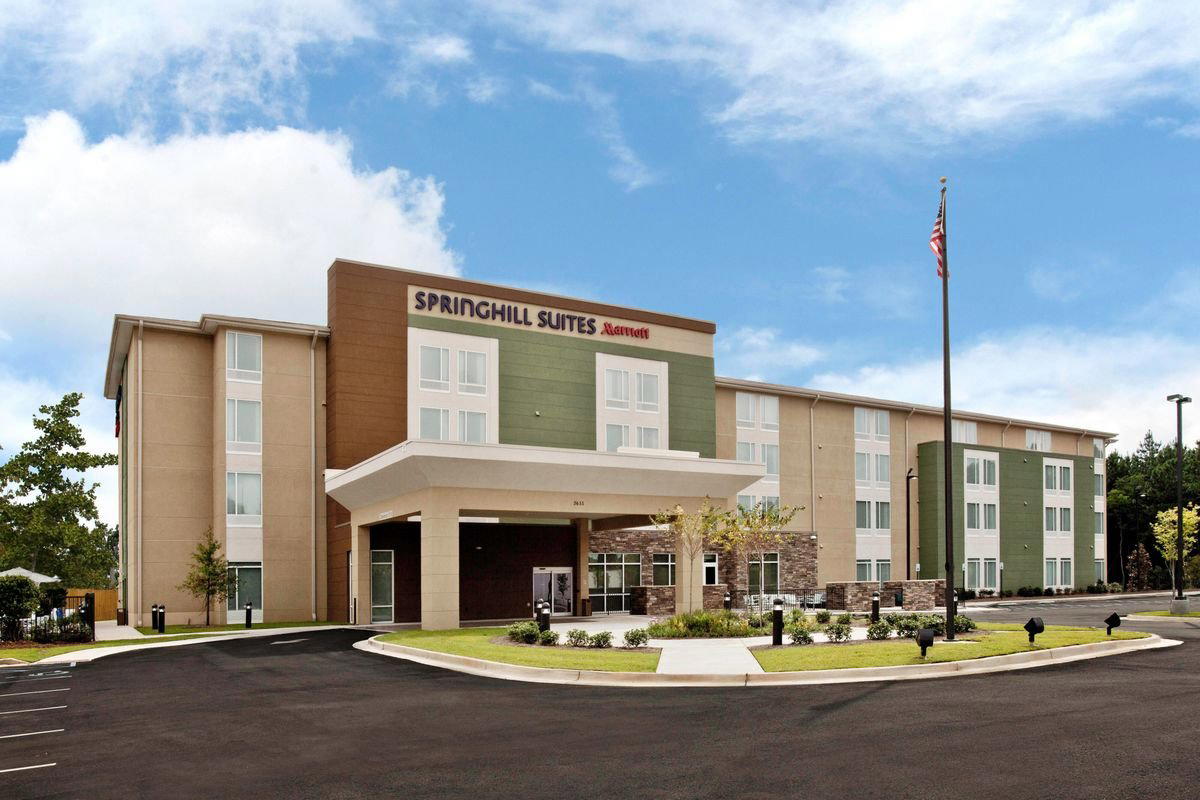
Spring Hill scale, Mobile tempo
Approaching Spring Hill is a different experience from entering downtown Mobile. The city’s port energy, civic buildings, and Mardi Gras architecture give way to a more residential cadence: college-adjacent streets, established houses, tree cover, and shopping villages designed around errands rather than spectacle. A hotel in this part of Mobile sits inside that slower geography. The point is not skyline drama or resort theatre; it is proximity to a local district where the city feels lived-in rather than staged for visitors.
Boutique Hotel at Villages of Springhill should be understood in that context. That absence matters editorially. In a market where larger hotels often signal themselves through flags, meeting space, and downtown access, a smaller Spring Hill property depends more heavily on setting, scale, and the practical needs of travellers who want Mobile without being absorbed by the central business district.
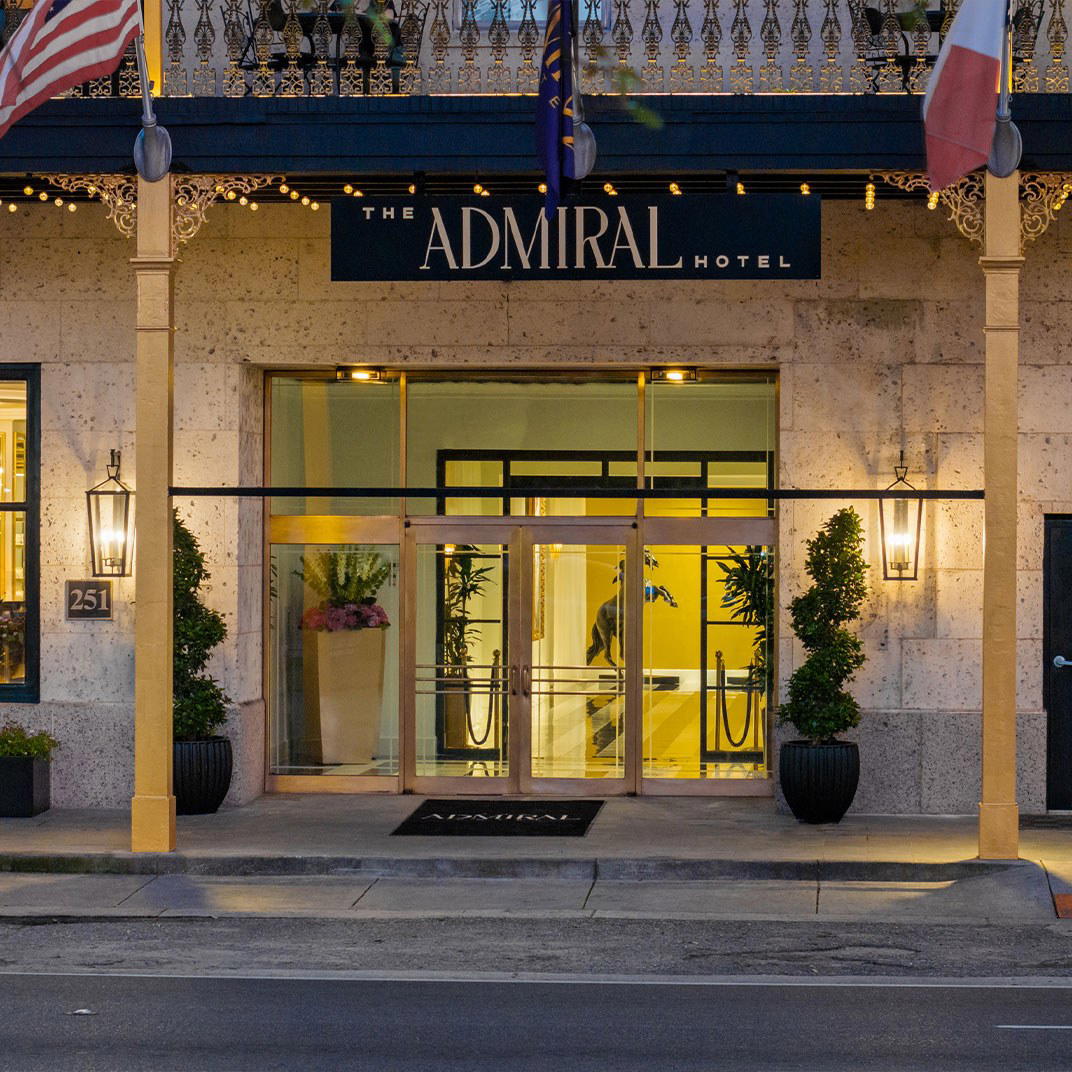
Mobile is not a single-note Gulf Coast stop. Its hotel scene stretches from historic downtown properties to interstate-facing business stays, bay-adjacent addresses, and neighbourhood hotels serving families, university visits, medical appointments, and longer regional itineraries. For a comparative downtown reference, The Admiral Hotel represents the city-centre tradition more directly. Spring Hill works differently: less ceremonial, more local, and often better suited to travellers who will spend time moving between residential Mobile, west-side errands, and downtown dining rather than treating the hotel as the entire trip.
Design is the deciding language
In smaller American city hotels, architecture and interiors carry more weight than brand mythology. A property can succeed by handling proportion, daylight, arrival sequence, and communal space with restraint. It can fail by borrowing generic boutique cues: dark lobby paint, overworked lighting, mismatched art, and a bar cart dressed up as identity. The useful question in Spring Hill is not whether the hotel feels grand. It is whether the building understands its neighbourhood scale.
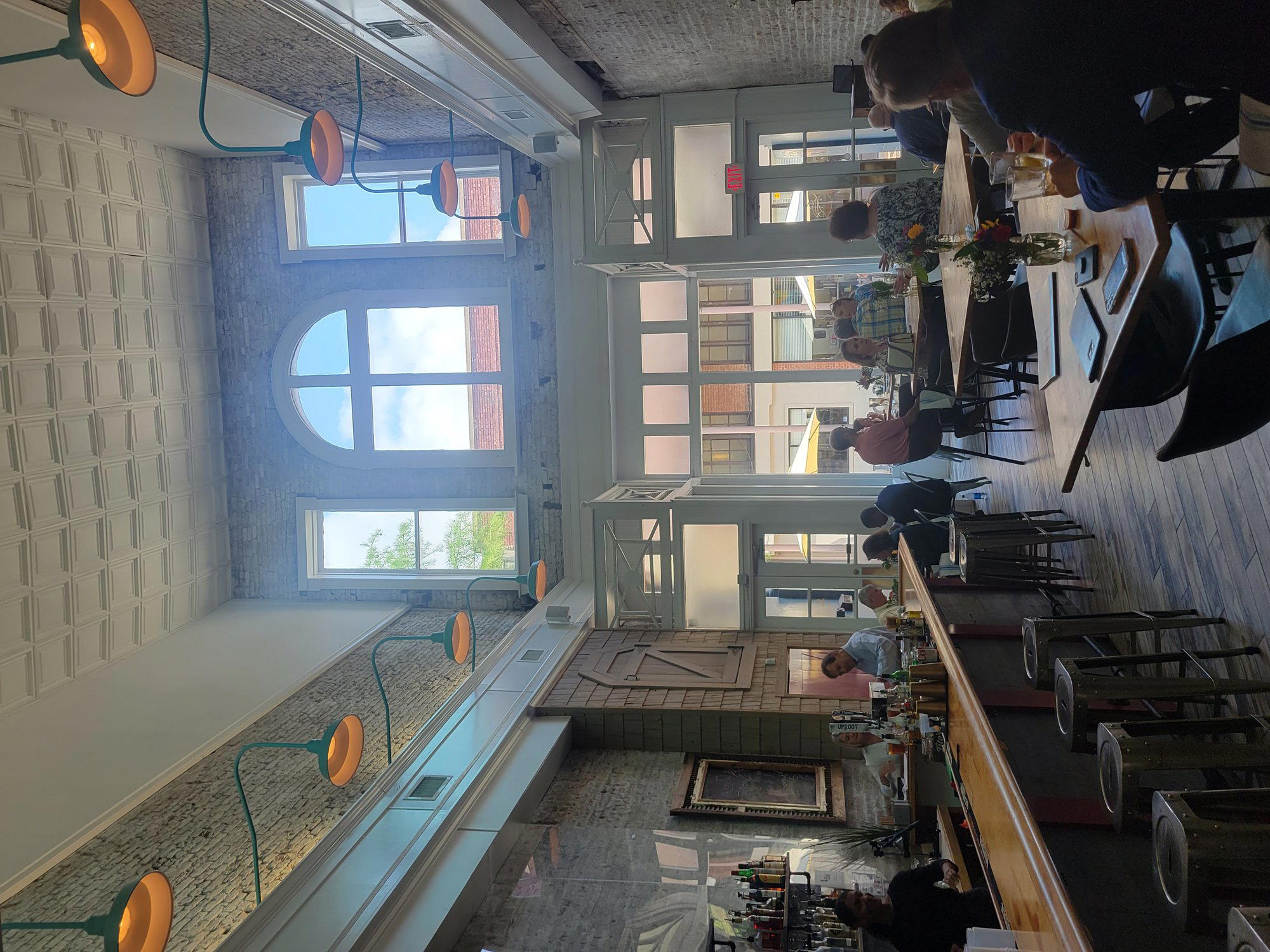
The Villages of Springhill name points toward a mixed-use, village-style setting rather than a tower or resort compound. The broader design test is still clear. A hotel in this district should make arrival simple, keep public areas legible, and avoid the inflated formality that can feel misplaced outside downtown. Low-friction design matters here: parking access, lobby clarity, guestroom quiet, and circulation that serves short stays as well as return visits.
This is where Mobile’s hospitality character differs from larger Southern hotel markets. New Orleans sells theatrical layering. Charleston often trades on preservation and polish. Nashville has turned hotel design into entertainment infrastructure. Mobile is subtler. Its historic fabric is real, but the city’s visitor economy is more modest, and that makes overstatement easy to spot. A Spring Hill hotel has a narrower brief: provide comfort, local positioning, and enough design discipline to feel intentional without pretending to be a destination resort.
How Spring Hill changes the stay
That matters for itinerary planning. Downtown Mobile is where visitors find the denser cluster of civic landmarks, Mardi Gras history, restaurants, bars, and hotel lobbies built for out-of-town traffic. Spring Hill is more useful for travellers whose days are spread across the city: campus visits, family weekends, regional business, west Mobile shopping, medical appointments, or a quieter base after evening plans downtown.
The trade-off is simple. A downtown hotel generally offers walkability to more restaurants and bars. A Spring Hill base offers a calmer return point and easier access to residential Mobile. For travellers comparing categories, this is less about luxury hierarchy than urban rhythm. Some trips need lobby energy, late drinks, and a short walk back from dinner. Others benefit from a room away from the city-centre circuit, especially when the schedule includes driving across Mobile rather than staying in one compact district.
For planning across the city, EP Club’s local pages are more useful than forcing one hotel to answer every part of a trip.
The boutique label needs evidence
“Boutique” has become one of hotel writing’s least useful words because it can mean design-led independence, small room count, lifestyle branding, or simply a property without a major flag. The available record gives the name Boutique Hotel at Villages of Springhill but does not provide the evidence needed to classify its exact position: no designer, no hotel group, no service model, no public awards, and no star rating. That does not make the hotel irrelevant. It means the reader should evaluate it by concrete trip requirements rather than romance around the label.
In practical terms, a boutique stay should justify itself through at least one of four things: architecture, location, service intimacy, or a distinctive food-and-beverage program. Only location can be discussed with confidence from the supplied data. Awards are not listed, and neither are chef, cuisine type, signature dishes, or dining hours, so the hotel should not be presented as a culinary address. If food is central to the trip, the room should be treated as a base and meals built from Mobile’s restaurant map.
This distinction matters in premium travel. A hotel can be expensive without being design-serious; it can be charming without being operationally strong; it can be locally placed without offering a reason to linger in public spaces. In Spring Hill, the editorial promise is likely more about convenience and neighbourhood fit than spectacle. That is a valid promise, but it should be judged honestly.
Where it sits among design-led hotels
Across the United States, design-led hotels have separated into several families. Some are urban restorations, where historic architecture and adaptive reuse do much of the work. The Fifth Avenue Hotel in New York City and Chicago Athletic Association in Chicago belong to that conversation, though in far larger and more media-saturated markets. Others are heritage glamour addresses, such as The Beverly Hills Hotel in Los Angeles, where the building’s cultural memory is inseparable from the stay.
Another set uses geography as architecture. Amangiri in Canyon Point, Post Ranch Inn in Big Sur, Sage Lodge in Pray, and Kona Village, A Rosewood Resort in Kailua Kona make setting central to the hotel’s identity. Wine-country properties such as Auberge du Soleil in Napa, Meadowood Napa Valley in St. Helena, and SingleThread Farm Inn in Healdsburg often bind room design to food, landscape in the literal sense, and cellar culture.
Mobile operates on a different scale. A Spring Hill hotel does not need to compete with desert modernism, Alpine palace hotels, or coastal wellness compounds. Its peer question is narrower: does it serve Mobile with more personality and location intelligence than a standard roadside or downtown business hotel? For broader comparison, 1 Hotel San Francisco in San Francisco, Raffles Boston in Boston, Four Seasons at The Surf Club in Surfside, and Troutbeck in Amenia show how varied design-led hospitality can be once region, building type, and service ambition are accounted for.
The international references sharpen the point further. Hôtel de Paris Monte-Carlo in Monte Carlo, Badrutt's Palace Hotel in St. Moritz, and Aman Venice in Venice are palace or heritage references in cities where the hotel itself can become a primary cultural object. That is not the Spring Hill brief. Mobile’s smaller hotels are better judged by how well they fit the trip at hand.
Planning the stay
In Mobile, that verification is not a formality: neighbourhood choice can change the whole trip, especially for visitors deciding between downtown walkability and the quieter Spring Hill side of the city.
If the trip is built around downtown restaurants, bars, or civic events, compare transit time and evening transport before committing to a Spring Hill base. If the schedule includes campus activity, family visits, appointments, or driving between several parts of Mobile, the location may be more efficient than a central address. Value cannot be judged against downtown hotels or national chains. Reputation should be checked through current guest feedback rather than inferred from the boutique label.
For a design-minded traveller, the right questions are specific: are rooms quiet, is parking simple, does the lobby function as a place to meet, and does the property feel intentional rather than merely small? Those details determine whether a neighbourhood hotel becomes a useful Mobile base or just a convenient bed.
Comparable Venues Nearby
Comparable venues nearby, for context on price, style, and recognition.
| Venue | Cuisine | Price | Notes |
|---|---|---|---|
| Boutique Hotel at Villages of SpringhillThis venue — the venue you are viewing | Planned as a boutique hotel integrated into a mixed-use village context, replacing a former National Guard armory site. | Not listed | Not listed |
| The Admiral Hotel | Historic boutique hotel reimagined with modern luxury. | $$$ | Downtown Historic District |
| Hyatt Place | Upper-midscale extended-stay concept with apartment-style suites optimized for business travelers and longer stays. | $$ | Stadium Commons |
| Elevation Convening Center & Hotel | modern lifestyle hotel | $$$ | Downtown Montgomery |
| 106 Jefferson | Urban lifestyle boutique hotel anchored in Huntsville’s role as the Space Capital, combining residential comfort with an upscale, design‑forward feel. | $$$ | Downtown Huntsville / Twickenham district |
| GunRunner Boutique Hotel | Renovated boutique hotel with luxury themed suites in a historic downtown building. | $$$ | downtown |
Continue exploring
More in Mobile
Bars in Mobile
Browse all →
At a Glance
- Modern
- Business Trip
- Weekend Escape
- Group Retreat
- Historic Building
Conceptually positioned as a contemporary boutique property integrated with the Villages of Springhill master plan, with design subject to community design standards and city planning approvals.