The Admiral Hotel

The Admiral Hotel on Government Street is one of Mobile's most architecturally distinguished addresses, carrying a 2025 Michelin Selected designation that places it among a small cohort of recognised hotels in the American South. The building's Art Deco bones give it a presence that newer properties in the city simply cannot replicate, making it the reference point for historically grounded accommodation in Mobile.
Pearl is the En Primeur Club membership app — saves, bookings, and concierge access live there. Same editors, same standards.
- Address
- 251 Government St, Mobile, AL, USA
- Phone
- 251-432-8000
 Saves & bookings on Pearl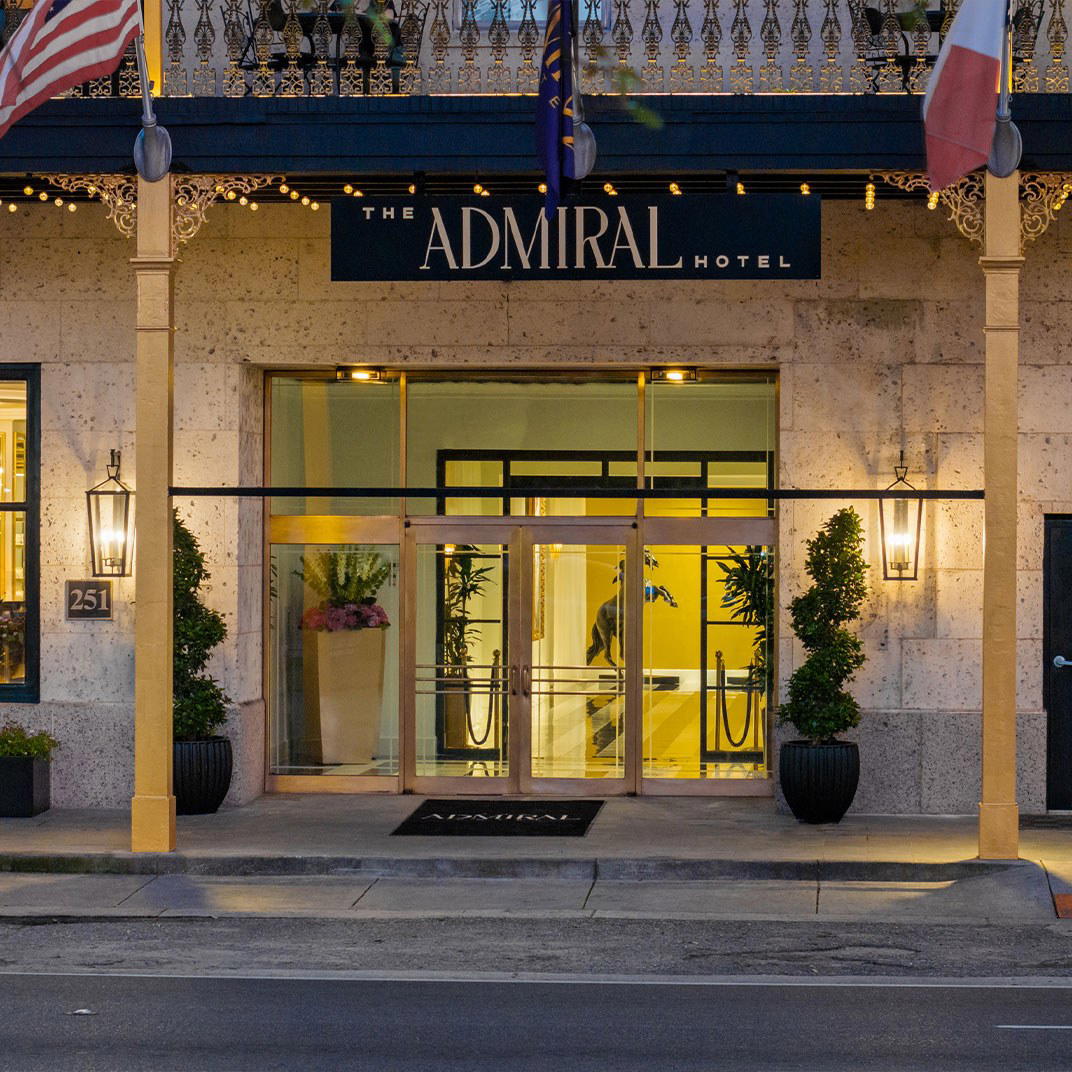
Architecture as Argument: What the Admiral Hotel Says About Mobile
The Admiral Hotel is a historic hotel in Mobile, Alabama, at 251 Government Street. It occupies that street with the confidence of a building that has already survived several eras of taste. Its Art Deco facade, with the vertical emphasis and geometric ornament that defined American commercial architecture in the late 1920s and 1930s, reads as a deliberate statement about permanence in a city that has often been overlooked in the broader conversation about Southern heritage destinations.
Historic hotel preservation in the American South has followed two broad paths: the large-scale institutional restoration (think grand plantation-adjacent resorts) and the mid-scale urban adaptive reuse, where a single building's bones are retained while contemporary programming is layered in. The Admiral belongs firmly to the second category, placing it in a comparable set that includes properties like Chicago Athletic Association in Chicago and The Hornibrook Mansion Empress of Little Rock in Little Rock, hotels where the architecture is not incidental backdrop but the primary editorial argument for staying there.
The Michelin Selection and What It Signals
The 2025 Michelin Selected designation for The Admiral Hotel is not a star rating, but it carries its own weight. Michelin's hotel selection process identifies properties that meet a consistent standard across service, comfort, and character without requiring the volume or infrastructure of a full-star-rated establishment. For Mobile, which does not appear in every mainstream American travel conversation, the inclusion signals something the city's advocates have argued for years: that the Gulf Coast port has the architectural and hospitality stock to compete for a more considered traveller.
Among the broader set of Michelin Selected hotels across the United States, the designation tends to cluster around properties with a distinct physical identity rather than those relying on brand affiliation or amenity scale. Troutbeck in Amenia and Washington School House Hotel in Park City share a similar logic: the building itself does a significant share of the editorial work. At The Admiral, that work is done by decades of Deco detail that no new-build property on the Gulf Coast can credibly replicate.
Mobile as a Destination: The Case the Building Makes
Mobile is the kind of city that rewards the traveller who arrives with some prior reading. It holds the distinction of hosting the oldest Mardi Gras celebration in North America, predating New Orleans by a margin that local historians are happy to document at length, and its antebellum and early-twentieth-century architectural stock is more varied and less touristically curated than comparable Southern cities. The Admiral sits at the convergence of the city's commercial history and its current effort to reposition itself as a serious leisure destination rather than simply a transit point between New Orleans and the Florida Panhandle.
Government Street's proximity to the Port of Mobile, Bienville Square, and the Cathedral of the Immaculate Conception means the hotel operates as a genuinely walkable base for the city's historic core. For travellers accustomed to the discipline of properties like Raffles Boston in Boston or Bowie House, Auberge Resorts Collection in Fort Worth, hotels where the surrounding neighbourhood is part of the proposition, the Admiral's address is a considered choice rather than a default.
Design Lineage and the Art Deco Cohort
American Art Deco hotels occupy a specific niche in the broader conversation about architectural preservation. The style's commercial heyday ran roughly from the mid-1920s through the late 1930s, and the hotels built during that period were designed to project modernity and optimism at scale. The Admiral's vertical massing and period detailing place it in a cohort of Gulf Coast buildings that have survived the pressures of urban disinvestment, hurricane seasons, and the generic modernisation impulse that gutted so many mid-century American hotel interiors during the 1970s and 1980s.
The comparison to European historic hotels is instructive in understanding the premium that architectural authenticity commands. Properties like Hôtel de Paris Monte-Carlo in Monte Carlo or Badrutt's Palace Hotel in St. Moritz occupy their markets partly because nothing built recently can carry the same accumulated physical credibility. At a domestic American scale, The Admiral makes a version of the same argument: the building's age is not a liability to be managed but a credential to be read. Properties like The Fifth Avenue Hotel in New York City operate on similar logic in their respective markets.
Positioning Within the Broader American Boutique Hotel Tier
The premium American boutique hotel market has stratified considerably in the past decade. At the upper end sit design-forward independents and resort properties like Amangiri in Canyon Point, Post Ranch Inn in Big Sur, and Meadowood Napa Valley in Napa, each commanding rates that reflect remote settings or Michelin-adjacent dining programs. A middle tier of architecturally credentialed urban properties, where The Admiral sits, competes on character and location rather than amenity volume. This is the same tier occupied by The Stavrand in Guerneville and, at the coastal resort end, Four Seasons at The Surf Club in Surfside.
For the traveller whose priority is physical specificity over amenity completeness, The Admiral's address and historic character make a coherent case in Mobile.
Planning Your Stay
The hotel sits at 251 Government Street in Mobile's historic downtown, with 156 rooms and a smart-casual setting. For stays where design context and historic fabric matter as much as room specification, the Government Street address delivers historic presence in downtown Mobile.
Comparable Venues
Comparable venues nearby, for context on price, style, and recognition.
| Venue | Cuisine | Price | Awards | Notes |
|---|---|---|---|---|
| The Admiral HotelThis venue — the venue you are viewing | Historic boutique hotel reimagined with modern luxury. | $$$ | Not listed | Not listed |
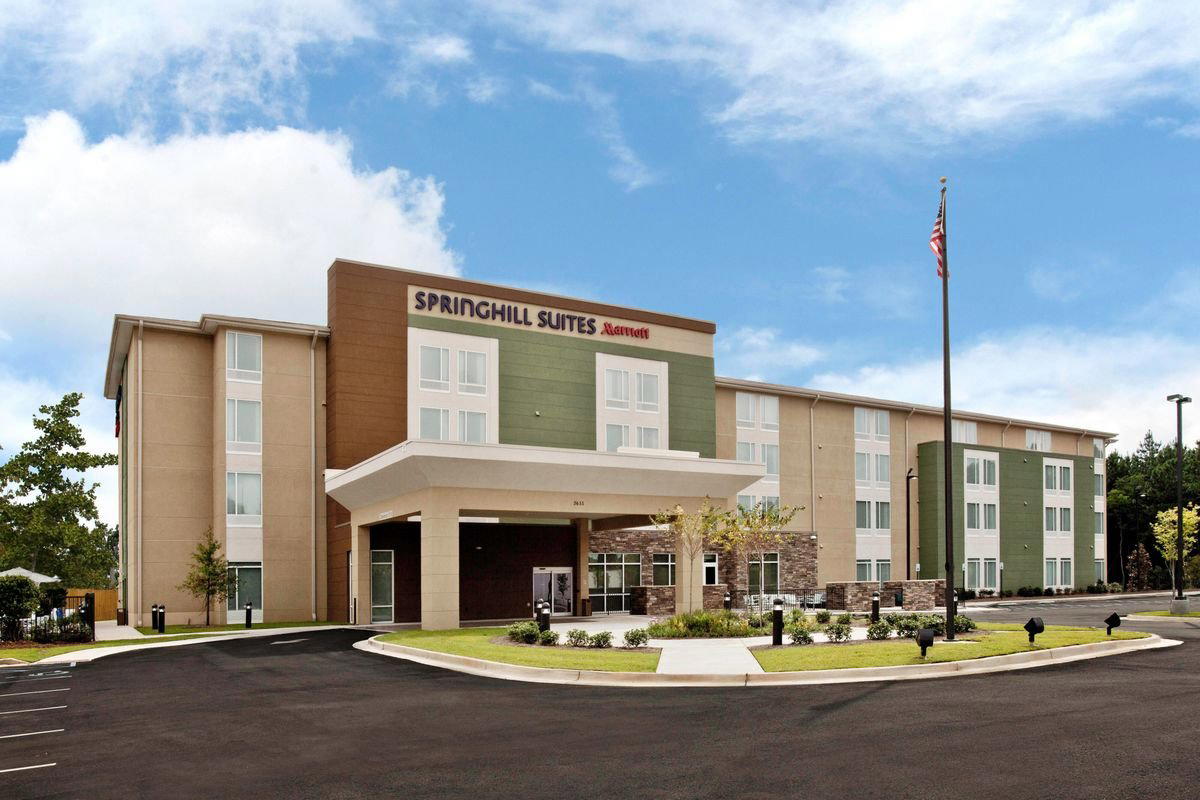
| Boutique Hotel at Villages of Springhill | Planned as a boutique hotel integrated into a mixed-use village context, replacing a former National Guard armory site. | Not listed | Not listed | Villages of Springhill |
| Hyatt Place | Upper-midscale extended-stay concept with apartment-style suites optimized for business travelers and longer stays. | $$ | Not listed | Stadium Commons |
| Elevation Convening Center & Hotel | modern lifestyle hotel | $$$ | Not listed | Downtown Montgomery |
| GunRunner Boutique Hotel | Renovated boutique hotel with luxury themed suites in a historic downtown building. | $$$ | 3-Star | downtown |
| Elyton Hotel | Modernized historic boutique hotel | $$$$ | 4-Star | Downtown Birmingham |
Recognition history
Dated appearances from independent guides and award organizations, with the underlying list record or original source where available.
Michelin Selected
Michelin
At a Glance
- Elegant
- Sophisticated
- Classic
- Historic
- Business Trip
- Weekend Escape
- Celebration
- Historic Building
- Rooftop Pool
- Pool
- Fitness Center
- Room Service
- Concierge
- Street Scene
- Pool
- Fitness Center
- Room Service
- Concierge
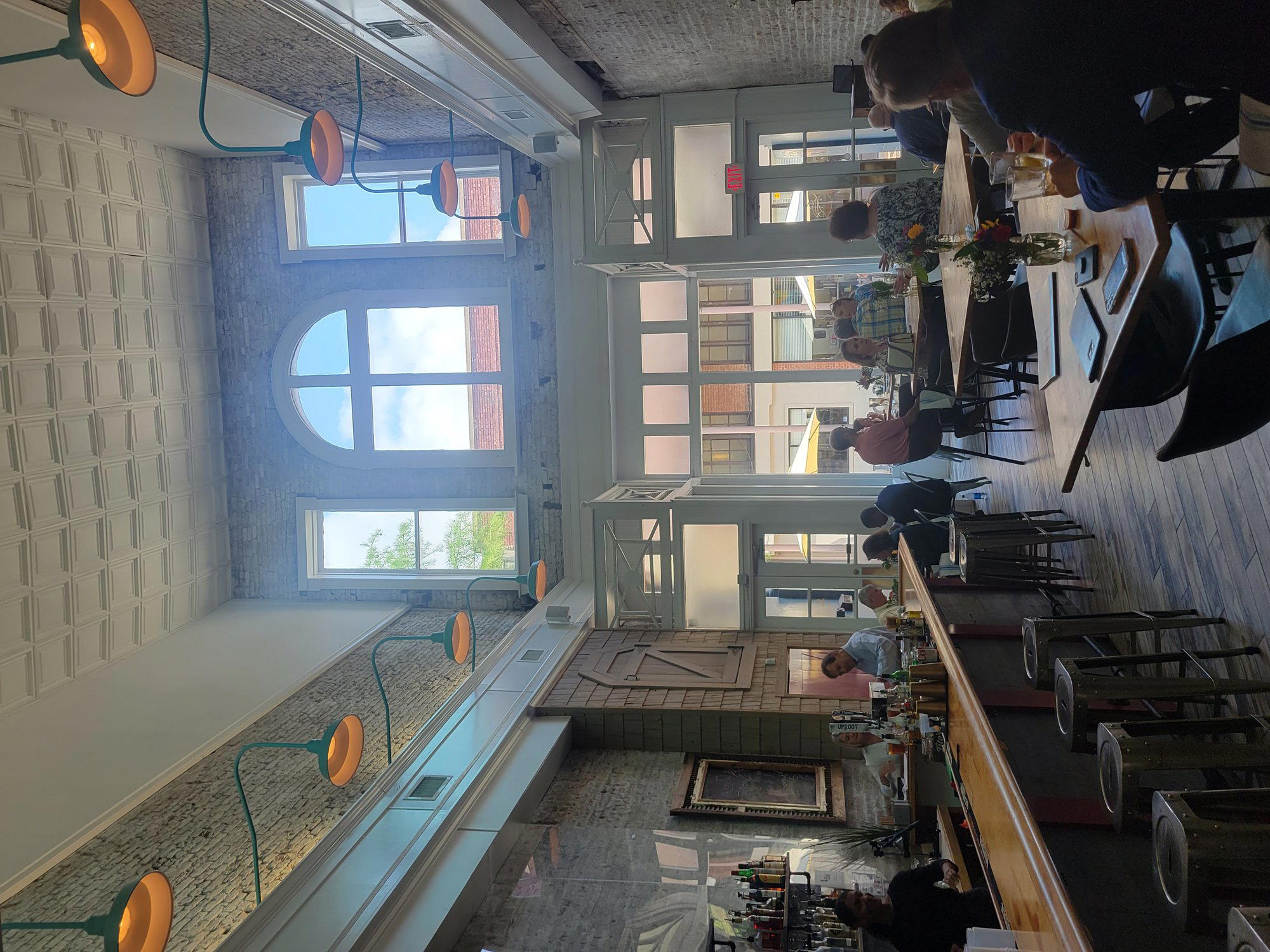
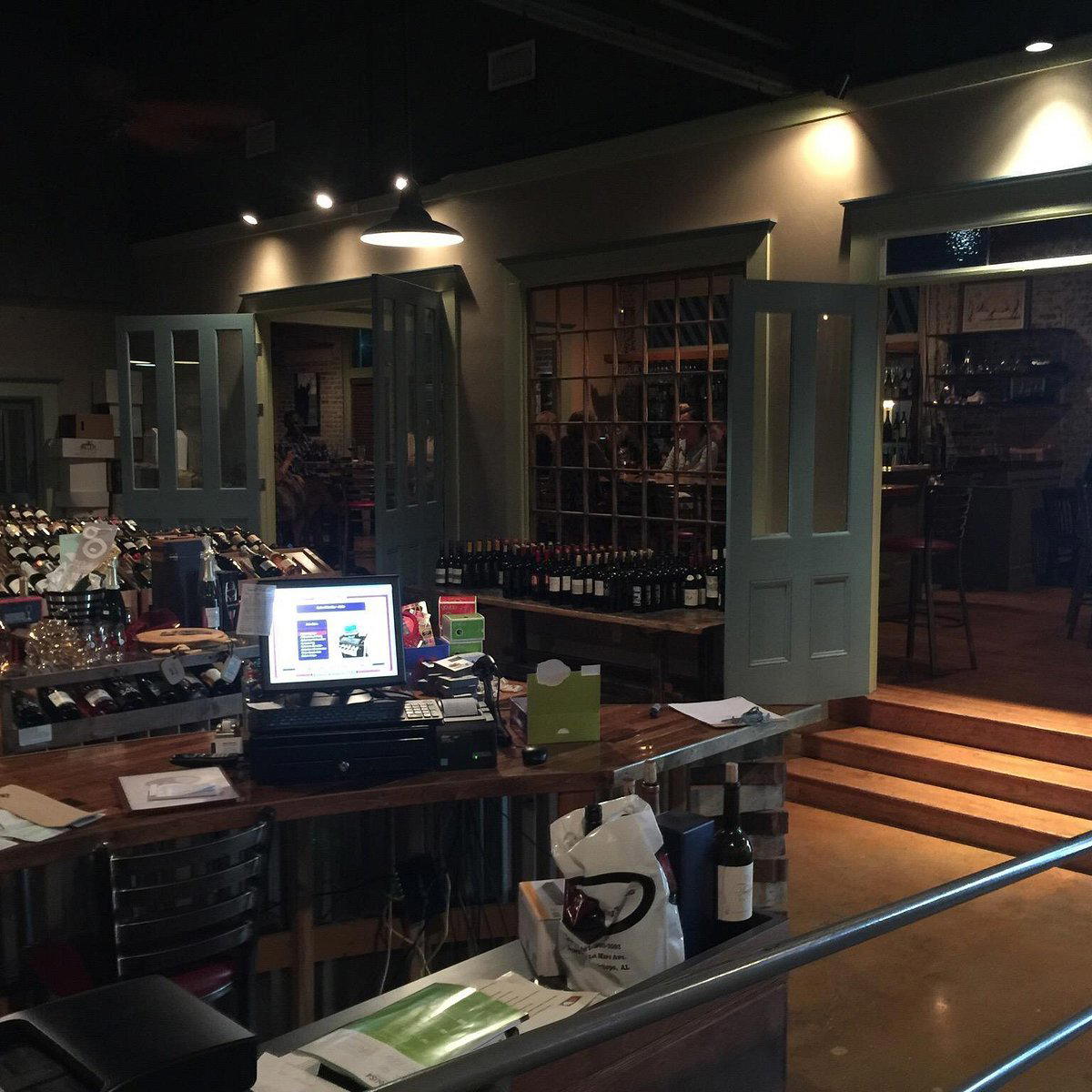
Cosmopolitan sophistication blending historic art deco elegance with modern brilliance, featuring stylish lobby and relaxing lounge areas.