← Guides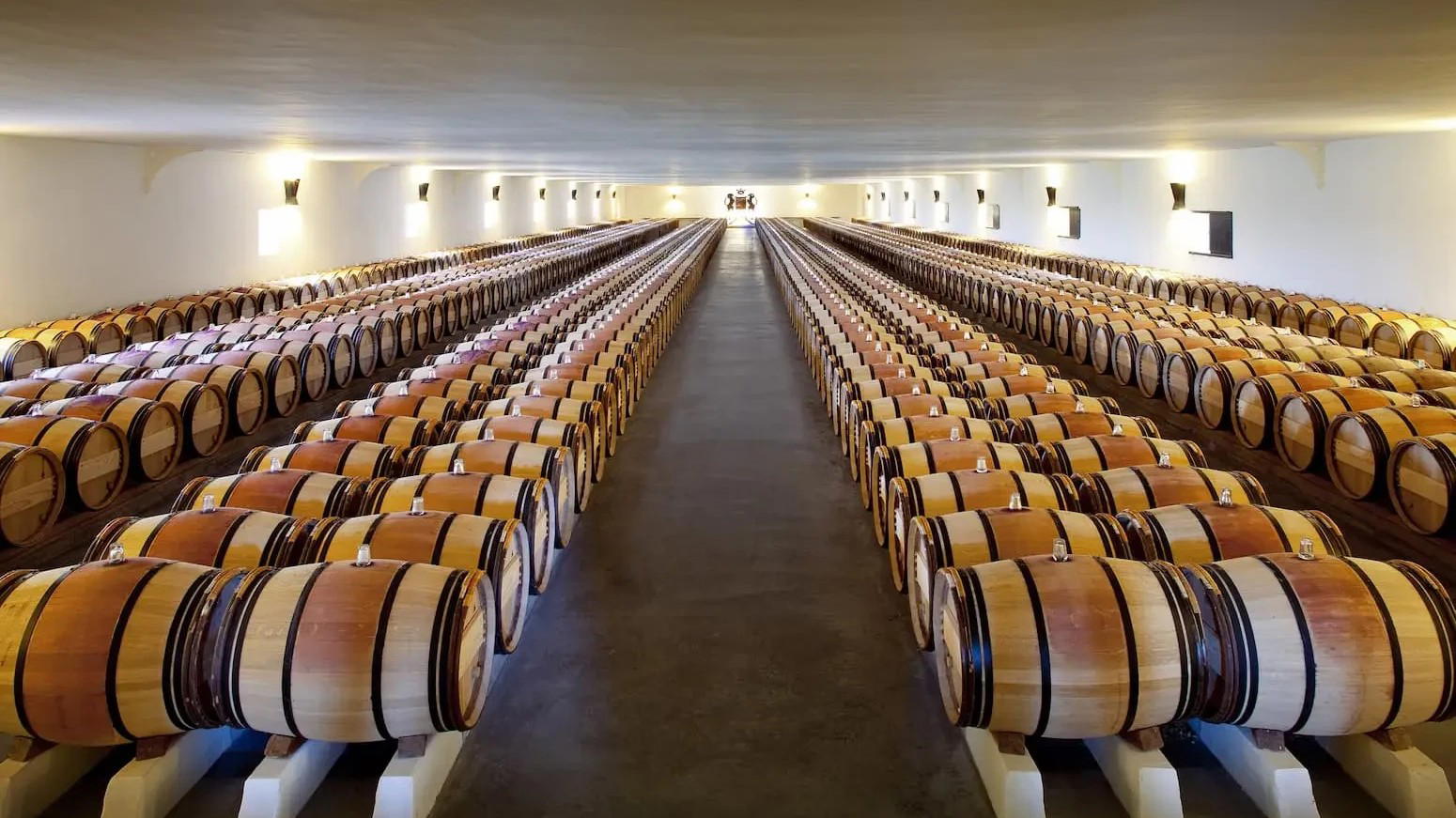
Visiting Château Mouton Rothschild in 2026: What to Know Before You Go The iron gates on the D2 north of Pauillac do not open on impulse.
Visiting Château Mouton Rothschild in 2026: What to Know Before You Go The iron gates on the D2 north of Pauillac do not open on impulse.
The iron gates on the D2 north of Pauillac do not open on impulse. Château Mouton Rothschild accepts visitors by appointment only, no walk-ins, no same-day bookings, and no public tasting room in the conventional sense. The single most reliable route in is a confirmed appointment made well in advance, requested directly through the château's official contact channels.
Mouton is a working Premier Cru Classé estate, one of only five First Growths, and the only one to reach that rank after a campaign by Baron Philippe de Rothschild that took two decades, with the reclassification confirmed in 1973. The vineyards, the chais, and the museum are not a hospitality product bolted onto a winery; they are the winery. Harvest, barrel work, and bottling run on their own calendar, and the estate manages visitor flow tightly to protect both the wine and the experience.
The museum alone justifies the pilgrimage. Baron Philippe assembled a collection of art objects connected to wine spanning five millennia, Flemish silver, Roman bronzes, Picasso ceramics, and the original label artworks commissioned annually since 1945 from artists including Braque, Miró, Warhol, and Jeff Koons. That collection is housed in the cellars beneath the château, and access to it is bundled with the guided visit. There is no separate museum ticket sold at the door.
Demand is structural: Mouton draws wine travelers from every continent, and the estate's capacity for guided groups is finite. Time slots get booked weeks, sometimes months in advance.1 The combination of a globally recognized name, a singular museum, and a strict appointment system means that slots, particularly in peak season, fill well ahead of time.
The estate's official website carries a contact and reservation form, and this is the primary channel the château directs visitors toward. A visit reservation request can be submitted via the château's online visit form, specifying your preferred date, number of visitors, and language preference.2 Tours are conducted in French and English; other languages may be available on request but are not guaranteed. You can also reach the estate by email, reservations can be made by contacting the château by email via their website,3 or by phone at +33 (0)5 56 73 21 29.3
A few practical notes on the channel itself: the estate does not publish a live availability calendar, so the form submission initiates a correspondence rather than an instant confirmation. Expect to exchange emails. Groups larger than a handful of people should flag their size upfront, the estate manages group visits differently from individual or small-party bookings, and some formats may not be available to large parties.
Luxury travel agents and Bordeaux-specialist wine tour operators can sometimes smooth the process, particularly for visitors combining Mouton with other First Growth visits or building a Médoc itinerary. Bookings can also be requested through Wine Paths via a contact form on their website.4 Operators with established relationships at the estate may have standing access to appointment slots that aren't visible through the public form. If you're planning a dedicated wine trip to the Médoc, this route is worth exploring, though it adds cost.
There is no third-party booking platform (no Resy, no Tock, no Viator listing) that carries verified live availability for Mouton's standard guided visits. Any listing claiming instant-confirm access to the château should be verified directly with the estate before payment.
Tours must be booked at least two months in advance and are subject to availability,3 so the practical rule is to request as early as your travel dates allow. The estate does not confirm how far ahead slots open beyond that minimum; ask directly when you submit your inquiry.
Seasonally, the picture is clearer. Spring, April through June, and early autumn, September through early October, represent the highest-demand windows, when Bordeaux wine tourism peaks and en primeur tastings draw trade visitors to the region.Tours are suspended during the harvest period,3 typically late September into October in the Médoc, so this is not the moment to plan a visit. Post-harvest, from November onward, the Médoc quiets considerably.
January and February are the quietest months in Pauillac. If your schedule allows a winter visit, this is when appointment availability is most likely to open on shorter notice. The landscape is stripped back, bare vines, low light, the Gironde grey and wide, but the museum and chais are no less compelling for it, and you'll share the space with far fewer people.
The annual label artist announcement, when it comes, generates a brief spike of press attention and visitor interest. Timing a visit around that news cycle means competing with journalists and collectors; timing it a few weeks later does not.
The estate does not publish current pricing on its website, so confirm the fee when you receive your booking confirmation rather than assuming it matches any figure you've seen cited elsewhere. The château is open Monday to Friday by appointment only,3 visits are not possible on weekends,1 and opening hours run 9:00 AM to 12:30 PM and 2:00 PM to 6:00 PM.5
The patient route is the direct inquiry, submitted early, with flexible dates. A few tactics that improve your odds: offer two or three alternative date windows rather than a single fixed date, and specify your language preference and group size clearly in the first message. Vague inquiries generate more back-and-forth and slower confirmations.
Luxury travel concierges who handle the correspondence can potentially access slots not visible through the public form, useful if you're building a multi-château Médoc itinerary and need confirmed dates before booking flights.
The guided visit moves through the working heart of the estate, the barrel cellars, the bottling hall, and the Grand Chai, before arriving at the museum. The chais at Mouton are among the more photographed in Bordeaux: the first-year chai is a long, cathedral-like space where the new vintage rests in Bordeaux barrels, aligned in rows under stone arches. The scale is deliberate; Baron Philippe rebuilt and expanded the cellars in the mid-twentieth century with an eye to both function and theater.
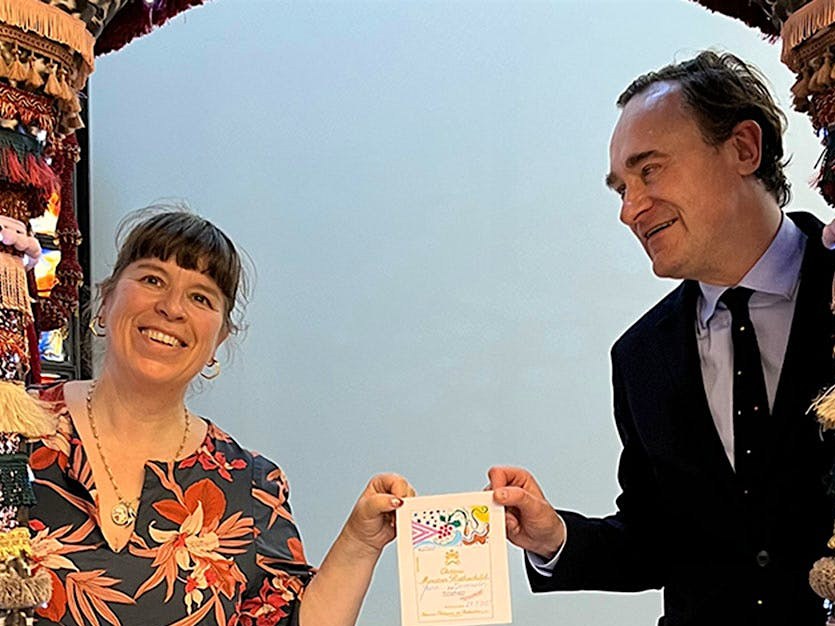
The museum, the Musée du Vin dans l'Art, is the visit's centerpiece.
Baron Philippe began collecting in the 1920s, and the collection now spans five millennia of objects connected to wine: Egyptian alabaster vessels, Greek kylixes, medieval tapestries, and the twentieth-century label artworks that have made Mouton's annual commission among the more watched in the wine world.
The label from the year of reclassification, painted by Picasso, is here, alongside works by Francis Bacon and Jeff Koons. The density of the collection in a relatively compact cellar space is striking; this is not a corporate wine museum with interpretive panels, but a private collection with genuine depth.
An appointment gives a 2.5-hour tour of the wine cellar, the Museum of Wine in Art, and includes a tasting. The wines poured vary and the estate does not publish a fixed tasting format in advance. Visitors should not expect to taste the current grand vin en primeur or to purchase bottles at the château, Mouton's allocation system runs entirely through the Bordeaux négociant trade, and there is no cellar-door sales operation. The visit is an experience of place and collection, not a buying opportunity.
| Château | Visit Format | Booking Route | Walk-ins Accepted? | Museum / Collection | Tasting Included? |
|---|---|---|---|---|---|
| Mouton Rothschild | Guided tour, appointment only; Mon-Fri | Direct via château website contact form or phone | No | Yes, Musée du Vin dans l'Art | Typically yes (format unconfirmed, verify with estate) |
| Château Pichon Baron | Guided tours, appointment preferred | Direct or via AXA Millésimes hospitality | Limited | No dedicated museum | Yes |
| Château Lynch-Bages | Guided tours + village experience (Bages) | Direct booking; more accessible than First Growths | Partial (village) | No | Yes |
| Cité du Vin, Bordeaux | Self-guided museum + tasting | Online ticket purchase; walk-ins possible | Yes | Yes, permanent and temporary exhibitions | Yes (included in ticket) |
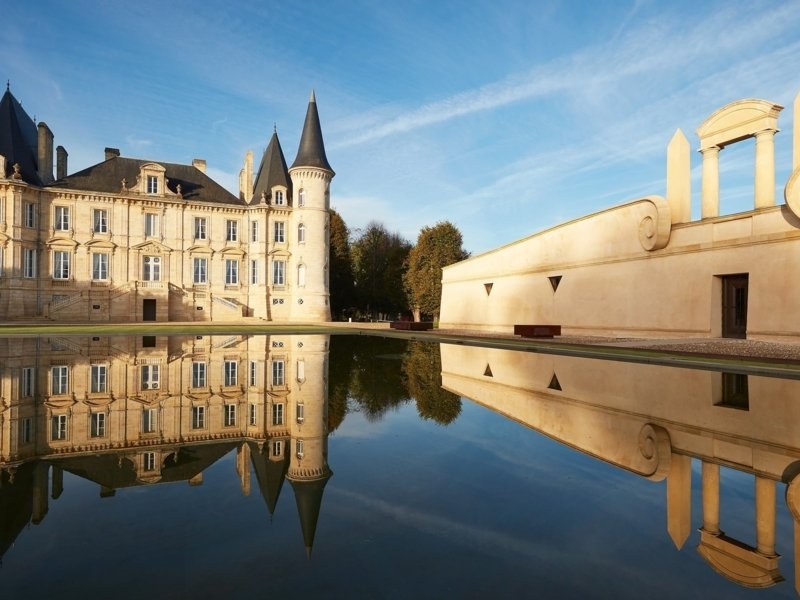
Château Pichon Baron (Pauillac). Pichon Baron offers guided visits through AXA Millésimes' hospitality program. The architecture alone, the turreted château reflected in its moat, makes it a destination, and the visit includes the barrel cellars and a tasting of current releases. Access is more direct than at the First Growths.
Château Lynch-Bages (Pauillac). The Cazes family has built one of the Médoc's most visitor-friendly estates around the village of Bages, which includes a bakery, restaurant, and wine shop alongside the château visit. Lynch-Bages is a Fifth Growth that consistently punches above its classification, and the visit is genuinely accessible, a useful entry point if you're new to Médoc château tourism.
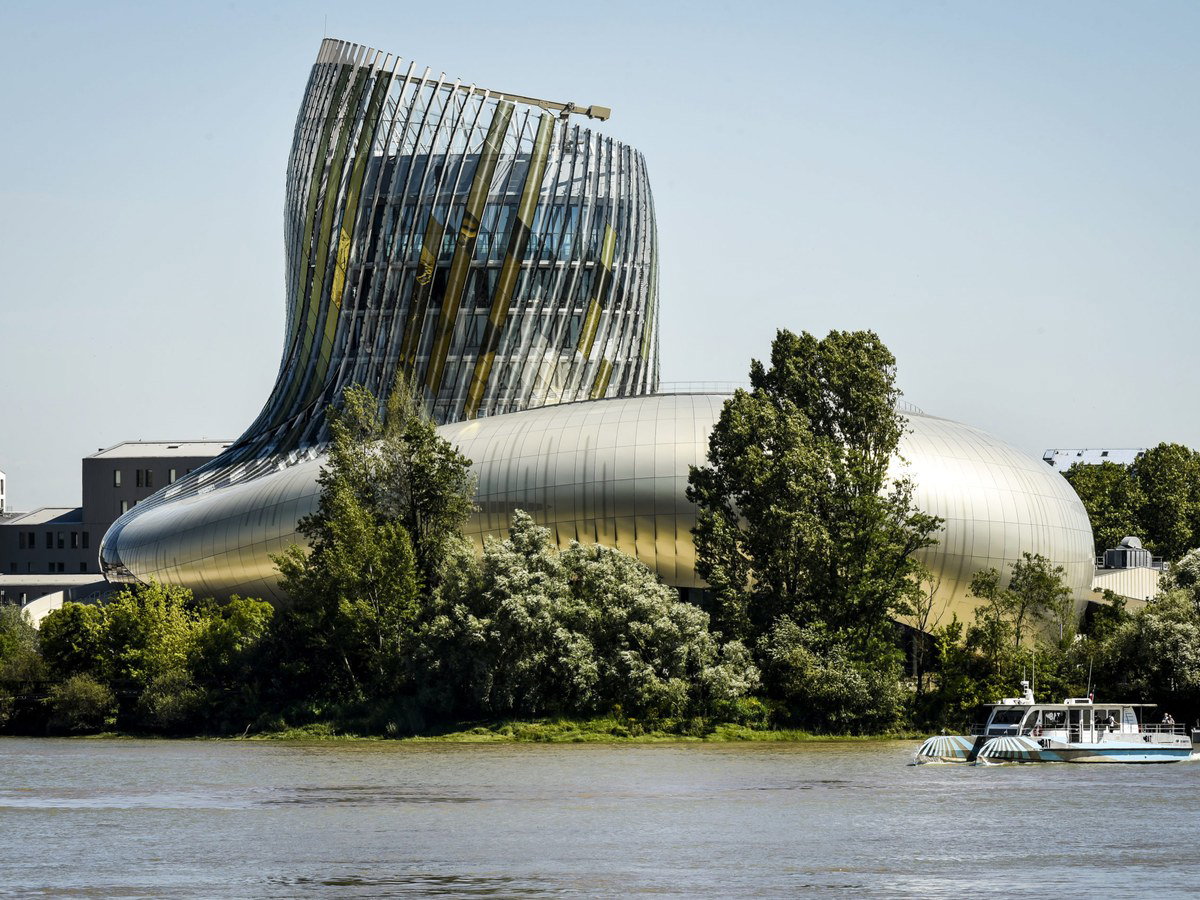
Cité du Vin, Bordeaux. For the museum dimension specifically, the Cité du Vin on the Bordeaux waterfront is especially accessible alternative. The permanent collection covers wine culture globally, the building is architecturally striking, and tickets are available online without advance correspondence. It is not a château visit, but it covers the art-and-wine ground on a flexible schedule.
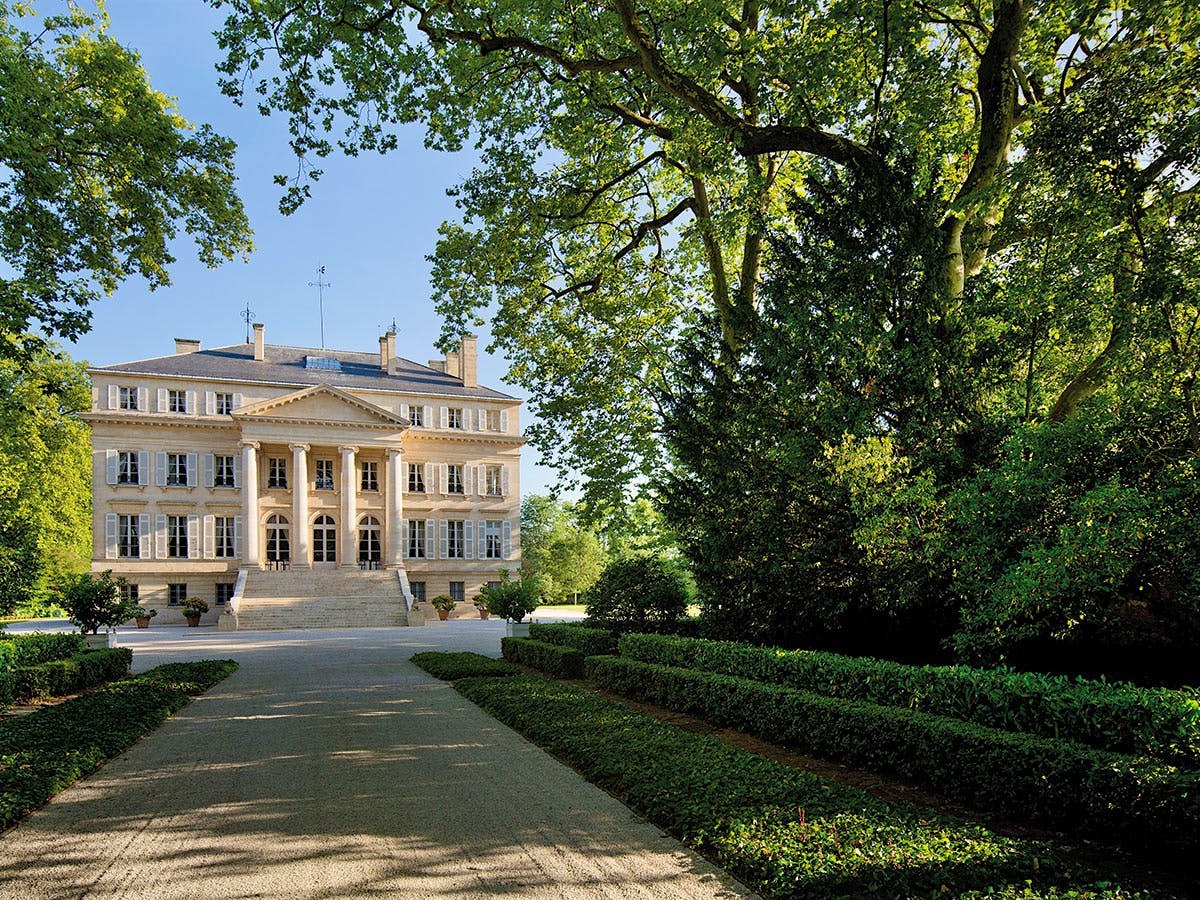
Château Margaux. If your interest is specifically in First Growth access and the Mouton appointment doesn't come through, Margaux accepts visit requests through a similar direct-contact model. The estate is more architecturally classical, the Palladian façade is one of Bordeaux's most well-known, and the visit covers the chais and cellars. Lead times and availability are comparable to Mouton; apply the same early-request logic.
The Mouton visit rewards collectors and serious enthusiasts who want to stand in the space where the wine is made, see the label artworks in their original context, and understand the estate's history through its objects rather than a brochure. If your interest in Mouton is primarily in acquiring the wine, the visit won't help, allocation runs through négociants, and the château does not sell at the door.
The visit suits a dedicated Médoc day trip from Bordeaux, paired with a lunch at one of Pauillac's waterfront restaurants and a second château appointment in the afternoon. It is less suited to travelers on tight schedules who can't absorb the uncertainty of an appointment-based system or who need same-day flexibility.
For a milestone birthday, a honeymoon with a wine dimension, or a serious collector's first visit to the Médoc, the effort of securing the appointment is proportionate to the experience. For a wine tourist with two days in Bordeaux and no fixed itinerary, Lynch-Bages or the Cité du Vin will serve better, both offer genuine depth without the correspondence overhead.
Mouton Rothschild is not a difficult visit to arrange, it is a visit that requires patience and lead time, which is a different thing. Tours of the estate are by appointment only,3 and the appointment system is the only route in. It works if you engage it early and directly through the château's contact form. There are no shortcuts that reliably improve on that, and no third-party platform that carries verified live availability.
The museum is the reason to prioritize this over other Médoc visits. The label collection, Picasso's canvas from the year of reclassification, Warhol's portrait of the Baron, Jeff Koons's 2010 label artwork, is not replicated anywhere else, and seeing it in the cellar context for which it was assembled is different from encountering reproductions in a catalogue. That alone justifies the correspondence.
Submit your request as early as your travel dates allow, offer flexible date windows, and confirm pricing and tasting format in the reply. If the appointment doesn't come through in time, Pichon Baron across the road offers a serious alternative without the same lead-time pressure. Mouton, in the end, is one of those estates where the planning itself becomes part of the experience, a reminder that the wines worth drinking are rarely the ones that come without effort.
No. Mouton Rothschild does not accept walk-in visitors. The estate operates on a strict appointment-only basis, and the gates are not open to the public outside of confirmed visits. Submit a visit request through the château's official website well in advance of your travel dates.
The château requires at least two months' notice, and slots are subject to availability. During peak season, spring and early autumn, demand is highest, so requesting earlier than the minimum is advisable. The estate does not publish how far ahead slots open; ask directly when you submit your inquiry.
A tasting is typically included in the guided visit, but the wines poured and the exact format are not published in advance and may vary. The estate does not operate a cellar-door sales operation, so the visit is not a route to purchasing allocation of the grand vin. Confirm the tasting format when you receive your booking confirmation.
No. The museum is housed within the estate's cellars and is accessible only as part of the guided visit. There is no separate museum ticket or independent public access to the collection. The visit and the museum are a single experience.
No. Mouton Rothschild's allocation runs entirely through the Bordeaux négociant trade. The château does not sell bottles at the cellar door. To acquire the wine, work through a Bordeaux merchant, a specialist wine merchant in your home market, or the en primeur system during the spring campaign.
Get the App
Take the shortlist into the En Primeur Club app for concierge access, saved places, and the next step after discovery.
Get Exclusive AccessMore from the editors