← Guides
How to join the Scarecrow wine mailing list, what to expect from the wait, and where to find bottles while you pursue an allocation.
How to join the Scarecrow wine mailing list, what to expect from the wait, and where to find bottles while you pursue an allocation.
The confirmation email doesn't come with fanfare. It arrives quietly: your name has moved from the waitlist to an active allocation on Scarecrow's mailing list, and with it comes the chance to purchase one of Napa Valley's most closely held Cabernet Sauvignons. There is no tasting room to walk into, no reservation to book on Resy, no merchant allocation sitting on a shelf waiting for you. Getting access to Scarecrow comes down to one path: join the mailing list, wait, and stay patient. For most collectors, that is the only route that reliably works.
Scarecrow's scarcity begins with the vineyard. The estate occupies a single parcel in Rutherford, the former J.J. Cohn property, planted in the 1940s and named for The Wizard of Oz, which Cohn helped produce at MGM. The JJ Cohn Estate name reflects the property's longtime association with J.J. Cohn, a longtime MGM studio executive; the land carries that history in its old-vine density and the particular iron-rich loam that defines Rutherford's mid-valley floor.
Production is deliberately small. Annual production is closer to approximately 1,600 to 2,000 cases.1 The entire production of Scarecrow Cabernet Sauvignon is sold through a mailing list; M. Etain is also offered to mailing list customers.2 Demand has grown steadily since the wine first drew serious critical attention in the mid-2000s. The mailing list is long. New names are added infrequently. If you want the grand vin at release price, the practical move is to get on the list now and measure the wait in years, not months.
Scarecrow is not open to the public; private appointments are not available; regular tours are not available.3 The primary access mechanism is the estate mailing list, through which allocations are offered directly to customers each release cycle. Mailing list members are given priority, even over celebrity requests.1Before planning around a particular window, confirm the current release calendar and waitlist status directly with the estate.
What is documented: the estate accepts mailing list inquiries through its website at scarecrowwine.com. The waitlist is typically around four years.4 Submitting a request does not guarantee placement, and placement on the waitlist does not guarantee an allocation offer on any fixed timeline. The estate manages the list at its own discretion. Collectors who have received allocations consistently report that responding to offers and buying when invited, rather than passing, keeps an allocation active over time.
There are three realistic routes to a bottle of Scarecrow in 2026, ranked by reliability:
1. The estate mailing list. Scarecrow wine is distributed by mailing list only.1 This is the only channel that delivers bottles at release price. Submit an inquiry through the estate's website and expect a wait measured in years, not months. This is the route insiders pursue first and protect carefully once established.
2. The secondary market and auction. Scarecrow appears regularly at major auction houses, Hart Davis Hart, Acker, Zachys, and Sotheby's Wine all handle it. Prices on the secondary market run substantially above release, and provenance matters enormously for a wine this age-worthy. Buy only from sources with documented cold-chain storage. Collector demand for Rutherford Cabernet at peak drinking windows keeps auction activity consistent across multiple vintages, and specific vintage performance should be confirmed with the relevant auction house.
3. Fine wine merchants with allocation history. A small number of Napa-specialist retailers, Wally's in Los Angeles, K&L Wine Merchants, and a handful of New York fine wine shops, have historically received limited Scarecrow allocations. These sell through quickly, often to customers with established purchase histories at those shops. Build the merchant relationship before you need the allocation; arriving cold and asking for Scarecrow rarely works.
There is no en primeur or futures program for Scarecrow. The wine is sold after bottling, through the mailing list, at the estate's discretion.
Collectors who hold active Scarecrow allocations share a few consistent behaviors. They purchase every vintage offered, even in years they might otherwise pass on; skipping an offer is the fastest way to lose an allocation. They respond to offer emails promptly; the estate does not hold allocations open indefinitely. And they treat the relationship as long-term: some current allocation holders trace their list membership back to the wine's early releases in the mid-2000s.
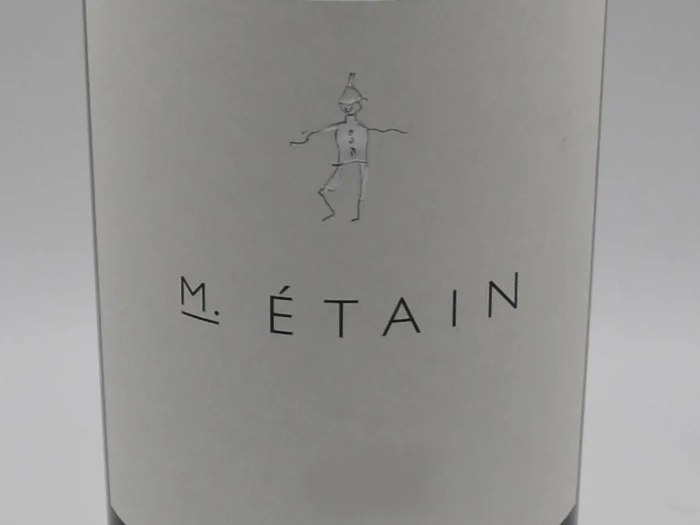
For those still on the outside, the M. Etain second wine is the practical entry point. M. Etain is offered to mailing list customers2 and appears more frequently through merchant channels than the grand vin. Buying M. Etain through a retailer establishes a purchase record with that merchant, which matters when a small Scarecrow allocation does surface.
Seasonal timing: Scarecrow's release cycle follows the Napa calendar loosely, with offers typically going out to mailing list members after bottling. Confirm timing directly with the estate. The secondary market tends to see more Scarecrow activity in the spring auction season and again in the fall, when major houses run their Napa-focused sales. Scarecrow is not open to the public,1 and there is no harvest-week access route here in the way some Napa estates offer.
Who you'll share the room with: Scarecrow's allocation list skews toward long-tenured Napa collectors, people who have been buying Harlan, Screaming Eagle, and Colgin since the 1990s and added Scarecrow when it emerged as a peer. At auction, the bidder pool includes both American collectors and a substantial contingent of Asian buyers, particularly from Hong Kong and Japan, who have driven secondary prices on cult Napa Cabernet over the past decade. This is not a wine that surfaces at casual retail; the people who hold it tend to hold it deliberately.
If the Scarecrow waitlist is a multi-year proposition, these four wines offer comparable Rutherford and Napa Cabernet character with more accessible allocation routes:
| Wine | Appellation | Access Route | Mailing List Difficulty | Secondary Market Availability |
|---|---|---|---|---|
| Scarecrow | Rutherford, Napa Valley | Estate mailing list; auction | high, waitlist, typically ~4 years | Regular; prices well above release |
| M. Etain (Scarecrow second wine) | Rutherford, Napa Valley | Merchant allocation; mailing list | Moderate, same list, more bottles | Occasional; more approachable pricing |
| Dalla Valle Maya | Oakville, Napa Valley | Estate mailing list | High, waitlist, but active | Regular auction presence |
| Colgin Cariad | Napa Valley | Estate mailing list; select merchants | High, multi-vintage commitment expected | Active; Liv-ex tracked |
| Realm Cellars The Bard | Napa Valley | Estate mailing list; merchant | Moderate, list more accessible than peers | Growing secondary presence |
Dalla Valle's Maya, a Cabernet Sauvignon/Cabernet Franc blend from Oakville, is the closest stylistic parallel: old-vine intensity, single-estate focus, and a mailing list that, while competitive, has historically been more responsive to new inquiries than Scarecrow's. Colgin's Cariad offers Napa Valley Cabernet at a similar quality tier with a slightly wider merchant footprint. Realm Cellars, newer to the conversation, has a mailing list that remains more accessible for collectors arriving now, so confirm current status directly.
Tastings at Scarecrow are by invitation only.1 The experience of Scarecrow is, almost entirely, the wine itself, opened at home, at a collector dinner, or at a restaurant with the depth of cellar to stock it.
The Cabernet Sauvignon from the JJ Cohn Estate is built on Rutherford's signature: that particular combination of well-drained alluvial loam, afternoon heat moderated by the Mayacamas shadow, and old-vine root systems that reach deep enough to find water without irrigation stress. The wines show the dusty, iron-tinged tannin structure that Rutherford collectors call "Rutherford dust", a textural quality that distinguishes the appellation from Oakville's rounder profile or Stags Leap's more linear frame.
The 2021 vintage trades around $900 to $1,1005 on the secondary market, a reference point for what release-price access through the mailing list represents relative to those premiums. Collector consensus and critical notes should be consulted for guidance on when to open any given bottle. M. Etain, the second wine, drinks earlier and shows more of the vineyard's red-fruit register, a useful introduction to the site's character before committing to the longer arc of the grand vin.
If you encounter Scarecrow on a restaurant list, and it does appear at a handful of Napa Valley dining rooms, including those attached to estates with reciprocal collector relationships, the wine rewards a long evening. Allow at least an hour in a wide-mouthed decanter and expect the wine to shift over the course of the meal.
Scarecrow is worth pursuing if you are building a serious Napa Cabernet cellar and want representation from Rutherford's old-vine tier. The JJ Cohn Estate's history, vines planted in the 1940s, a single parcel, no expansion possible, gives the wine a fixed ceiling on production that makes it genuinely scarce rather than artificially so. For a collector who already holds Harlan or Screaming Eagle and wants to complete the Napa cult Cabernet picture, Scarecrow belongs on the list.
It is less suited to collectors who want flexibility. The mailing list rewards consistency; if you are not prepared to purchase every vintage offered, the allocation will likely move to someone who is. Purchase when invited, or risk losing the position.
For the collector who wants the Rutherford experience without the multi-year waitlist, M. Etain is the practical near-term answer. Same vineyard, same farming, more bottles, and a merchant channel that actually functions.
Scarecrow is one of those allocations where the calculus is clear once you accept the timeline. The mailing list is the only distribution channel,1 the only route that delivers bottles at release price, and it is typically a four-year wait.4 Submit your inquiry, draw on M. Etain through a merchant to establish your presence in the category, and treat the secondary market as a parallel track rather than a fallback; auction prices are high, but provenance-verified bottles do surface regularly at Hart Davis Hart and Zachys.
The JJ Cohn Estate is not going anywhere. Annual production runs roughly 1,600 to 2,000 cases in recent vintages, historically as low as 400 to 800 cases,1 a ceiling set by the single parcel and old-vine yields, not by choice. What changes is your position on the list, and that only moves if you are on it. The collectors who hold Scarecrow allocations today mostly got on the list years ago and stayed. For most collectors in 2026, M. Etain is the smarter near-term chase; the grand vin belongs to those who planted their flag early and kept showing up, a patience that, for a wine this singular, tends to prove its own reward.
Submit an inquiry through the estate's website at scarecrowwine.com. The estate manages the waitlist at its own discretion. Collectors commonly report multi-year waits, though placement does not guarantee an allocation offer on any fixed timeline, confirm current status directly with the estate.
Scarecrow does not operate a public tasting room and does not offer scheduled vineyard tours or cellar visits. Tastings are by invitation only, and private appointments are not available to the general public. The wine is sold exclusively through the estate mailing list and, secondarily, through select fine wine merchants and auction.
The secondary market is one reliable route for collectors outside the mailing list. Scarecrow appears regularly at Hart Davis Hart, Acker, Zachys, and Sotheby's Wine. A small number of Napa-specialist retailers, including Wally's in Los Angeles and K&L Wine Merchants, have historically received limited allocations, though these sell through quickly to customers with established purchase histories at those shops.
M. Etain is Scarecrow's second wine, sourced from the same JJ Cohn Estate in Rutherford and offered to mailing list customers alongside the grand vin. It is produced in larger quantities than the Cabernet Sauvignon, appears more frequently through merchant channels, and drinks earlier, making it the practical entry point for collectors who want to experience the vineyard's character while pursuing a mailing list position for the flagship wine.
On the secondary market, the 2021 Scarecrow Cabernet Sauvignon trades around $900 to $1,100 per bottle, well above its mailing list release price; provenance-verified bottles from major auction houses command premiums that vary by vintage and market conditions. Confirm current auction estimates directly with Hart Davis Hart, Zachys, or Sotheby's Wine before bidding.
Get the App
Take the shortlist into the En Primeur Club app for concierge access, saved places, and the next step after discovery.
Get Exclusive AccessMore from the editors