← Guides
A tribute to Emidio Pepe, who founded his Torano Nuovo estate in 1964 and made Abruzzo’s montepulciano a cellar wine.
A tribute to Emidio Pepe, who founded his Torano Nuovo estate in 1964 and made Abruzzo’s montepulciano a cellar wine.
Emidio Pepe Abruzzo is the story of a Torano Nuovo estate founded in 1964 from about 1.5 hectares of family vineyards, and of a winemaker who spent six decades proving that montepulciano and trebbiano abruzzese could age. Pepe died on July 28, 2026, at his home in Torano Nuovo, one day after his 94th birthday; his granddaughter Chiara De Iulis Pepe confirmed his death to The New York Times. The date matters because the bottles he leaves behind, 1975 Montepulciano, 1971 Trebbiano, and many younger vintages still waiting in the family cellars, have become the clearest record of his argument. Time was his witness.
For collectors, Emidio Pepe Abruzzo has never been only an estate name. It is a shorthand for a set of choices that looked stubborn when he made them: bottle the family wine rather than sell it in bulk, trust Abruzzo's indigenous grapes, work the vineyards by hand without synthetic chemicals, ferment spontaneously in glass-lined concrete, avoid filtration, and add no sulfites. The natural wine generation would later claim him as an ancestor. He had already done the work.
In 1964, Emidio Pepe founded his eponymous estate in Torano Nuovo with about 1.5 hectares of family vineyards. The scale was modest; the break with family practice was not. His grandfather had made wine since 1899, and his father followed, but the family sold only bulk wine until Emidio chose to bottle commercially.
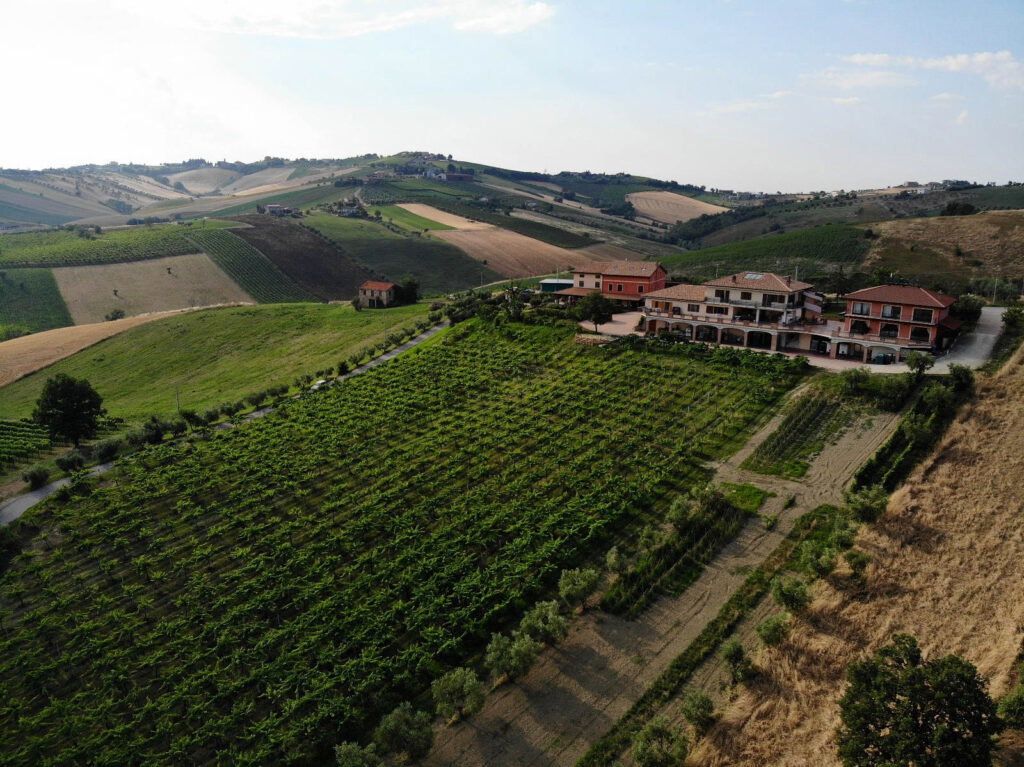
That single decision gave Abruzzo a different kind of evidence. Bulk wine disappears into anonymity; bottled wine carries a name, a vintage, and a claim on the future. Pepe put his own name on montepulciano for reds and trebbiano abruzzese for whites at a moment when few believed these grapes could build the kind of bottle age collectors expect from Italy's more famous regions.
My grandfather was the first to bottle, in order to show people that Montepulciano can age. Even [his] dad thought he was crazy
, Chiara De Iulis Pepe, granddaughter, Wine Spectator1
Pepe's answer was not reinvention. He stayed close to the methods he trusted. The estate's later reputation grew from the slow accumulation of proof: bottle after bottle showing that montepulciano from Torano Nuovo could move beyond youthful tannic austerity into an older register of complexity and grace. The proof did not arrive in a press release. It arrived in corks pulled after twenty years, then fifty.
Edoardo Valentini, who died in 2006, belongs in the same Abruzzo conversation. Together, Pepe and Valentini gave collectors two names through which to think about the region's age-worthy wines: Valentini for the complexity of Trebbiano d'Abruzzo, Pepe for montepulciano's capacity to deepen in bottle. They worked from local grapes and time-honored methods rather than from imported formulas. That was the point.
Pepe's methods have been repeated often because they read almost like a refusal list: no synthetic chemicals in the vineyards, no mechanical shortcut for the whites or reds, no filtration, no added sulfites, no oak-driven styling. White grapes were crushed by foot. Red grapes were destemmed by hand. Fermentations began spontaneously in glass-lined concrete.
This was not retro chic. Pepe began in 1964, decades before biodynamic and natural wine became table vocabulary. Later commentators would describe him as a precursor to those movements; the chronology matters. The natural wine generation embraced Pepe rather than the reverse. In 2016, his granddaughters Chiara and Elisa poured the estate's wines at Big Glou, the natural wine fair in Williamsburg, Brooklyn, for a young low-intervention crowd. The room had caught up with Torano Nuovo.
Inside the cellar, the vessels also mattered. Spontaneous fermentations in glass-lined concrete gave Pepe a way to make wines without the flavor architecture of oak. The absence of filtration and added sulfites meant the wines carried their material in a different way, less polished, more dependent on the health of fruit, ferment, and élevage. Such choices can produce fragile wines in careless hands. Pepe's long-lived bottles argue that discipline, not intervention, held the system together.
Grandfather says the oak makes the wine old quickly, instead of finding longevity. We like it when the complexity comes from the grape, not from the oak
, Chiara De Iulis Pepe, granddaughter, Wine Spectator1
That line explains the flavor grammar of the estate. If you come to Pepe expecting oak to announce seriousness, you miss the argument. The wines ask you to read grape, vintage, and time rather than cooperage. Montepulciano arrives young with tight structure, austere edges, and tannin. Trebbiano abruzzese can show texture and salinity earlier. Neither wine is built to flatter quickly.
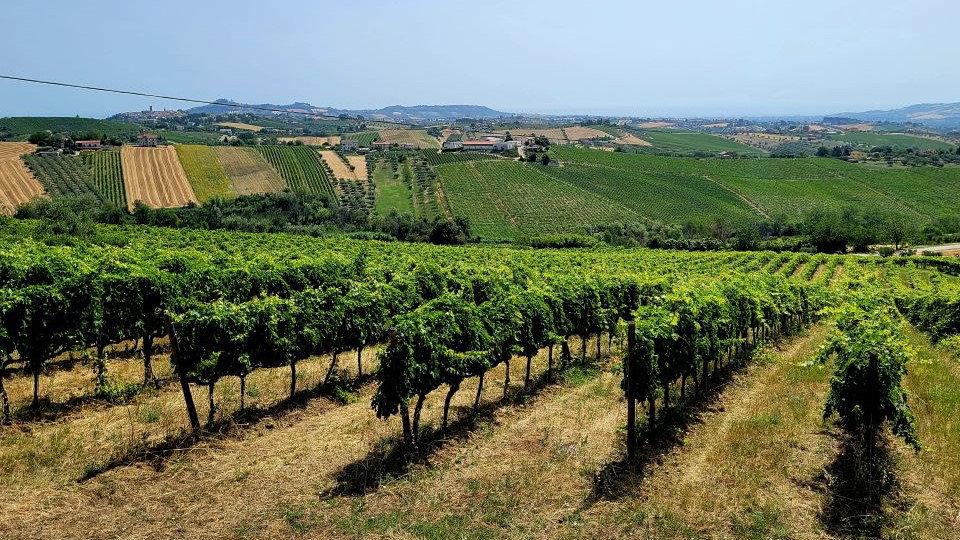
For travelers, this is why Torano Nuovo matters as more than a dot on an Abruzzo itinerary. The place is not incidental decoration around the bottle; the estate's choices begin in hand-worked vineyards and continue through the cellar without cosmetic correction. A visit to Abruzzo after tasting mature Pepe changes the wine in your mind. The bottle stops being an abstraction and becomes a record of a local argument made year after year.
Pepe's red wine made the loudest case because montepulciano carried the heavier burden. The grape was familiar in Abruzzo, but familiarity did not translate into collector confidence. Pepe insisted that Montepulciano d'Abruzzo could age, and his release strategy forced the question into the cellar rather than the tasting room.
With twenty years, the reds turn complex and graceful, as The New York Times put it in its obituary. That phrasing is useful because it avoids the usual shorthand of power. Pepe's Montepulciano d'Abruzzo did not gain its standing by imitating the weight of other Italian reds. It showed that Abruzzo's local grape, treated with patience and without oak makeup, could move into an older, more articulate phase.
The 1975 Montepulciano remains one of the proof bottles cited in coverage of Pepe's death. More than half a century after harvest, it was still alive. For a collector, that detail changes the way you view younger releases. A current bottle at four years is not a finished performance; it is an early chapter in a long, deliberately paced release program.
Pepe's place alongside Edoardo Valentini also sharpens the regional point. Valentini demonstrated another side of Abruzzo's capacity for age, particularly through Trebbiano d'Abruzzo. Pepe gave montepulciano a parallel claim. Between them, they helped pull Abruzzo out of the mental category of bulk wine and local table wine for drinkers willing to let bottles rest.
Luigi Veronelli belongs here as well, not as a producer but as a writer whose sympathies aligned with growers like Pepe. Chiara De Iulis Pepe recalled a belief shared by Pepe and Veronelli: that the smaller the estate and vineyard, the more well-suited the wine. Whether one takes that as philosophy or provocation, it suits the origin of Emidio Pepe Abruzzo: a small family holding, a local grape, and a decision to bottle under a name.
The red wine may have carried the headline, but Pepe's whites made their own claim. He championed trebbiano abruzzese, with pecorino also part of the white-wine story, at a time when Abruzzo's indigenous grapes needed advocates who could show not only local charm but bottle life.
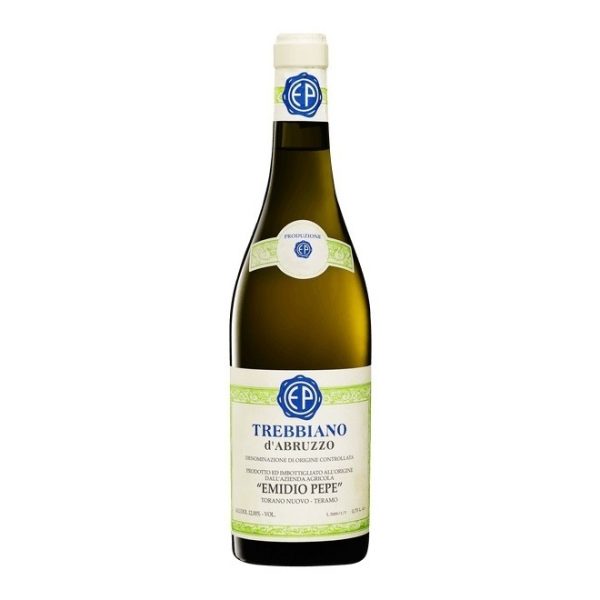
The whites age well too, while remaining more accessible young: textured and saline. Those two words do useful work. Texture places the wine in the mouth rather than only on the nose; salinity gives it a line that keeps the wine from feeling broad or merely mature. Pepe's white grapes were crushed by foot, then fermented through the same broader philosophy of patience and minimal correction.
The 1971 Trebbiano is the white-wine counterpart to the 1975 Montepulciano. It is cited as still alive more than half a century on. That bottle matters because Trebbiano d'Abruzzo has often needed even more explanation outside Italy than montepulciano. A fifty-year-old white from Abruzzo still carrying life is not a marketing phrase. It is a cork pulled against prejudice.
Collectors who come to Pepe only through the reds risk missing the estate's quieter lesson. The whites show that his trust in local varieties was not selective. He did not simply find one red grape to sharpen; he looked at Abruzzo's indigenous material and treated it as capable of duration. Trebbiano abruzzese, in his hands, did not need aromatic exaggeration or oak polish to justify a place at the table.
For wine-focused travel, this is one reason Abruzzo rewards time on the ground. The region's story cannot be reduced to a single grape or a single producer, yet Pepe offers a particularly clear lens: red and white wines made from local varieties, with age as the arbiter. Taste a young textured, saline white beside an older bottle if you have access, and the family's retention strategy begins to make sensory sense.
That policy changes the collector's decision. Many estates sell nearly everything on release and leave the secondary market to do the aging. Pepe's family keeps a portion of the wine under its own care, allowing drinkers to encounter bottles at stages the producer considers meaningful. For a wine whose identity depends on time, that is more than stock management. It is part of the aesthetic.
The latest-release reds, selling around $150 a bottle, arrive roughly four years after vintage. A collector buying at that stage is buying structure and future movement: tightness, austerity, tannin, and the promise of evolution. A collector buying from the library is paying for elapsed time, estate provenance, and the evidence that the bottle has moved beyond its early severity.
The family's decision to retain around half of each vintage also gives the estate a rare ability to teach its own aging curve. Instead of relying only on auction lots or restaurant cellars, Pepe can release older bottles that connect current drinkers to past growing seasons. The cited 1975 Montepulciano and 1971 Trebbiano are not just trophies. They form a bridge between the original 1964 wager and the present-day collector market.
For those who buy with the cellar in mind, provenance should sit at the center of any Pepe decision. There is no need to speculate about production numbers or allocation mechanics; the important known fact is that the family has historically held back a large share of each vintage. That alone affects how one should read availability. Library bottles appear because the family chose decades ago not to sell everything young.
There is also a psychological lesson in the release timing. Four years after vintage is late compared with many everyday reds, yet early for Pepe. Twenty years begins to show what the estate's montepulciano can become. Fifty-year bottles remain part of the proof. The collector's question is less whether the wine is ready and more which chapter of the wine's life you want to drink.
Chiara and Elisa's appearance at Big Glou in Williamsburg in 2016 now reads as a useful image of the estate's two time scales. On one side: bottles built from methods that predate the language of natural wine by decades. On the other: a young low-intervention audience in Brooklyn, tasting wines from Torano Nuovo as part of a contemporary conversation. Pepe did not need to adjust himself to that room. The room had found its way to him.
Alessandro Nicodemi, president of the Abruzzo wine consortium and head of Fattoria Nicodemi, issued a statement after Pepe's death, calling him one of the greatest figures in Italian viticulture. The statement matters because Pepe's work now belongs not only to his family but also to Abruzzo's public memory. His career gave the region a reference point for what indigenous grapes, traditional methods, and long aging can accomplish together.
The family's task is difficult precisely because the estate's identity is so legible. If a domaine's greatness depends on novelty, each generation can announce a new chapter. At Emidio Pepe, the chapter headings are already clear: hand-worked vineyards, foot-crushed whites, hand-destemmed reds, spontaneous fermentation in glass-lined concrete, no filtration, no added sulfites, no rush to market. Continuity will be measured in details, not slogans.
For travelers planning Abruzzo through wine rather than coastline alone, Torano Nuovo now carries the weight of pilgrimage. The practical points are simple: this is the town where Pepe founded the estate in 1964, where he died in 2026, and where the family continues the work. The richer point is harder to schedule. To understand the estate, you need to taste across time, young reds in their austere phase, mature montepulciano after two decades, and, if fortune allows, a library bottle old enough to have outlived most arguments about fashion.
Emidio Pepe leaves Italian wine with a rare kind of proof: not a theory of terroir, not a campaign for natural wine, but bottles that have kept speaking long after their doubters expected silence. The next measure of Emidio Pepe Abruzzo will come from Sofia, Daniela, Chiara, Elisa, and the vintages they choose to hold back for drinkers who are still learning how long Abruzzo can wait.
Get the App
Take the shortlist into the En Primeur Club app for concierge access, saved places, and the next step after discovery.
Get Exclusive AccessMore from the editors