← Guides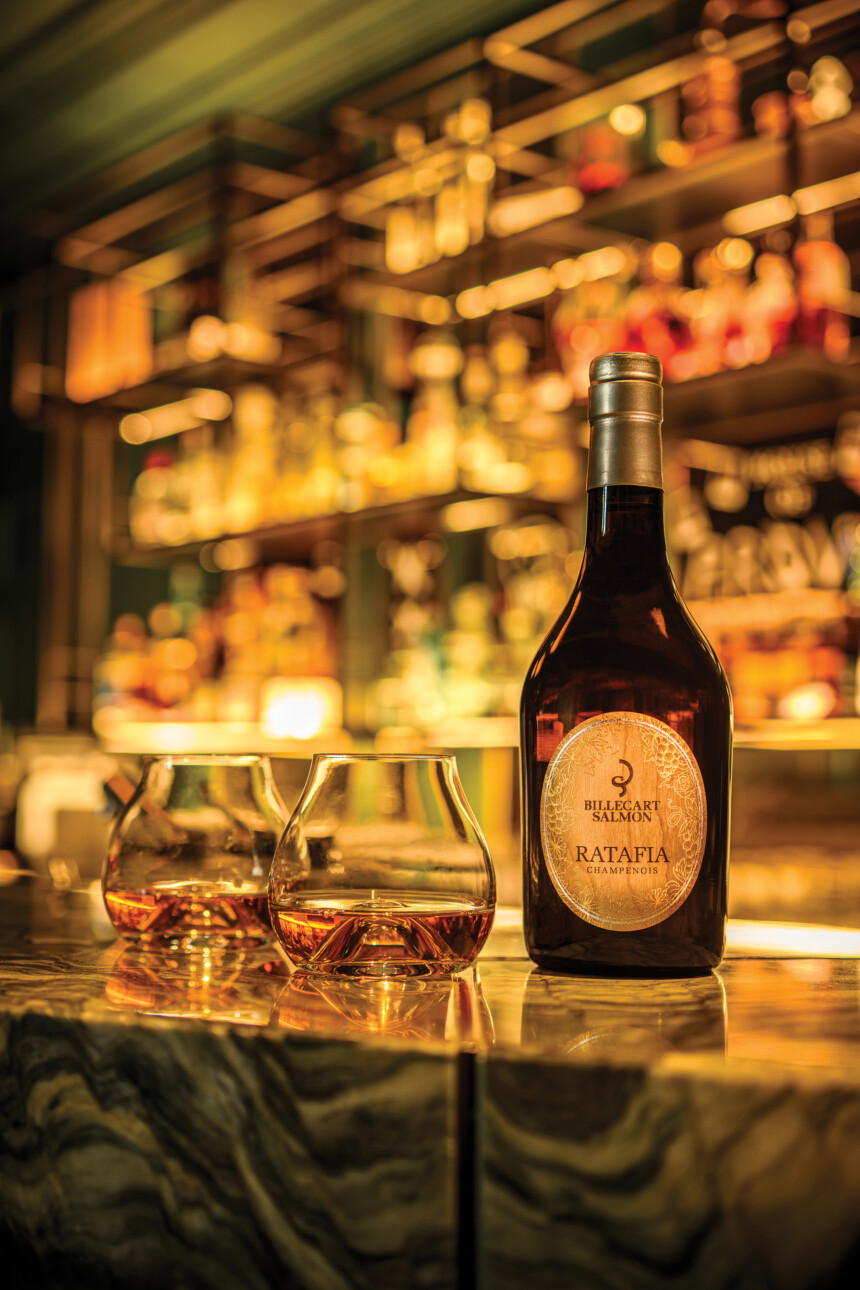
After 208 years, Billecart-Salmon turns second-press Pinot Noir must into an 18% Ratafia bound for Rosewood Hong Kong and Agnes.
After 208 years, Billecart-Salmon turns second-press Pinot Noir must into an 18% Ratafia bound for Rosewood Hong Kong and Agnes.
Billecart-Salmon Ratafia Champenois is the Mareuil-sur-Aÿ maison’s first Ratafia after 208 years, with an Asia-Pacific launch set for autumn 2026 after a spring debut at Rosewood Amsterdam. The first production runs to only two barrels. For a Champagne house whose name usually brings collectors to Brut Rosé, Nicolas François and Clos Saint Hilaire, the new bottle is a different kind of signal: Pinot Noir must, Fine de Champagne, mature Burgundy oak, and a practical answer to what happens after the first press.
Rebecca Lo reported the launch for The Drinks Business, noting that Billecart-Salmon introduced the product globally at Rosewood Amsterdam in spring 2026 and will bring it to selected Asia-Pacific on-trade partners in autumn 2026. Rosewood Hong Kong and Agnes in Brisbane are named for the rollout, with Singapore and Shanghai venues still to be confirmed by the maison.
The timing matters because this is not a line extension dressed in Champagne vocabulary. The house has made a Ratafia Champenois from second and third press juice, material it does not use for its Champagne cuvées, and tied the release to Look Beyond, its CSR vision around maximising terroir and minimising waste. The result is 18% ABV, built from four vintages, and bottled in formats that split the audience neatly between restaurants, hotels and collectors who prefer something they can take home.
The 2026 date gives the story its charge: Billecart-Salmon has waited 208 years before releasing a Ratafia Champenois. The house did not introduce it first through mass retail or a broad export push. It debuted at Rosewood Amsterdam in spring 2026, then moved toward Asia-Pacific restaurants and hotels for autumn 2026. That sequence tells you how Billecart-Salmon wants the wine-adjacent bottling to be encountered, poured, explained, paired, and served by teams who already understand the maison’s Champagne range.

At Tébo in Hong Kong, according to Lo’s report, a Maison Billecart-Salmon Champagne pairing dinner turned toward the bottle that was not yet on the table. Regional sales manager Thibault Casoli was discussing the Asia launch, and the absence itself became part of the draw. For collectors, this is often how a small release announces itself: not with shelf stacks, but through a restaurant conversation months before allocation arrives.
Mathieu Roland-Billecart, seventh generation owner and head of Maison Billecart-Salmon, frames the project from inside the house rather than from the drinks aisle. The maison uses first-press juice for its Champagne cuvées; the question was what to do with the second and third presses. Ratafia supplied a format where that richer juice could become part of a finished expression rather than a by-product. It is a cellar decision with a hospitality consequence.
There is also an old-fashioned scarcity mechanism at work. Roland-Billecart told The Drinks Business that inaugural production is only two barrels and mainly offered to loyal partners. Prices in Asia-Pacific are still to be set, but the 500mL bottle is priced in France at €58 (£49.50). For anyone used to following Champagne through allocation lists, the early signal is clear: the first meaningful access will likely be by the glass, by the pour, or by the table at named partner venues before 500mL bottles move through broader channels in early 2027.
Billecart-Salmon Ratafia Champenois is made from Pinot Noir grape must and Fine de Champagne through mutage, the process that halts fermentation by adding spirit and preserves grape sugar in the finished drink. The source material matters here. The experiment began with fruit from Clos Saint Hilaire, which Roland-Billecart described to The Drinks Business as fully biodynamically farmed and 100% Pinot Noir, the grape he called the king variety in the village of Mareuil-sur-Aÿ.
The technical outline is compact but full of useful signals: Pinot Noir must from a single vineyard parcel, Fine de Champagne at 60% ABV, a final 18% ABV, and ageing in mature Burgundy oak casks. Billecart-Salmon then divided the wine evenly between 500mL bottles and 5L Dame Jeanne bottles. The 500mL bottle gives the release a retail afterlife; the Dame Jeanne format puts it squarely into restaurants and hotels where a sommelier can control the pour and the context.
Florent Nys, chief winemaker at Billecart-Salmon, built the blend across four Champagne vintages: 2019, 2020, 2021 and 2022. He explained the vintage logic with the kind of precision collectors tend to remember: "When we carried out our first blending trials at the end of 2025, each vintage brought its own distinctive contribution: 2019 for its richness and depth; 2020 for its maturity; 2021 for its freshness; and 2022 for its length," said Florent Nys.1
Nys also told The Drinks Business that the oldest component had six years of ageing, while the youngest had three years in oak. That detail keeps the release from reading as a simple novelty. Billecart-Salmon did not just fortify spare juice and rush it out under a historic label; the team waited through trials and oak maturation before settling the final blend.
The 18% ABV places the bottle outside the usual rhythm of Champagne service. You would not treat it like Brut Réserve at the start of lunch, nor like a Blanc de Blancs alongside oysters. Its natural home is the aperitif hour with savoury pastry, the cheese course, a foie gras preparation where the kitchen leans into sweetness and salt, or the end of a meal when a sommelier wants something less expected than Sauternes. Those pairing ideas come from the form, not from invented tasting notes: Pinot Noir must, preserved sugar, spirit, oak and four harvests in one glass.
For Asia-Pacific, Billecart-Salmon has named Rosewood Hong Kong and Agnes in Brisbane among the first partner venues for autumn 2026. Singapore and Shanghai are also in the plan, with specific establishments still to be confirmed. That makes the launch unusually useful for travellers: Hong Kong and Brisbane give you two concrete coordinates before retail distribution begins.
Rosewood Hong Kong is an apt first address for the region because the product has already passed through the Rosewood orbit in Amsterdam. The global debut at Rosewood Amsterdam in spring 2026 gave Billecart-Salmon a hotel dining setting rather than a trade-fair introduction. In Hong Kong, the maison has already used the city’s dining rooms as part of the conversation; Tébo hosted the spring Champagne pairing dinner where Casoli discussed the coming Asia launch.
Agnes in Brisbane gives the rollout a second shape. Rather than keeping the initial pour confined to Hong Kong, Singapore or Shanghai, Billecart-Salmon is placing Ratafia into an Australian restaurant address from the start. For Australian collectors who usually encounter limited Champagne releases through importers, private dining rooms or restaurant lists, Agnes becomes one of the first named places to watch for a pour.
The 5L Dame Jeanne format is built for exactly this sort of service. According to The Drinks Business, the Dame Jeannes were designed for selected hospitality venues including Domaine Les Crayères and Arbane in Reims, Alléno in Paris, The Connaught Hotel in London, and the Waterside Inn in Bray. These are not take-home bottles; they are stage pieces for cellars and dining rooms, intended to be seen and served rather than quietly stocked.
The more accessible format follows later. Billecart-Salmon plans to distribute 500mL bottles across independent retail outlets, restaurants and 5-star hotels in key markets from early 2027. The France price is €58 (£49.50), while Asia-Pacific prices remain unset. If you collect Billecart-Salmon already, the autumn 2026 restaurant launch is the first read on how the Ratafia tastes in context; early 2027 is when the home cellar question begins.
The sustainability case is not a garnish here. It is the origin of the product. Billecart-Salmon uses first-press juice for its Champagnes, and the house began discussing how to use the second and third presses within the framework of Look Beyond. Ratafia gave the team a category where richer press fractions could play a structural role instead of being treated as excess.
Roland-Billecart put the decision plainly: "We concluded that strong use of these presses was Ratafia, as it needs more richness in the juice to balance the alcohol needed for the mutage," said Mathieu Roland-Billecart.2
That sentence explains why the product could come from a Champagne house with a tightly held cuvée identity. The second and third presses were not being folded into Brut or Rosé; they were routed into a drink whose balance depends on the relationship between must richness and spirit. In other words, the press fraction that does not suit Billecart-Salmon’s Champagne program becomes useful in a different cellar grammar.
Clos Saint Hilaire also gives the first release a sharper point of origin. The source reports that the experiment began with the 2019 harvest, using fruit from Clos Saint Hilaire, and that the grape is fully biodynamically farmed and 100% Pinot Noir. The vineyard name will matter to Billecart-Salmon collectors because Clos Saint Hilaire already carries weight within the house’s upper-end conversation. Here, it anchors an experiment rather than a sparkling cuvée.
There is restraint in the production volume, too. Two barrels do not create a mass-market sustainability story. They create a prototype with distribution discipline: loyal partners first, named venues, larger Dame Jeanne bottles for restaurant theatre, smaller 500mL bottles later for retail, restaurants and hotels. Billecart-Salmon could have announced a broad new range. Instead, it has let the first Ratafia travel through the same rooms where its Champagne already has an audience.
The next practical moment is autumn 2026, when Billecart-Salmon Ratafia Champenois reaches Asia-Pacific partner venues. Rosewood Hong Kong and Agnes in Brisbane are the confirmed names to follow, with Singapore and Shanghai still awaiting specific venue confirmation. If your travel calendar already bends toward Champagne dinners and hotel cellars, those cities give the first likely points of contact in the region.
For collectors, the second marker is early 2027, when 500mL bottles are scheduled to move into independent retail outlets, restaurants and 5-star hotels in key Billecart-Salmon markets. The France price of €58 (£49.50) gives a reference point, but Asia-Pacific pricing remains open. The more important number, for now, is two barrels. Initial volume will shape everything from by-the-glass availability to how many bottles make it beyond partner accounts.
This release also changes how one might plan a Champagne-focused itinerary. Reims already has Domaine Les Crayères and Arbane named among Dame Jeanne venues; Paris has Alléno; London has The Connaught Hotel; Bray has the Waterside Inn. Add Rosewood Hong Kong and Agnes in Brisbane, and the first Billecart-Salmon Ratafia route becomes less about cellar-door tourism and more about dining rooms where the maison trusts the pour.
Billecart-Salmon has waited 208 years to bottle this category under its own name. Now the question is not whether Ratafia can sit beside Champagne in the house story, but how sommeliers will place an 18% Pinot Noir must and Fine de Champagne blend between aperitif, pairing and after-dinner service once the first Dame Jeannes are opened in autumn 2026.
Get the App
Take the shortlist into the En Primeur Club app for concierge access, saved places, and the next step after discovery.
Get Exclusive AccessMore from the editors