Bar des Écuries places a château-estate bar inside the former stables of Domaine de la Bretesche in Missillac.

Pearl is the En Primeur Club membership app — saves, bookings, and concierge access live there. Same editors, same standards.
- Address
- Domaine de la Bretesche, 44780 Missillac (anciennes écuries)
- Phone
- +33 (0)2 51 76 86 96
- Directions
- Get directions
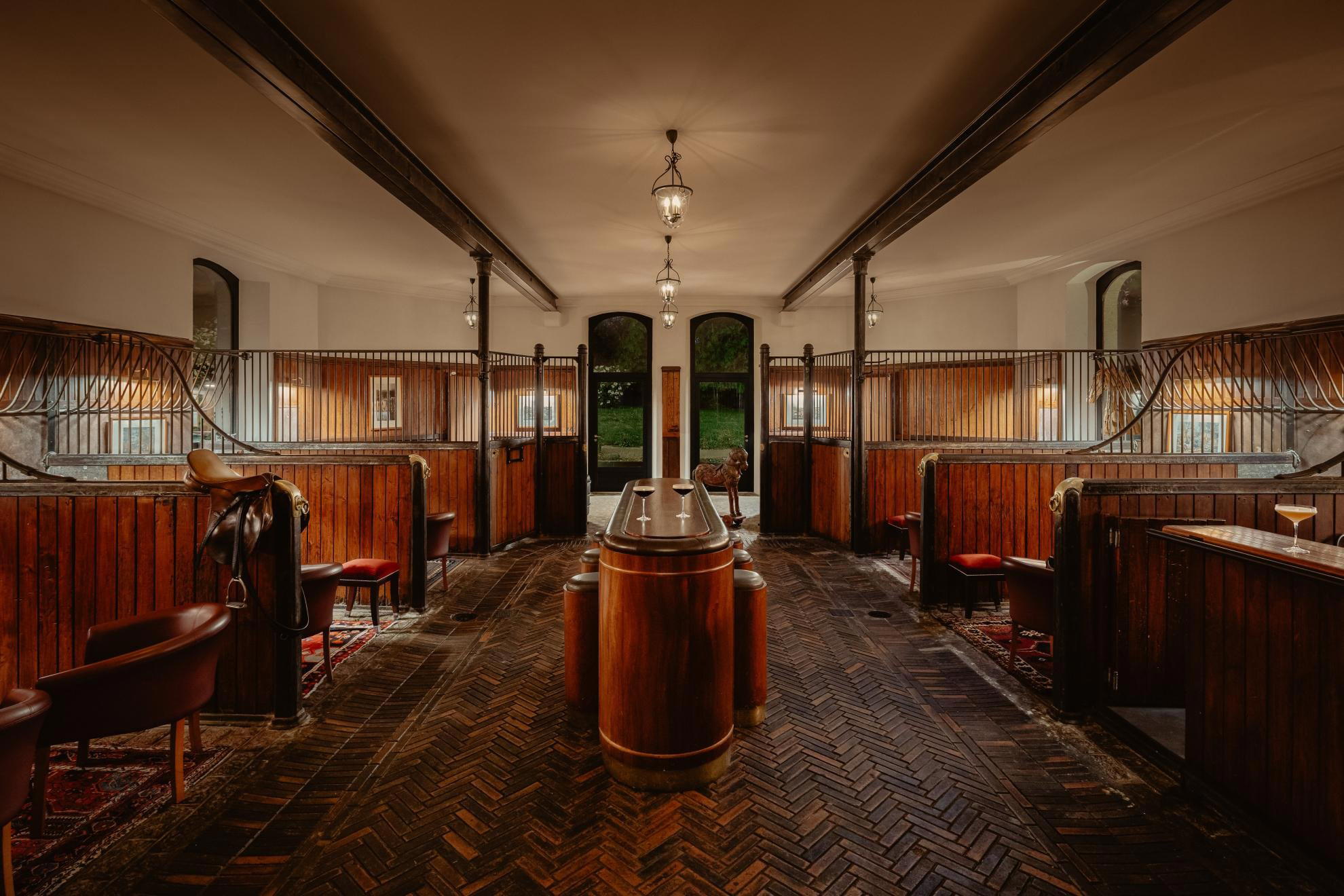
Former stables, estate tempo, and the bar as a slower kind of room
Approaching Bar des Écuries begins with architecture rather than signage. The address places it at Domaine de la Bretesche, 44780 Missillac, in the anciennes écuries, the former stables of the estate. That detail matters because a bar in this setting belongs to a different French drinking tradition from the street-corner comptoir, the Paris palace lounge, or the late-night cocktail address. It is a room shaped by arrival, grounds, stone, and the slower rhythm of a country domain.
Missillac is not a cocktail capital in the way Paris, Bordeaux, Lyon, or Montpellier can be. Its bar culture is tied more closely to hotel life, château stays, nearby countryside dining, and the movement between aperitif, dinner, and the last glass of the evening. In that context, Bar des Écuries is less about chasing a public ranking and more about the role a bar plays inside a rural hospitality address: a transition point between the day outside and the table ahead.
That makes the absence of public detail part of the reader’s assessment. For a traveller used to highly documented city cocktail bars, that signals a lower-information format. For an estate bar, it also fits the category: many such rooms operate as part of a broader property experience, with the practical questions answered closer to arrival than by a dense online drinks archive.
The cocktail question in a countryside French setting
France’s modern cocktail scene has split into several recognizable camps. Paris palace bars sell precision, ceremony, and high staffing ratios; independent city bars often build identity through clarified serves, low-waste prep, French spirits, and tight menus; wine-region bars lean toward by-the-glass depth and aperitif culture. A countryside estate bar in Missillac occupies another lane, where the quality of the evening depends on whether the drinks program understands the room rather than imitates a metropolitan format.
For comparison, La Bar du Plaza Athénée in Paris belongs to the palace-bar model, where setting, service choreography, and luxury-hotel expectations set the terms before the first drink is ordered. Papa Doble in Montpellier reflects a city cocktail culture built around bar identity and repeat local custom. La Vertu in Reims carries the pressure of Champagne-country drinking habits, where bubbles and cocktails often sit in conversation rather than opposition. Bar des Écuries should be read against those formats, not forced into the same competitive bracket.
The wiser order in a room like this is driven by context. Start by asking what the bar is pouring well that evening, especially if the team is working around classic aperitif structures or French spirits. Without a published cocktail list in the record, it would be irresponsible to name a house serve or describe technique as fact. The editorial stance is narrower and more useful: in a château-estate bar, a clean aperitif, a short drink, or a well-made classic usually suits the setting better than a theatrical multi-ingredient order designed for a high-volume urban counter.
That does not mean the cocktail programme is secondary. It means the programme has to carry a different burden. In a city bar, the drink can be the destination. In Missillac, the drink often has to hold the room together: pre-dinner pacing, post-dinner quiet, hotel guests, passing visitors, and the formality implied by a historic estate. A good bar in this category avoids shouting over its own walls.
What the former-stable address tells you
The phrase anciennes écuries is not decorative trivia. Converted stables across French estates often create a particular hospitality mood: thick walls, lower acoustic pressure than glassy lobbies, a sense of enclosure, and an easy relationship to the courtyard or grounds. Still, the address alone places the bar in a rural-estate typology that experienced travellers will recognize.
This typology changes how one judges value. In a dense city, a bar has to compete against dozens of alternatives within a short walk. In Missillac, the question is not whether a guest should cross town for a single Negroni. The question is whether the property’s bar provides the right level of polish and calm for an evening anchored at Domaine de la Bretesche. That is a practical distinction, and it should shape expectations before arrival.
Readers planning beyond this address can use Our full Missillac restaurants guide to understand the local dining map around the commune. The area does not behave like a large urban dining district, where late changes and spontaneous bar-hopping are easy. Rural planning rewards earlier decisions, particularly when dinner, transport, and drinks are linked to a single estate or nearby accommodation.
How it compares with French bar formats
The French bar scene is broad enough that a single word, “cocktail,” now covers very different expectations. In Bordeaux, Bar Casa Bordeaux in Bordeaux sits in a city where wine culture shapes how guests read spirits and aperitif service. In Lyon, Broc'Bar in Lyon operates in a food city where bars compete with bouchons, wine rooms, and late-evening neighborhood energy. In Angers, Le Cercle Rouge in Angers draws from a Loire context where casual drinking and wine-adjacent habits are part of the rhythm.
Alsace adds another comparison point. Le Cercle des Arômes in Colmar and Le Goupil in Ribeauvillé sit closer to wine-country tourism, where visitors often arrive with regionally specific drinking expectations. Chez Rosa in Toulouse belongs to a larger southern city with a different social tempo. Crapule in Vannes is a useful western-France reference for travellers thinking about Brittany-adjacent drinking culture, while Café La Trova in Miami shows how far a bar can travel from French estate quiet into music-led, high-energy cocktail hospitality.
Against those references, Bar des Écuries is defined by restraint of setting rather than published acclaim. Its trust signal is instead the verifiable address inside Domaine de la Bretesche and the former-stable location, a concrete hospitality context rather than a trophy claim.
What to order when the list is not published
A bar without a public drinks list asks for a different kind of guest decision. The smart move is to order by structure, not by fantasy. Ask for an aperitif if the evening is moving toward dinner; ask for a short classic if the aim is to test balance; ask what local or French spirits the team is using if the bar appears to be steering guests toward regional character. This keeps the conversation grounded and avoids forcing a bartender into a drink that belongs to another room.
That limitation is not a flaw in the visit, but it is a planning note. Guests who need a published menu, exact pricing, or confirmed technical drinks programme before committing may prefer a more documented urban bar. Guests already at or near Domaine de la Bretesche should treat the bar as part of the estate’s evening architecture and judge it by pacing, clarity, and fit with the setting.
There is also a useful etiquette point in countryside France. The aperitif is not always a race toward complexity. A concise, well-balanced drink before dinner often reads better than an elaborate order that slows the room. If the team suggests a classic or a house direction, follow the structure first, then ask about variations. That is how to get a better drink without pretending the bar is a laboratory counter in Paris.
Planning the evening at Domaine de la Bretesche
The practical information available is limited but concrete. Bar des Écuries is located at Domaine de la Bretesche, 44780 Missillac, in the former stables. Travellers should therefore confirm access through their accommodation or the estate before treating the bar as a guaranteed standalone stop.
That point is especially relevant in Missillac, where transport and timing require more thought than in a city centre. If dinner is planned elsewhere, build in enough time for arrival and departure. If dinner is on the estate, the bar likely functions more naturally as an aperitif or nightcap room than as an isolated destination.
Pricing is also unpublished in the record. In practice, estate and hotel bars in France often price above ordinary village bars because they are tied to a hospitality property, but no specific range should be assumed here. The safest planning approach is to expect a property-bar tariff, confirm before ordering if budget matters, and avoid relying on third-party snippets when the venue’s own structured data is sparse.
Who should choose this bar
Bar des Écuries makes the strongest case for travellers already oriented toward Domaine de la Bretesche, rural French hospitality, and a quieter evening format. It is not the right choice for someone chasing a published awards circuit, a named bartender’s public reputation, or a heavily documented cocktail menu. It is better suited to the guest who understands that a château-estate bar is judged by proportion: the drink, the room, the timing, and the way the evening moves.
The editorial read is clear. In Missillac, the draw is not density or late-night choice; it is the chance to let a bar operate at the pace of its setting. Bar des Écuries has a concrete and memorable address, and that address gives it a defined role. Until more public detail is available on its drinks programme, the right expectation is a setting-led bar where the first question should be practical and direct: what is the bar making well tonight?
At-a-Glance Comparison
| Venue | Price | Awards |
|---|---|---|
| Bar des ÉcuriesThis venue — the venue you are viewing | Not listed | Not listed |
| La Bar du Plaza Athénée | $50–100 | World's 50 Best #49 |
| Le Syndicat | Not listed | World's 50 Best |
| Buddha Bar | $100–150 | World's 50 Best #20 |
| Bar Nouveau | $30–50 | World's 50 Best #5 · Top 500 Bars Best Bars #18 |
| The Cambridge Public House | $20–30 | World's 50 Best #7 · Pinnacle Guide 2 Pins |
Continue exploring
More in Missillac
Restaurants in Missillac
Browse all →
Hotels in Missillac
Browse all →
Wineries in Missillac
Browse all →
Details
- Elegant
- Intimate
- Cozy
- Sophisticated
- After Work
- Group Outing
- Special Occasion
- Private Event
- Casual Hangout
- Historic Building
- Hotel Bar
- Seated Bar
- Lounge Seating
- Private Rooms
- Classic Cocktails
- Conventional Wine
- Garden
- Waterfront
Warm, convivial, and elegant, with a historic-stable setting that feels intimate and atmospheric rather than loud or clubby.