
Falstaff Winery - Listed
Medea Winery gives southern Istria a contemporary, accessible tasting-room expression rather than a collector-only estate narrative. In Vodnjan near Pula, the producer works across more than 60 hectares, pairing Malvazija istarska, Teran and Refosco with Chardonnay, Merlot and Cabernet Sauvignon, with single-vineyard labels adding a more site-specific register.

Pearl is the En Primeur Club membership app — saves, bookings, and concierge access live there. Same editors, same standards.

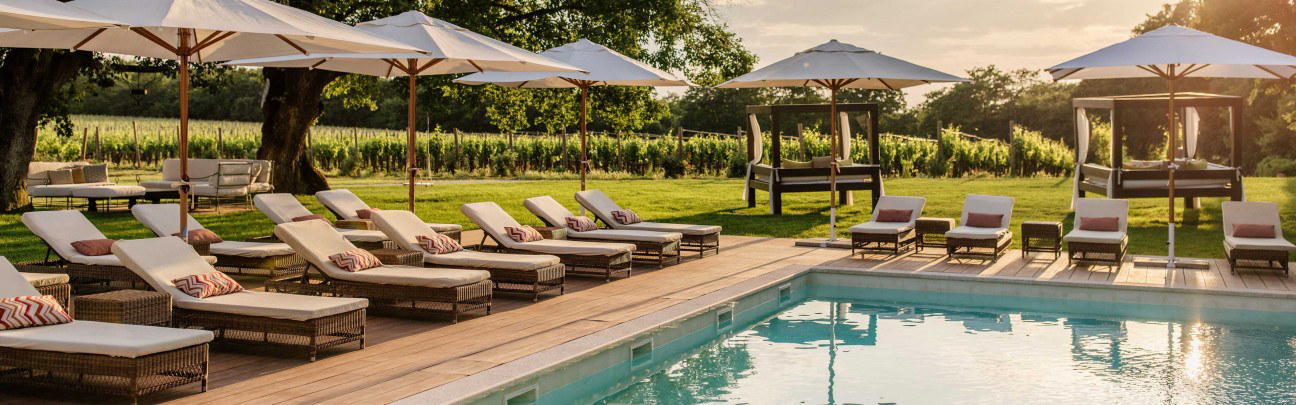
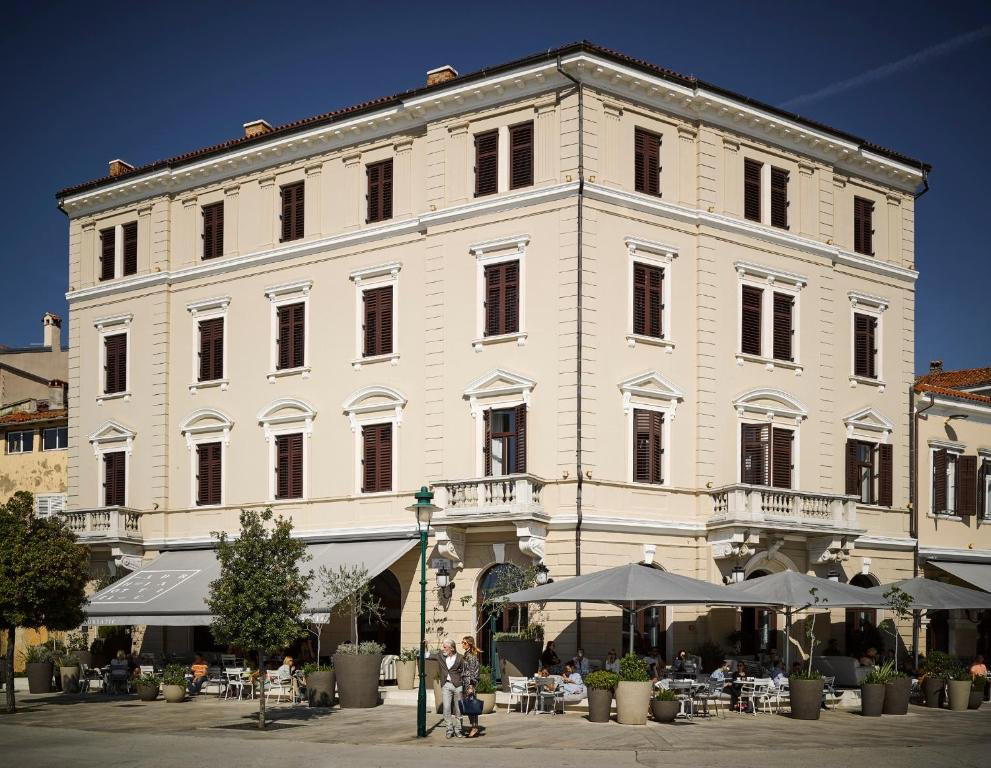
The approach to Medea Winery is less postcard vineyard romance than working Istrian wine country: a production facility, a contemporary tasting room and the practical edge of Vodnjan meeting the older town. That setting matters. Southern Istria’s wine identity is not built only on grand cellar theatre; it is built on producers that connect vineyard scale, local grapes and tourism without turning the experience into a luxury performance.
Vodnjan sits in the part of Istria where the Adriatic influence, warm dry summers, mild winters and roughly 2,400 hours of annual sun give white grapes freshness and reds enough ripeness to feel Mediterranean rather than continental. The better way to read Medea is through that geography. Its range is not a narrow statement of one grape or one plot. It is a map of southern Istria’s dual personality: Malvazija istarska, Teran and Refosco for regional identity, Chardonnay, Merlot and Cabernet Sauvignon for broader table culture.
Southern Istria in a glass, from Malvazija to Teran
Istria has spent the past two decades making Malvazija istarska legible to international drinkers while keeping its wines close to the region’s food habits: seafood, olive oil, grilled meat, truffles further inland and the everyday habit of drinking wine with lunch rather than saving it for ceremony. Medea fits that pattern through a portfolio that moves from still white, rosé and sparkling wine to structured reds. Medea Brut is made from Malvazija istarska, while the still range includes Malvazija, Chardonnay, Rosé, Merlot, Cabernet Sauvignon and Teran.
The estate’s scale gives the range its logic. More than 60 hectares of vineyards across southern Istria allow a broader varietal spread than a small single-parcel cellar could sustain. The vineyard map includes Ševe, Montiron, Marlera cape and Punta Grkova; Montiron is tied to Istarska Malvazija, while Punta Greca is associated with a 3.4-hectare Merlot site. That distinction between broad regional labels and single-vineyard bottlings is useful for visitors: the everyday wines explain the house style, while Montiron and Punta Greca point toward place-specific expression.
The cellar scale is also part of the story. A 1,000-square-metre facility with capacity around 400,000 litres places Medea in a different category from tiny garage estates. Annual processing of around 200,000 litres and a mid-sized regional footprint mean consistency, restaurant distribution and visitor access matter as much as scarcity. In a Croatian wine culture often discussed through small family addresses, that gives the Vodnjan producer a more commercial but still regional role: it translates Istria for drinkers who want clarity before rarity.
A modern tasting room with regional rather than rarefied manners
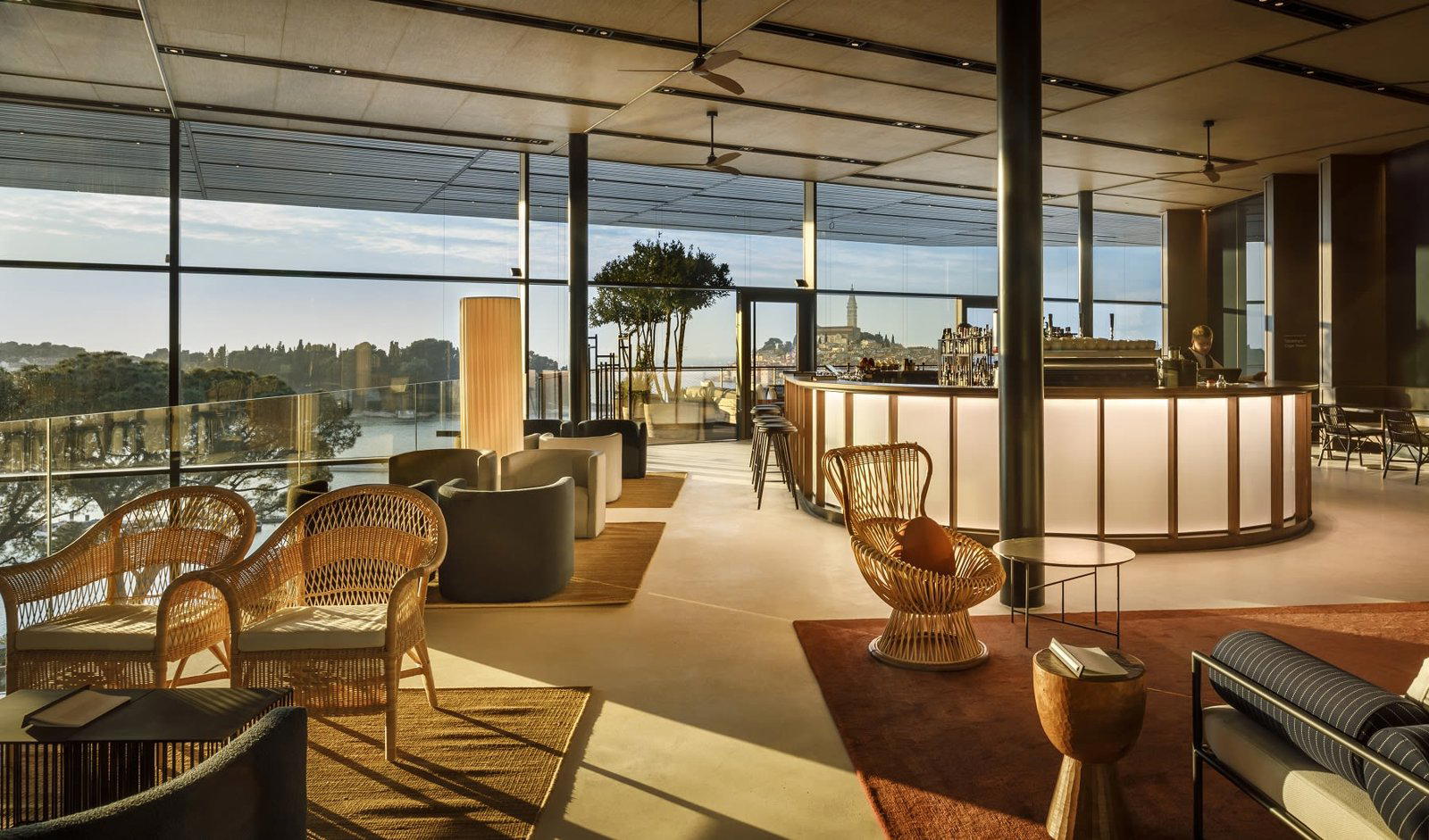
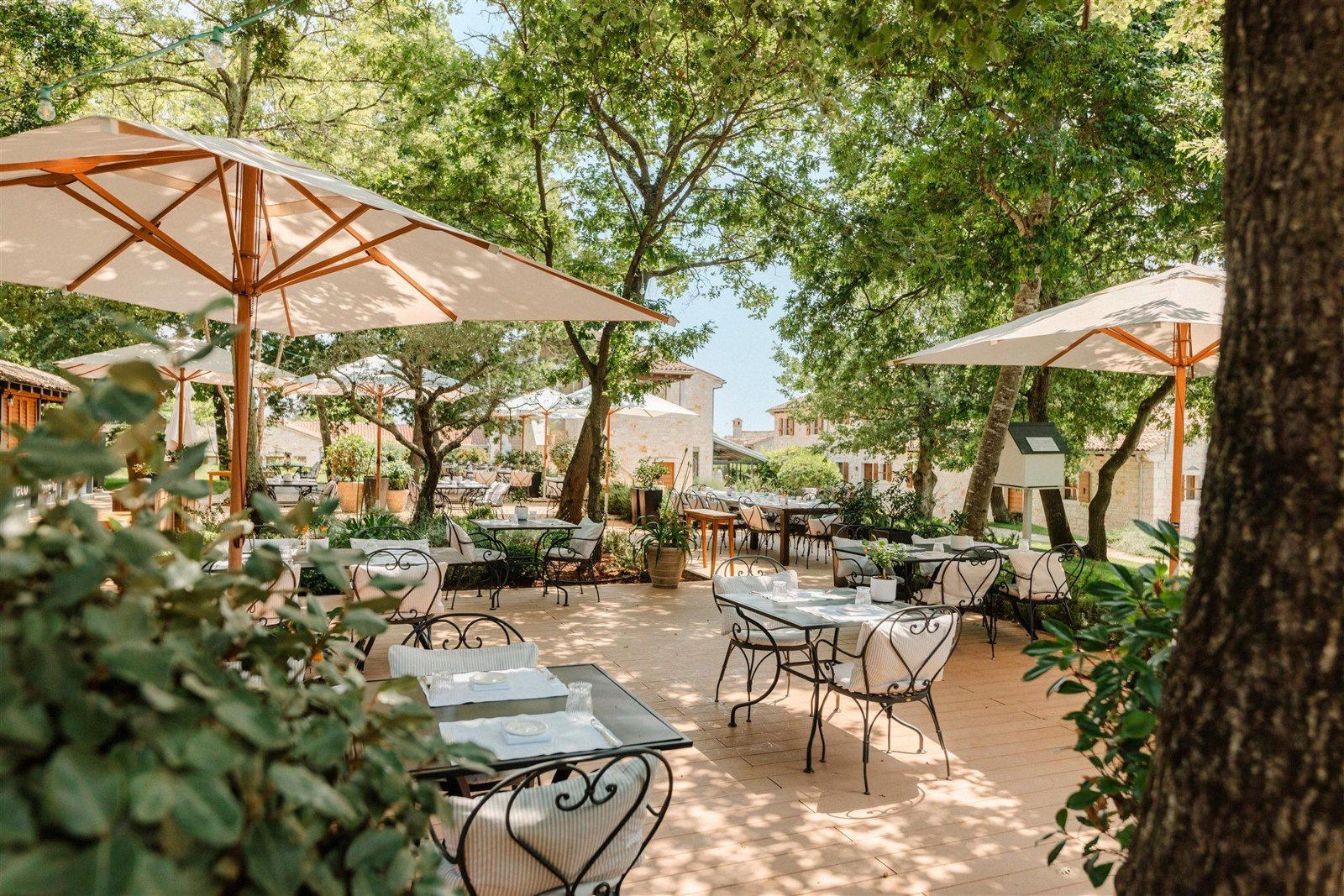
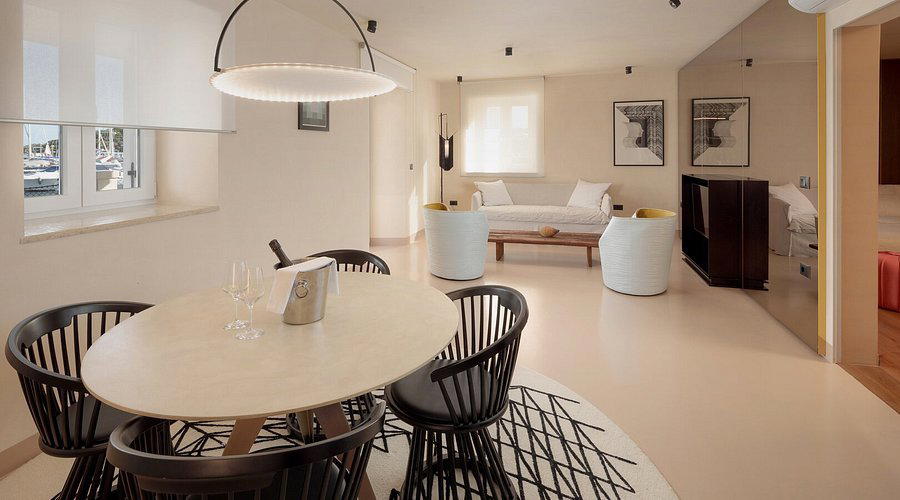
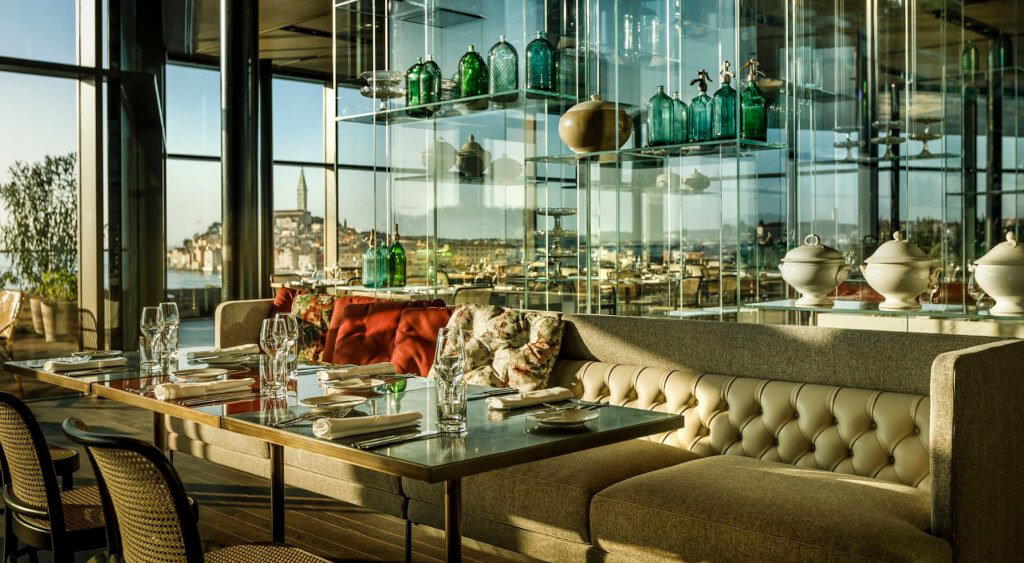
Tasting room reads as a design-led introduction to Istria rather than a museum of family lineage. Contemporary interiors, a conversational atmosphere and a hospitality style built around guided tasting make it suitable for visitors who want context without a formal cellar ritual. The mood is intimate enough for focused tasting, but the winery’s stated culture is social and accessible; this is not the sort of room where silence is mistaken for seriousness.
That accessibility is editorially important. Croatian wine tourism can split between rustic cellar visits, resort-adjacent tastings and technical appointments for collectors. Medea occupies the middle ground: modern presentation, working-winery credibility and a range designed for both restaurant lists and relaxed drinking. The result is a useful first stop for understanding southern Istria’s grape vocabulary before moving deeper into the peninsula’s smaller addresses.
Recognition gives one clear signal of quality within that broader approach. Montiron Malvazija 2024 received a platinum medal in The World of Malvasia 2026, a relevant accolade because it connects the winery’s site-specific Malvazija work to the grape category that defines much of Istria’s contemporary reputation. Vinistra also identifies Medea as the largest wine producer in southern Istria, which explains why its role is not only artisanal but structural: it helps set the region’s accessible premium tone.
How to place it in a Vodnjan wine itinerary
For travellers using Vodnjan as a base, Medea works as a clear orientation point rather than a niche detour. The value lies in seeing how a modern Istrian producer organizes scale, grape diversity and tasting-room hospitality around the same regional argument. Start with Malvazija istarska if the aim is to understand place; move to Teran or Refosco-related rosé for the local red-grape vocabulary; use Merlot and Cabernet Sauvignon to see how international varieties behave under southern Istrian sun.
The broader planning frame is simple: Vodnjan is small enough that wine, food and coastal excursions can sit in the same day, but the region rewards a slower route through producers rather than a checklist approach.
For a wider Croatian and Central European wine circuit, Medea also sits well beside inland and coastal producers with different regional logics: Adzic in Kutjevo, Ante Sladić Vino in Skradin, Arman Marijan Winery in Vizinada, Bakovic in Supetar, Baraka Winery in Sibenik, Bastian in Buje, Bastijana in Hvar, Belje Podrumi in Darda, »der Steiner« Hans Steiner in Podersdorf am See and & Handwein in Mannheim. Medea’s particular contribution is southern Istrian clarity: a producer large enough to show range, focused enough to make Malvazija and regional vineyard identity the centre of the conversation.
Recognition history
Dated appearances from independent guides and award organizations, with the underlying list record or original source where available.
Falstaff Winery - Listed
Falstaff
Continue exploring
More in Vodnjan
Wineries in Vodnjan
All wineries in Vodnjan →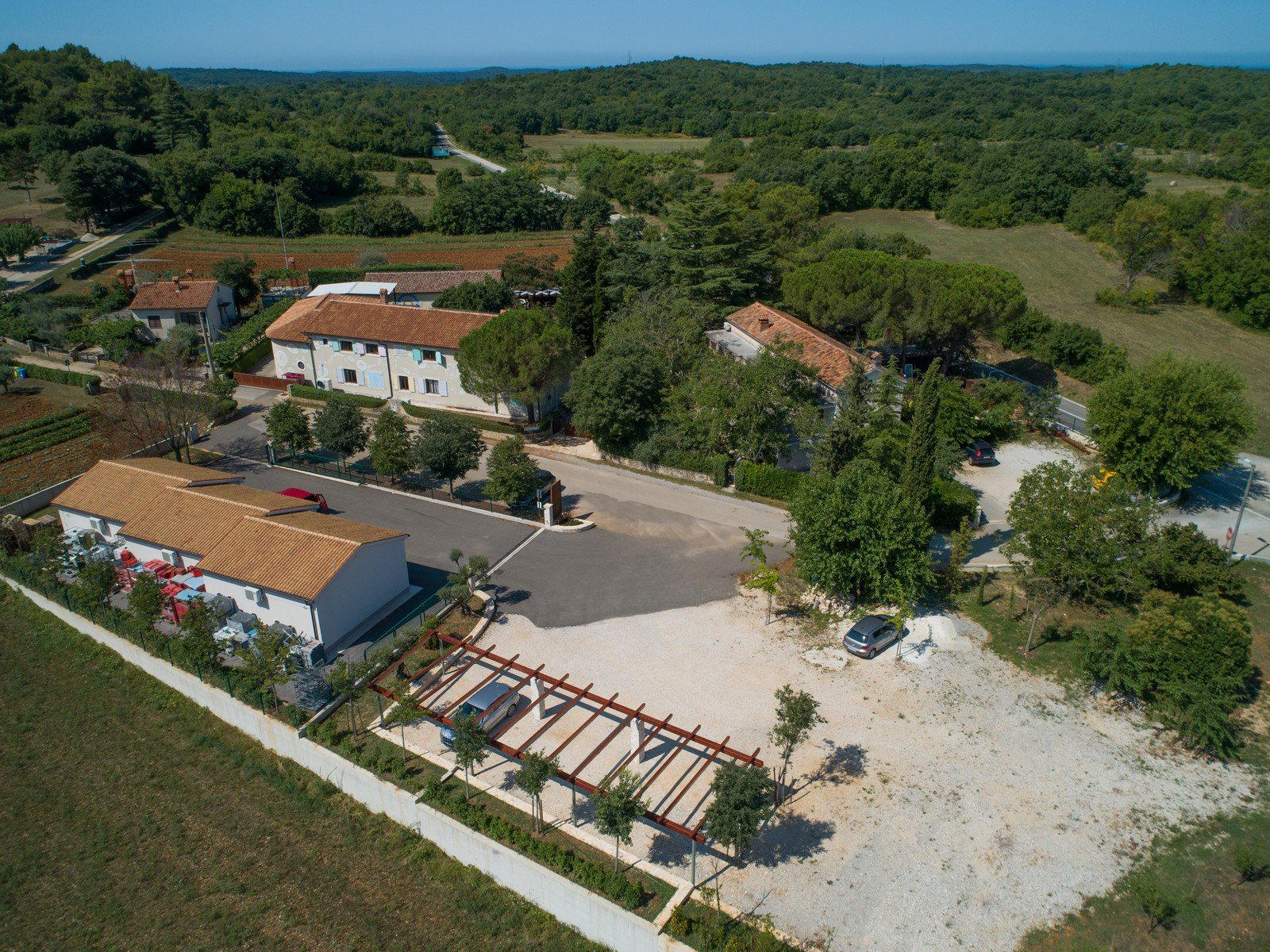
Bars in Vodnjan
Browse all →
Restaurants in Vodnjan
All restaurants in Vodnjan →
Details
- Modern
- Cozy
- Lively
- Intimate
- Group Outing
- Wine Education
- Romantic Getaway
- Solo Exploration
- Special Occasion
- Family
- Private Tasting
- Design Destination
- Sustainable
- Malvazija (istrian Malvasia)
- Chardonnay
- Merlot
- Cabernet Sauvignon
- Teran
- Refosco
- Still White
- Still Red
- Still Rosé
- Sparkling
- Bar Tasting
- Guided Tasting
- Private Tasting
- English
- Croatian
- Italian
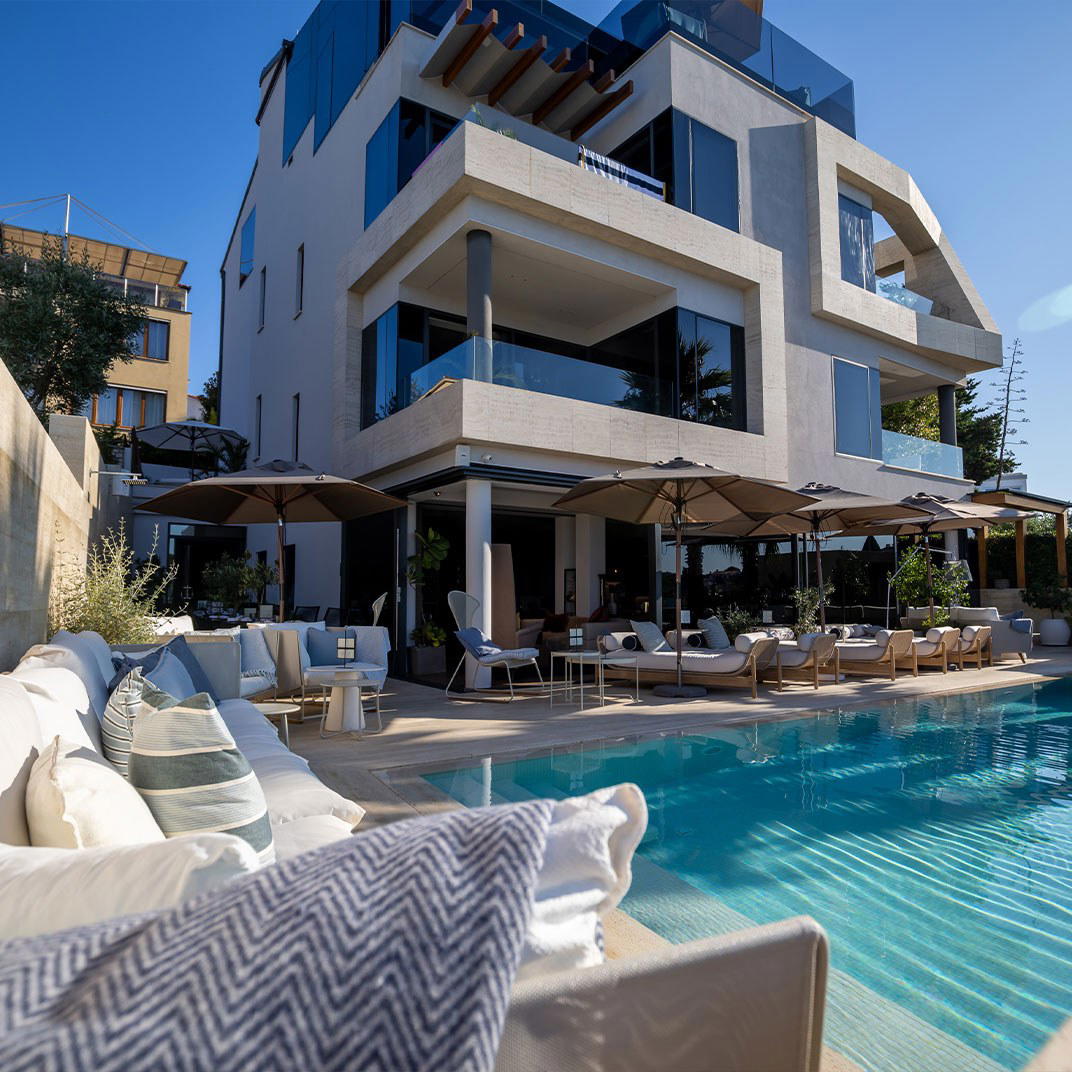
Modern yet warmly welcoming tasting room that blends contemporary design with Istrian tradition, aiming to convey a relaxed, pleasurable everyday wine culture focused on people and socializing.