The Place Steak Houze
A steakhouse operating in Alor Setar's modest but growing dining scene, The Place Steak Houze sits at the intersection of Western grill culture and northern Malaysian hospitality. For a city better known for its hawker heritage than its red meat credentials, it represents a particular kind of ambition, bringing cut-focused dining to a market that rarely prioritises it.
Pearl is the En Primeur Club membership app — saves, bookings, and concierge access live there. Same editors, same standards.
- Address
- LOT 5719, 256, 05450 Alor Setar, Kedah, Malaysia
- Phone
- +60194470904
- Website
- irdecogroup.org
- Directions
- Get directions
 Saves & bookings on Pearl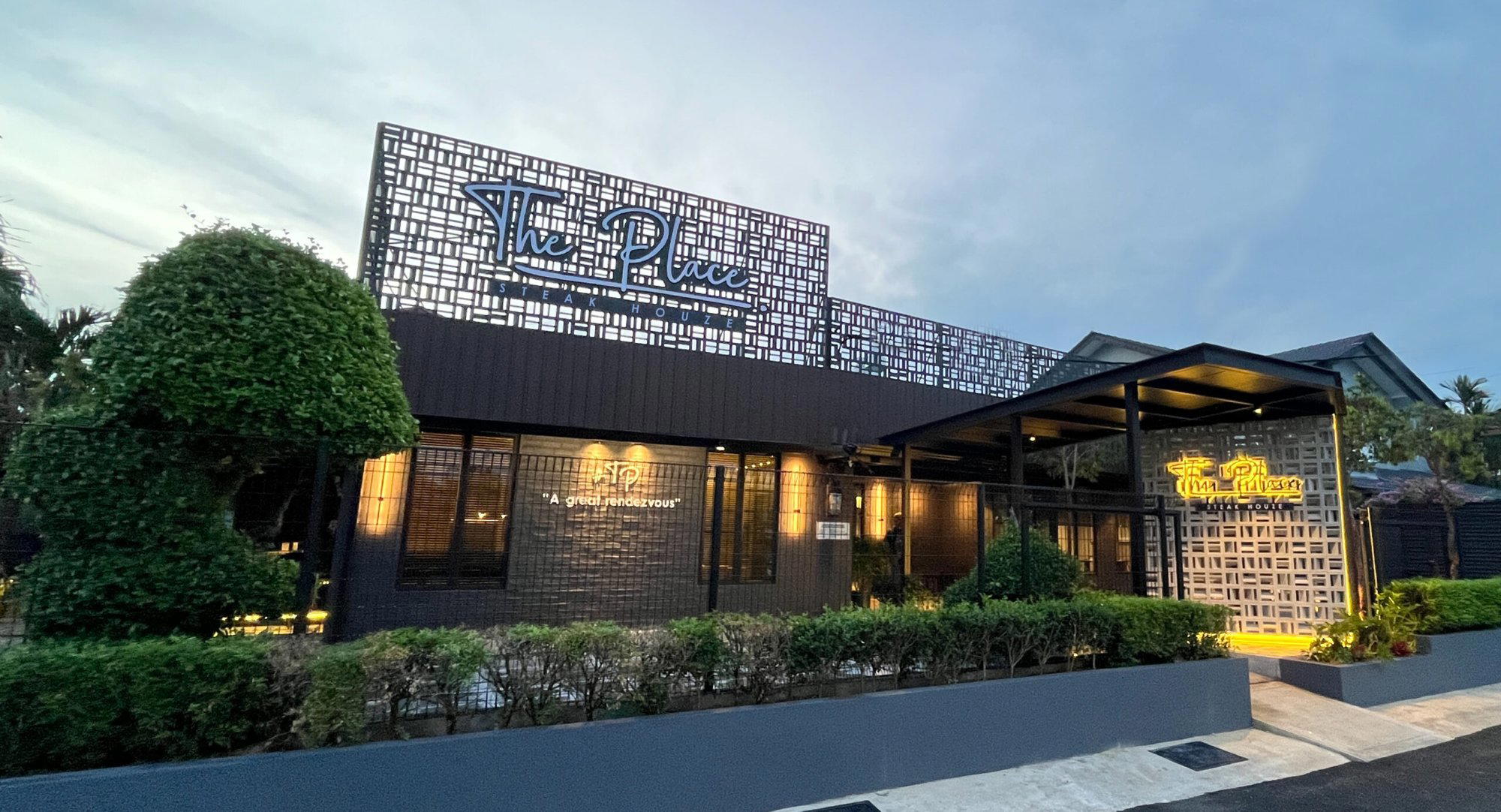
Where Grill Culture Meets the Kedah Table
Alor Setar is not a city that announces itself through fine dining. The capital of Kedah built its culinary reputation on nasi kandar stalls, roadside char kway teow, and the kind of morning coffee shops where regulars have occupied the same chair for twenty years. Against that backdrop, a steakhouse operating at Lot 5719 on Jalan Stadium carries an implicit argument: that the city's appetite has broadened, and that cut-focused, grill-led dining has a place alongside the hawker traditions that have long defined northern Malaysian eating.
Steakhouses occupy a specific cultural register in Malaysian cities outside Kuala Lumpur. They tend to function as destination restaurants for occasions, birthdays, business dinners, celebrations that call for something more structured than a hawker centre but stop short of the formal fine dining rooms that anchor cities like KL or Penang. Kay's Steak & Lobster in Subang Jaya operates in that same register, serving a suburban professional market where the steakhouse format signals occasion without demanding black-tie formality. The Place Steak Houze appears to occupy a comparable tier within Alor Setar's more compact dining ecosystem.
The Sourcing Question in Northern Malaysia
The editorial argument for any steakhouse, anywhere, begins with where the beef comes from. In peninsular Malaysia, this is a more complicated question than it appears. Domestic beef production is limited, and the country relies heavily on imports from Australia, which has long supplied the bulk of the market, as well as premium cuts from the United States and, at the higher end of the price spectrum, Japanese wagyu from Miyazaki or Kagoshima prefectures. Halal certification requirements shape the supply chain significantly: Malaysian Muslim-majority markets require beef that meets halal standards throughout slaughter, processing, and cold-chain logistics, which filters out certain import sources and creates a distinct competitive structure among suppliers.
Australia's position as the dominant beef supplier to Southeast Asia is not accidental. Australian producers built export-oriented halal processing infrastructure decades ago, and cuts like grain-fed striploin and ribeye from facilities in Queensland and New South Wales now appear on menus from Kuala Lumpur to Kota Kinabalu. What distinguishes individual restaurants in this category is less often the country of origin and more often the grade specification: whether the kitchen is working with marbling score 4-5 commodity beef or pushing into Marble Score 7-9 territory, and whether that premium sourcing is reflected in price points, resting and preparation protocol, and the quality of the accompaniment programme. For comparison, Dewakan in Kuala Lumpur has built a case for rigorously sourced Malaysian produce across all proteins, a different philosophical approach, but one that illustrates how seriously the upper tier of Malaysian dining now treats ingredient provenance.
Alor Setar's Dining Position in the Northern Peninsula
Alor Setar sits in a specific geographic and culinary band. It is roughly two hours north of Penang by road, which places it within range of one of Southeast Asia's most celebrated food cities. Auntie Gaik Lean's Old School Eatery in George Town represents the kind of deep-rooted Peranakan heritage dining that Penang has codified and promoted internationally. Alor Setar competes on different terms: it is a working administrative city rather than a heritage tourism destination, and its restaurant scene reflects that, practical, value-conscious, with pockets of ambition directed at local professionals and families rather than food tourists.
That context matters when assessing what a steakhouse format means in this city. The format is not trying to replicate the tasting-menu ambition of Dewakan or the French-inflected precision you find at the summit of KL's restaurant hierarchy. It is positioned within a more local logic: a city of around 300,000 people that has enough middle-class dining demand to support Western-format restaurants, but where price sensitivity remains a material factor. Across the northern peninsula, similar dynamics play out in cities like Taiping, where venues like Jia Yi Dao Vegetarian Restaurant address a health-conscious segment that larger cities take for granted.
The Wider Malaysian Grill Scene
Steakhouses across Malaysia have proliferated over the past decade at a rate that reflects both rising disposable incomes and a broadening of dining reference points, driven partly by travel and partly by social media visibility around grill culture. Cities far smaller than Kuala Lumpur now support Western-format steak restaurants, and this has created a tiered market: at the leading, places like Kay's Steak & Lobster compete on premium cuts, theatre, and wine lists; in the middle, a crowded field of casual grill venues competes on value and familiarity; and at the bottom, steakhouses shade into the same category as Western-themed casual dining chains.
Formats at the higher end of the spectrum have also evolved. Buffet dining remains a significant format in Malaysia, with operators like Kuroma Buffet & Dining in Johor Bahru competing in that segment. The steakhouse and the premium buffet occupy different psychological spaces in the Malaysian dining imagination, the former signals focused, cut-led expertise; the latter signals abundance and value. The Place Steak Houze, by its name and format, aligns with the former positioning.
For readers whose reference points extend beyond Malaysia, the comparison with globally prominent steak-focused dining establishments is instructive mainly as contrast. Le Bernardin in New York City operates in an entirely different register, French technique applied to seafood, at three Michelin stars, but it illustrates the broader truth that particularly durable restaurants in any format category tend to be those with a clearly articulated sourcing philosophy, not merely a premium price point.
Planning a Visit
The Place Steak Houze operates at Lot 5719, 256, in the 05450 postcode of Alor Setar, Kedah. Alor Setar is accessible by train on the ETS service from Kuala Lumpur, with the journey running approximately three to four hours depending on service class, or by road from Penang in around two hours. For visitors covering northern Malaysia more broadly, pairing an Alor Setar stop with the Penang eating circuit makes geographic sense and allows comparison of the region's distinct dining registers.
Fast Comparison
Comparable venues nearby, for context on price, style, and recognition.
| Venue | Cuisine | Price | Notes |
|---|---|---|---|
| The Place Steak HouzeThis venue — the venue you are viewing | Steakhouse | $$ | Not listed |
| CRC Restaurant (CRC Restaurant (美麗華魚翅海鮮酒家)) | Cantonese Seafood | $$ | George Town |
| Din Tai Fung (Din Tai Fung (鼎泰豐)) | Taiwanese Dim Sum | $$ | Bukit Bintang |
| Haidilao Hot Pot | Chinese Hot Pot | $$ | Perai |
| æµ·åºæç«é çåæ¹¾åº Haidilao Huo Guo @Queensbay Mall | Chinese Hot Pot | $$ | Bayan Lepas |
| Tanjung Ria Cafe | Malaysian Buffet with International Flavors | $$$ | Kota Kinabalu District |
At a Glance
- Sophisticated
- Elegant
- Date Night
- Special Occasion
Current opening hours
- Monday
- 8 AM–11 PM
- Tuesday
- 8 AM–11 PM
- Wednesday
- 8 AM–11 PM
- Thursday
- 8 AM–11 PM
- Friday
- 4–11 PM
- Saturday
- 8 AM–11 PM
- Sunday
- 8 AM–11 PM
Hours can change for holidays and private events. Last verified .
Sophisticated atmosphere embodying fine western-style cuisine.