Tha Phraya

Tha Phraya on the Upper East Side moves well past the green-curry defaults that define most New York Thai menus, drawing instead from the regional specificity of Northern and Southern Thai cooking.000 reviews signals a local following that rewards the kitchen's range. The mid-range price point makes it one of the more accessible addresses for serious Thai food in Manhattan.
Pearl is the En Primeur Club membership app — saves, bookings, and concierge access live there. Same editors, same standards.
- Address
- 1553 2nd Ave, New York, NY 10028
- Phone
- (646) 564-1456
- Website
- thaphraya.com
- Directions
- Get directions
 Saves & bookings on Pearl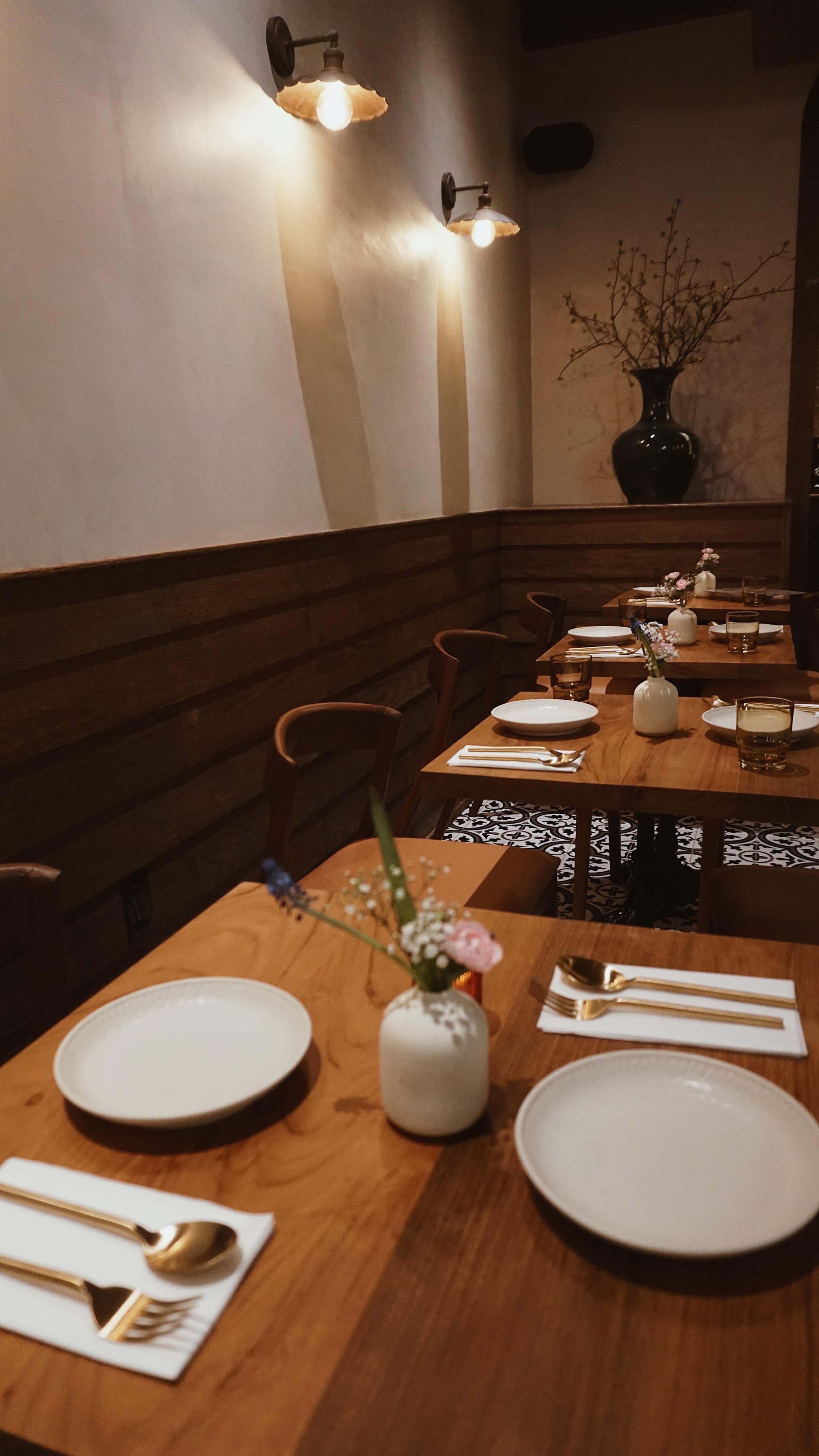
Regional Thai Cooking on the Upper East Side
Most Thai restaurants in New York operate from a compressed, tourist-oriented menu: pad thai, green curry, tom yum, repeat. The city has dozens of them, and they occupy a predictable mid-market band where familiarity sells and regional nuance rarely enters the equation. Tha Phraya, at 1553 Second Avenue, makes a different argument. The kitchen draws from the full geographic spread of Thailand, Northern highlands, central plains, Southern coast, and treats those distinctions as the actual subject of the menu rather than a footnote.
That approach places Tha Phraya in a smaller cohort of New York Thai addresses that take culinary regionalism seriously. At a time when the city's higher-end dining conversation is dominated by tasting-menu formats at restaurants like Atomix or Eleven Madison Park, the case for a mid-priced Thai room built around specificity and breadth rather than spectacle is worth making clearly.
A Menu Built Around Provenance
Thai cuisine is not a monolith. The sour, herb-forward cooking of Chiang Mai operates in an entirely different register from the turmeric-heavy, seafood-driven dishes of Phuket, and both diverge sharply from the coconut-milk curries that Central Thai cooking exports most readily to Western markets. Tha Phraya's menu holds these distinctions rather than flattening them.
The sai-ua spring roll carries the herbal intensity of Chiang Mai sausage, lemongrass, kaffir lime leaf, galangal packed into a casing that gets a second round of heat in the fryer, arriving crisp on the outside with a yielding, aromatic interior. Khao soi, the coconut-braised noodle dish that defines Northern Thai comfort eating, appears here alongside the richer, spice-forward territory of Southern Phuket-style curry, served in a family-style format that suits the dish's origins as communal cooking. Zabb hang, a rice noodle preparation with sliced pork, meatball, and a house-made brown sauce, represents the kind of dish that rarely crosses into Manhattan Thai menus at this price tier.
Green curry and Thai iced tea remain on the list for the uninitiated, but they function more as orientation points than as the kitchen's core proposition. The cocktail program takes a similar approach: drinks named after games played at Thai temple festivals, which gives the bar menu a cultural grounding that most Thai restaurant cocktail lists skip entirely.
The Room and Its Reference Points
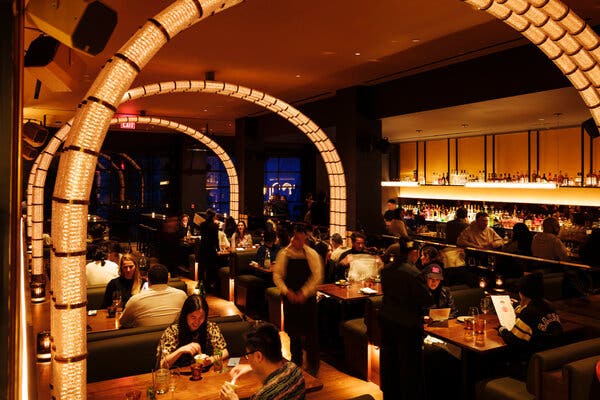
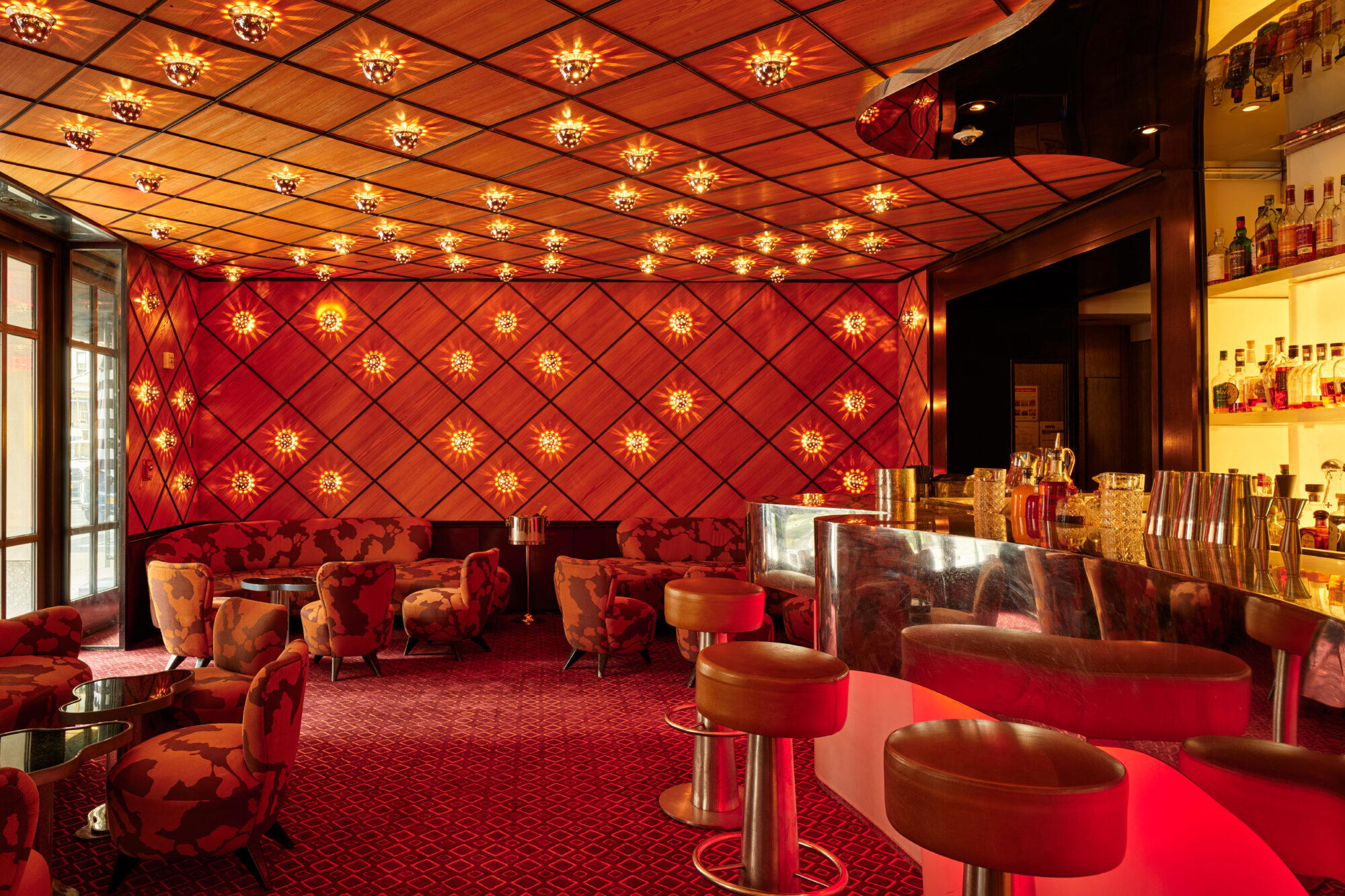
The interior reads as a deliberate scene-setter. Red lamps distributed across the dining room create an atmosphere that references the density and energy of Bangkok's entertainment districts rather than the spare, neutral aesthetic that many urban Asian restaurants adopt to signal seriousness. It is a considered choice: the visual register suggests street-level Bangkok before the food arrives, which primes the correct expectation. The comparison to Patpong Alley is apt in terms of sensory temperature, even if the Upper East Side address could hardly be further from it geographically.
This kind of environment places Tha Phraya in a different peer group from the austere, high-concept rooms that define New York's Michelin-tracked tier, places like Le Bernardin, Masa, or Per Se. The reference set here is closer to the serious regional-specialist model: venues where the dining room signals immersion rather than elevation, and where the food's authority comes from specificity and sourcing rather than from tasting-menu architecture.
Ethical Sourcing and the Regionalist Argument
Cooking with genuine regional specificity carries an implicit sourcing commitment. Dishes like sai-ua spring rolls and khao soi depend on ingredient integrity, the quality of the sausage, the balance of the curry paste, the provenance of the aromatics, in ways that generic Thai-American menus largely sidestep. When a kitchen commits to Northern Thai herb profiles, the sourcing either backs that commitment or the dish doesn't hold. This is the understated sustainability argument embedded in serious regional cooking: fewer generic substitutions, greater reliance on authentic inputs, and a menu that changes meaning if those inputs are compromised.
This logic operates in the same direction as farm-to-table commitments at restaurants like Single Thread Farm in Healdsburg or the ingredient-led sourcing at Lazy Bear in San Francisco, even if the format and price point differ significantly. The discipline required to cook Thai regional food honestly, rather than defaulting to a simplified, cost-optimized version of it, is its own form of ethical sourcing practice. Comparable approaches appear in Bangkok's own contemporary Thai scene, at addresses like Baan Tepa and Wana Yook, both of which have made sourcing transparency central to their identity.
At the mid-range price tier, sustaining that sourcing discipline is harder than at fine-dining operations with larger per-cover margins. The fact that restaurant maintains,000 reviews at a price point marked as $$ suggests the kitchen has found a workable model rather than cutting corners to hold the price line.
Where It Fits in the New York Thai Conversation
New York's Thai dining scene has historically concentrated in Midtown and the outer boroughs, with the Upper East Side representing an underserved pocket. The neighborhood's dining room skews toward European and American formats, with Thai cooking rarely occupying the more serious regional-specialist position. The restaurant fills that gap, and the volume of its review base suggests a local clientele that has genuinely adopted it rather than treating it as a novelty.
For context on how the city's full dining range distributes, see our full New York City restaurants guide. The city's hotel, bar, and experience infrastructure for visitors planning around a meal here is covered in our New York City hotels guide, bars guide, and experiences guide. A New York City wineries guide is also available for those extending a broader dining itinerary.
For comparison points at higher price tiers, the kind of tasting-menu investment that anchors a New York visit, Alinea in Chicago, The French Laundry in Napa, Emeril's in New Orleans, and Providence in Los Angeles represent the broader US fine-dining frame that restaurant deliberately sits outside.
Planning a Visit
Address: 1553 Second Avenue, New York, NY 10028. Cuisine: Thai contemporary, with a regional focus spanning Northern, Central, and Southern Thailand. Price: Mid-range ($$); one of the more accessible entries for serious Thai cooking in Manhattan. What to order: The sai-ua spring roll, khao soi, and zabb hang represent the kitchen's regional range most directly; the temple-festival cocktail program is worth exploring alongside.
Budget Reality Check
Comparable venues nearby, for context on price, style, and recognition.
| Venue | Cuisine | Price | Awards | Notes |
|---|---|---|---|---|
| Tha PhrayaThis venue — the venue you are viewing | Upper East Side-Yorkville, Regional Thai | $$$ | Bib Gourmand | Not listed |
| Bangkok Supper Club | West Village, Modern Thai Charcoal Grill | $$$ | Michelin Plate | Not listed |
| Altro Paradiso | Not listed | $$$ | Michelin Plate | SoHo-Little Italy-Hudson Square, Seasonal Italian |
| Café Mars | Not listed | $$$ | Bib Gourmand | Carroll Gardens-Cobble Hill-Gowanus-Red Hook, Contemporary Italian |
| Soothr | East Village, Authentic Thai Noodles | $$ | Michelin Plate | Not listed |
| Ernesto's | Not listed | $$$ | Michelin Plate | Chinatown-Two Bridges, Basque Tapas & Pintxos |
Recognition history
Dated appearances from independent guides and award organizations, with the underlying list record or original source where available.
Michelin Bib Gourmand
Michelin
Michelin Bib Gourmand
Michelin
Continue exploring
More in New York City
Restaurants in New York City
Browse all →
Bars in New York City
Browse all →

Hotels in New York City
Browse all →





At a Glance
- Lively
- Trendy
- Modern
- Date Night
- Group Dining
- Casual Hangout
- Open Kitchen
- Craft Cocktails
Current opening hours
- Monday
- 11:30 AM–4 PM, 5–10 PM
- Tuesday
- 11:30 AM–4 PM, 5–10 PM
- Wednesday
- 11:30 AM–4 PM, 5–10 PM
- Thursday
- 11:30 AM–4 PM, 5–10 PM
- Friday
- 11:30 AM–4 PM, 5–10:30 PM
- Saturday
- 11:30 AM–10:30 PM
- Sunday
- 11:30 AM–10 PM
Hours can change for holidays and private events. Last verified .
Lively dining room with red lamps evoking Patpong Alley, busy with downtown energy amid a lively, noisy atmosphere.