
Michelin Plate
Our verdict
Tekés brings Israeli cooking to the heart of the 2nd arrondissement, earning consecutive Michelin Plates in 2024 and 2025 while maintaining a mid-range price point that makes it one of the more accessible Michelin-recognised addresses in central Paris. The kitchen draws on the bread-centred, sharing traditions of the Levant, placing it in a small but growing cohort of Israeli restaurants reshaping how Paris eats outside its classic French registers.

Pearl is the En Primeur Club membership app, where members save venues, book tables and use the concierge.
The menu
What to order
- Flame-grilled leeks with potato and feta purée
- Fattoush salad with labneh and za'atar
- Grilled eggplant
Israeli Bread Culture in the Centre of Paris
The bread arrives before anything else. In Israeli cooking tradition, that is not incidental, it is the architecture around which the rest of the meal is organised. Pita pulled from a hot oven, warm enough to trap steam inside its pocket, functions less as a side and more as the first course, the utensil, and the communal signal that the table is open. This is the register in which Tekés, on Rue Saint-Sauveur in the 2nd arrondissement, operates, a kitchen rooted in the sharing logic and bread culture of the Levant, delivered at a price point that keeps it well within reach of the Paris dining public.
Israeli cuisine's arrival in Paris has been gradual and uneven. For a city whose food culture runs deep on classical French foundations, from the multi-starred rooms of Alléno Paris au Pavillon Ledoyen and Arpège to the old-guard bistro tradition, Middle Eastern and Levantine kitchens have carved space slowly, often in the Marais and its fringes. The 2nd arrondissement, denser with finance and fashion professionals than with food tourists, is a slightly less obvious location for this kind of cooking. That positioning is part of what distinguishes Tekés from the more tourist-facing addresses in the neighbourhood.
What Consecutive Michelin Recognition Signals
Michelin awarded Tekés a Plate in both 2024 and 2025, a recognition that sits below star level but confirms the kitchen is cooking at a standard the guide considers worth noting. The Michelin Plate is sometimes misread as a consolation credential, but in practice it functions as a quality floor: it tells you the cooking is consistent, technically sound, and worth the trip. For an Israeli restaurant in Paris at the €€ price range, back-to-back Plate recognition is a meaningful signal, placing Tekés in a tier above the city's casual falafel and hummus counters without asking the diner to spend at the level of L'Ambroisie or Kei.
Volume at that score suggests consistency rather than a handful of exceptional visits inflating the average. The combination of institutional recognition and high-volume crowd approval is less common than either alone, and it positions Tekés as a reliable address rather than a destination reserved for special occasions.
The Bread Table: Levantine Sharing as a Dining Format
Across the broader tradition of Israeli and Levantine cooking, bread is not simply a vehicle for other flavours. Manakish, flatbread baked with za'atar and oil, is eaten for breakfast in Lebanon and at lunch across the Levant. Sangak, the long saffron-tinged Iranian flatbread, feeds families at scale. Pita in its Israeli interpretation, thicker than its Greek counterpart, softer, designed to hold fillings without splitting, structures the mezze-style service that defines how the meal moves. The breaking of bread at an Israeli table carries a social weight that translates directly into how the format feels in a Paris dining room: dishes arrive to share, portions accumulate at the centre of the table, and the pace is set by the bread rather than by a French service sequence.
This is a format increasingly familiar to Paris diners, but still differentiated from the city's dominant sharing tradition of charcuterie boards and cheese courses. At Tekés, the communal model is native to the cuisine rather than adopted as a trend device, which is a meaningful difference in how the meal reads. Comparable Israeli addresses in other cities, Tavline in Paris or 12 Chairs in New York City, or Ash'Kara in Denver, share this same structural commitment to the table as a communal surface rather than a set of individual plates.
The 2nd Arrondissement Context
Rue Saint-Sauveur sits in the lower half of the 2nd, close to the old Sentier textile district, which over the past decade has shifted toward a tech and media cluster. The streets around it carry a density of working lunch trade during the week and a more exploratory dinner crowd in the evenings. The neighbourhood's dining mix leans casual-to-mid rather than grand, which suits Tekés's price range and format. It is not the Marais, where Middle Eastern and Israeli restaurants have deeper roots; it is a slightly less mapped territory for this kind of cooking, which may partly explain why the restaurant draws repeat visitors from across the arrondissement rather than just from its immediate block.
For a broader picture of where Tekés sits within Paris's full restaurant range, from the starred institutions at the top of the market to the neighbourhood addresses that define daily eating, see our full Paris restaurants guide. Travellers planning a wider Paris stay can also consult our Paris hotels guide, bars guide, wineries guide, and experiences guide.
For those extending beyond Paris, France's broader fine dining map includes addresses well worth the travel: Flocons de Sel in Megève, Mirazur in Menton, Troisgros - Le Bois sans Feuilles in Ouches, Paul Bocuse - L'Auberge du Pont de Collonges in Collonges-au-Mont-d'Or, Bras in Laguiole, and Auberge de l'Ill in Illhaeusern.
Planning Your Visit
Tekés sits at the €€ price range, making it one of the more accessible Michelin-recognised addresses in central Paris. The address is 4 bis Rue Saint-Sauveur, 75002 Paris.
| Venue | Cuisine | Price Range | Michelin Recognition | Location |
|---|---|---|---|---|
| Tekés | Israeli | €€ | Plate 2024, 2025 | 2nd arr. |
| Tavline | Israeli/Levantine | €€ | – | Marais |
| Kei | Contemporary French | €€€€ | 3 Stars | 1st arr. |
| L'Ambroisie | French Classic | €€€€ | 3 Stars | 4th arr. |
What Regulars Order at Tekés
Regulars at Tekés tend to anchor their orders around the kitchen's bread-forward, sharing format: warm pita served early in the meal alongside hummus and vegetable-based spreads, followed by grilled and roasted dishes drawn from the Israeli mezze tradition. That is, in any case, how the format is designed to work.
Frequently asked questions
What do regulars order at Tekés?
Orders at Tekés tend to build around the kitchen's bread-forward sharing format: warm pita served early alongside hummus, with additional dishes structured around Levantine staples. The €€ price range means a full sharing spread remains accessible by central Paris standards. Two consecutive Michelin Plates (2024 and 2025) confirm the kitchen is executing this format at a consistent level.
What should I budget for a meal at Tekés?
Pricing at Tekés is listed as €€.
Where is Tekés located?
Tekés is located at 4 bis Rue Saint-Sauveur, 75002 Paris, France, Paris.
Comparable Spots, Quickly
A quick peer check to anchor this venue’s price and recognition.
| Venue | Cuisine | Price | Awards | Notes |
|---|---|---|---|---|
| TekésThis venue (the venue you are viewing) | Modern Levantine Vegetarian | $50–100 | Michelin Plate | Not listed |
| Alléno Paris au Pavillon Ledoyen | Modern French Fine Dining | $150–200 | 3 Michelin Stars · World's 50 Best #79 | Creative |
| Kei | Modern French with Japanese Influences | $300–500 | 3 Michelin Stars · World's 50 Best #93 | Contemporary French, Modern Cuisine |
| L'Ambroisie | Classic French Haute Cuisine | $300–500 | 2 Michelin Stars · World's 50 Best #23 | French, Classic Cuisine |
| Le Cinq - Four Seasons Hôtel George V | Modern French Fine Dining | $300–500 | 3 Michelin Stars · World's 50 Best #24 | French, Modern Cuisine |
| Plénitude | Modern French Sauce-Led Fine Dining | $300–500 | 3 Michelin Stars · World's 50 Best #14 | Contemporary French |
Recognition history
Dated appearances from independent guides and award organizations, with the underlying list record or original source where available.
Michelin Plate
Michelin
Full recognition history (2 entries)
Michelin Plate
Michelin
Continue exploring
More in Paris
Restaurants in Paris
All restaurants in Paris →
Bars in Paris
All bars in Paris →

Details
- Lively
- Energetic
- Trendy
- Group Dining
- Brunch
- Special Occasion
- Open Kitchen
- Craft Cocktails
- Small Plates
- Cocktails
- Natural Wine
- Vegetarian Friendly
Current opening hours
- Monday
- 12–2:30 PM, 7 PM–1:30 AM
- Tuesday
- 12–2:30 PM, 7 PM–1:30 AM
- Wednesday
- 12–2:30 PM, 7 PM–1:30 AM
- Thursday
- 12–2:30 PM, 7 PM–1:30 AM
- Friday
- 12–2:30 PM, 7 PM–1:30 AM
- Saturday
- 12–2:30 PM, 7 PM–1:30 AM
- Sunday
- 12–3 PM, 7 PM–1:30 AM
Hours can change for holidays and private events. Hours as of .
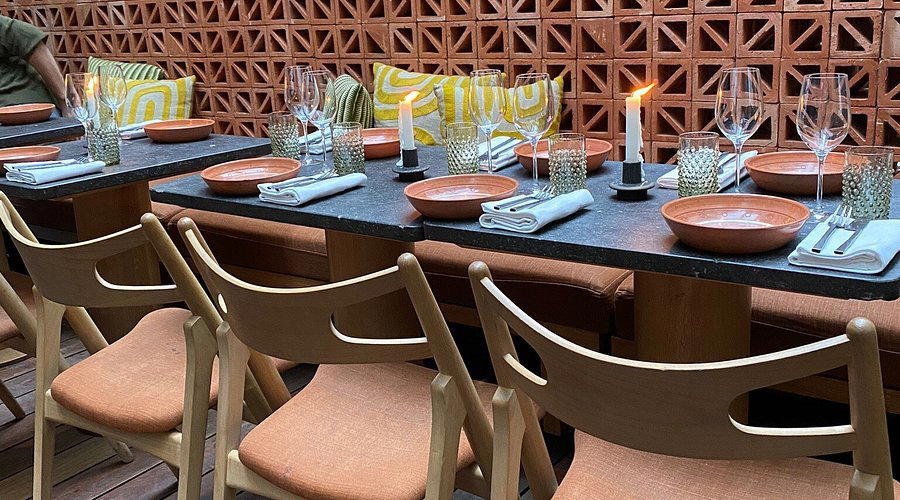
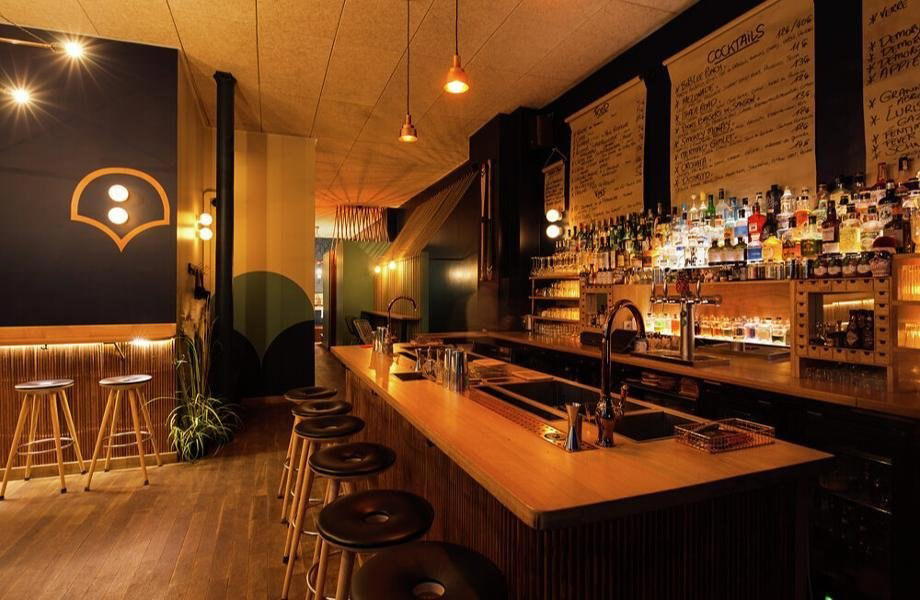
Lively and energetic with open kitchen, earthy tones, raw wood, hand-crafted ceramics, and oriental music creating a lively, convivial atmosphere.