
Michelin Plate
Our verdict
A husband-and-wife kaiseki-style table in Kyoto's Shimogyo Ward where the menu arrives handwritten in brushstrokes and the cooking pivots entirely on what the season offers. Simmered dishes are the kitchen's signature register, with preparations like bamboo shoots with wakame and kaburamushi built around a single seasonal ingredient carried to its logical conclusion. The name itself, a fusion of the couple's family names, signals the intimacy of the operation.

Pearl is the En Primeur Club membership app, where members save venues, book tables and use the concierge.
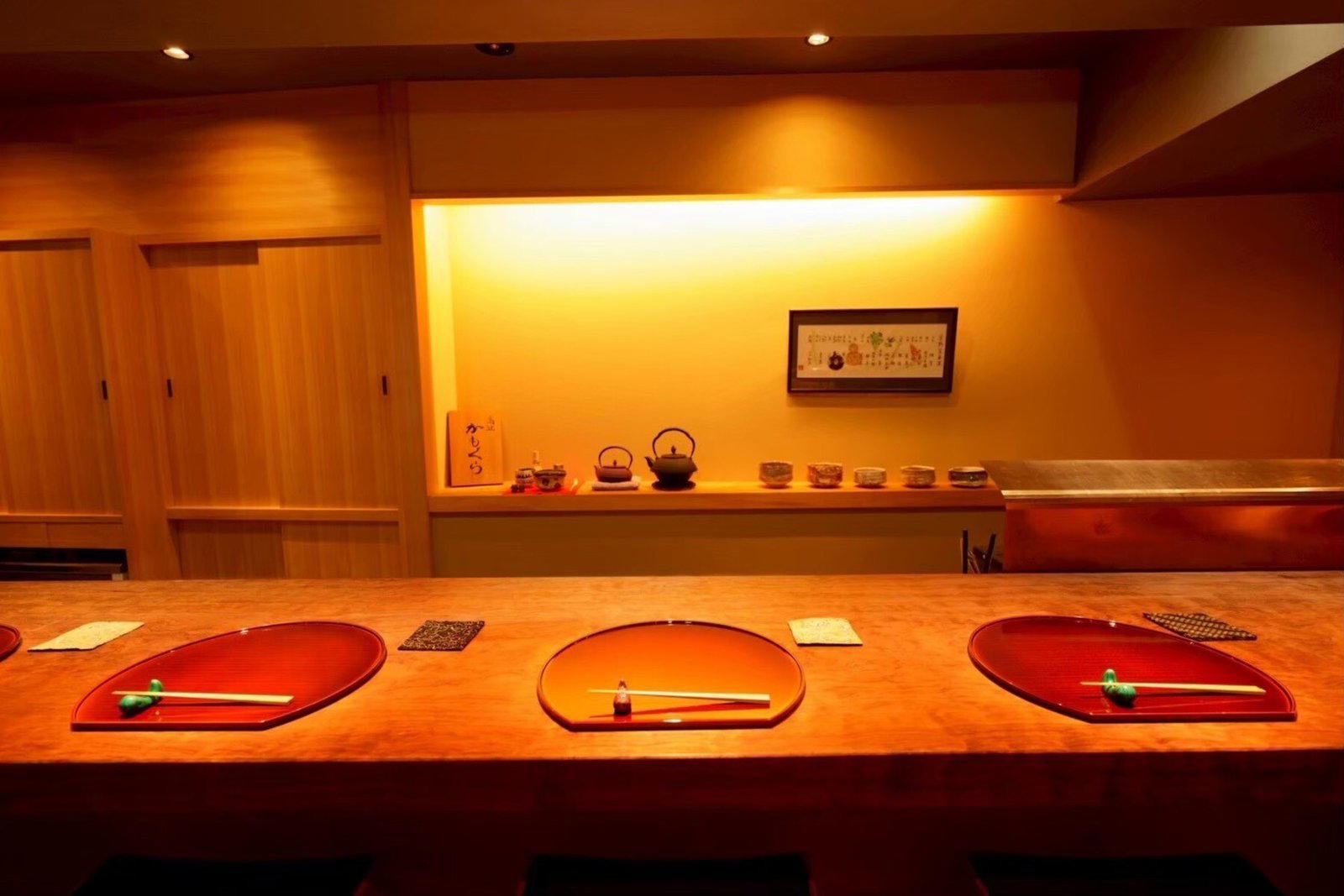
Where the Season Does the Work
In Kyoto's quieter residential quarters, away from the Michelin-circuit corridors of Gion and Higashiyama, a different kind of Japanese dining persists: small, domestic in scale, anchored to the agricultural calendar rather than to any single chef's ego. Shimogyo Ward sits south of the city's most-photographed districts, and the restaurants that endure there tend to do so on the strength of regulars rather than tourist footfall. Sakaimachi Kamokura belongs to this less-visible tier of Kyoto dining, a tier where the cooking philosophy and the seasonal supply chain are effectively the same thing.
That alignment between kitchen and calendar is not incidental. Traditional kaiseki-influenced cooking in Kyoto developed as a discipline of restraint partly because restraint was practical: you cooked what was available, prepared it in the way that preserved its character, and served it at the moment it was most itself. The current resurgence of interest in that approach, traceable across Japan's better small restaurants and visible internationally at places like Atomix in New York City, reflects a wider recognition that rigorous seasonality is also, structurally, a form of sustainability. When a kitchen's menu changes because the bamboo shoots are ready, or because the turnip harvest has peaked, there is no surplus of out-of-season product to manage, no cold-chain dependency to offset.
The Handwritten Menu as Editorial Statement
At Sakaimachi Kamokura, the menu is written by hand, in the husband's own brushstrokes, in what the venue describes as light, supple characters. That detail matters beyond the aesthetic. A printed or digital menu implies a fixed offering, reproducible across service. A handwritten menu implies that the list of dishes was composed that day, or close to it, in response to what arrived from suppliers. It is a logistical signal as much as a hospitality gesture, and it places the restaurant in a lineage of small Kyoto tables where the day's purchases determine the evening's cooking rather than the reverse.
This approach reduces the structural waste that comes with over-ordering and menu rigidity. Kitchens that commit to seasonal, supply-led cooking do not accumulate the ingredient backlog that mid-scale restaurants routinely manage. The discipline required to write a new menu in brushstrokes each day is also, in practice, a discipline of procurement: you order what you can use, and you use what you order. Among Kyoto's high-end kaiseki houses, Kikunoi Honten, Hyotei, Mizai, that discipline is assumed at scale. At a smaller operation like Kamokura, it shapes every single service.
Simmered Dishes and the Logic of Low-Intervention Cooking
The kitchen's stated forte is simmered preparations. In Japanese cooking, simmering (nimono) occupies a specific register: it is slow, temperature-controlled, and oriented toward drawing out the natural character of an ingredient rather than transforming it through high heat or elaborate technique. Bamboo shoots with wakame, summer daikon, ebi-imo taro, and kaburamushi, steamed fish topped with grated turnip, are the examples the venue cites. Each of these is a seasonal ingredient prepared through a method that amplifies rather than overrides its intrinsic flavour.
That orientation connects to a broader point about sustainable kitchen practice. Low-intervention cooking methods, simmering, steaming, careful grilling, tend to be more energy-efficient than extended high-heat preparation. They are also more forgiving of ingredient variability, which matters when you are working with produce that arrives on its own seasonal schedule rather than to a standardised spec. The guest's ability to choose their preparation method (grilled, steamed, or deep-fried, as the venue notes) introduces further discipline: service becomes responsive rather than prescriptive, and waste from unwanted preparations is reduced.
This positions Kamokura's approach differently from the performance-led tasting formats at some of Kyoto's larger kaiseki addresses. The experience is closer in spirit, if not in cuisine type, to the quiet ingredient-focus that characterises places like akordu in Nara or, at greater remove, Goh in Fukuoka, kitchens where the sourcing decision is also the creative decision.
Two-Part Harmony: The Service Model
The name Kamokura is an amalgam of the couple's family names. The husband cooks; both welcome guests together. That model of paired, domestic hospitality is less common in Japan's formal dining tier, where front-of-house and kitchen roles are sharply delineated, but it has precedent in the smaller omakase and kappo formats that have always sat outside the main restaurant hierarchy. The result is a service dynamic that functions more like a considered home kitchen than a professional operation performing hospitality, which, in a city as practised in formal restaurant culture as Kyoto, is a meaningful distinction.
Compared to the structured theatrics of a full kaiseki sequence at Gion Sasaki or Isshisoden Nakamura, Kamokura's two-person operation signals something different to the guest: proximity to the people making the decisions, and a service that is responsive rather than choreographed. That intimacy is characteristic of Kyoto's less-visible small-table circuit, a category that rarely appears in international rankings but accounts for much of what locals actually eat when eating well.
Placing Kamokura in the Kyoto Dining Spectrum
Kyoto's restaurant culture is stratified in ways that take time to read. At the high end, multi-Michelin kaiseki houses command international recognition and multi-month waitlists. Below that tier, and largely outside the international radar, sits a substantial layer of smaller, family-run operations working in the same seasonal-ingredient tradition but without the formal kaiseki structure or the associated price point. Sakaimachi Kamokura occupies that space.
For travellers already familiar with the formal kaiseki register, or those who have eaten at comparable small-table operations elsewhere in Japan, such as Harutaka in Tokyo or HAJIME in Osaka, the interest here is in the domestic scale and the supply-led, waste-conscious cooking model rather than in ceremony or spectacle. The handwritten menu, the simmered preparations built around whatever the season has delivered, and the two-person welcome are not selling points in the conventional sense. They are structural features of a kitchen that treats the season's supply as both constraint and content.
For a fuller picture of what Kyoto's dining scene offers across price tiers and formats, see our full Kyoto restaurants guide. The city's accommodation, bar, and experience circuits are covered separately in our Kyoto hotels guide, our Kyoto bars guide, our Kyoto wineries guide, and our Kyoto experiences guide.
Planning Your Visit
Sakaimachi Kamokura is located in Shimogyo Ward at 493-1 Yugaocho, Kyoto 600-8077. Given the venue's small-table, family-run format, advance reservation is almost certainly required, this category of Kyoto restaurant typically does not accommodate walk-ins. Direct enquiry in Japanese or via a hotel concierge familiar with the local small-table circuit is the most reliable approach.
Quick reference: Shimogyo Ward, Kyoto; intimate family-run table; seasonal, supply-led menu handwritten daily; advance booking advised; contact via hotel concierge recommended.
Frequently asked questions
What should I eat at Sakaimachi Kamokura?
The kitchen's stated strength is simmered dishes, and the menu follows what is available seasonally rather than a fixed list. Preparations cited in the venue's own description include bamboo shoots with wakame, summer daikon, ebi-imo taro, and kaburamushi, steamed fish topped with grated turnip. Guests can request their preferred cooking method (grilled, steamed, or deep-fried) for flavours of the season. The menu changes with the agricultural calendar, so what is available on the day you visit will be different from any static list.
Should I book Sakaimachi Kamokura in advance?
Given the small, family-run format and the domestic scale of the operation, advance booking is almost certainly necessary. Small-table kaiseki-influenced restaurants in Kyoto, even those outside the formal Michelin tier, rarely hold capacity for walk-ins, and the handwritten, supply-led menu format suggests an operation built around knowing its cover count well in advance. No online booking method is currently listed. In Kyoto, a hotel concierge or a specialist reservation service with Japanese-language capability is typically the most direct route into this category of restaurant.
Reputation First
Comparable venues nearby, for context on price, style, and recognition.
| Venue | Cuisine | Price | Awards | Notes |
|---|---|---|---|---|
| Sakaimachi KamokuraThis venue (the venue you are viewing) | Kyoto Kaiseki | Not listed | Michelin Plate | Not listed |
| Takocho | Traditional Kyoto Oden | $50–100 | Michelin Plate | Higashiyama |
| sushi imagine | Edomae Sushi Omakase | $100–150 | Michelin Plate | Shimogyō |
| Ryoriya EN | Traditional Kyoto Kaiseki | $150–200 | Michelin Plate | Shimogyō |
| Keri | Kamo-ryori (Duck Specialties) | $150–200 | Michelin Plate | Higashiyama |
| Ryori Rihaku | Japanese-Chinese Fusion Kappo | $50–100 | Michelin Plate | Nakagyō |
Recognition history
Dated appearances from independent guides and award organizations, with the underlying list record or original source where available.
Michelin Plate
Michelin
Continue exploring
More in Kyoto
Restaurants in Kyoto
All restaurants in Kyoto →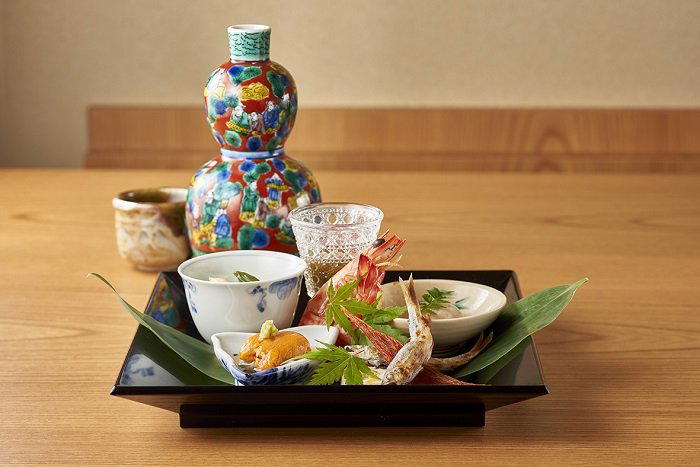
Bars in Kyoto
All bars in Kyoto →
Hotels in Kyoto
All hotels in Kyoto →
Wineries in Kyoto
Browse all →
Details
- Quiet
- Elegant
- Intimate
- Cozy
- Special Occasion
- Business Dinner
- Date Night
- Private Dining
- Sake Program
- Local Sourcing
- A La Carte
Current opening hours
- Monday
- Closed
- Tuesday
- 5–10 PM
- Wednesday
- 5–10 PM
- Thursday
- 5–10 PM
- Friday
- 5–10 PM
- Saturday
- 5–10 PM
- Sunday
- 5–10 PM
Hours can change for holidays and private events. Hours as of .
Hideaway atmosphere with restrained lighting, traditional materials, and private rooms fostering quiet conversation and slow enjoyment.