

Tabelog 100 #98
Our verdict
Rokurinsha on Tokyo Ramen Street occupies a specific and well-defended position in Japan's tsukemen scene, drawing queues to its basement counter inside Tokyo Station daily. Ranked #35 on Opinionated About Dining's 2025 Casual Japan list, it represents the concentrated, high-broth tradition of dipping ramen at its most practised. Two service windows run seven days a week, including a morning slot from 7:30 am.

Pearl is the En Primeur Club membership app, where members save venues, book tables and use the concierge.
The menu
What to order
- Tsukemen
- Ajitamatsukemen
- Tokusei Tsukemen
Tsukemen at the Source: What Tokyo Station's Ramen Street Tells You About the Format
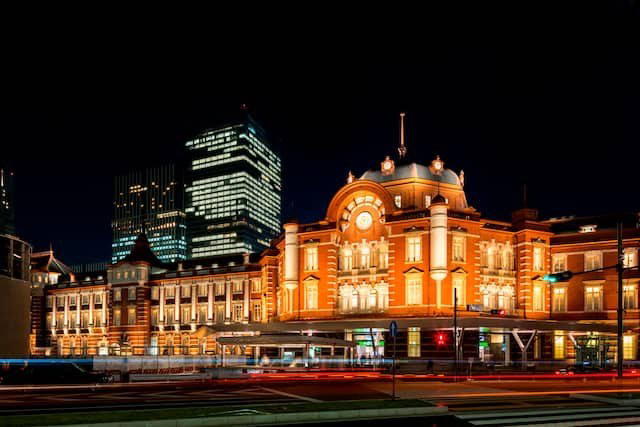
The queue forms before the shutters go up. On Tokyo Ramen Street, the basement corridor beneath one of the world's highest-traffic transit hubs, a handful of counters compete for attention from commuters, tourists, and serious eaters who have planned their visit around a bowl. Among them, Rokurinsha has held a consistent position for years, not because of its location alone, but because tsukemen, the dipping-noodle format it represents, rewards the kind of concentrated broth production that suits a dedicated, high-volume specialist. The format itself explains the queue.
The Dipping Noodle Tradition and Why It Produces Obsessives
Tsukemen emerged in Tokyo as a ramen variant in which thick, chilled or room-temperature noodles are served separately from a deeply reduced dipping broth, typically fish-forward, often pork-enriched, and built to a viscosity that would overwhelm a conventional ramen bowl if poured directly over the noodles. The diner controls the ratio. Pull noodles through the broth, eat, repeat. At the end, hot broth or water is brought to the table to dilute the remaining liquid into a soup to finish. It is a format with clear rules and strong opinions about how those rules should be executed.
Within Tokyo's ramen taxonomy, tsukemen sits in an interesting position. Shoyu, tonkotsu, and miso ramen have broader international recognition, but tsukemen commands a dedicated following of eaters who argue, sometimes with genuine intensity, about noodle thickness, broth temperature, the correct fat-to-dashi ratio, and whether the fish component should lean toward katsuobushi or niboshi. Rokurinsha's broth belongs to the concentrated, fish-heavy Tokyo school that defines one end of the spectrum, and its rankings on Opinionated About Dining's Casual Japan list, #35 in 2025, #44 in 2024, and #41 in 2023, indicate consistent recognition within a list that weights specialist execution above novelty.
Tokyo Ramen Street as a Format, Not Just an Address
The decision to situate a serious ramen counter inside a station complex inverts the usual logic of destination dining. Most of the restaurants covered elsewhere in our full Tokyo restaurants guide, from the kaiseki precision of RyuGin to the French rigor of L'Effervescence and Sézanne, require a deliberate journey to a specific neighbourhood. Tokyo Ramen Street, by contrast, inserts itself into an already-necessary journey. The eight shops along the corridor were curated to represent different regional ramen styles, and the format has proven durable: the street draws eaters who would not otherwise pause at a station basement, and it draws them repeatedly.
This model has parallels in other Japanese cities. The food floors and train-station dining corridors of Osaka and Kyoto follow the same logic of capturing foot traffic with legitimate quality, and venues like HAJIME in Osaka and Gion Sasaki in Kyoto operate in an entirely different tier, but the principle of placing serious food inside infrastructure-driven locations is embedded in Japanese dining culture in a way it rarely is elsewhere.
Reading the Rankings: What OAD Casual Japan Means in Practice
Opinionated About Dining separates its Japan list into formal and casual tiers, and the casual ranking covers a broad field: ramen, soba, tempura specialists, katsu counters, standing sushi bars. Placing in the top 50 of that list over three consecutive years, as Rokurinsha has done, signals something more than traffic-driven popularity.
For context on what that means within Tokyo's wider dining hierarchy: the tasting-menu restaurants that occupy Tokyo's leading formal rankings, places like Harutaka for sushi or Crony for contemporary French, operate in a different price and format tier entirely. The comparison is not meaningful in terms of competition, but it is useful for understanding how Tokyo's food culture distributes excellence: serious execution appears at every price point, and the casual tier is genuinely contested. A position in the OAD casual top 50 is not a consolation prize.
Timing, Access, and the Morning Window
Rokurinsha runs two daily service windows: 7:30 to 9:35 am and 10 am to 10:30 pm, seven days a week. The morning opening is notable because few ramen counters of this profile operate at that hour, and it makes Rokurinsha accessible to travellers passing through Tokyo Station on early Shinkansen departures, a genuinely useful logistical fact given that Tokyo Station serves as the main hub for bullet train connections to Osaka, Kyoto, and points north and south. Visitors heading on to destinations like Nara, Fukuoka, or Yokohama can build a bowl into their departure rather than treating it as a separate expedition.
Queue length varies by time of day. Midday and early evening windows tend to draw the longest waits. The basement location means weather is not a factor in queuing, which distinguishes it from street-level counters elsewhere in the city.
For travellers building a broader Tokyo itinerary across dining, accommodation, and bars, the full Tokyo hotels guide, bars guide, and experiences guide cover the full range. The wineries guide addresses the growing natural wine scene operating alongside the city's food culture. Japan's dining scene beyond Tokyo, from Okinawa to cities covered in the regional guides, reflects the same pattern of serious casual execution existing alongside formal fine dining.
For reference points outside Japan: the concentration and format discipline that defines Tokyo's leading ramen counters has no direct equivalent in Western cities. The closest analogy might be the kind of focused, single-format specialist approach visible at counters like Atomix in New York, though the price points and cultural contexts diverge substantially. What Le Bernardin in New York is to French seafood cooking, the top-ranked casual specialists in Tokyo are to their own formats: the point at which a narrow focus becomes a credential rather than a limitation.
Know Before You Go
- Location: Tokyo Station Ichiban-gai B1F, Tokyo Ramen Street, Marunouchi, Chiyoda, Tokyo
- Hours: Daily 7:30–9:35 am and 10:00 am–10:30 pm
- Cuisine: Tsukemen (dipping ramen)
- Awards: OAD Casual Japan #35 (2025), #44 (2024), #41 (2023)
- Booking: Walk-in only; queue at the counter
- Access: Direct basement access from Tokyo Station; covered queuing regardless of weather
- Leading timing: Morning session (7:30 am) or late evening for shorter waits
Frequently asked questions
What dish is Rokurinsha famous for?
Rokurinsha is known for its tsukemen, the Tokyo-style dipping noodle format in which thick noodles are served separately from a concentrated dipping broth. The broth at counters in Rokurinsha's tradition is typically fish-forward and heavily reduced, closer to a sauce in viscosity than a conventional ramen soup, with a pork base adding depth. The diner pulls noodles through the broth at the table, controlling the ratio with each mouthful. At the meal's end, hot liquid is added to the remaining broth to create a finishing soup. This format, and Rokurinsha's consistent recognition on the Opinionated About Dining Casual Japan list, has made it one of the reference addresses for the style in Tokyo.
Budget Reality Check
A short peer table to compare basics side-by-side.
| Venue | Cuisine | Price | Awards | Notes |
|---|---|---|---|---|
| RokurinshaThis venue (the venue you are viewing) | Tsukemen Ramen | $10–20 | Tabelog 100 #98 | Not listed |
| Harutaka | Edo-Style Omakase Sushi | $200–300 | 3 Michelin Stars · World's 50 Best #76 | Sushi |
| RyuGin | Modern Kaiseki | $500+ | 3 Michelin Stars · World's 50 Best #41 | Kaiseki, Japanese |
| L'Effervescence | Modern French with Japanese Influences | $200–300 | 3 Michelin Stars · World's 50 Best #69 | French |
| HOMMAGE | Modern French with Japanese Influences | $150–200 | 2 Michelin Stars · World's 50 Best #78 | Innovtive French, French |
| MAZ | Innovative Peruvian-Japanese Fusion | $150–200 | 2 Michelin Stars · World's 50 Best #28 | Innovative |
Recognition history
Dated appearances from independent guides and award organizations, with the underlying list record or original source where available.
Opinionated About Dining Casual in Japan Ranked #120
Opinionated About Dining
Tabelog 100 #98 · No. 98
Tabelog · Tabelog 100 - Ramen - TOKYO - 2025
Full recognition history (5 entries)
Opinionated About Dining Casual in Japan Ranked #35
Opinionated About Dining
Opinionated About Dining Casual in Japan Ranked #44
Opinionated About Dining
Opinionated About Dining Casual in Japan Ranked #41
Opinionated About Dining
Continue exploring
More in Tokyo
More from Chef Various
Browse all →
Restaurants in Tokyo
All restaurants in Tokyo →




Details
- Lively
- Energetic
- Casual Hangout
- Sake Program
- Counter Dining
Current opening hours
- Monday
- 7:30–9:45 AM, 10 AM–11 PM
- Tuesday
- 7:30–9:45 AM, 10 AM–11 PM
- Wednesday
- 7:30–9:45 AM, 10 AM–11 PM
- Thursday
- 7:30–9:45 AM, 10 AM–11 PM
- Friday
- 7:30–9:45 AM, 10 AM–11 PM
- Saturday
- 7:30–9:45 AM, 10 AM–11 PM
- Sunday
- 7:30–9:45 AM, 10 AM–11 PM
Hours can change for holidays and private events. Hours as of .
Bustling and energetic underground ramen shop with quick turnover, constant queues, and efficient service amid the lively Tokyo Station atmosphere.