Our verdict
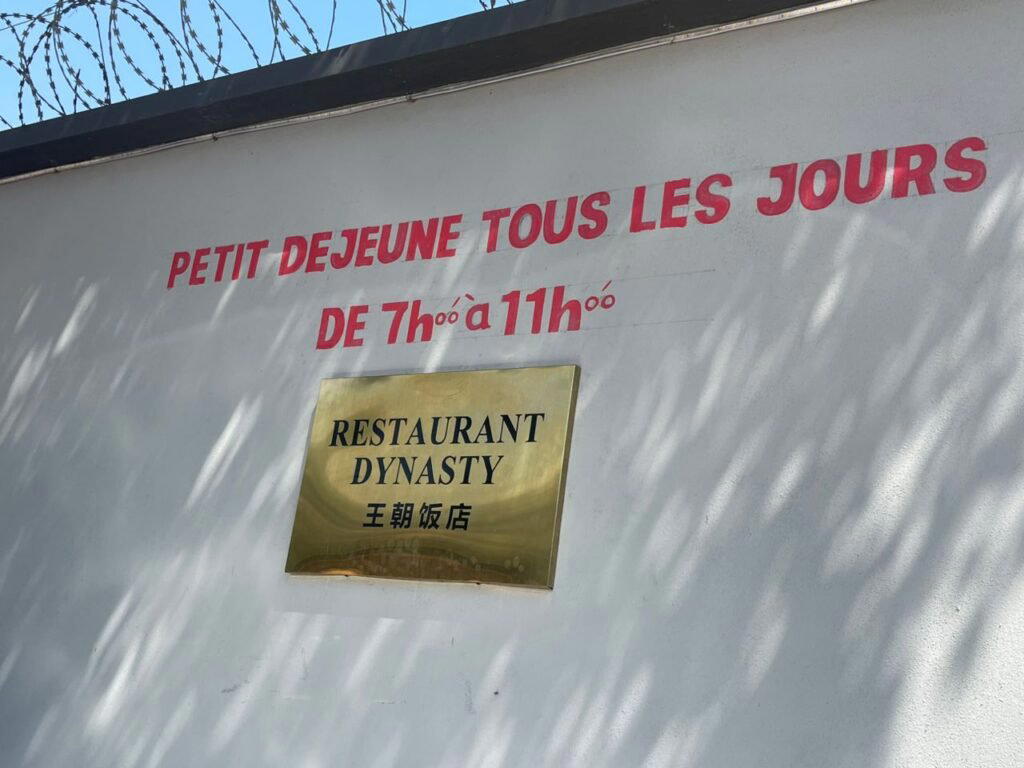
Restaurant Dynasty occupies a quiet stretch of Avenue Ruyigi in Bujumbura, positioning itself within a city where formal dining options remain limited and local ingredient sourcing defines what any serious kitchen can achieve. For travellers approaching Burundi's dining scene with curiosity rather than expectation, it represents a reference point in a capital still finding its restaurant identity.

Pearl is the En Primeur Club membership app — saves, bookings, and concierge access live there. Same editors, same standards.
Dining in Bujumbura: What the City's Restaurant Scene Actually Looks Like
Bujumbura sits on the northeastern shore of Lake Tanganyika, one of the world's deepest freshwater lakes, and that geography shapes what ends up on plates across the city in ways that no menu copy ever fully acknowledges. The lake's fish — primarily Nile perch and the small, protein-dense dagaa — move through local markets each morning before reaching the few formal restaurants that operate along the city's main avenues. This is not a capital with the culinary infrastructure of Nairobi or Addis Ababa. There are no Michelin inspectors, no regional 50 Best rankings to calibrate expectations. What exists instead is a compact, often informal dining culture shaped by the French colonial legacy, the cuisine of the Great Lakes region, and whatever fresh produce the surrounding highlands and the lake itself deliver each week.
Within that context, a restaurant that commits to a fixed address and a formal dining format, as Restaurant Dynasty does on Avenue Ruyigi, occupies a specific and relatively narrow tier. The city's dining options split roughly between hotel restaurants serving international menus to business travellers and NGO workers, local spots built around Burundian staples like ugali, isombe, and brochettes, and a small number of mid-to-upper-tier restaurants that attempt something more structured. For a fuller picture of where it sits relative to other options, our full Bujumbura restaurants guide maps the broader scene.
Ingredient Sourcing and Why It Defines the Kitchen
In cities with mature food supply chains, ingredient sourcing is a choice. In Bujumbura, it is a constraint and, for kitchens that work with it rather than against it, an opportunity. The produce arriving from Burundi's highland interior, including beans, plantains, cassava leaves, sweet potatoes, and a range of leafy vegetables, represents one of the most nutritionally dense and geographically distinct ingredient sets in Central Africa. The challenge for any formal restaurant in the city is whether it builds its menu around this supply or attempts to import around it.
Kitchens that lean into the local supply chain face a different set of creative parameters than, say, the sourcing philosophy of a place like Arpège in Paris, where chef Alain Passard built a three-Michelin-star reputation around estate-grown vegetables, or Azurmendi in Larrabetzu, which integrates its own biodynamic garden into a three-star Basque menu. The ambition is different, but the underlying logic, that what grows nearby should drive what appears on the plate, holds across contexts. In Bujumbura, the freshest, most defensible cooking tends to come from restaurants that treat Lake Tanganyika's fish as the centerpiece and use highland vegetables as the supporting register, rather than approximating European or pan-Asian formats with imported ingredients that arrive at a cost premium and a quality discount.
What the city's dining logic suggests, however, is that any restaurant on Avenue Ruyigi operating above the casual tier is contending with these same sourcing realities every service. The ingredient question is not an abstraction here; it is the practical condition that separates kitchens that adapt from those that struggle.
The Physical Setting and What to Expect Approaching the Venue
Avenue Ruyigi is one of Bujumbura's more navigable central streets, and a restaurant at number 12 sits in an area accessible from the city's main hotel corridor without requiring significant travel. Bujumbura's geography concentrates most formal dining within a relatively contained zone between the lake and the central administrative districts, which means logistics for visitors staying in that band are manageable. The broader neighbourhood character is functional rather than atmospheric by the standards of dining districts in larger African cities, which puts more pressure on the interior environment to establish a sense of occasion.
Formal restaurants in this city's upper tier tend toward enclosed, air-conditioned spaces that buffer against the heat and the ambient noise of street-level Bujumbura. The physical arrival at a restaurant in this tier is less about a curated exterior streetscape and more about the transition from the street to the interior, a shift that better-run establishments in the city handle with intention. Without specific interior data for Dynasty, the reasonable expectation for a restaurant at a fixed formal address in this tier is a dining room built for relative quiet and some degree of occasion, distinguishing it from the open-air brochette stands and market-adjacent eateries that define the city's volume end.
How Restaurant Dynasty Sits in a Global Reference Frame
Placing a Bujumbura restaurant in the same editorial frame as Le Bernardin in New York City, Alinea in Chicago, or Amber in Hong Kong is not a meaningful quality comparison, those restaurants operate with decades of institutional recognition, Michelin stars, and supply chains built over generations. The useful comparison is contextual: what does it mean to run a formal dining establishment in a capital where the category itself is thin, where supply chain consistency is not guaranteed, and where the customer base includes a significant proportion of international visitors whose baseline expectations were set elsewhere?
In that frame, Dynasty's peers are not the three-star rooms of Paris or the technically ambitious counters of Atomix in New York City or Benu in San Francisco. They are the upper-tier restaurants of Kigali, Kampala, and Dar es Salaam, cities at comparable stages of formal dining development, where a well-executed local fish dish or a dependable French-inflected menu represents genuine accomplishment given the conditions. The restaurants that navigate this context credibly in those cities tend to do so through supply discipline, consistent execution, and a clear sense of which end of the local-versus-imported spectrum they are committed to. Those are the criteria worth applying when assessing Dynasty.
For reference, the kind of sourcing discipline that defines the upper end of this discussion globally, from Aponiente's marine ingredient focus in El Puerto de Santa María to Atelier Moessmer Norbert Niederkofler's Alpine sourcing in Brunico, demonstrates that geography-led ingredient logic is not a constraint exclusive to less-resourced markets. It is, at its finest, the most coherent editorial position any kitchen can take.
Planning Your Visit
Restaurant Dynasty is located at Av. Ruyigi #12 in Bujumbura. Bujumbura's formal dining tier is small enough that restaurant hours and availability can shift seasonally or in response to local conditions, and a same-day check before arrival is advisable regardless.
Frequently asked questions
Is Restaurant Dynasty child-friendly?
Given its address on Avenue Ruyigi in Bujumbura's central formal dining tier, the room format is more likely suited to adult dining than family groups with young children. If travelling with kids, calling ahead directly or checking with your hotel concierge is the most reliable way to confirm arrangements before visiting.
What's the overall feel of Restaurant Dynasty?
Dynasty sits at the upper register of Bujumbura's narrow formal dining sector, on a navigable central avenue within reach of the city's main hotel district. Without a published awards profile, the room reads as a structured dining address rather than a destination with international critical recognition. In a capital where formal sit-down restaurants are few, that positioning alone gives it a role in the city's business and traveller circuit.
Is Restaurant Dynasty a practical option for visitors arriving from outside Burundi?
The address at Av. Ruyigi #12 places it within Bujumbura's central zone, accessible from the city's main hotel corridor used by international travellers, business visitors, and NGO staff. For travellers used to cities with dense restaurant options, Bujumbura's limited formal dining tier makes Dynasty one of a small number of addresses operating at this level.
What should I eat at Restaurant Dynasty?
Specific menu data is not available for Restaurant Dynasty. In Bujumbura broadly, the most defensible ordering strategy follows the city's supply geography: Lake Tanganyika fish — particularly fresh-caught varieties sourced from one of the world's deepest freshwater lakes — tends to reflect what kitchens here do most consistently and with the freshest ingredients. Dishes built around local produce are generally more reliable than those requiring imported components.
What part of town is Restaurant Dynasty in?
Restaurant Dynasty is located at Av. Ruyigi #12, Bujumbura, Bujumbura.
Details
- Casual Hangout
- A La Carte