Ramen Lab Eatery
Our verdict
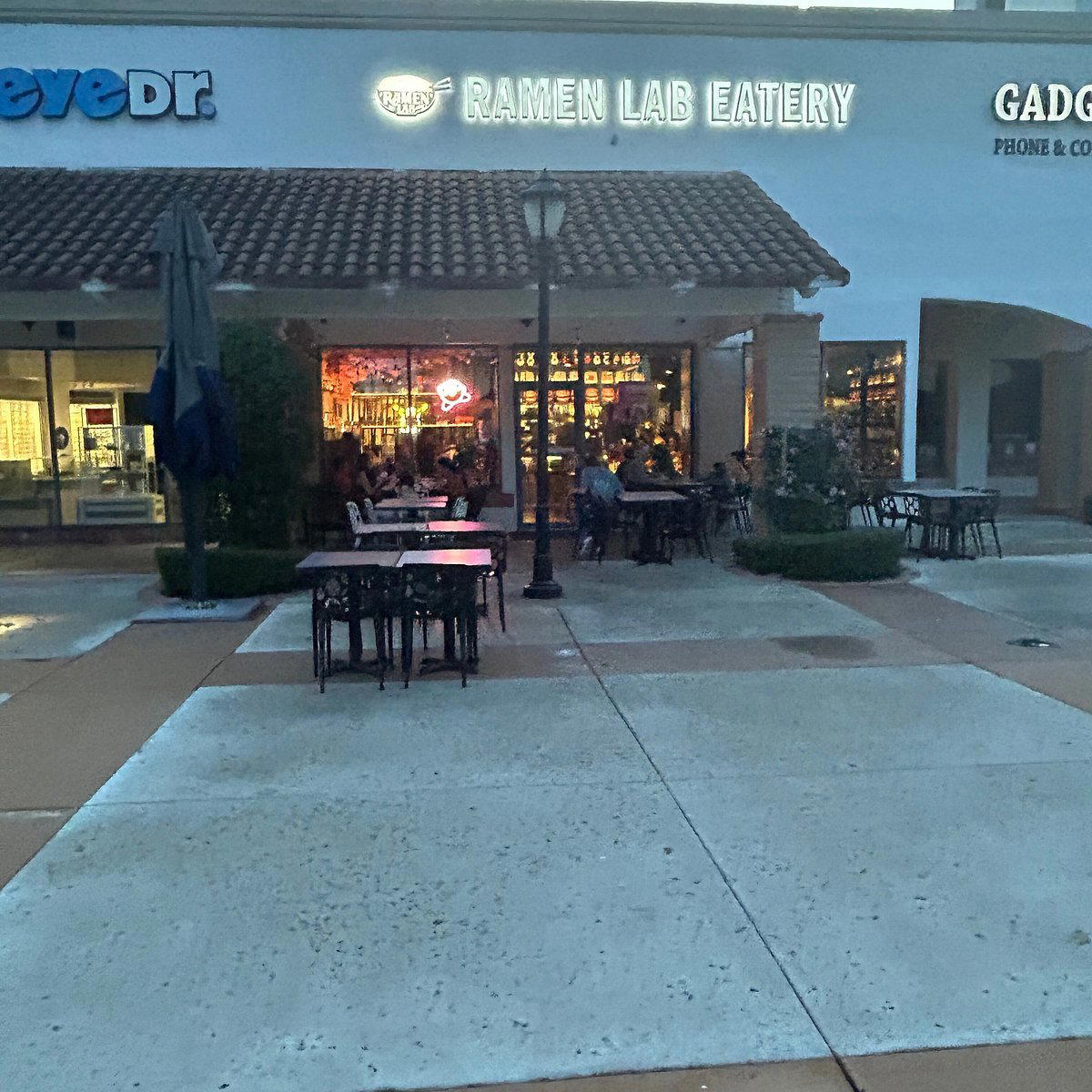
Ramen Lab Eatery on FL-7 sits at the practical end of Boca Raton's dining range, where the draw is a focused ramen format rather than occasion dining. In a city better known for waterfront Italian and French bistros, a dedicated ramen counter occupies a specific niche. The address places it in a strip-mall corridor that South Florida has made its own as an unlikely home for serious ethnic kitchens.

Pearl is the En Primeur Club membership app, where members save venues, book tables and use the concierge.
The menu
What to order
- Tonkotsu Ramen
- 5 Spice Duck Ramen
- Nanban Chicken
Where Boca Raton's Strip-Mall Kitchens Do Their Most Interesting Work
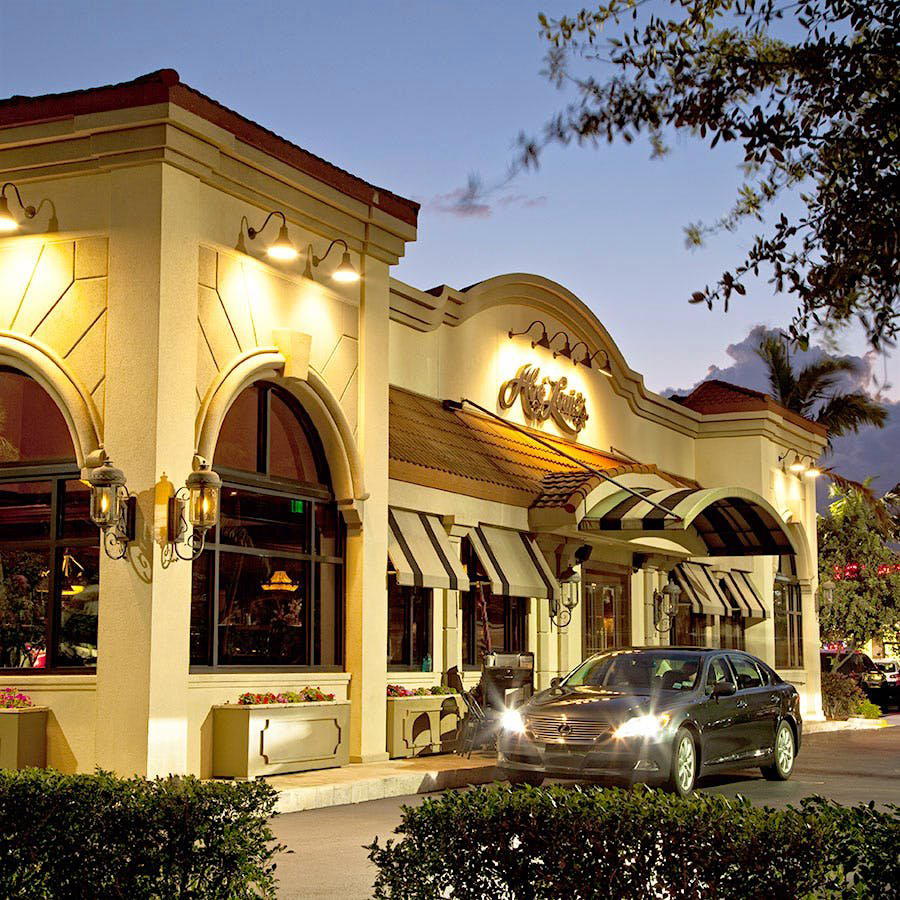
South Florida has a well-documented relationship with the strip mall as a dining venue. From the food-hall conversions of Fort Lauderdale to the tucked-away Vietnamese and Japanese spots along Broward's Federal Highway, the region's most compelling non-occasion cooking often happens in storefronts that prioritize kitchen investment over interior design budgets. Ramen Lab Eatery, on FL-7 in the 33498 zip, follows that pattern. The address, suite A5 in a retail block along State Road 7, signals nothing particularly theatrical about what's inside, which in this context is closer to a recommendation than a caveat.
Boca Raton's dining identity has historically been shaped by its waterfront Italian and white-tablecloth Continental formats. Places like 388 Italian Restaurant By Mr Sal and Beluga House Waterfront Restaurant set the dominant register. The city's newer dining range also includes casual-all-day formats like Anyday Boca and European café-style operations such as Cafe Landwer. Against that backdrop, a ramen-specific kitchen occupies a different position entirely, serving a format that rewards repetition and regularity rather than special-occasion visits.
The Format That Ramen Demands
Ramen, as a category, is one of the more technically demanding propositions in Japanese cooking. The broth structures, tonkotsu, shio, shoyu, miso, each require different timing, fat ratios, and mineral balance. Tonkotsu alone typically involves a 12-to-18-hour pork-bone reduction to achieve the collagen-rich opacity that defines the style. This is not food that scales easily or tolerates shortcuts in a way that remains invisible to the diner. In American ramen culture, which has matured considerably since the mid-2010s wave of Japanese-trained operators opening on the coasts, the gap between a serious ramen kitchen and a generic noodle shop is immediately legible in the bowl.
In South Florida specifically, the ramen offer has generally lagged behind what's available in Miami's Brickell and Wynwood corridors, which carry higher tourist traffic and can support the volume that justifies serious broth operations. A venue committed to the format in Boca Raton's western suburbs is serving a more local, repeat-customer base, a different commercial equation that, when it works, tends to produce more consistent quality than trend-driven openings targeting foot traffic.
Team Dynamics in a Focused Kitchen
The editorial angle of EA-GN-11, team collaboration as the organizing principle, applies with particular force to ramen formats. Unlike tasting-menu kitchens, where the sommelier-to-chef dynamic gets the most visible expression, a ramen counter's hospitality architecture is flatter. The kitchen and the floor are in close communication because the product is time-sensitive: a bowl of ramen begins deteriorating from the moment it's poured, as noodles absorb broth and fat emulsification breaks down. Service timing is therefore a function of kitchen-floor coordination, not just kitchen output. A well-run ramen counter, at any price point, depends on the front-of-house team reading table pace accurately and communicating it backwards into the kitchen in real time.
This is different from, say, the sommelier-forward collaboration that defines operations like Le Bernardin in New York City or the farm-to-table team architecture at Blue Hill at Stone Barns in Tarrytown, where pairing knowledge and agricultural sourcing shape the guest experience from a distance. In a ramen format, the collaboration is more immediate and less visible to the diner, but its presence or absence is felt in whether the bowl arrives at the right moment.
Boca Raton's Broader Dining Context
Ramen Lab Eatery sits on the western, less-trafficked arc of Boca's dining geography. The FL-7 corridor runs north-south through what is largely a residential and retail zone, distinct from the Atlantic Avenue and Mizner Park concentrations where Boca's more visible dining addresses tend to cluster. Venues like AlleyCat operate in the denser, more foot-traffic-driven parts of the city. The FL-7 location makes Ramen Lab Eatery a destination rather than a drop-in, which again aligns with the format, since ramen diners in the US have shown consistent willingness to travel for a specific bowl.
For context on what a focused, specific-format restaurant in a non-obvious location can achieve at the national level, it's worth noting how American dining has evolved broadly. Tasting-menu operations like Alinea in Chicago and The French Laundry in Napa represent one end of the format spectrum. Ramen Lab Eatery occupies the opposite end, where the format discipline is no less rigorous but expressed through a single category rather than a multi-course architecture. The analogy isn't about prestige, it's about the principle that format specificity, at any price tier, tends to produce more reliable quality than generalist menus.
Comparable evidence appears in how Korean-format specialists like Atomix in New York City have built sustained reputations on culinary precision within a defined cultural framework. The discipline of staying within a lane, rather than broadening to capture more market, is the logic that makes format-specific kitchens credible over time. South Florida's dining scene includes enough generalist operators that a venue with a clearly stated format offers something distinct by contrast.
Planning a Visit
Ramen Lab Eatery is located at 20449 FL-7, Suite A5, Boca Raton, FL 33498. The FL-7 address is most conveniently reached by car, consistent with the suburban commercial strip context. As with most casual ramen formats in the US, the operation likely runs on a walk-in or limited-reservation basis, but specific booking policies, hours, and current pricing are best confirmed directly before visiting, as this category of restaurant tends to adjust operating hours seasonally and around staff capacity. For a broader map of what Boca Raton's dining scene offers across formats and price tiers, the full Boca Raton restaurants guide covers the range from waterfront occasion dining to neighbourhood-level operators.
Comparative reference points in the Florida dining scene for similar strip-mall-adjacent quality positioning would include the Vietnamese and Japanese kitchens that have built reputations along Broward and Palm Beach County's commercial corridors over the past decade, where low overhead and local repeat business have supported more consistent kitchen quality than higher-profile locations with greater cost pressure. That context is useful for calibrating expectations: this is not occasion dining, and it is not priced or positioned as such. The value proposition is a focused format executed with the consistency that repeat local patronage demands.
Those looking to extend a Boca Raton visit across multiple dining registers might also consider the French bistro tradition represented elsewhere in the city, or the Italian-American formats at 388 Italian Restaurant By Mr Sal. For American regional cooking at opposite ends of the national range, Emeril's in New Orleans and Providence in Los Angeles illustrate how different the occasion-dining register looks when it's operating at full depth. Ramen Lab Eatery is serving a different purpose and a different diner, and that clarity of purpose is, in the current Boca Raton market, its clearest credential.
Frequently asked questions
Where do I go for Ramen Lab Eatery?
Ramen Lab Eatery is located at 20449 FL-7 A5, Boca Raton, FL 33498, Boca Raton.
Is Ramen Lab Eatery a good option for ramen in western Boca Raton?
Ramen Lab Eatery sits on the FL-7 corridor in Suite A5 at 20449 FL-7, placing it on the western, less-trafficked arc of Boca Raton's dining geography, an area dominated by residential retail strips rather than destination restaurant clusters. That address makes it the most accessible dedicated ramen kitchen for residents of western Boca and the adjacent communities along the Broward-Palm Beach border. The focused format, typical of serious ramen operations, prioritizes broth depth over a sprawling menu.
What dish is Ramen Lab Eatery famous for?
Ramen Lab Eatery's menu centers on Japanese-style ramen, where broth construction, whether tonkotsu, shio, shoyu, or miso, is the defining technical focus. The FL-7 location in Boca Raton draws a regular crowd specifically for the bowl formats rather than a broader Japanese menu.
Do I need a reservation for Ramen Lab Eatery?
Ramen formats in strip-mall kitchens at this address on FL-7 in Boca Raton typically operate on a walk-in basis, consistent with the counter-service conventions of the category. Visiting during off-peak hours, mid-afternoon or early evening on weekdays, reduces wait time at most comparable South Florida ramen spots.
At-a-Glance Comparison
Comparable venues nearby, for context on price, style, and recognition.
| Venue | Cuisine | Price | Notes |
|---|---|---|---|
| Ramen Lab EateryThis venue (the venue you are viewing) | Japanese Ramen Fusion | $20–30 | Not listed |
| AlleyCat | Modern Japanese Izakaya & Sushi | $30–50 | East Boca Raton |
| Tap 42 Boca Raton | Modern American Gastropub | $30–50 | Town Center |
| Chez Marie French Bistro | Traditional French Bistro | $30–50 | Polo Club Shoppes |
| Lemongrass - Boca Raton | Pan-Asian Sushi & Thai Fusion | $30–50 | Boca Raton |
| Maggie McFly's® | American Craft Gastropub | $20–30 | Town Center |