Our verdict
On Avenue du 2 Février in Lomé, Namiélé occupies a corner of the Togolese capital where West African ingredient traditions and considered cooking intersect. The restaurant sits within a dining scene that is still defining its upper tier, making it a reference point for visitors tracking where Lomé's table culture is heading. For those following West Africa's emerging restaurant circuit, it merits attention.

Pearl is the En Primeur Club membership app — saves, bookings, and concierge access live there. Same editors, same standards.
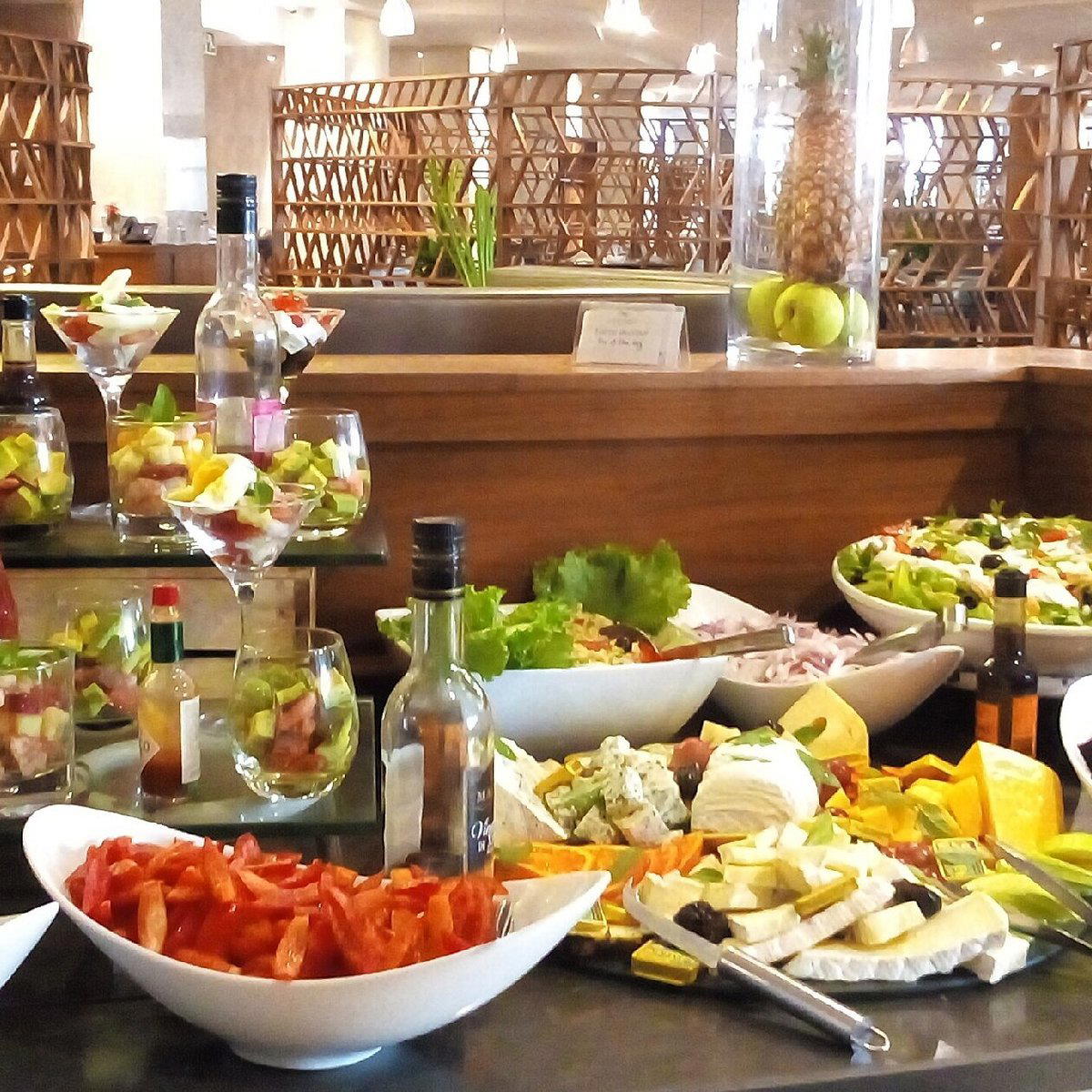
Avenue du 2 Février and the Logic of Place
Lomé's dining address that carries the most symbolic weight is Avenue du 2 Février, the seafront boulevard named for the date of a 1974 nationalisation that reshaped Togolese economic life. The street runs along the Atlantic coast, and the Gulf of Guinea is never far from your awareness — the salt air, the proximity of the fishing quarter, the way light behaves in the late afternoon as the ocean reflects it back across the city. Arriving at Namiélé on this avenue, the physical environment does much of the contextual work before you sit down. You are not in a restaurant district that grew up around tourism or expatriate demand. You are on a boulevard that belongs to the city itself, and that distinction shapes what a kitchen here can credibly be.
West Africa's coastal cities are still in the early stages of building a tier of restaurants that treat local sourcing as a structural commitment rather than a stylistic choice. In cities like Accra, Abidjan, and Dakar, the conversation around ingredient provenance and regional cooking traditions has accelerated over the past decade, with chefs drawing on cassava, smoked fish, palm-based sauces, and fermented condiments as primary materials rather than nostalgic footnotes. Lomé occupies an interesting position in that regional conversation: smaller than those capitals, less visible on international itineraries, but with direct access to both Atlantic seafood and the agricultural interior of Togo, where yam, sorghum, and shea production give a kitchen genuine sourcing range. For context on how Lomé's broader dining scene is developing, our full Lome restaurants guide maps the city's emerging options across price tiers.
Where the Ingredients Come From
The editorial argument for paying attention to Namiélé is inseparable from the sourcing argument for paying attention to Togolese cooking. Togo's narrow geography — a thin corridor running from the Atlantic coast to the Sahel, produces a disproportionate range of ingredients. The southern coast yields fresh and smoked seafood that has defined Lomé's street food and home cooking for generations. The central plateau and northern regions supply grains, root vegetables, and livestock that rarely appear on menus pitched at international visitors, because international-facing restaurants in West Africa have historically defaulted to a generic continental format over local specificity.
The more compelling dining addresses in the region are those willing to use that sourcing range as a structural element of their menus. Songhai in Lomé represents one approach to this question, and further along the coast, Hotel Ecole Safari in Agbodrafo engages the same coastal ingredient logic from a hospitality-school context. The question Namiélé sits inside is whether Lomé's restaurant tier can develop a consistent sourcing identity the way that, say, the farm-to-table movement gave specific American cities a legible culinary argument. In San Francisco, that argument produced places like Lazy Bear and Atelier Crenn, where provenance is the organising principle. In West Africa, the equivalent movement is younger and less codified, which makes each restaurant that commits to it more load-bearing as a reference point.
The Regional Context for Serious Cooking
Across the Gulf of Guinea, the most interesting culinary development of the past decade has not been the arrival of international formats but the reassertion of indigenous ones. Fermented locust beans, called dawadawa in the Hausa-speaking belt and iru in Yoruba cooking, are appearing as umami anchors in dishes that once deferred to imported condiments. Palm oil, long treated as a workhorse fat, is being sourced with the same attention that European kitchens give to olive oil provenance. Dried and smoked fish are functioning as seasoning as much as protein, in a way that parallels the use of bottarga in Italian coastal cooking or the anchovy paste foundations of Southeast Asian sauces.
Restaurants operating at a considered level in this tradition are building something that the global dining conversation has not yet fully mapped. The benchmark restaurants that international critics reference, places like Le Bernardin in New York City for seafood technique, Arpège in Paris for vegetable-forward sourcing discipline, or Aponiente in El Puerto de Santa María for marine ingredient range, all built their identities on a specific, defensible sourcing logic. The West African restaurants beginning to operate at that level of ingredient intentionality are doing so without the Michelin infrastructure or the 50 Best visibility that accelerated recognition in those other markets.
Other internationally recognised restaurants have demonstrated how a specific regional identity can anchor a global reputation: Arzak in San Sebastián built on Basque ingredient logic, Atomix in New York City on Korean culinary grammar, and Atelier Moessmer Norbert Niederkofler in Brunico on South Tyrolean Alpine sourcing. The pattern is consistent: specificity of origin produces durability of identity. Lomé's better restaurants are beginning to operate inside that same logic, with Togolese ingredient specificity as the asset.
Planning a Visit
Namiélé sits on Avenue du 2 Février, which is accessible from central Lomé and well-known as an address to local residents. Lomé does not yet have the dense restaurant infrastructure of a city like Accra or Abidjan, so specific reservations matter more than in cities where a backup option is always a short walk away. The broader Togolese dining scene rewards visitors who plan with some flexibility, since operating schedules at independent restaurants across the region can shift around local events, seasons, and supply availability.
Frequently asked questions
Can I bring kids to Namiélé?
Lomé's dining culture on Avenue du 2 Février is broadly communal, and West African restaurant settings at this address tier tend to accommodate families without friction. Namiélé's specific policy on children is unconfirmed, so contacting the venue directly before visiting with young children is the practical approach. Nothing in its positioning signals a format that would exclude them.
What's the overall feel of Namiélé?
The address on Avenue du 2 Février sets the tone before you arrive: it is a seafront boulevard carrying real civic and historical weight in Lomé, named for a 1974 nationalisation date. That context tends to give restaurants along this stretch a grounded, place-specific character rather than the generic international register you find elsewhere in West African capital dining. Expect a setting shaped by proximity to the Atlantic and by Lomé's own identity as a smaller, less internationally profiled city than Accra or Dakar.
How does Namiélé reflect Lomé's position relative to the wider Gulf of Guinea food scene?
Lomé occupies a geographically specific position on the Gulf of Guinea: a coastal city with direct access to both Atlantic seafood and the agricultural interior of Togo, a country whose cooking tradition is largely underrepresented in international food media compared to Ghana or Senegal. Namiélé on Avenue du 2 Février is part of a small set of Lomé addresses making the case that this gap is an editorial oversight, not a quality one. For visitors arriving from Accra or Lagos, the contrast in register — smaller city, less internationally mediated, more locally anchored — is part of what makes the stop worth scheduling.
What's the best thing to order at Namiélé?
What the broader Togolese cooking tradition does well — and what restaurants drawing on serious local sourcing along the Gulf of Guinea tend to anchor their menus around — is produce-led cooking shaped by the coastal and inland supply chains unique to Togo. Arrive ready to follow what the kitchen is running rather than arriving with a fixed order in mind.
What's Namiélé's location?
Namiélé is located at Avenue du 2 Février, Lomé, Lome.
Is Namiélé reservation-only?
In Lomé's independent restaurant circuit, higher-end addresses increasingly operate on a reservation basis given limited covers, so reaching out in advance is the lower-risk approach.
At-a-Glance Comparison
| Venue | Cuisine | Price |
|---|---|---|
| NamiéléThis venue — the venue you are viewing | African with French and International influences | $20–30 |
| Songhai | Pan-Asian Fusion Fine Dining | $50–100 |
| Hotel Ecole Safari | Authentic Togolese | Not listed |
Continue exploring
More in Lome
Restaurants in Lome
All restaurants in Lome →
Details
- Modern
- Elegant
- Brunch
- Family
- Hotel Restaurant
- A La Carte
- Buffet
- Vegetarian Friendly
- Vegan Options
Fresh and smart atmosphere with the quality of a high-range restaurant.