
Tabelog 100 #45
Our verdict
Mukai Sake no Mise sits in Ise’s izakaya tier where seafood, nihonshu and local regulars matter more than ceremony. Its Tabelog 100 Izakaya WEST selections in 2022, 2024 and 2025 place it among western Japan’s more closely watched tavern addresses, with a mid-range dinner budget and a format built around fish, sake and shochu rather than chef-counter theatre.

Pearl is the En Primeur Club membership app — saves, bookings, and concierge access live there. Same editors, same standards.
The menu
What to order
- Fresh sashimi from Ise Bay
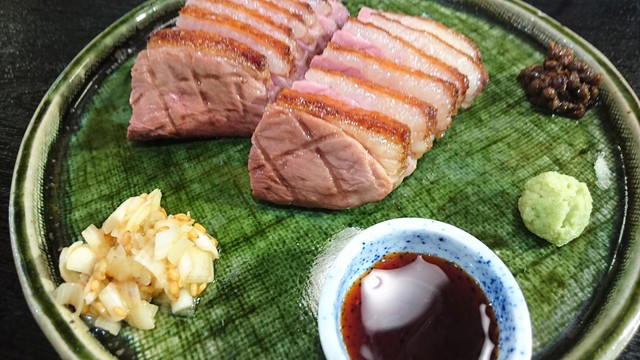
- Low-temperature cooked meat dishes
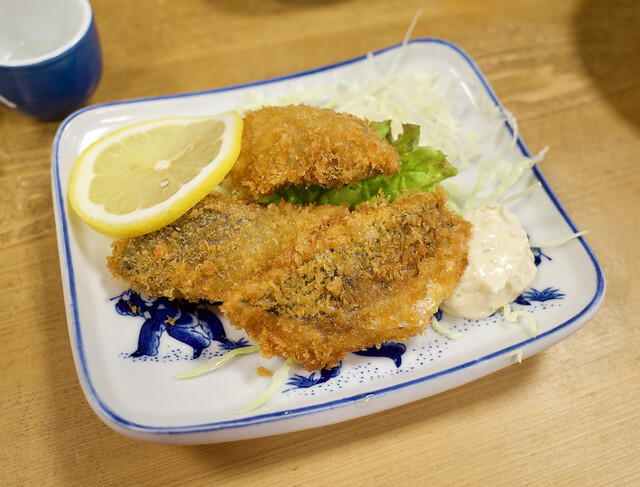
- Fried oysters (kaki furai)
- Salt-grilled small shrimp
- Assorted sake snacks
Before the first order, Mukai Sake no Mise signals the older logic of the Japanese tavern: a room built around drinking, seafood and conversation rather than ceremonial progression. In Ise, that format carries weight. The city’s food culture sits between pilgrimage traffic, local seafood, old sweets houses and everyday drinking rooms, so an izakaya must do more than feed visitors passing through. It has to absorb the town’s working appetite after dark.
Mukai Sake no Mise belongs to that second category. It is not competing with the formality of sushi counters such as Komada, nor with the higher-ticket bracket represented by Nikawa. Its lane is direct: Japanese tavern cooking, seafood and sake, with enough consistency to earn Tabelog 100 Izakaya WEST recognition in 2025. In a city where shrine schedules and train times often dictate the day, this is the more local proposition: dinner as a drinking table, not a ceremony.
Ise's seafood tavern tradition, read through sake rather than spectacle
Ise’s food is inseparable from geography. Mie Prefecture faces rich coastal waters, and the city’s eating habits have long been shaped by fish, shellfish, soy, rice and the practical demands of feeding pilgrims. That does not make every seafood address serious. The useful test is whether fish is treated as decoration or as the centre of the house’s identity. Here, the public categorisation is blunt: izakaya, seafood and Japanese cuisine, with food focused on fish and drinks naturally aligned with tavern drinking.
That combination matters because the better regional izakaya does not behave like a miniature kaiseki restaurant. It works through repetition, seasonality and compatibility with alcohol. A plate needs clarity beside sake, enough salt or texture to carry another pour, and enough restraint not to exhaust the table. The appeal is cumulative pacing, not a parade of named signatures. The absence of a famous chef narrative is therefore not a weakness. In this category, the house is judged by procurement, freshness, drink alignment and confidence to let the table move at tavern speed.
The Tabelog 100 Izakaya WEST selection is a useful signal because it compares taverns across a broad western Japan field, not only within Ise. The score, 3.73, also sits where Japanese users have already filtered for reliability rather than novelty. That recognition does not make the room formal; it confirms that the informal format has been taken seriously by diners who know the genre.
Why this room fits Ise better than a destination tasting menu
For travellers mapping Ise through food, the city splits into daytime institutions and evening taverns. Local dining can explain the confectionery and pilgrimage side, point toward regional traditions, show the comfort-food current, or reflect the casual contemporary layer. Against that spread, a seafood-and-sake izakaya becomes the evening hinge: less polished than a tasting counter, more rooted than a generic meal.
The tavern format sharpens the point. An izakaya has a broader social register than the small prestige model. It can hold drinkers, local groups and visitors who want izakaya grammar without turning dinner into a luxury performance. The format is editorially revealing: this is shared-room dining, where energy comes from the rhythm of food, sake and conversation rather than enclosure.
The comparison set around Ise clarifies the price logic. Tora Maru occupies a comparable serious-dinner conversation, while Nikawa moves into a higher-ticket register. That places Mukai Sake no Mise in the serious everyday category, where expectation is shaped by product and repeat appeal rather than tasting-menu architecture. For a traveller with one dinner in Ise, the smarter choice is not always the higher spend; in a pilgrimage city, the meal that best explains the place may be built for drinking, fish and conversation.
How to fold it into a sharper Ise itinerary
A strong Ise food day should not treat dinner as an isolated booking. Build a sequence: start with the old-town and daytime canon, then let evening move toward nihonshu and seafood. Readers building a broader route can use Our full Ise restaurants guide for the dining map, with Our full Ise hotels guide for where to base the night. The city’s drinking culture is more compact than Tokyo’s, but Our full Ise bars guide helps separate tavern drinking from cocktail-led rooms, while Our full Ise experiences guide helps pace cultural time around meals. Wine travellers will find fewer local anchors, though Our full Ise wineries guide frames the category for those extending the trip.
Within a wider Japan itinerary, the lesson is comparative. Refined dining rooms, charcoal-led addresses, specialist counters and other city-specific formats each explain a different urban appetite. Smaller-format places across Japan also show how cities absorb outside formats. Ise’s contribution is older and plainer: fish, drink, shared tavern culture, and a rhythm suited to a town built around arrival and return.
For overseas readers, there is a sake parallel. International sake bars can translate nihonshu culture into curated contexts, while Japanese comfort-food specialists abroad frame familiar flavours for a different dining economy. In Ise, the same ingredients and drinking logic sit closer to their source. Mukai Sake no Mise is strongest when read that way: not as a trophy reservation, but as a compact expression of regional tavern culture with third-party recognition to justify the detour.
Frequently asked questions
Is Mukai Sake no Mise good for families?
The room is best read as an izakaya for tavern dining, seafood and Japanese cuisine in Ise. Dinner pricing is listed at JPY 5,000 to JPY 5,999.
What kind of setting is Mukai Sake no Mise?
It is an izakaya in Ise, categorised publicly as a Japanese-style tavern, seafood and Japanese cuisine venue.
What's the price range at Mukai Sake no Mise?
Pricing at Mukai Sake no Mise is listed as JPY 5,000 - JPY 5,999.
What is Mukai Sake no Mise known for?
Mukai Sake no Mise is known as an Ise izakaya focused on seafood and Japanese cuisine, with Tabelog 100 Izakaya WEST recognition in 2025 and a listed score of 3.73.
Snapshot
Comparable venues by cuisine and price in the same metro.
| Venue | Cuisine | Price | Awards | Notes |
|---|---|---|---|---|
| Mukai Sake no MiseThis venue (the venue you are viewing) | Seafood-focused Japanese izakaya with strong sake program | $30–50 | Tabelog 100 #45 | Not listed |
| Ichigetsu Ya | Traditional Japanese Izakaya & Seafood | $20–30 | Tabelog 100 #11 | Miyamachi |
| 伊勢 三玄 | Traditional Japanese Kaiseki | $50–100 | Not listed | Ise |
| Isuzu Chaya Honten | Traditional Japanese sweets cafe & teahouse | $10–20 | Tabelog 100 #22 | Okage Yokocho / Oharaimachi (near Ise Jingu Naiku) |
| Akafuku Honten | Traditional Japanese sweets & tea house | $1–10 | Tabelog 100 #88 | Oharaimachi |
| Sazanami Ise ten | Japanese fried shrimp & seafood | $20–30 | Tabelog 100 #86 | Jinkyu |
Recognition history
Dated appearances from independent guides and award organizations, with the underlying list record or original source where available.
Tabelog 100 #45 · No. 45
Tabelog · Tabelog 100 - Izakaya - WEST - 2025
Continue exploring
More in Ise
Restaurants in Ise
All restaurants in Ise →
Details
- Cozy
- Lively
- Classic
- Intimate
- Energetic
- Casual Hangout
- After Work
- Group Dining
- Solo
- Date Night
- Celebration
- Standalone
- Chefs Counter
- Historic Building
- Sake Program
- Beer Program
- Local Sourcing
- Sustainable Seafood
- A La Carte
- Small Plates
- Counter Dining
- Sake
- Beer
- Shochu
- Pescatarian Friendly
Current opening hours
- Monday
- Closed
- Tuesday
- 4–10 PM
- Wednesday
- 4–10 PM
- Thursday
- 4–10 PM
- Friday
- 4–10 PM
- Saturday
- 4–10 PM
- Sunday
- Closed
Hours can change for holidays and private events. Last verified .