Loiseau d'à Côté

Michelin Plate
Our verdict
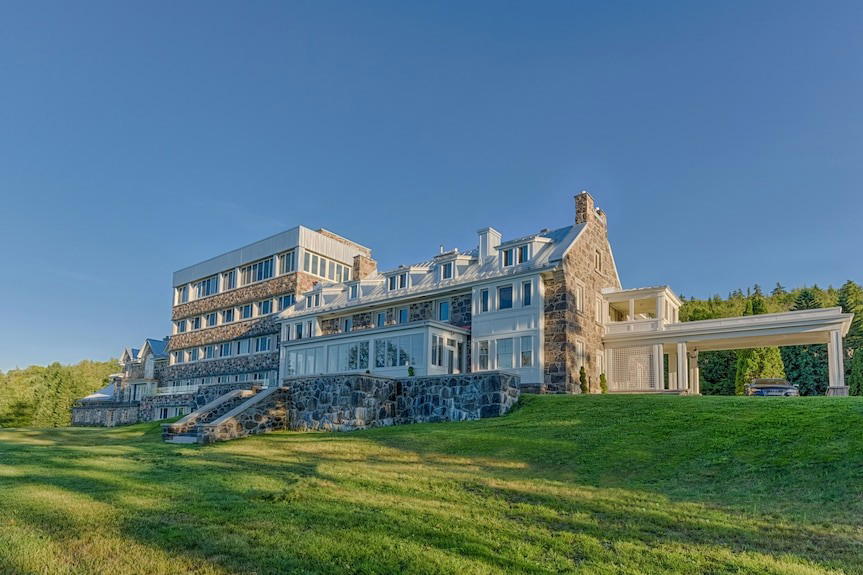
Chef Alexandre Loiseau and Sandra Côté run this striking castle-like building opposite Saint-Sauveur Church, where traditional Québécois cooking centers on traceable regional farms. A lunch formule and evening à la carte format rely on Gaspor suckling pig, boudin noir, maple-glazed sweetbreads, and flat iron steaks treated with restraint rather than spectacle.

Pearl is the En Primeur Club membership app, where members save venues, book tables and use the concierge.
The stone-and-turret profile of this small-castle structure sits directly across from Saint-Sauveur Church, a silhouette that signals ambition in a town better known for ski lodges than formal dining. The unusual architecture, more Loire Valley than Laurentians, sets a threshold expectation that the interior quietly recalibrates: the room is warm rather than grand, service direct rather than scripted, and the menu built around supply-chain transparency more than architectural flourish. Alexandre Loiseau and Sandra Côté have built a program where the farm name matters more than the plating device, a model that positions the restaurant closer to Québec's ingredient-driven bistro wave than to resort-town comfort-food defaults. For travelers exploring Our full Saint Sauveur restaurants guide, the venue operates as a counterpoint: formal enough for occasion dining, grounded enough to avoid resort markup theater.
Sourcing as Editorial Stance
Loiseau d'à Côté frames its menu through named-farm provenance, a decision that narrows ingredient choice but sharpens traceability. Suckling pig arrives from the Gaspor family farm, a supplier whose scale and ethics are verifiable rather than implied. Boudin noir and maple-glazed sweetbreads appear with equal billing, a signal that the kitchen values technique across cuts rather than relying on premium-protein hierarchy. Flat iron steak, braised with mushrooms and red wine, reflects the Québécois embrace of hearty-but-humble tradition, where execution depth compensates for ingredient cost. This approach aligns the restaurant with a broader Laurentian dining shift: farms treated as co-authors, menus adjusted seasonally not for novelty but for supply reliability, and traditional preparations given room to speak without interruption. The maple glaze is a nod to regional identity, but its application remains measured; sweetbreads carry the sweetness without cloying. The model here is restraint anchored in access, a combination that separates the restaurant from both high-intervention tasting formats and low-ambition pub fare. Visitors accustomed to 3 Pierres 1 Feu in Montréal or 7 Enoteca in Oakville will recognize the farm-forward tone but find the execution less urban-polished, a difference that reflects Saint-Sauveur's scale and proximity to source.
Format and Pricing Structure
Lunch service centers on a set formule with optional supplements, a structure that controls cost and kitchen pace while offering flexibility for appetite or budget. The formule format is common in Québec's bistro tier, where fixed-price midday menus allow operators to manage waste and prep depth. Evening service shifts to à la carte, widening choice and raising check averages without abandoning the ingredient-driven logic that governs lunch. This dual format works for both local repeat diners and seasonal tourists: the lunch formule becomes an accessible entry point, while the evening à la carte menu supports celebration or multi-course exploration. Desserts are house-made and mentioned specifically in available descriptions, a trust signal that kitchen craft extends beyond savory courses. The warm welcome noted in external commentary suggests front-of-house consistency, a detail that matters more in resort-adjacent towns where service quality can swing wildly between peak and shoulder seasons. For context, Saint-Sauveur's dining landscape includes a mix of casual cafés, resort dining rooms, and a small cluster of independent restaurants targeting the Montréal weekend market. Loiseau d'à Côté occupies the higher end of that independent cluster, priced above bistro standard but below Montréal fine-dining equivalents. Travelers exploring Our full Saint Sauveur hotels guide or Our full Saint Sauveur experiences guide will find the restaurant functions as a credible anchor for multi-day itineraries, where dinner quality justifies the drive or overnight stay.
The building's location at 10 avenue Filion places it within walking distance of the town center and church square, a short stroll from lodging options clustered around rue Principale. Saint-Sauveur sits roughly 60 kilometers north of Montréal, a drive that takes just over an hour outside rush periods and positions the restaurant as a viable same-day excursion or weekend-trip anchor. The Laurentian region draws year-round traffic, ski season in winter, hiking and lakes in summer, so timing visits around shoulder seasons (late spring, early fall) can reduce crowds without sacrificing ingredient quality or kitchen consistency. The castle-like exterior makes the building easy to spot, but signage is minimal; first-time visitors should confirm the address in advance. Parking is available nearby, though winter conditions require appropriate preparation. For visitors routing through Québec's broader culinary circuit, the restaurant pairs logically with stops at regional wineries or craft-beverage producers, creating a day loop that balances ingredient tourism with table service.
Loiseau d'à Côté offers a rare combination in resort-adjacent dining: farm-to-table rigor without urban pretension, traditional Québécois technique without nostalgia, and a physical setting that manages to be both distinctive and unpretentious. The named-farm sourcing model gives the menu editorial weight, while the dual-format service structure makes the restaurant accessible across budgets and occasions. The dessert program and warm service close the loop, ensuring that the experience coheres rather than fragments. For travelers seeking transparency over theater, and ingredient stories over plating spectacle, the restaurant delivers a clear value proposition. It will not satisfy diners chasing molecular innovation or tasting-menu ceremony, but for those prioritizing traceable supply chains and honest execution, the castle-like building opposite the church holds more than architectural novelty, it houses a kitchen that treats tradition as a live practice rather than a heritage asset.
Frequently asked questions
Does Loiseau d'à Côté work for a family meal?
The restaurant accommodates families without issue. The lunch formule, set menu with optional extras, offers predictable structure and pacing, and the traditional French-Canadian repertoire (suckling pig, sweetbreads, flat iron steak) includes straightforward proteins that translate across age groups. The castle-style building opposite Saint-Sauveur Church adds a visual hook for younger diners.
What kind of setting is Loiseau d'à Côté?
The venue occupies a small castle-style building opposite Saint-Sauveur Church, an architectural choice that stands out in the Quebec town's streetscape. Inside, the focus shifts to the cooking: chef Alexandre Loiseau and Sandra Côté run a kitchen built around named-farm sourcing, notably from the Gaspor family farm. The atmosphere leans warm rather than formal.
Is Loiseau d'à Côté award-winning?
Loiseau d'à Côté has received recognition including: Opposite Saint-Sauveur Church, this unusual-looking building resembling a small castle houses the restaurant of chef Alexandre Loiseau and Sandra Côté. The traditional cuisine served here is made using impeccable local produce: knuckle of s….
What part of town is Loiseau d'à Côté in?
Loiseau d'à Côté is located at 10 avenue Filion, Saint-Sauveur, Quebec, J0R 1R0, CAN, Saint Sauveur.
What's the best way to book Loiseau d'à Côté?
No public website or phone number is currently listed, so prospective diners should reach out through directory assistance for Saint-Sauveur or visit in person at 10 avenue Filion. The kitchen runs both a lunch formule and an evening à la carte menu, so timing affects availability and format.
What makes Loiseau d'à Côté worth seeking out?
The restaurant commits to named-farm provenance, suckling pig from Gaspor, local boudin noir, which narrows the supply chain and sharpens traceability. That approach is less common in Quebec's Laurentian corridor than in Montreal, making the model notable for a town of Saint-Sauveur's scale. The menu also showcases traditional preparations: maple-glazed sweetbreads, mushroom-and-red-wine treatments, and house desserts that anchor the experience.
Can Loiseau d'à Côté adjust for dietary needs?
The evening à la carte menu offers more choice than the lunch formule, which centers on a set sequence. Traditional French-Canadian cooking here relies heavily on pork (suckling pig, boudin noir) and offal (sweetbreads), so strict vegetarian or vegan requirements will limit options. Advance notice when booking is advisable to gauge flexibility, though the named-farm sourcing model suggests a tightly ingredient list.
Quick Comparison
Comparable venues by cuisine and price in the same metro.
| Venue | Cuisine | Price | Awards |
|---|---|---|---|
| Loiseau d'à CôtéThis venue (the venue you are viewing) | Seasonal French Bistro | $30–50 | Michelin Plate |
| L’Épicurieux | Modern Cuisine | Not listed | Not listed |
| StoneHaven Le Manoir | French Fine Dining | $50–100 | Relais Chateaux Award |
Recognition history
Dated appearances from independent guides and award organizations, with the underlying list record or original source where available.
Michelin Plate
Michelin
Continue exploring
More in Saint Sauveur
Restaurants in Saint Sauveur
All restaurants in Saint Sauveur →
Bars in Saint Sauveur
Browse all →
Details
- Cozy
- Sophisticated
- Elegant
- Classic
- Date Night
- Business Dinner
- Group Dining
- Brunch
- Standalone
- Craft Cocktails
- Beer Program
- Local Sourcing
- Street Scene
- A La Carte
- Wine
- Cocktails
- Beer
- Gluten Free Options
A warm, refined neighborhood dining room with a creative yet traditional culinary identity and an intimate, polished feel.