Le Belier
Our verdict
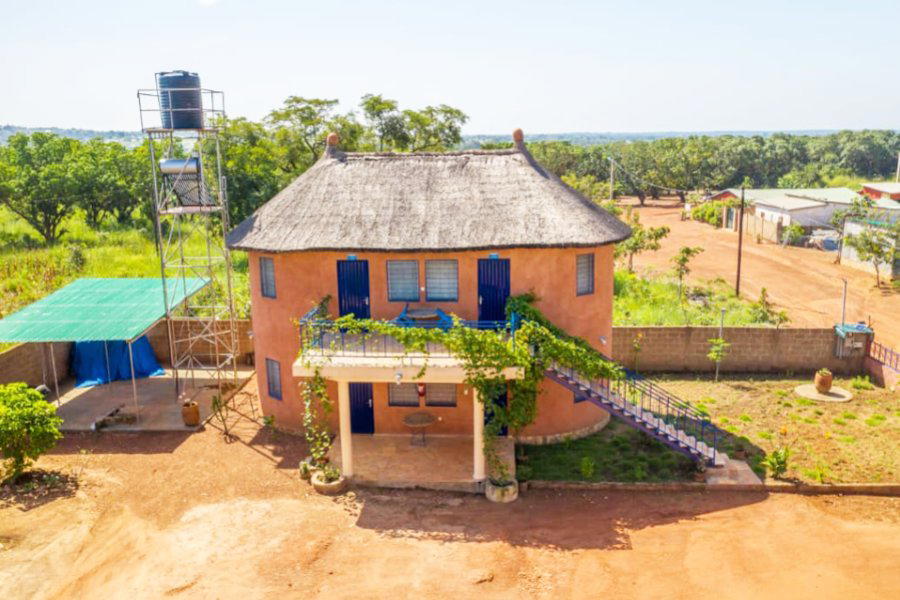
Le Belier sits in Natitingou, the gateway city to Benin's Atakora region and one of West Africa's less-documented dining destinations. In a city where the food culture draws directly from the agricultural rhythms of the surrounding Atakora mountains, Le Belier represents a local dining reference point worth understanding before you arrive. See our full Natitingou context for what to expect from the broader scene.

Pearl is the En Primeur Club membership app, where members save venues, book tables and use the concierge.
The menu
What to order
- Tête de mouton façon Bélier
- Igname pilée sauce arachide
Eating in Natitingou: What the Atakora Region Puts on the Table
There is a particular quality to dining in cities that sit at the edge of agricultural heartlands, where the supply chain between field and kitchen is short enough to be legible. Natitingou occupies exactly that position in northern Benin. The city serves as the administrative and commercial centre of the Atakora department, a region defined by its refined terrain, the Atakora mountain range, and communities whose farming practices have remained largely continuous across generations. Ingredients here do not arrive through long cold-chain logistics; they move from market to kitchen on the same day. That proximity shapes what ends up on the plate in ways that are harder to engineer in larger, more connected cities.
Le Belier is part of that local dining fabric. Its name, French for 'the ram,' points toward the culinary register you should expect: grilled and stewed meats, dishes built around the livestock and produce that define Atakoran cooking. In a city where dining options are limited and each establishment occupies a distinct position in the local food economy, Le Belier functions as a reference point rather than a footnote. For anyone spending time in Natitingou, understanding what it represents within the city's food scene is more useful than treating it as an isolated venue.
Sourcing at Altitude: What the Atakora Produces
The Atakora region's elevation, averaging between 400 and 600 metres, gives it a slightly cooler, more varied climate than the lowland zones of Benin. That variation supports a broader agricultural range: sorghum, millet, yams, and beans alongside fruit crops and the livestock, primarily cattle, sheep, and goats, that form the backbone of northern Beninese cooking. The markets of Natitingou reflect this directly. On market days, which draw traders and producers from surrounding villages, the ingredient range on display represents a live map of what the surrounding countryside grows and raises.
This is the sourcing context in which a restaurant named 'Le Belier' operates. Mutton and lamb preparations, braised or grilled over wood, are common across northern Benin's restaurant culture and carry weight here in a way they do not in coastal Cotonou, where seafood dominates. The distinction matters: visitors arriving from Benin's south or from internationally-focused urban dining scenes will find the northern table meaningfully different in its protein emphasis and in the sauces, often groundnut or tomato-based, that accompany it.
For comparison, the cooking tradition at ART Residence in Porto Novo works within Benin's southern coastal idiom, where fish and palm-oil-rich preparations define the baseline. The gap between that table and what Natitingou's restaurants offer illustrates how much internal culinary diversity Benin contains within its relatively compact geography.
Natitingou's Place in Benin's Dining Geography
Benin's dining infrastructure concentrates heavily in Cotonou, its commercial capital, and to a lesser degree in Porto Novo. Natitingou, despite its regional importance, operates with a much thinner layer of formal restaurant culture. That scarcity is not a flaw in the city's character; it reflects a different relationship between food and public life, one where home cooking, market food, and a small number of established local restaurants divide the function that a dense restaurant district would serve elsewhere.
In this context, the restaurants that do establish themselves in Natitingou carry more weight per venue than their equivalents in a larger city. There is no redundancy in the system. A traveller who arrives expecting the optionality of, say, a city like Lagos or Abidjan will need to recalibrate. What Natitingou offers instead is a tighter, more locally-rooted eating experience, where the question of where ingredients come from has a cleaner, more immediate answer than in most urban dining environments.
That is a different kind of value from what drives the reputation of internationally-recognised restaurants. The precision sourcing programs at places like Arpège in Paris or the hyper-local ingredient philosophies that define Azurmendi in Larrabetzu are deliberate, heavily-documented systems built on top of global infrastructure. In Natitingou, the short supply chain is structural rather than curated, a function of geography rather than a positioning choice. Both approaches can produce food that tastes of its place. The mechanisms are simply very different.
Planning a Visit: What to Know Before You Arrive
Natitingou is approximately 550 kilometres north of Cotonou by road, a journey that takes the better part of a day depending on road conditions and transport choice. The city is also accessible via a small domestic airport, though schedules and availability on that route shift seasonally. Most visitors arriving in Natitingou are either overlanding through West Africa, visiting the Tata Somba fortified houses of the Batammariba people in the surrounding countryside, or using the city as a base for the Pendjari National Park, one of West Africa's more significant wildlife reserves, located roughly 80 kilometres to the north.
Given the limited restaurant infrastructure, planning meals in Natitingou requires a different approach than in cities with dense dining options. Arriving with some knowledge of where to eat, rather than assuming options will present themselves, is the practical approach. Our full Natitingou restaurants guide covers the broader scene with that practicality in mind.
Specific operational details for Le Belier, including hours, booking methods, and current pricing, are not reliably documented in international sources. Direct contact through your accommodation in Natitingou, or through local operators familiar with the city's restaurant scene, is the most reliable way to confirm availability before visiting. This is standard practice for independent restaurants in smaller West African cities, and the expectation management it requires is part of travelling in this part of the continent with any degree of care.
The Broader Frame: West Africa's Underdocumented Tables
Much of the international food writing attention directed at West Africa focuses on the coastal cities and, increasingly, on the urban restaurant scenes developing in Lagos, Accra, and Dakar. The interior, including northern Benin, remains substantially underdocumented in English-language food media.
It also means that first-hand assessment is more valuable and harder to replicate. The restaurants earning detailed international coverage, from Le Bernardin in New York to 8 1/2 Otto e Mezzo Bombana in Hong Kong, exist within thick layers of criticism, awards documentation, and peer comparison. Le Belier in Natitingou exists largely outside that apparatus. What it offers instead is the direct, unmediated experience of a local restaurant serving food that reflects where it actually is, using what the surrounding region actually produces. That is not a consolation prize for the absence of Michelin coverage. For a certain kind of traveller, it is precisely the point.
Frequently asked questions
Can I bring kids to Le Belier?
Natitingou's restaurant culture is built around casual, communal eating rather than formal dining conventions, which makes it an environment where children fit without friction. Food in northern Benin is served in a straightforward, shared-table register that does not demand adult-only decorum. Families travelling through Natitingou on the way to Pendjari National Park regularly eat at local restaurants of this type.
What's the vibe at Le Belier?
Le Belier sits in Natitingou, a regional administrative city in the Atakora department rather than a tourist-oriented hub, and that context shapes the tone. Expect a practical, local-facing dining room where the clientele is largely residents and travellers passing through northern Benin, not an international restaurant crowd. The register is relaxed and functional, consistent with the broader dining culture of mid-sized West African regional cities.
Is Le Belier a practical meal stop before entering Pendjari National Park?
Natitingou is the primary staging city for Pendjari National Park, positioned roughly 80 kilometres south of the park's main entry points, and its restaurants serve that transit function in practice. Le Belier, located in Natitingou itself, sits on the logical route for travellers heading north from Cotonou, approximately 550 kilometres by road. Eating in Natitingou before entering the park makes logistical sense given that dining options inside Pendjari are limited to lodge facilities.
What should I eat at Le Belier?
The restaurant's name references livestock directly, 'bélier' is French for ram, which points toward meat-centred preparations built on local northern Benin produce. The Atakora region's agricultural output, shaped by elevations between 400 and 600 metres, includes grains, tubers, and livestock that form the backbone of the area's cooking. Dishes in this part of Benin typically draw on those ingredients rather than coastal or imported produce.
What's Le Belier's location?
Le Belier is located at Natitingou, Natitingou.
Do they take walk-ins at Le Belier?
Walk-in dining is the operating norm in Natitingou, where formal reservation infrastructure at local restaurants is limited and rarely expected. Given the city's profile as a regional centre rather than a high-demand dining destination, arriving without a booking at a restaurant of this type carries little risk. Travellers routing through Natitingou toward Pendjari National Park routinely rely on this walk-in model.
What's the signature at Le Belier?
The restaurant's name anchors it firmly to lamb and mutton preparations, and northern Benin's livestock-farming tradition makes those the logical centrepiece of the menu. That framing is consistent with how similarly positioned restaurants in the Atakora region operate, where locally raised animals dominate the plate over fish or imported proteins.
Side-by-Side Snapshot
| Venue | Cuisine | Price |
|---|---|---|
| Le BelierThis venue (the venue you are viewing) | Beninese Regional Cuisine | $1–10 |
| ART Residence | Modern Beninese Cuisine | $20–30 |
Details
- Cozy
- Rustic
- Casual Hangout
- Family
- Hotel Restaurant
- Local Sourcing
- Mountain
- A La Carte
Relaxed countryside atmosphere with healthy local foods cooked with care.