ART Residence
Our verdict
A residence-style property on the quiet streets of Avakpa-Kpodji, ART Residence sits within Porto Novo's emerging creative quarter, where Beninese craftsmanship and local materials define the aesthetic rather than imported convention. For travellers approaching West Africa's most historically layered capital, it offers a considered alternative to the hotel corridor model that dominates nearby Cotonou.

Pearl is the En Primeur Club membership app, where members save venues, book tables and use the concierge.
The menu
What to order
- Akassa Moyo
- Art Omelette
- Piron Rouge
Porto Novo's Quieter Register
Porto Novo does not announce itself. Benin's constitutional capital sits in the shadow of Cotonou's commercial noise, roughly 30 kilometres to the west, and that displacement has preserved something useful: a city where colonial-era Brazilian architecture meets Yoruba tradition in streets that still feel navigable, human-scale, and genuinely inhabited rather than staged for visitors. The neighbourhood of Avakpa-Kpodji, where ART Residence occupies a plot on Rue 40 in Ilot 13, belongs to this quieter register. Zémidjan motorcycle taxis thread past compound walls painted in terracotta and ochre. Markets operate on inherited rhythms. The soundscape at dawn is birds and the call to prayer, not generators and hotel lobby music.
This context matters for understanding what a property like ART Residence represents in Porto Novo's accommodation picture. The city receives a fraction of the visitor traffic that Cotonou manages, which means its lodging options have developed around local patterns of hospitality rather than international brand expectations. For travellers already familiar with how cities like Cotonou function, Porto Novo reads differently, slower, more archival, more architecturally coherent. See our full Porto Novo restaurants guide for a broader map of the city's emerging scene.
Ingredient Sourcing as a West African Principle
Across West Africa's smaller capitals, the most interesting residential properties and guesthouses tend to share a particular relationship with food procurement: they source locally not as a marketing position but as a practical reality. Supply chains that connect a place like Porto Novo to international distributors are inconsistent, which means that kitchens, whether in private residences or small-scale hospitality operations, build their menus around what the proximate market reliably produces. In Porto Novo's case, that means the Grand Marché and its satellite vendors, which supply fresh vegetables, palm oil pressed from local plantations, smoked fish from Lake Nokoué, and the seasonal produce that defines Beninese cooking at its most grounded level.
The broader culinary tradition this connects to is one of the least-documented in West Africa, which is not a reflection of its depth. Beninese cuisine draws from Fon and Yoruba agricultural practice: tchoukoutou (fermented sorghum), acarajé-adjacent bean fritters that reflect the historical slave trade routes between Benin and Brazil, and a persistent use of fermented locust beans (dawadawa) as a flavour anchor in sauces that would otherwise lean sweet. Properties operating in this food environment that engage with local sourcing are, whether consciously or not, participating in the preservation of a largely unrecorded culinary record. That is a different proposition from the farm-to-table rhetoric attached to restaurants at places like Azurmendi in Larrabetzu or the micro-regional ingredient sourcing that defines menus at Atelier Moessmer Norbert Niederkofler in Brunico, at those addresses, provenance is a deliberate editorial act. In Porto Novo, it is simply the operating condition.
The Residence Format in West African Hospitality
West African hospitality has historically organised itself around the compound model: an enclosed domestic space that accommodates guests within a family or community structure rather than at arm's length behind a reception desk. The residence format that properties like ART Residence adopt in contemporary Porto Novo sits downstream of that tradition, even when it incorporates modern amenities. The distinction between a maison d'hôtes and a conventional hotel in this context is not merely one of scale; it is a difference in social logic. Guests in a residence-format property tend to engage with the neighbourhood directly rather than through a concierge layer, which in a city like Porto Novo, where the Ethnographic Museum, the Centre Songhaï agricultural research project, and the Brazilian Quarter's architecture all require pedestrian navigation, is an advantage rather than a limitation.
The address on Rue 40, Ilot 13 places ART Residence within walking distance of the neighbourhood's daily rhythms. Porto Novo's urban fabric is compact enough that most of its significant sites, the Musée da Silva, the Royal Palace of King Toffa, are reachable without a vehicle. That kind of location logic is relevant at a moment when visitor interest in West African capitals has begun to diversify beyond Cotonou's business-hotel infrastructure, toward properties that function as actual entry points into the cultural fabric of a place. For a sense of the contrast between a maximally formal dining context and the kind of informal, locally-embedded food culture Porto Novo offers, consider how removed the experiences at Alain Ducasse at Louis XV in Monte Carlo or Alléno Paris au Pavillon Ledoyen are from the market-anchored reality of Beninese daily eating, and why the latter might be worth understanding on its own terms.
Porto Novo in the Wider Benin Picture
Benin's emerging visitor profile has been shaped primarily by Cotonou's airport, its hotels, and its status as the country's commercial engine. But the cultural argument for Porto Novo has become harder to ignore as interest in West African heritage travel grows. The city was once a significant node in the Dahomey Kingdom's political geography, and its architecture carries that layered history in ways that Cotonou, rebuilt repeatedly around commercial priorities, does not. Travellers who use Porto Novo as a base rather than a day-trip destination from Cotonou tend to report a qualitatively different engagement with Beninese culture, one that extends to food markets, neighbourhood sociality, and the kind of slow temporal rhythm that smaller capitals preserve almost by accident.
In the broader Benin context, Le Belier in Natitingou represents what independent, locally-anchored hospitality looks like in the country's north. Porto Novo's version of that model is still developing its vocabulary, but properties operating in the Avakpa-Kpodji area are part of that formation. The comparison set for ART Residence is not the international mid-market hotel groups that dominate Cotonou's Boulevard de la Marina, it is the small-footprint guesthouses and maisons d'hôtes emerging across West African capitals from Lomé to Accra, as those cities build hospitality infrastructure scaled to cultural tourism rather than business travel.
Planning a Stay
Porto Novo is most accessible via Cotonou's Cadjehoun Airport, with the road connecting the two cities well-travelled and served by shared taxis and private hire. Direct booking enquiries for ART Residence are leading handled through the property's address on Rue 40, Ilot 13, Avakpa-Kpodji, as no online booking platform or website is currently listed. The residence format suggests that early communication about arrival timing, dietary requirements, and length of stay will shape the experience more directly than at a conventional hotel, where those variables are absorbed by operational infrastructure. Porto Novo's peak visitor season aligns loosely with Benin's dry period, roughly November through March, when humidity drops and overland travel to sites like Ouidah or Abomey becomes more manageable.
Frequently asked questions
Is ART Residence okay with children?
The compound-format layout typical of West African residential properties tends to offer enclosed courtyard space, which can work well for families with young children. It is worth contacting the property directly, via the address at Ilot 13 Rue 40, Avakpa-Kpodji, Porto Novo, to confirm room configurations and any age-related arrangements before booking.
How would you describe the vibe at ART Residence?
Porto Novo operates at a different register from Cotonou: fewer transit crowds, a stronger colonial-era architectural character, and a pace shaped by its role as Benin's constitutional capital rather than its commercial centre. ART Residence sits within that context, positioned in the Avakpa-Kpodji neighbourhood, which places guests closer to the city's civic and cultural fabric than a Cotonou hotel would. The residence format suggests something closer to a private house than a conventional hotel.
Is ART Residence a good base for visiting Porto Novo if arriving via Cotonou Airport?
Cadjehoun Airport in Cotonou is the practical entry point for most international visitors to Benin, and Porto Novo sits approximately 30 kilometres to the east, a route served by shared taxis and private transfers. ART Residence at Ilot 13 Rue 40, Avakpa-Kpodji places guests in Porto Novo itself rather than Cotonou, which suits visitors whose focus is the capital's administrative sites, markets, and 19th-century Brazilian-Portuguese architecture rather than Cotonou's commercial centre.
What do people recommend at ART Residence?
Documented guest recommendations are not on public record for ART Residence at this time. Properties in Porto Novo of this type are generally noted for proximity to the city's markets, colonial architecture, and the Ethnographic Museum of Porto Novo. The location in Avakpa-Kpodji places the property within reach of those reference points, making the neighbourhood itself part of what guests typically engage with.
Where do I go for ART Residence?
ART Residence is located at ilot 13 RUE 40 Avakpa-Kpodji, Porto-Novo, Porto Novo, Porto Novo.
Continue exploring
More in Porto Novo
Restaurants in Porto Novo
All restaurants in Porto Novo →
Hotels in Porto Novo
Browse all →
Details
- Modern
- Elegant
- Scenic
- Date Night
- Family
- Casual Hangout
- Rooftop
- Hotel Restaurant
- Open Kitchen
- Craft Cocktails
- Street Scene
- A La Carte
- Buffet
- Family Style
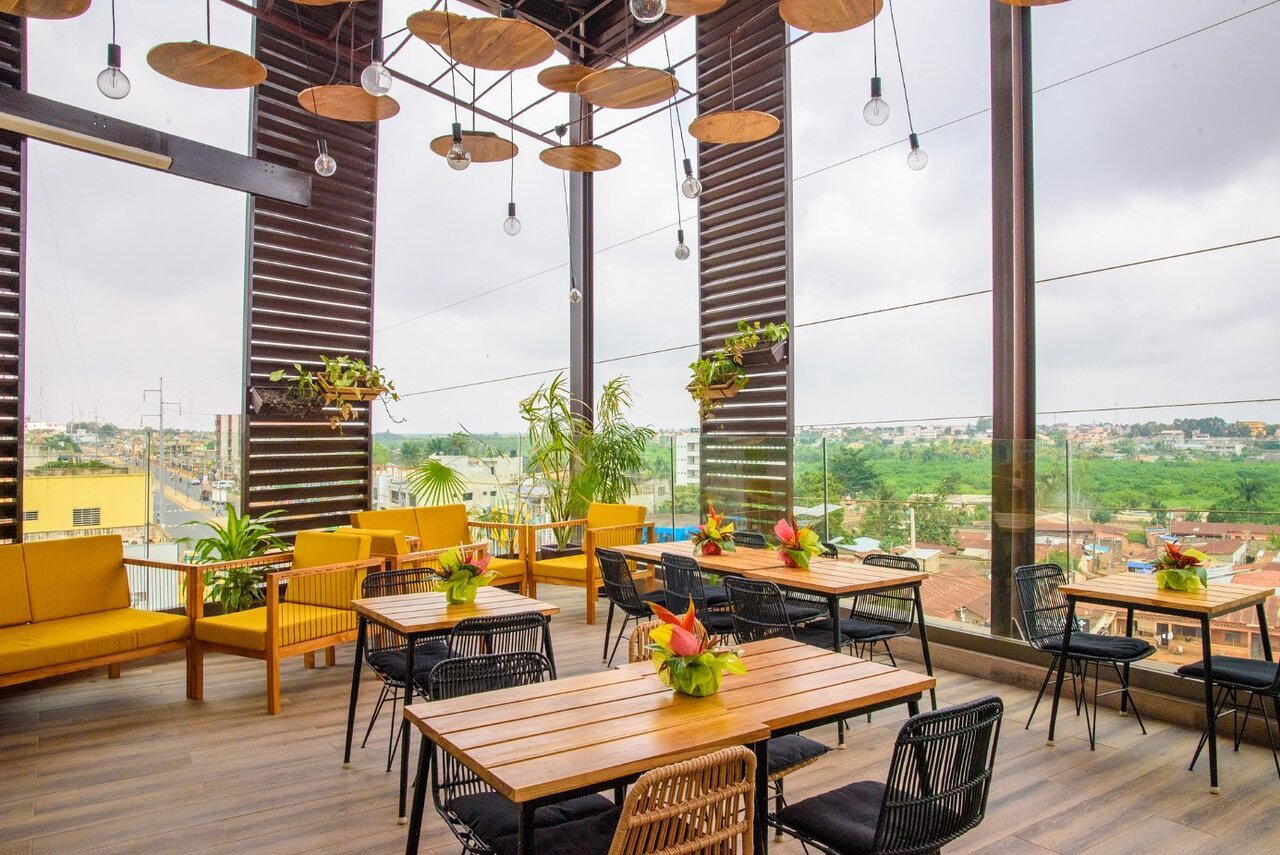
Design-forward terrace with natural ventilation, poolside dining, and scenic cityscape views praised for warm, refreshing atmosphere.