
Hanhan occupies a distinct position in Kyoto's omakase scene, with a format built around equal halves of meat and vegetables. The chef's dual training in kappo and sushi informs a menu that replaces the traditional kaiseki emphasis on fish with beef, pork, and chicken, treated with the same rigour. Dishes like chicken wings stuffed with enoki and kombu, and Chinese yam norimaki, signal both technical grounding and real creative range.
Pearl is the En Primeur Club membership app — saves, bookings, and concierge access live there. Same editors, same standards.
- Address
- 554-3 Wakamiyacho, Shimogyo Ward, Kyoto, 600-8314, Japan
- Phone
- +81 75-361-8650
- Directions
- Get directions
 Saves & bookings on Pearl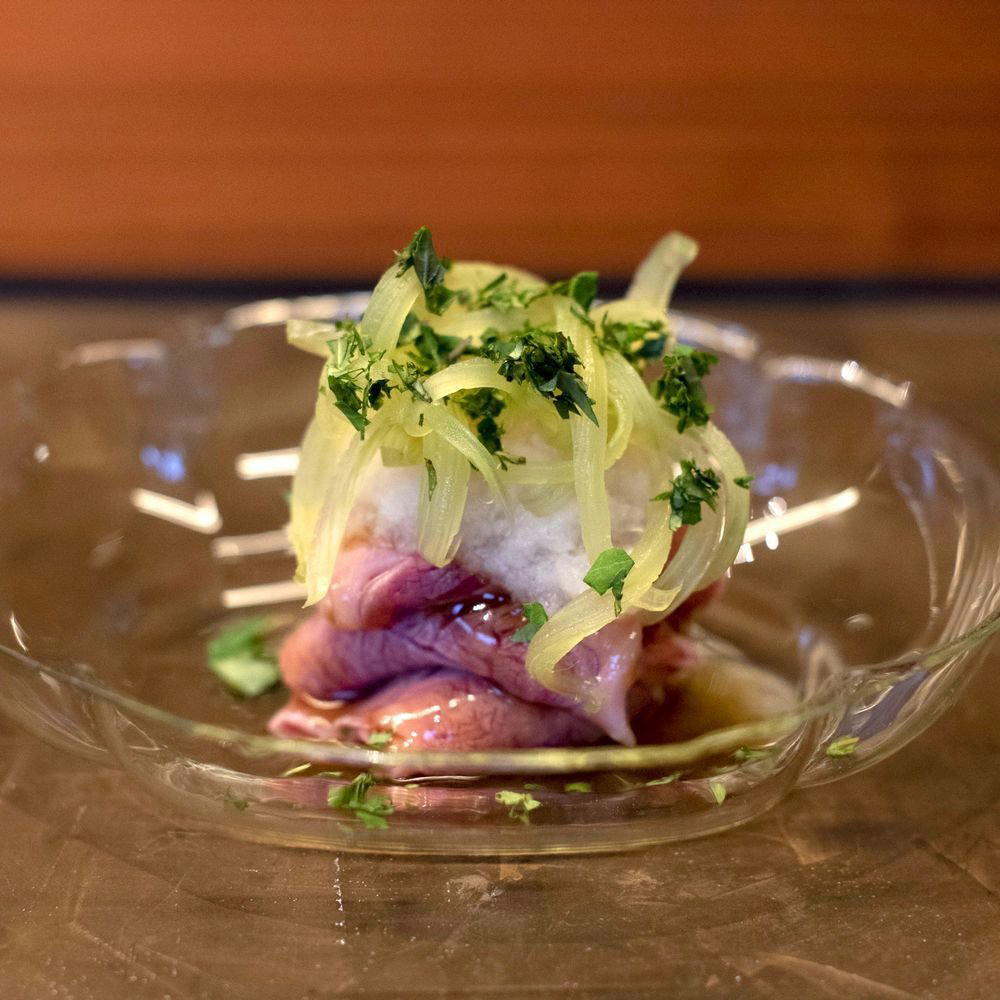
A Counter That Rewrites Kyoto's Protein Hierarchy
Shimogyo Ward sits south of the old city's ceremonial core, a neighbourhood where the density of temples thins and the streets carry a more working Kyoto character. It is not where you expect to find a counter doing something structurally unusual with the kaiseki grammar. Hanhan is a restaurant in Kyoto's Shimogyo Ward, serving a modern Japanese omakase of half meat and half vegetables, with a price around $130 per person. The name telegraphs the premise before you sit down: hanhan (半半) means 'half and half.' The omakase set divides evenly between meat dishes and vegetables, a ratio that may sound simple but is, in the context of Kyoto's dining culture, a deliberate departure.
What the Format Actually Means for Kyoto Dining
To understand what Hanhan is doing, it helps to understand what it is working against. Kyoto kaiseki, as practised at places like Gion Sasaki, Hyotei, and Kikunoi Honten, is a cuisine built on seasonal fish, tofu, and dashi-led broths, with meat playing at most a supporting role. The tradition draws from Buddhist culinary restraint and from a geography that gave Kyoto's chefs access to refined mountain vegetables and lake fish rather than the ocean protein that dominates Tokyo's counter cooking. Meat, in classical kaiseki, is an afterthought.
Hanhan's chef trained in both kappo and sushi before moving toward a format that substitutes meat for the fish positions in a kaiseki-style progression. This is not fusion in the lazy sense. It is a structural substitution: beef, pork, and chicken occupy the same narrative slots that salmon, sea bream, or eel would fill in a conventional progression. The vegetable half of the menu keeps faith with Kyoto's produce tradition, grounding the meal in something recognisably local even as the protein side travels somewhere else. The result is an omakase that reads as a dialogue between what Kyoto cooking has always done well and what it has historically left to other cities.
For comparative context, Isshisoden Nakamura and Mizai represent the kind of orthodox kaiseki lineage that Hanhan is implicitly in conversation with, and the contrast sharpens the editorial case for Hanhan's format. It is not arguing against kaiseki; it is using its structure as scaffolding for something less doctrinaire.
The Dishes as Evidence
Two dishes from the documented menu make the creative and technical case simultaneously. Chicken wings stuffed with enoki mushrooms, then wrapped in kombu and presented in norimaki form, use a sushi technique (nori rolling) applied to a kappo-style ingredient combination. The kombu wrap references the dashi-making tradition that underlies almost all Kyoto cooking, while the enoki stuffing is an exercise in textural precision: the mushrooms must retain their thread-like character inside the wing without going soft. Getting that right requires the kind of heat control that comes from kappo training, not guesswork.
The Chinese yam norimaki extends the same logic. Chinese yam (nagaimo or yamaimo) is sticky, slippery, and resistant to being formed into anything; rolling it in nori and presenting it as a norimaki piece asks the chef to manage a technically difficult ingredient with the discipline expected of a sushi counter. That this appears on a meat-forward omakase menu says something about the range of the kitchen's formal training.
Neither dish is a novelty item. Both are evidence of a chef who absorbed the technical vocabulary of two demanding Japanese disciplines and is now applying them to a format that does not yet have an established category in Kyoto's dining taxonomy. Elsewhere in Japan, meat-forward fine dining counters have appeared in Osaka at places like HAJIME and in Tokyo at counters like Harutaka, though those kitchens operate with different structural premises. In Kyoto, Hanhan occupies a less crowded position.
Where Hanhan Sits in the Critical Conversation
The editorial case for Hanhan rests partly on what it is not. Kyoto's most-discussed restaurants at the ¥¥¥¥ tier, including the kaiseki institutions above, compete on depth of tradition, seasonal precision, and Michelin accreditation. Hanhan's recognition is built around its conceptual originality, which places it in a different kind of critical conversation. At smaller omakase counters across Japan, that question is increasingly the operative one. akordu in Nara and Goh in Fukuoka both operate in that space, applying non-native frameworks to Japanese ingredients with formal rigour. Hanhan does something related but inverted: it applies Japanese technique to ingredients that Japanese fine dining has historically undervalued.
Internationally, the structural parallel might be found at counters like Atomix in New York City, where Korean culinary logic is applied to fine dining progressions in ways that require the guest to bring some baseline knowledge to appreciate what is being subverted. The analogy is imperfect but points to a category of serious restaurant that rewards prior engagement with the tradition it is working within.
The Wider Kyoto Restaurant Scene
Kyoto's dining scene supports multiple tiers of Japanese fine dining, from apprenticed kaiseki lineages to single-cuisine omakase specialists. For those building an itinerary across the Kansai region, 1000 in Yokohama and 6 in Okinawa offer points of comparison for the kind of format-driven omakase that Hanhan represents, while Le Bernardin in New York City provides an international benchmark for how a kitchen can build a reputation on protein-specific technical mastery.
Know Before You Go
- Address: 554-3 Wakamiyacho, Shimogyo Ward, Kyoto, 600-8314, Japan
- Format: Omakase set menu, half meat and half vegetables
- Cuisine lineage: Kappo and sushi training; meat-substitution of classical kaiseki fish positions
- Booking: Essential given the small-counter format
- Price range: About $130 per person
- Getting there: 554-3 Wakamiyacho, Shimogyo Ward, Kyoto, 600-8314, Japan
How It Stacks Up
Comparable venues nearby, for context on price, style, and recognition.
| Venue | Cuisine | Price | Awards | Notes |
|---|---|---|---|---|
| HanhanThis venue — the venue you are viewing | Modern Japanese Omakase (Half Meat, Half Vegetables) | $$$ | Michelin Plate | Not listed |
| Keri | Kamo-ryori (Duck Specialties) | $$$ | Michelin Plate | Higashiyama |
| Ryo Kawashima | Modern Kyoto Kaiseki Omakase | $$$ | Michelin Plate | Nakagyō |
| Niomon MUI | Kappo Japanese | $$$ | Michelin Plate | Sakyō |
| Totoyoshi | Seafood Kappo | $$$ | Michelin Plate | Nakagyō |
| sushi imagine | Edomae Sushi Omakase | $$$ | Michelin Plate | Shimogyō |
Recognition history
Dated appearances from independent guides and award organizations, with the underlying list record or original source where available.
Michelin Plate
Michelin
Continue exploring
More in Kyoto
Restaurants in Kyoto
Browse all →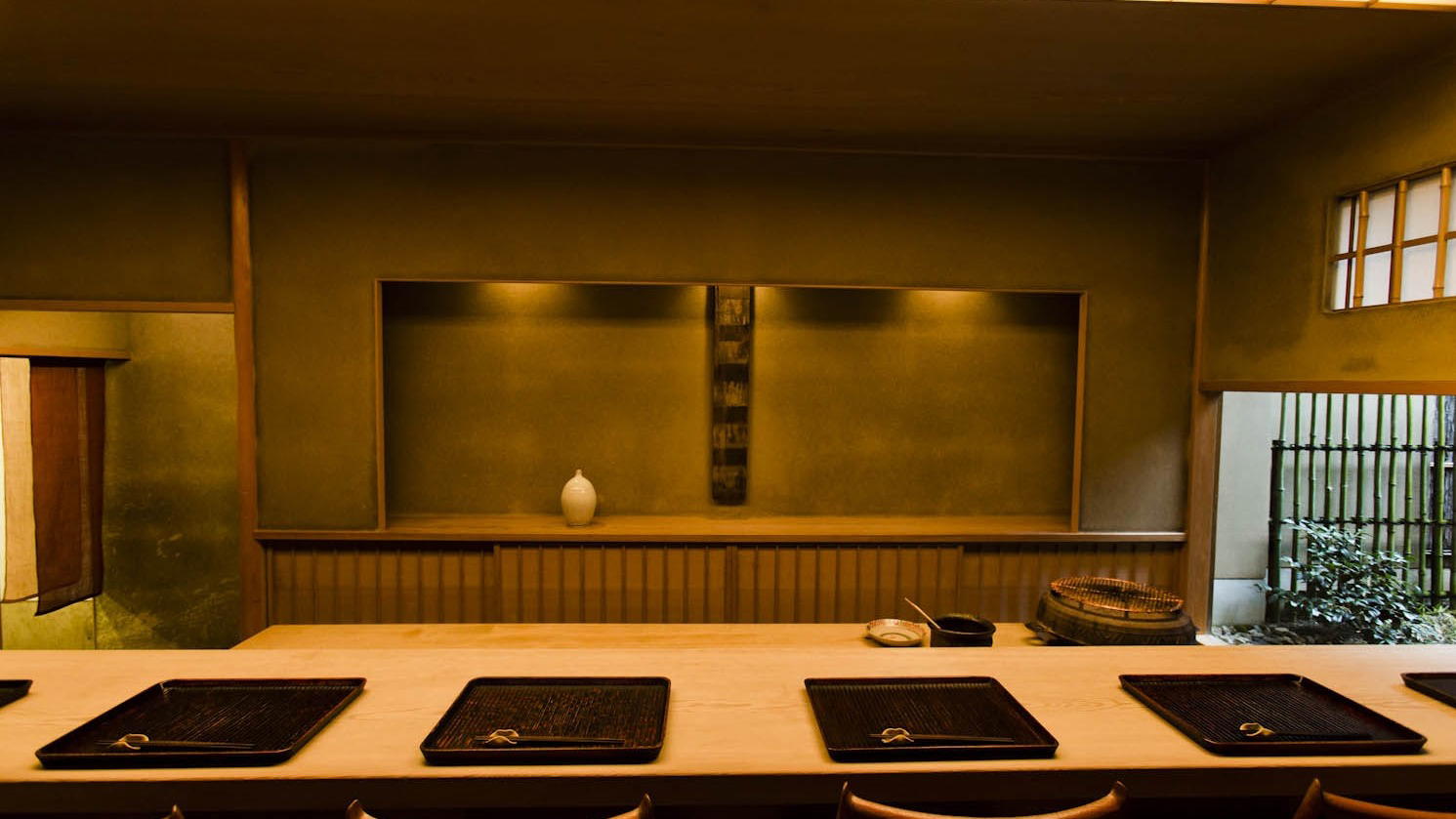
Bars in Kyoto
Browse all →
Hotels in Kyoto
Browse all →
Wineries in Kyoto
Browse all →
At a Glance
- Intimate
- Modern
- Elegant
- Quiet
- Date Night
- Special Occasion
- Chefs Counter
- Open Kitchen
- Sake Program
- Local Sourcing
- Waterfront
- Street Scene
Current opening hours
- Monday
- 5:30–11 PM
- Tuesday
- 5:30–11 PM
- Wednesday
- 5:30–11 PM
- Thursday
- 5:30–11 PM
- Friday
- 5:30–11 PM
- Saturday
- 5:30–11 PM
- Sunday
- 5:30–11 PM
Hours can change for holidays and private events. Last verified .
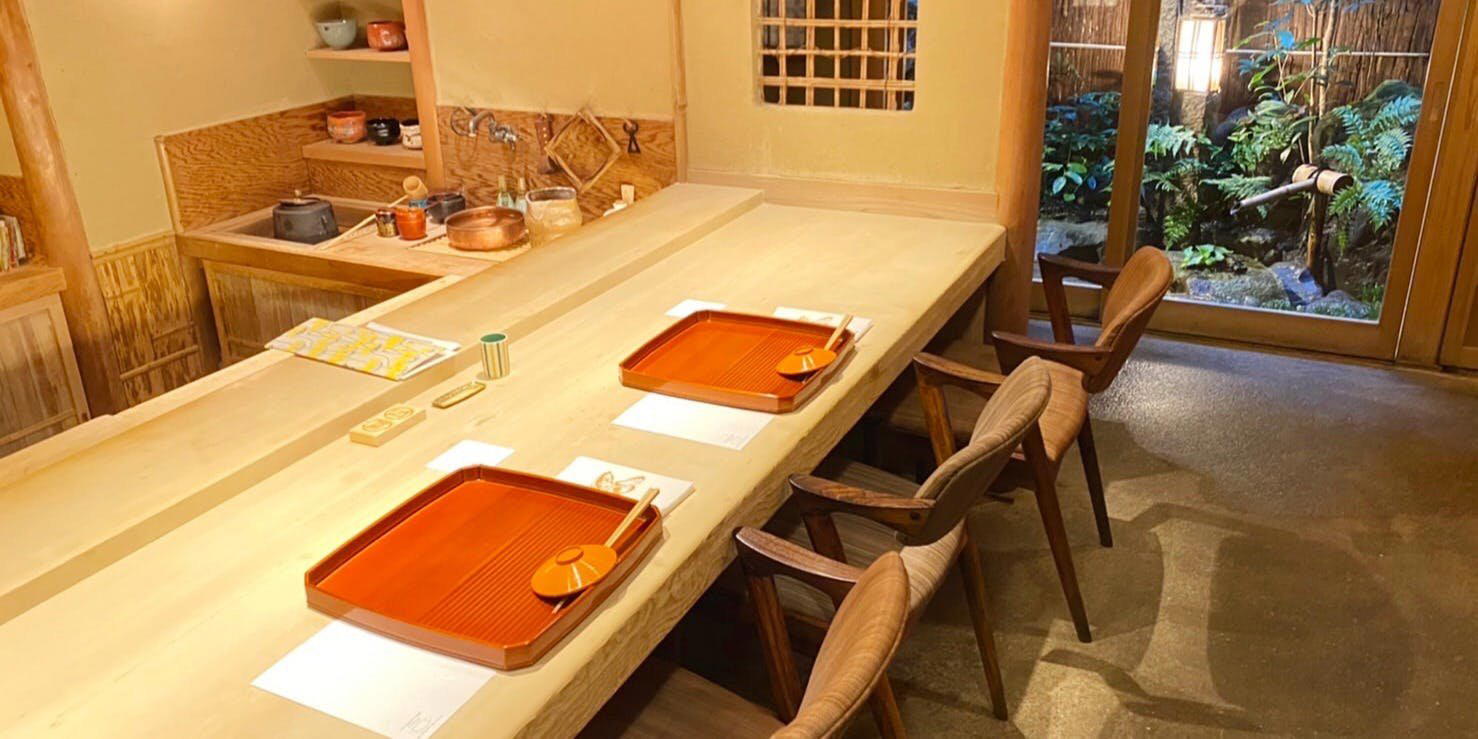
Warm and quiet interior with wood surfaces and restrained materials along a quiet waterway, focusing attention on the food and intimate counter service.