Fat Cat Wine Club
Our verdict
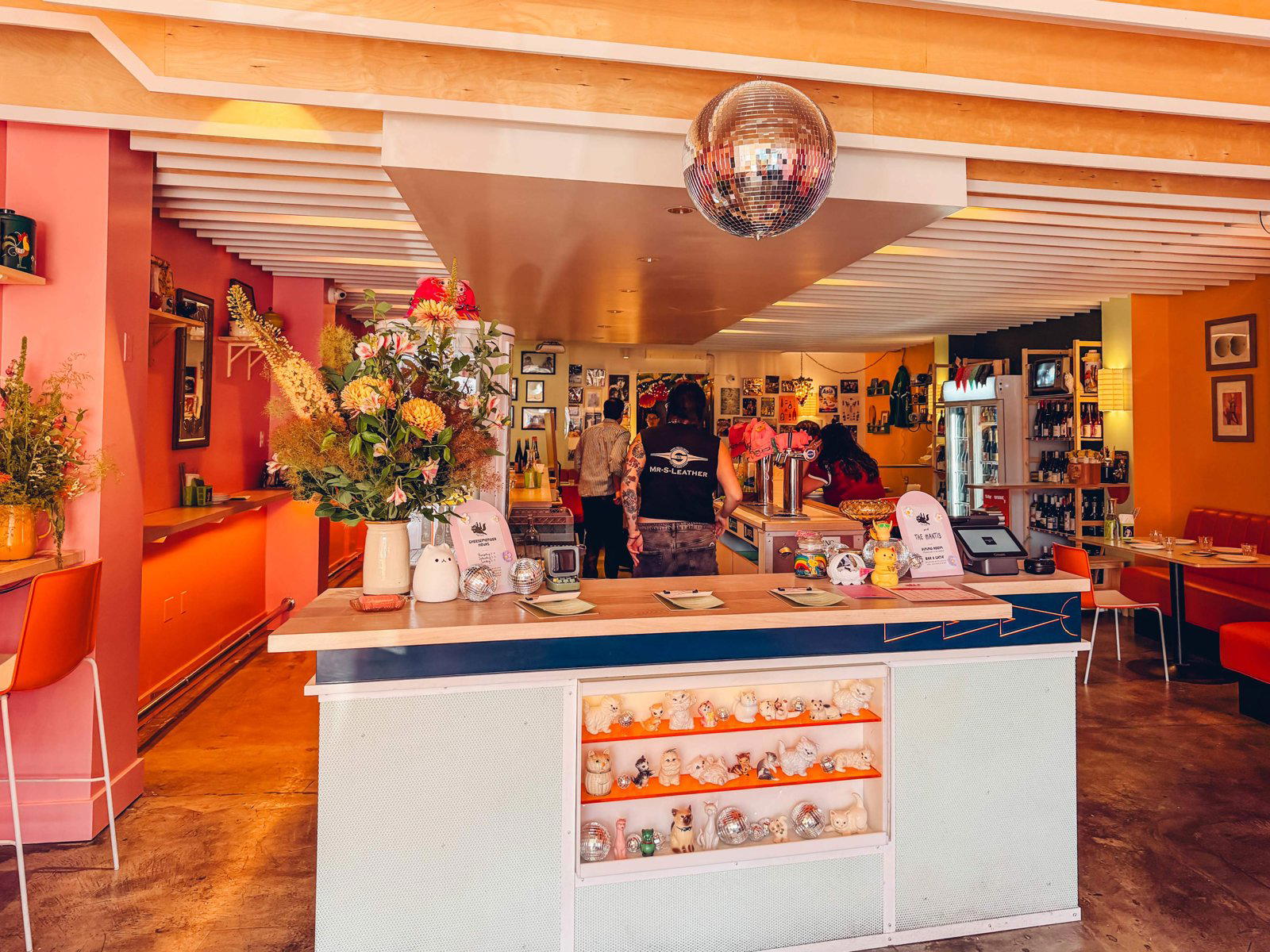
Fat Cat Wine Club sits in San Francisco’s Mission orbit, where wine-led evenings often favor conversation, grazing, and a slower rhythm over formal dining choreography. With few public details on format, pricing, or reservations, the smarter read is categorical: treat it as a wine-club stop rather than a conventional restaurant, and plan the night around the neighborhood’s loose, social cadence.

Pearl is the En Primeur Club membership app — saves, bookings, and concierge access live there. Same editors, same standards.
The menu
What to order
- Strawberry-topped trout crudo
- Soy-filled crispy tofu
- Bo kho-style beef dish
San Francisco changes register quickly after dark: casual counters, corner bars, low-lit rooms, and bottle-focused places all sit close enough for a night to move by mood rather than itinerary. Fat Cat Wine Club belongs to that San Francisco habit of letting the evening find its own shape, where the ritual is less about a fixed sequence than about the table deciding what pace the night will take.
That matters because wine-club venues ask for a different kind of attention. The usual restaurant questions, courses, chef lineage, signature dish, starched service, often miss the point. In this category, the useful signals are how the room supports conversation, how flexible the plan feels, and whether the format encourages lingering rather than a quick transaction. San Francisco has long had room for that middle tier between bar and restaurant: informal enough for a weeknight, structured enough to anchor a plan.
A wine-club rhythm suits San Francisco's social style
San Francisco is one of the easier cities for a progressive evening because its dining culture is naturally modular. A full dinner, a glass before a show, a snack-heavy meet-up, and a late second stop can all live within the same night. Fat Cat Wine Club fits that pattern as a venue to read through pacing and company rather than ceremony.
Wine clubs and bottle-led rooms also shift the etiquette of the night. Guests tend to move in waves, adjust to the glass rather than the clock, and let the table’s appetite decide how long to stay. That can make the experience feel looser than a formal restaurant and more intentional than a standard bar. The value is in tempo: time to talk, taste, pause, and keep the evening open.
For readers mapping a broader San Francisco food day, the city rewards contrast. The EP Club restaurant index covers a range of casual meals, neighborhood dining rooms, polished menus, and community-minded food programming across San Francisco. Those are not direct comparisons; they sketch the range of formats that make the city more interesting than a single reservation category.
The smart order is restraint: let the bottle set the meal
The strongest way to approach a wine-led room is to avoid treating it like a restaurant that happens to serve wine. Start with the drinking structure, then let everything else play support. If the evening is built around conversation, lighter planning usually works better than trying to force a conventional appetizer-main-dessert arc. If the table wants to continue elsewhere, the choice should come from what pairs cleanly with the mood rather than from chasing a marquee dish.
That distinction is especially relevant in San Francisco, where price and expectation can drift apart quickly. A room does not need to present itself as a formal trophy reservation to be useful. It needs clarity of purpose. Here, the public-facing signals point toward a wine-club identity rather than a chef-driven destination, so the editorial expectation should follow: arrive for a social drinking ritual, not for a documented culinary canon.
Across the West Coast and beyond, EP Club’s broader coverage shows how specialized formats shape guest behavior. Wine-led rooms, casual counters, focused bar programs, and flexible neighborhood dining all show the same rule: format tells the guest how to behave before the first order is placed.
Use it as part of a San Francisco night, not the whole thesis
The practical play is to keep the plan flexible. San Francisco rewards diners who understand sequencing: a glass-led stop before dinner, a casual follow-up after a larger meal, or a low-commitment meeting point when the group’s appetite is uneven. That is where a wine-club format has real utility. It can be the hinge of the evening rather than its formal centerpiece.
For wider planning, EP Club’s city guides are more useful than forcing one venue to answer every question. Start with our full San Francisco restaurants guide for dining context, then cross-check our full San Francisco bars guide, our full San Francisco hotels guide, our full San Francisco wineries guide, and our full San Francisco experiences guide if the trip needs more than dinner.
The broader editorial lesson is simple: not every worthwhile San Francisco address needs to behave like a trophy reservation. Some rooms earn their place by giving the night elasticity. Fat Cat Wine Club is better understood in that register, a wine-first stop for people who want the evening to unfold by the glass, the conversation, and the city’s own unhurried momentum.
For readers building parallel itineraries elsewhere, the same format logic applies across EP Club’s wider map: different kinds of dining rooms, bars, counters, and destination meals each reward the same first move: understand the ritual before judging the room.
Frequently asked questions
Is Fat Cat Wine Club okay with children?
Fat Cat Wine Club is in San Francisco, and its public-facing identity is a wine-club setting. For questions about age policies or family suitability, check the venue's official channels for the latest details.
What should I expect atmosphere-wise at Fat Cat Wine Club?
Expect a wine-club format in San Francisco. It reads as a social, bottle-led stop that fits an easygoing night out.
What's Fat Cat Wine Club's location?
San Francisco.
How hard is it to get a table at Fat Cat Wine Club?
Plan as you would for a San Francisco wine club rather than a large dining room. A smaller-format wine-led stop usually rewards arriving with some flexibility, and the venue's official channels are the best source for current details.
What's Fat Cat Wine Club best at?
Fat Cat Wine Club is best understood as a wine-led venue in San Francisco. The clearest anchor is the format itself.
Can Fat Cat Wine Club handle vegetarian requests?
For dietary questions, check the venue's official channels for the latest details.
Comparable venues nearby, for context on price, style, and recognition.
| Venue | Cuisine | Price | Awards | Notes |
|---|---|---|---|---|
| Fat Cat Wine Club | Modern wine bar with Vietnamese & Californian-inspired food | $50–100 | Not listed | San Francisco |
| Ristorante Milano | Northern Italian Trattoria | Not listed | Not listed | Russian Hill |
| Tommy's Mexican Restaurant | Traditional Yucatecan Mexican | $30–50 | World's 50 Best #40 | Outer Richmond |
| The Crossing at East Cut | Multi-vendor outdoor food & bar venue | Not listed | Not listed | San Francisco |
| Lomo Libre Cantina | Peruvian Fusion Cevicheria | $30–50 | Not listed | Sunset/Parkside |
| Brenda's Meat & Three | Southern Meat & Three | $20–30 | Not listed | Western Addition |
Continue exploring
More in San Francisco
Restaurants in San Francisco
All restaurants in San Francisco →
Bars in San Francisco
All bars in San Francisco →
Hotels in San Francisco
All hotels in San Francisco →
Wineries in San Francisco
All wineries in San Francisco →
Fat Cat Wine Club
The wine
- Wine program
- Curated wine list
- Extensive wine list
- Natural wine
- Craft cocktails
- Zero-proof drinks
Details
- Trendy
- Cozy
- Lively
- Intimate
- Date Night
- After Work
- Group Dining
- Casual Hangout
- Late Night
- Standalone
- Design Destination
- Wine Cellar
- Private Dining
- Extensive Wine List
- Natural Wine
- Craft Cocktails
- Zero Proof
- Natural Wine
- Local Sourcing
- A La Carte
- Small Plates
- Wine
- Natural Wine
- Spritzes
- Non Alcoholic
- Vegetarian Friendly