Elystan Street





1 Michelin Star · AA Rosettes 3 Rosettes · The Good Food Guide GFG Very Good
Our verdict
A Michelin-starred collaboration between Philip Howard and Rebecca Mascarenhas in Chelsea, Elystan Street operates at the meeting point of Modern British and Modern French cooking: seasonal, Mediterranean-inflected, and built around balance rather than theatre. The wine list runs to around twenty selections by the glass from a European-heavy cellar, with lunch offering the most accessible entry at this price tier for the postcode.

Pearl is the En Primeur Club membership app, where members save venues, book tables and use the concierge.
The menu
What to order
- Burford Brown egg
- Chicken on onion tarte fine
- John Dory with butternut squash
Chelsea Dining, on Its Own Terms
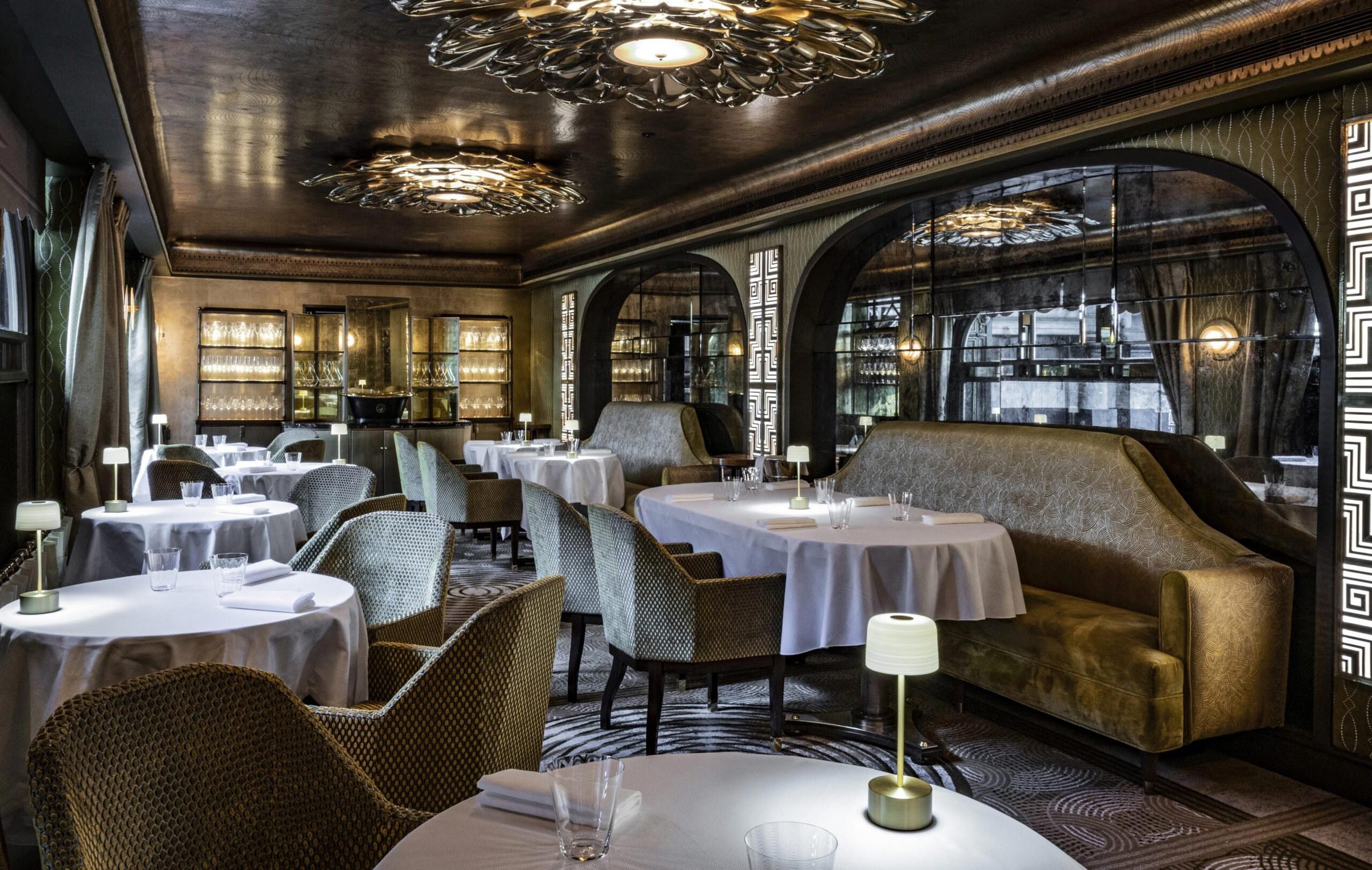
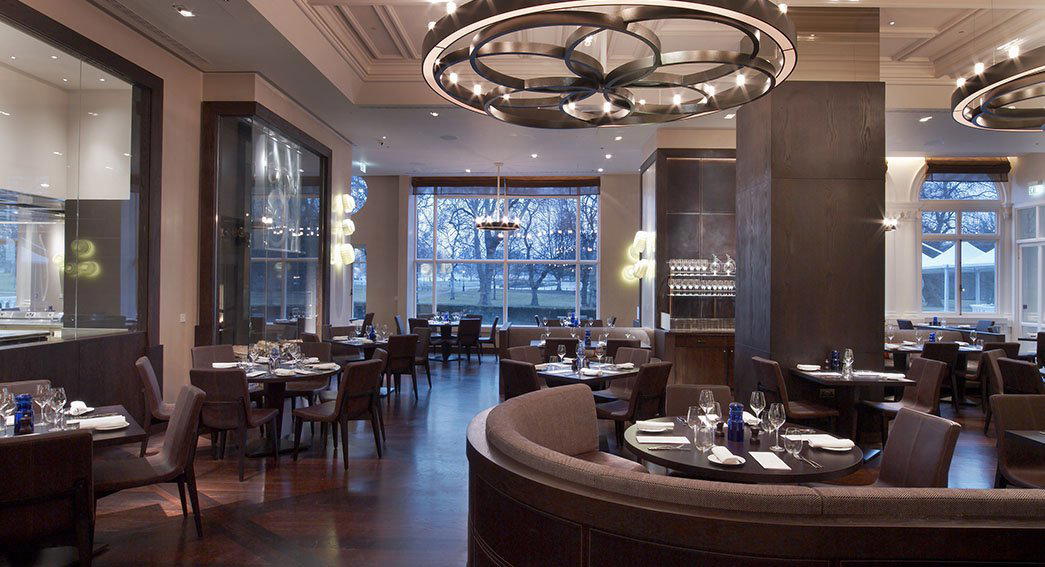
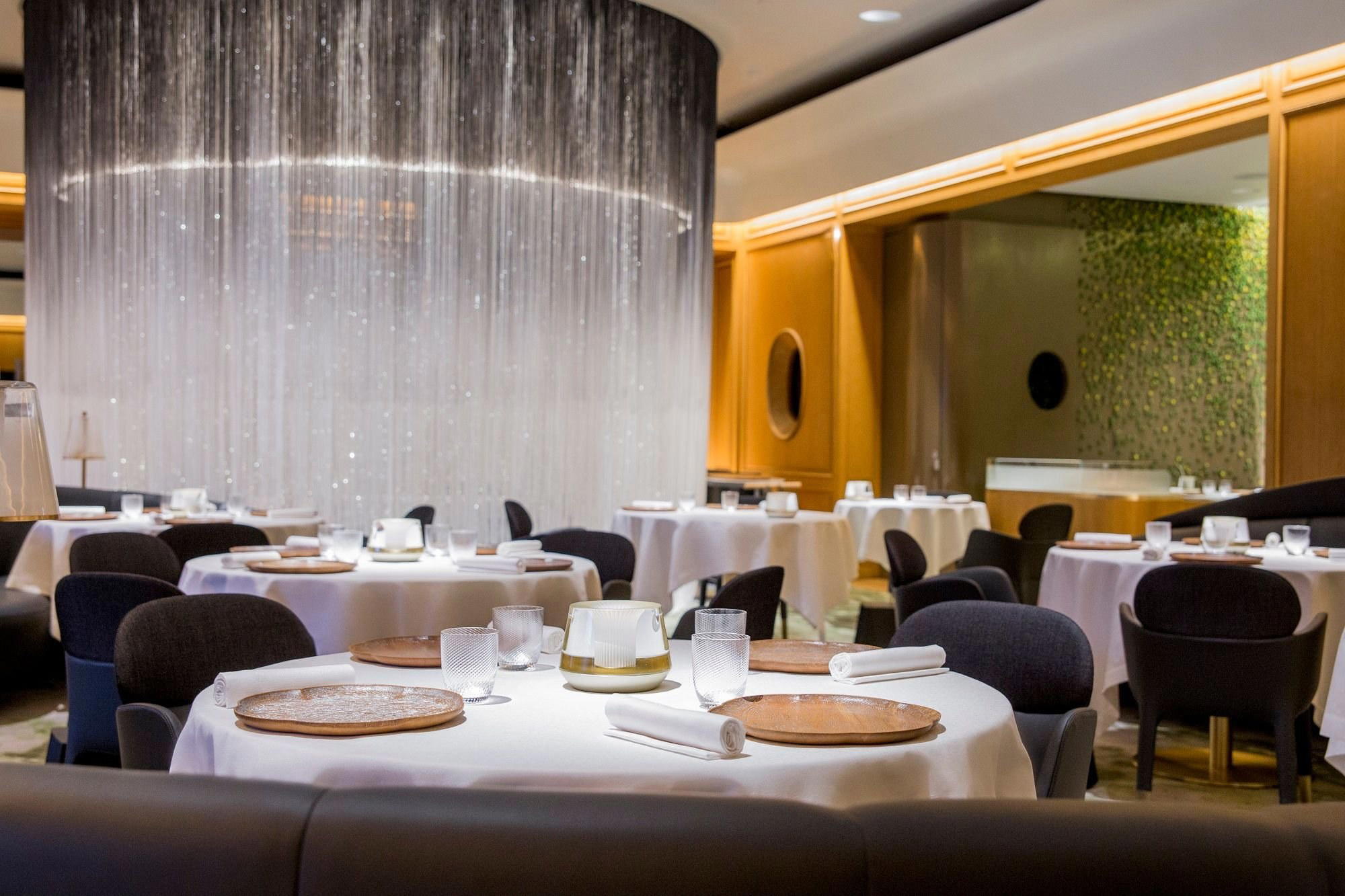
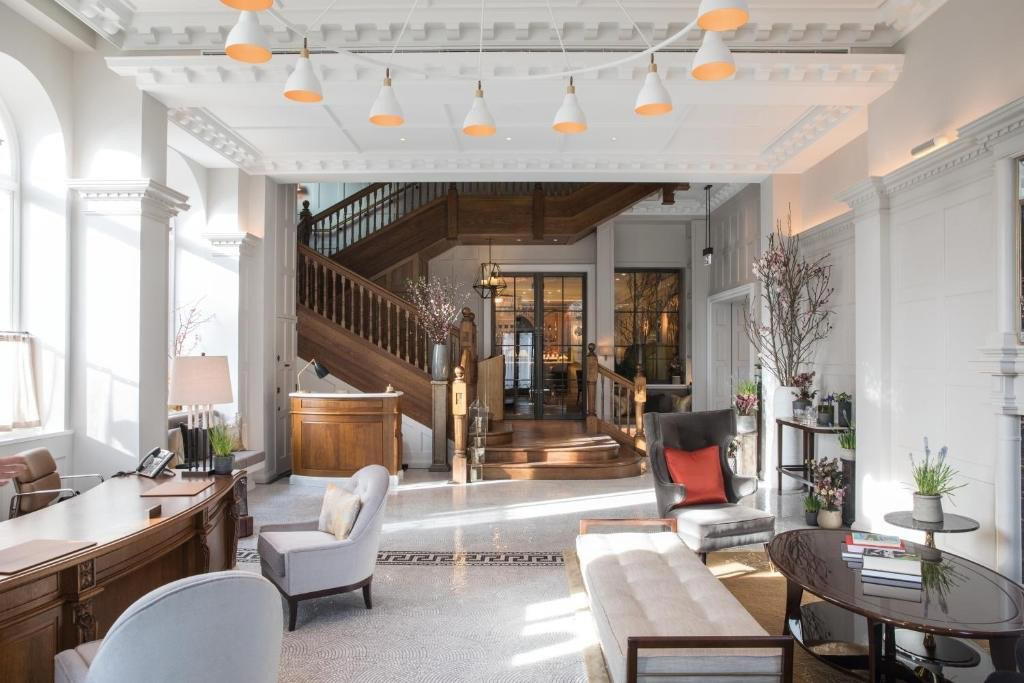
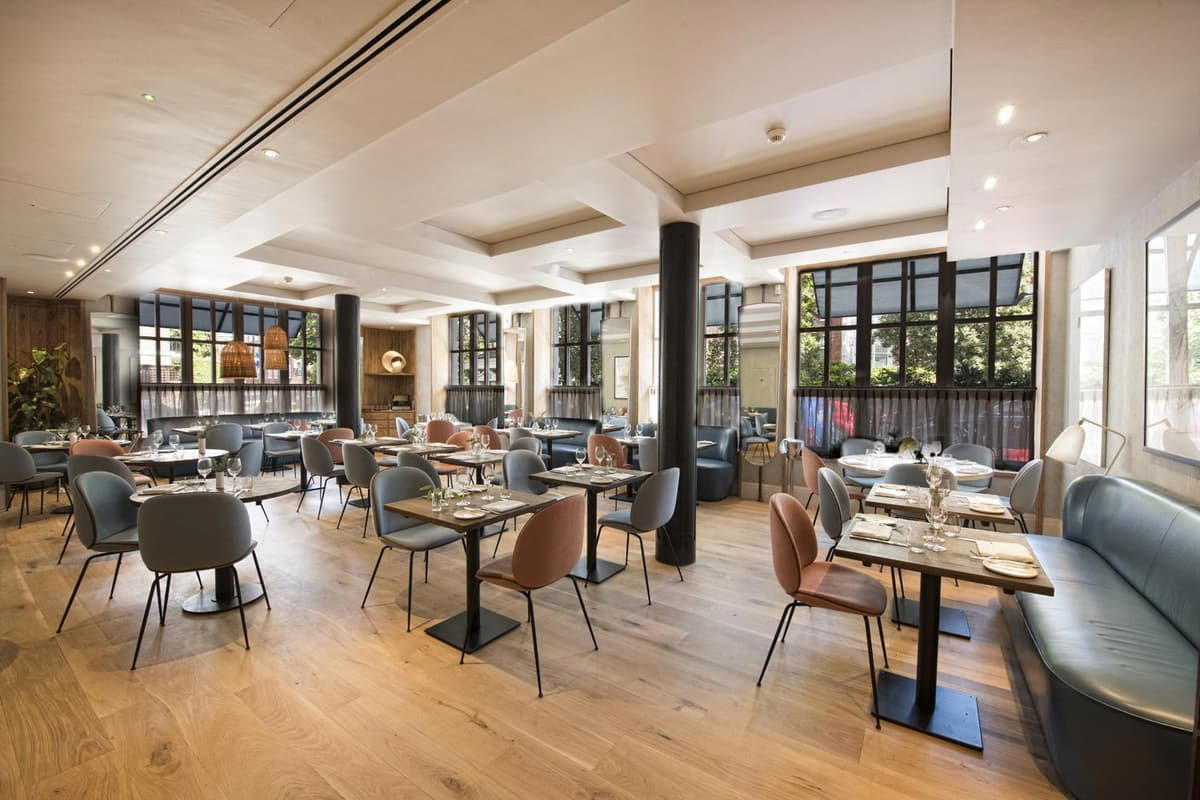
Elystan Street sits on a quiet residential block in Chelsea, the kind of address where large sash windows let the afternoon light pool across linen-covered tables and the noise level never rises above comfortable conversation. The room itself signals its allegiances quickly: large monochrome prints, a mix of peach and grey seating, and an absence of anything that might be described as theatrical. This is a dining room built for regulars, for long lunches that drift into mid-afternoon, and for the particular pleasure of eating well without being made to feel the occasion.
That register, informal but serious, neighbourhood in spirit but not in ambition, has become an identifiable category in London dining. Chelsea, specifically, has always demanded a version of luxury that does not draw attention to itself. Elystan Street, the collaboration between chef Philip Howard and restaurateur Rebecca Mascarenhas, sits at the more considered end of that category: the kind of place where the cooking does the work that the decor conspicuously refuses to do.
The Cooking: Restraint as Method
The kitchen operates in the territory where Modern British and Modern French cooking genuinely converge, rather than simply sharing a menu. Vegetables, grains, and fermented elements carry more structural weight here than at restaurants of comparable standing, with fish and meat frequently functioning as counterpoints rather than centrepieces. The approach draws on Mediterranean reference points with enough frequency that dishes such as barbecued octopus with aioli, crispy chickpeas, and tardivo read as characteristic rather than occasional. The flavour logic is one of precision and balance: clean, well-defined, and without unnecessary complication.
The seasonal discipline is consistent enough to have drawn specific reader observation. Hand-cut strozzapreti in buttery chicken stock with summer truffle and aged Parmesan, sea bream with baba ganoush, apricot harissa, charred Padrón pepper, and basil-infused olive oil, and saddle of lamb in Mediterranean style with pesto-baked aubergine and San Marzano tomatoes have all been cited as representative of the kitchen's range. That range is notably broad: the menu moves between European grain-forward plates, seafood with North African and Iberian inflections, and confident meat cookery, without the menu reading as eclectic. British and French cheeses are maintained with care, and desserts such as a millefeuille of raspberries with vanilla and lemon verbena cream reflect the same pared-back precision as the savoury courses.
Philip Howard previously held two Michelin stars at The Square for over twenty years before its closure in 2016. The shift to Elystan Street involved a deliberate recalibration: simpler structures, lighter plates, a greater emphasis on produce over technique. The current Michelin single star, awarded in 2024, positions the restaurant accurately within London's mid-to-upper tier: serious enough to compete with neighbouring Chelsea addresses, but pitched against a different set of expectations than the multi-star rooms at CORE by Clare Smyth, Restaurant Gordon Ramsay, or Sketch, The Lecture Room and Library.
Where It Sits Among London's Serious Rooms
London's upper dining tier has split into two legible cohorts over the past decade. One group, which includes The Ledbury and Dinner by Heston Blumenthal, operates at the ££££ price point with multi-course tasting formats and correspondingly high production values. Opinionated About Dining placed Elystan Street at #376 among European restaurants in 2024, rising to #531 in 2025, which reflects continued recognition across a field that includes some of the strongest independent rooms in France, Scandinavia, and southern Europe. For the London-specific context, that ranking places it comfortably within the tier of London restaurants that serious diners return to seasonally rather than reserving for occasions.
Lunch pricing is notably accessible for the postcode, which makes the midday service a practical entry point for visitors comparing it against the higher fixed-cost formats at The Fat Duck in Bray or L'Enclume in Cartmel. For travellers building a broader picture of serious British cooking, the comparison set also extends to Moor Hall in Aughton, Gidleigh Park in Chagford, Hand and Flowers in Marlow, and Le Manoir aux Quat' Saisons in Great Milton. Internationally, the casual-fine register parallels what certain rooms in New York have been doing with equivalent seriousness, Le Bernardin and Atomix occupy different points on the formality spectrum, but share the same commitment to cooking that earns attention on its own terms.
The Wine List: European Depth, Thoughtfully Assembled
The editorial angle on wine at Elystan Street is worth examining, because the list reflects something specific about how serious neighbourhood restaurants in Britain now approach the question. London has seen wine programs at comparable addresses fragment between three orientations: natural wine lists with a strong Loire and Jura axis; traditional European cellar-first programs built around Burgundy, Bordeaux, and Rhône; and hybrid lists that make room for English sparkling and emerging regional selections alongside classical European references.
Elystan Street's list falls clearly into the third category, with a pronounced lean toward European producers, approximately twenty wines available by the glass, and bottles starting at £35. That by-the-glass depth at a restaurant of this standing is a practical signal: it suggests the list is designed to function at lunch as well as for longer evening meals, and that the selection has been assembled with a diner who may be drinking alone or pairing by course in mind. The starting bottle price positions the list below the entry point of many comparable £££ rooms, where £40-45 is more common at the low end.
The European emphasis, without a prescriptive narrow focus, is a sensible match for a kitchen that draws on British produce, French technique, and Mediterranean flavour references. Wines from southern France, Spain, and Italy have natural affinities with the octopus, the bream preparations, and the vegetable-forward plates; Burgundy and Loire selections sit naturally against the truffled pasta and the cheese course.
For readers approaching the wine question from a comparative angle: the list at Elystan Street is designed for the meal rather than as a statement in itself, which places it in a different category from the cellar-depth programs at rooms like The Ledbury or the more conspicuous curation at certain Mayfair addresses. That is a choice, not a limitation.
Service and the Room's Particular Register
Service here has been consistently described in terms of quality time spent with guests rather than transactional efficiency. Staff have been noted for attentiveness that adds to the informal atmosphere rather than formalising it. The distinction matters in a city where front-of-house style at Michelin-recognised restaurants tends toward one of two extremes: tightly choreographed and occasionally ceremonial, or aggressively casual in a way that reads as studied. Elystan Street sits in neither camp.
The room operates Tuesday through Saturday across lunch and dinner services, with a Sunday lunch that runs until 3:30 PM. Friday and Saturday dinner extends to 9 PM; weekday dinner closes at 8:30 PM. That pattern reflects the neighbourhood's rhythms: early weekday dinners for the Chelsea residential base, longer weekend sittings for visitors and those travelling further. The address, 43 Elystan Street SW3, places it within a ten-minute walk of Sloane Square.
Planning Your Visit
Reservations: Advance booking is recommended, particularly for weekend lunch and Friday/Saturday dinner. Budget: £££, with lunch offering the most accessible entry at this price tier for the postcode. Hours: Lunch daily from 12:30 PM (Sunday from 12:00 PM); dinner Tuesday through Thursday until 8:30 PM, Friday and Saturday until 9:00 PM. Address: 43 Elystan St, London SW3 3NT. Chef: Ivan Vukadinovic leads the kitchen.
For broader London planning: see our full London restaurants guide, our full London hotels guide, our full London bars guide, our full London wineries guide, and our full London experiences guide.
What dish is Elystan Street famous for?
Elystan Street does not trade on a single signature dish in the way that some restaurants build identity around one plate. The kitchen's reputation rests on a consistent approach: seasonal ingredients treated with precision and a Mediterranean accent that appears across multiple sections of the menu. Barbecued octopus with aioli, crispy chickpeas, and tardivo has been cited frequently enough to function as a representative example of the style. Hand-cut strozzapreti with summer truffle and aged Parmesan, sea bream with baba ganoush and apricot harissa, and saddle of lamb in Mediterranean preparation have all drawn specific mention in documented accounts. The connecting thread is balance: flavours that are well-defined without being assertive, and a lightness of touch that runs from the kitchen's Michelin-recognised years at The Square through to the current Chelsea address. The 2024 Michelin star and Opinionated About Dining's European ranking provide external anchors for assessing where the cooking sits among its peers.
Frequently asked questions
How much does it cost to eat at Elystan Street?
Pricing at Elystan Street is listed as £££.
What are the operating hours at Elystan Street?
Hours at Elystan Street: Monday 12:30 PM-2:30 PM 6:30 PM-8:30 PM Tuesday 12:30 PM-2:30 PM 6:30 PM-8:30 PM Wednesday 12:30 PM-2:30 PM 6:30 PM-8:30 PM Thursday 12:30 PM-2:30 PM 6:30 PM-8:30 PM Friday 12:30 PM-2:30 PM 6 PM-9 PM Saturday 12:30 PM-2:30 PM 6 PM-9 PM Sunday 12 PM-3:30 PM.
Does Elystan Street have a Michelin star or similar recognition?
Elystan Street has received recognition including: Elystan Street is a neighbourhood restaurant, but as that neighbourhood is Chelsea, you can expect to find elegance and style in spades. It’s a collaboration between Philip Howard and Rebecca Mascarenhas, and with its huge windows, well-jud….
What dish is Elystan Street famous for?
Elystan Street does not anchor its reputation to a single signature plate. The kitchen's identity is built on restraint and balance across the full menu: vegetables, grains, and fermented ingredients take a structural role rather than a supporting one, a deliberate shift Philip Howard made when moving from The Square, where he held two Michelin stars. Dishes such as barbecued octopus with aioli, crispy chickpeas, and tardivo have drawn attention as representative of the kitchen's pared-back Mediterranean approach.
What kind of cuisine does Elystan Street serve?
Cuisine-First Comparison
A quick peer list to put this venue’s basics in context.
| Venue | Cuisine | Price | Awards | Notes |
|---|---|---|---|---|
| Elystan StreetThis venue (the venue you are viewing) | Modern European Fine Dining | $100–150 | 1 Michelin Star · AA Rosettes 3 Rosettes | Not listed |
| The Ledbury | Modern British Fine Dining | $300–500 | 3 Michelin Stars · World's 50 Best #42 | Modern European, Modern Cuisine |
| Sketch, The Lecture Room and Library | Modern French Fine Dining | $200–300 | 3 Michelin Stars · World's 50 Best #18 | Modern French |
| CORE by Clare Smyth | Modern British Fine Dining | $150–200 | 3 Michelin Stars · World's 50 Best #97 | Modern British |
| Restaurant Gordon Ramsay | French Fine Dining | $200–300 | 3 Michelin Stars · World's 50 Best #13 | Contemporary European, French |
| Dinner by Heston Blumenthal | Historic British Fine Dining | $200–300 | 2 Michelin Stars · World's 50 Best #45 | Modern British, Traditional British |
Recognition history
Dated appearances from independent guides and award organizations, with the underlying list record or original source where available.
Michelin 1 Star
Michelin
AA Rosettes 3 Rosettes
AA Rosettes
Opinionated About Dining Top Restaurants in Europe Recommended
Opinionated About Dining
The Good Food Guide GFG Very Good
The Good Food Guide
We're Smart World 2 Radishes
We're Smart World
Full recognition history (10 entries)
Michelin 1 Star
Michelin
Opinionated About Dining Top Restaurants in Europe Ranked #531
Opinionated About Dining
Michelin 1 Star
Michelin
Opinionated About Dining Top Restaurants in Europe Ranked #376
Opinionated About Dining
Opinionated About Dining Top New Restaurants in Europe Recommended
Opinionated About Dining