Docket Restaurant


On a quiet stretch of Whitchurch high street, Docket has held a Michelin Plate since 2024, making it among the more ambitious tasting-menu restaurants in Shropshire. Chef Stuart Collins brings classical technique and a broad international frame of reference to a format that sits firmly in the serious end of provincial British dining. Booking ahead is advisable.
Pearl is the En Primeur Club membership app — saves, bookings, and concierge access live there. Same editors, same standards.
- Address
- 33 High St, Whitchurch SY13 1AZ, United Kingdom
- Phone
- +44 1948 665553
- Website
- docketrestaurant.com
- Directions
- Get directions
 Saves & bookings on Pearl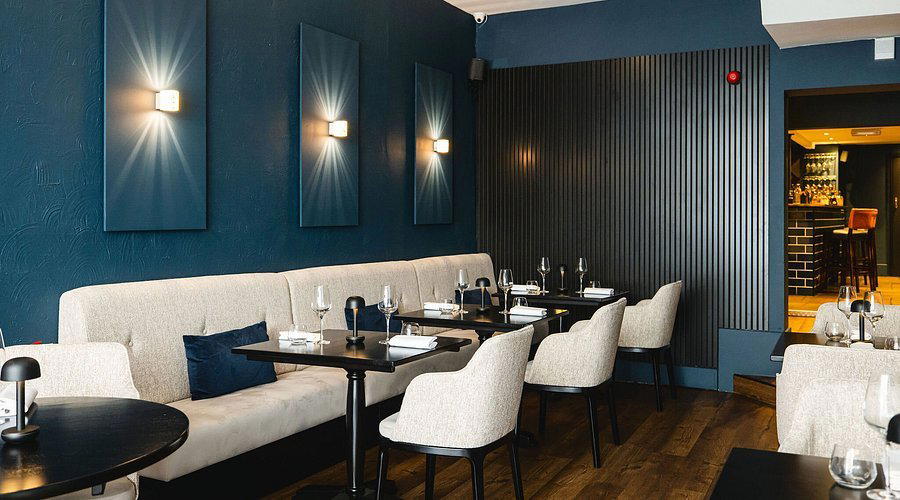
A Market Town That Now Has a Reason for the Drive
The approach to Docket does little to signal what waits inside. Number 33 on Whitchurch's high street is a monochrome shopfront wedged between two retail neighbours, the kind of frontage that reads as modest to the point of anonymity. That studied understatement is, in its own way, a statement about what British destination dining has become in the years since the gastropub movement proved that serious cooking could exist outside metropolitan postcodes. The question used to be whether a chef with real credentials would commit to a market town. Docket Restaurant in Whitchurch serves a Modern British Tasting Menu by Stuart Collins, with a Michelin Plate in 2024 and 2025 and an average price of about $60 per person. Since around 2010, a growing number have answered that question with a resounding yes, from L'Enclume in Cartmel anchoring Cumbria's food economy to Moor Hall in Aughton redefining what rural Lancashire could support. Docket belongs to that broader pattern of kitchen talent migrating toward smaller communities and building something lasting.
The Format and What It Means for the Room
Modern British tasting menus occupy a specific position in the UK dining hierarchy. At the upper end of the bracket, places like CORE by Clare Smyth and The Ledbury in London operate with three Michelin stars and London pricing. Below that, a tier of regionally distributed restaurants, Michelin-recognised, tasting-menu-led, has emerged as a distinct competitive set. Docket sits in this provincial fine-dining category alongside places like hide and fox in Saltwood and Midsummer House in Cambridge. What defines this cohort is a willingness to operate at high culinary ambition in towns that would not traditionally support it, relying on destination diners and a local audience that takes food seriously enough to match a ££££ price point.
Docket's format centres on a tasting menu rather than à la carte, which is a deliberate commitment. It means the kitchen controls pace, sequence, and narrative. It also means the evening moves on the kitchen's terms. That is not a criticism, it is a description of how this kind of cooking works. The canapé sequence, served individually rather than as a composed plate, exemplifies the approach: each element wants its own moment rather than competing for attention. Whether that granularity of service repays the patience is a matter of preference, but the intent is clear.
What the Kitchen Actually Does
Stuart Collins trained in the classical tradition, and that foundation is visible in the structural logic of what reaches the table. But the cooking also draws on a period of working overseas, which introduces a range of reference points not always present in this price tier outside London. The result, as Michelin inspectors have noted in awarding the restaurant a Plate in both 2024 and 2025, is cooking that demonstrates "sound but imaginative culinary energy" across the menu.
The evidence of that range appears in how individual dishes are constructed. The kitchen is led by head chef Stuart Collins. A green soup built on clam stock and leek tops contains cavatelli, poached salsify, wild green asparagus, and poached halibut with golden beetroot, a technically demanding plate that organises multiple textures and flavour registers without losing coherence. Elsewhere, a south Asian approach to quail sees the breast roasted in a spiced crust alongside a deep-fried pakora-battered leg, with braised kohlrabi and a quenelle of yellow dhal with coriander seeds completing the composition. These are not dishes that happen to reference global cuisines decoratively; the technique is genuinely applied. Collins also demonstrates the kind of umami-forward thinking, buckwheat, Madeira jelly, truffled confit white asparagus, Parmesan ice cream, that places the kitchen in conversation with contemporary British cooking at a national level rather than purely within a regional frame.
On the sweet side, the kitchen shows the same precision. A rhubarb and custard parfait pre-dessert arrives on a lolly-stick, a knowing piece of playfulness before a chocolate délice with cumin tuile and yoghurt sorbet. The cheese course is available as a supplement at £10. Wine pairings are available and, according to Michelin's assessment, drawn from a list that rewards attention rather than defaulting to safe choices.
Service, Setting, and the Front-of-House Dynamic
The front of house at Docket operates under Frances Collins, who runs the room with what Michelin inspectors have described as efficiency and warmth in equal measure. In the broader context of tasting-menu restaurants at this price tier, service tone matters as much as technical knowledge. The inspectors' observation that this is "food served not by distant experts, but by people who are as interested and unpretentious as their guests" reflects something about how the restaurant positions itself: it operates at high ambition without the coolness that sometimes accompanies it. That is not a given at ££££ pricing, and it distinguishes the room from places where formality becomes a barrier rather than a frame.
The physical space maintains the monochrome restraint visible from the street. There is no attempt to compensate for the high-street location with interior theatrics. In this, Docket resembles a cohort of serious provincial restaurants that treat the room as a neutral stage rather than a destination in itself, a sensibility more aligned with, say, Restaurant Andrew Fairlie in Auchterarder than with the destination-property model of Le Manoir aux Quat' Saisons in Great Milton or Gidleigh Park in Chagford.
Whitchurch and Its Dining Context
Whitchurch is a small north Shropshire market town, historically positioned on old coaching routes and not previously known as a food destination. Docket has materially changed that. The town's other notable entry in the serious dining category is Wild Shropshire, which approaches local produce from a different angle. Together, they give the town a density of culinary ambition disproportionate to its size. Docket's location at 33 High Street puts it in the centre of town, walkable from most accommodation options. Reservations are essential.
For those arriving from further afield, Whitchurch sits roughly between Shrewsbury and Chester, accessible by car from the M6 or A49 corridor.
Fast Comparison
Comparable venues nearby, for context on price, style, and recognition.
| Venue | Cuisine | Price | Awards | Notes |
|---|---|---|---|---|
| Docket RestaurantThis venue — the venue you are viewing | Modern British Tasting Menu | $$$ | Michelin Plate | Not listed |
| Wild Shropshire | Innovative | $$$ | Michelin Plate | Whitchurch |
| Mortimers | Modern British Fine Dining | $$$ | Michelin Plate | Corve Street |
| Lighthouse | Modern British Fine Dining | $$$ | Michelin Plate | Boylestone |
| The Jackdaw | Modern Welsh Fine Dining | $$$ | Michelin Plate | Conwy |
| The Baiting House | Modern British Gastropub | $$$ | Michelin Plate | Upper Sapey |
Recognition history
Dated appearances from independent guides and award organizations, with the underlying list record or original source where available.
Michelin Plate
Michelin
Michelin Plate
Michelin
The Good Food Guide GFG Very Good
The Good Food Guide
Michelin Plate
Michelin
Continue exploring
More in Whitchurch
Restaurants in Whitchurch
Browse all →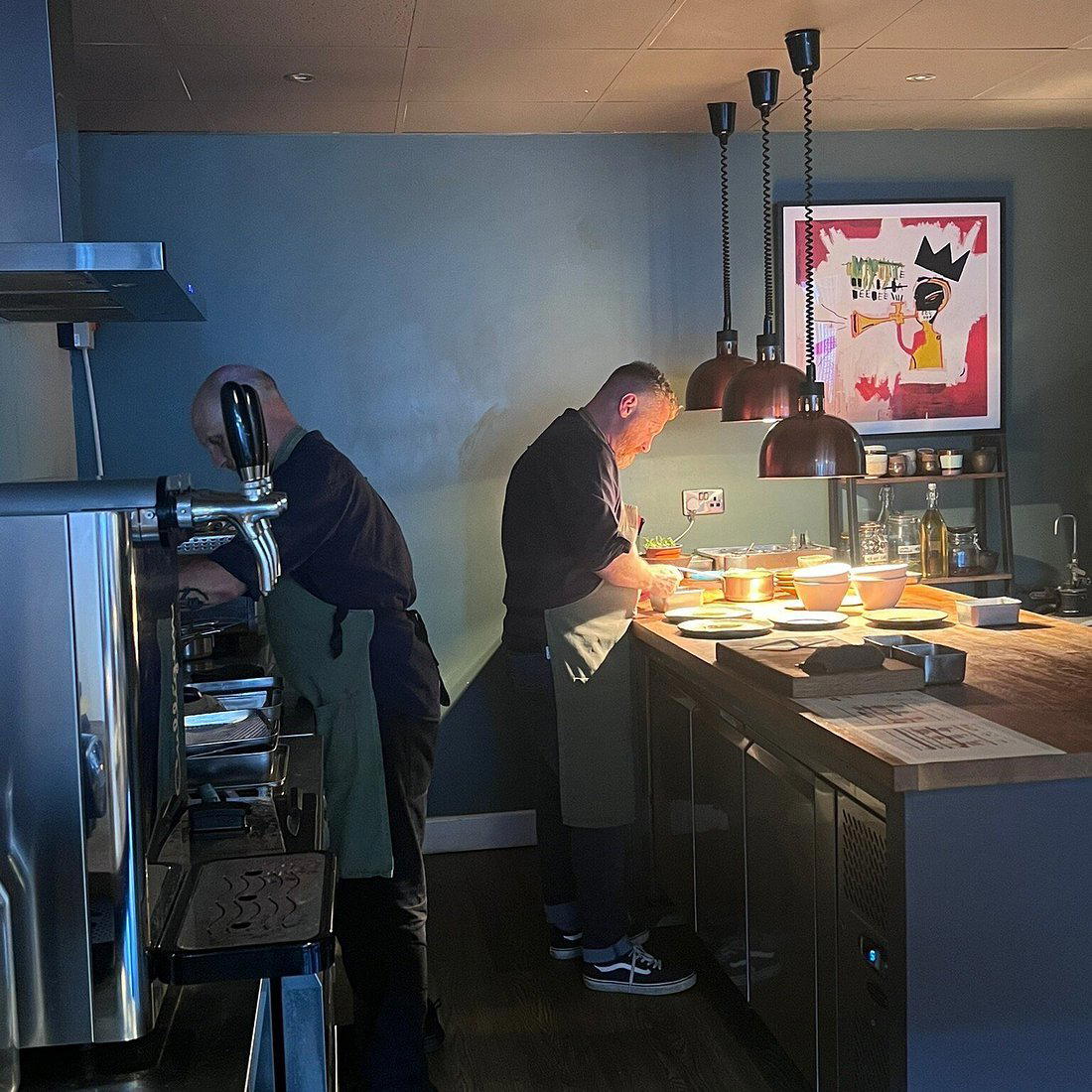
Bars in Whitchurch
Browse all →
Hotels in Whitchurch
Browse all →
Wineries in Whitchurch
Browse all →
At a Glance
- Elegant
- Intimate
- Modern
- Sophisticated
- Date Night
- Special Occasion
- Celebration
- Private Dining
- Extensive Wine List
- Local Sourcing
Current opening hours
- Monday
- Closed
- Tuesday
- Closed
- Wednesday
- 7–11 PM
- Thursday
- 7–11 PM
- Friday
- 7–11 PM
- Saturday
- 12–11 PM
- Sunday
- Closed
Hours can change for holidays and private events. Last verified .
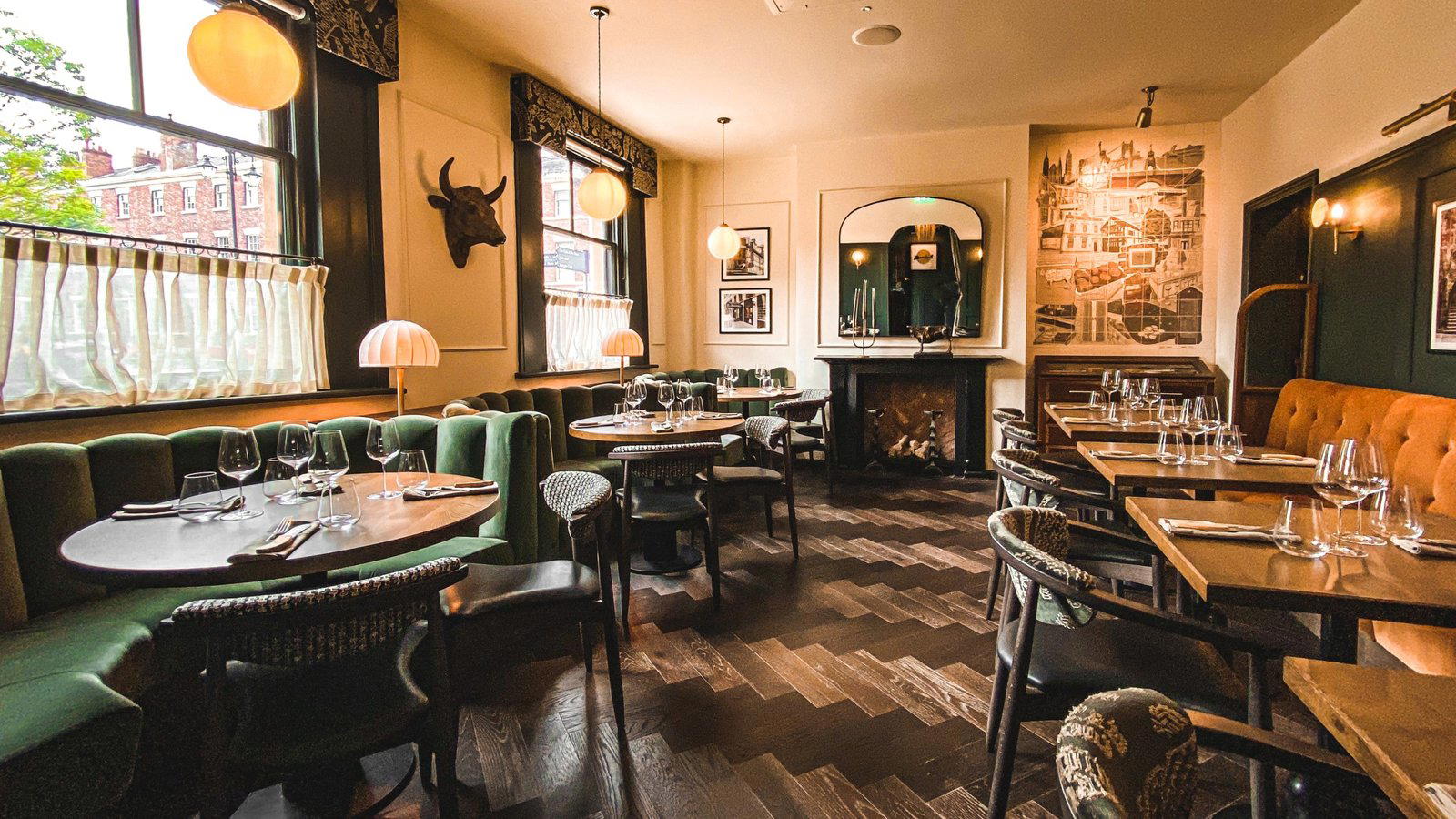
Monochrome understated interior with soft lighting, creating a relaxed yet elegant neighbourhood bistro atmosphere.