
Michelin Plate
Our verdict
A Michelin Plate-recognised counter restaurant in Setagaya's Daizawa neighbourhood, DAN serves casual French cooking filtered through Japanese ingredients. The arc-shaped counter places guests directly within sight of the kitchen, and the format rewards the kind of repeated visits that build into something closer to a local ritual than a single dining occasion.

Pearl is the En Primeur Club membership app — saves, bookings, and concierge access live there. Same editors, same standards.
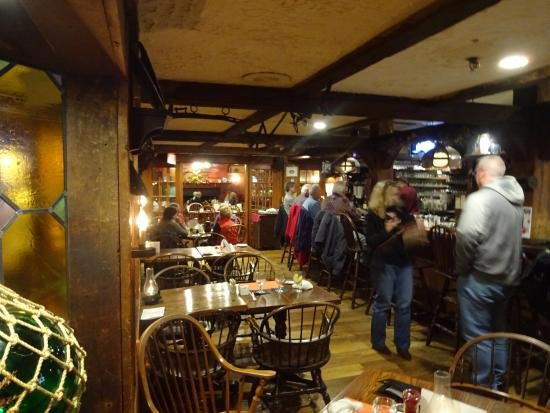
A Different Register of French Cooking in Tokyo's Residential West
Tokyo's French dining scene operates across a wide register. At the formal end sit tasting-menu institutions like L'Effervescence, Sézanne, and ESqUISSE, where multi-course menus, imported wine programs, and Michelin stars above two command prices to match. Further down the register, a quieter category has emerged: neighbourhood counters where a chef with serious technical formation cooks for a small circle of regulars in a setting that deliberately refuses ceremony. DAN, in Setagaya City's Daizawa district, occupies this second category with enough confidence to have earned consecutive Michelin Plate recognition in 2024 and 2025.
The distinction matters. In Paris, the neighbourhood bistro with a trained cook behind the stove is a structural part of the dining ecosystem. Tokyo has developed its own version of that model, often in the city's residential western wards, where lower rents and local clientele allow chefs to run tighter, more personal operations without the capital overhead of a Marunouchi or Ginza address. Daizawa sits within that tradition. It is not a dining destination in the way that Roppongi or Ebisu are. It is a place people go to eat well, regularly, without occasion.
What the Counter Format Says About the Experience
The arc-shaped counter at DAN is the defining architectural fact of the restaurant. Counter formats in Tokyo are largely associated with sushi and kappo, where the chef-guest exchange is part of the grammar of the meal. Applying that spatial logic to French cooking produces a different kind of intimacy: the techniques are European, the ingredients increasingly Japanese, but the social contract is that of a Tokyo counter, where proximity to the kitchen is not a premium add-on but the entire point.
French restaurants in Tokyo that have adopted counter or open-kitchen formats, from Florilège in Minami-Aoyama to more formal operations like Château Restaurant Joël Robuchon, have used the format to signal transparency and directness. At DAN, the arc dissolves the barrier between kitchen and dining room more completely than in larger venues, because the scale is small enough for the kitchen's rhythm to become a shared ambient experience rather than a visual backdrop.
The Ingredient Logic: Japanese Products in a French Framework
The culinary premise at DAN is not fusion in the blended-identity sense that term often implies. It is closer to a methodological argument: that French technique, built around patience, reduction, and structure, is well suited to Japanese ingredients, many of which reward exactly that kind of careful treatment. The pairing has a longer history than the current wave of Franco-Japanese restaurants suggests. Japanese chefs trained in France have been bringing ingredients home and cooking them through French structures since at least the 1980s, and the affinity has only deepened as French-trained Japanese chefs took on more significant roles in Tokyo's dining scene.
The risotto on DAN's menu is the clearest illustration of this thinking. Rice as a base for slow-cooked, stock-enriched dishes is intuitive within Japanese culinary culture, and risotto's structure, which demands a specific starch behaviour from the grain, maps onto that familiarity while remaining distinctly Italian-French in technique. It is a dish that earns its place on a menu not through novelty but through coherence. For reference, similar Franco-Japanese ingredient conversations are playing out at very different price points across Japan, from HAJIME in Osaka to akordu in Nara, which suggests the conceptual terrain is now well established rather than experimental.
Pricing and Positioning Within the Tokyo French Scene
DAN's ¥¥¥ price tier places it below the ¥¥¥¥ bracket that includes L'Effervescence, Sézanne, and two-star operations like Crony. That positioning is coherent with the format: a small counter in a residential neighbourhood, running casual French with a focus on repeat custom, has neither the cost structure nor the ambition to price against multi-star tasting menus. The Michelin Plate designation, awarded in both 2024 and 2025, functions as a quality signal within that tier rather than as a stepping stone toward starred status. Plate recognition is the Guide's acknowledgment of good cooking without the architecture of a full tasting menu, and it aligns with what DAN appears to be doing: making technically grounded French food accessible without diluting the craft.
Comparable Franco-Japanese counter restaurants at the ¥¥¥ level tend to book out quickly among neighbourhood regulars and word-of-mouth networks, which is a different kind of scarcity than the three-month advance booking required by Tokyo's leading omakase counters. The demand pattern at this tier is less about prestige allocation and more about building a consistent clientele, which is consistent with the cheerful, communal atmosphere the restaurant's format is designed to produce.
How DAN Sits Within Wider French Cooking in Asia
Tokyo's cluster of French restaurants, from the casual counter end to formal institutions, is among the densest in Asia. It sits alongside Singapore operations like Les Amis and European reference points like Hotel de Ville Crissier in Crissier as part of a broader argument that serious French cooking has multiple valid homes outside France. At DAN's end of that spectrum, the argument is not about prestige or technical virtuosity for its own sake but about whether French culinary logic can become genuinely embedded in a neighbourhood rather than remaining an imported spectacle. The evidence from Daizawa suggests it can. For readers planning wider itineraries across Japan, the French tradition extends into other cities, including Gion Sasaki in Kyoto, Goh in Fukuoka, 1000 in Yokohama, and 6 in Okinawa.
For those building a Tokyo itinerary around French dining across multiple price tiers, EP Club's full Tokyo restaurants guide maps the field from casual counters to three-star institutions. Wider city planning is covered in our Tokyo hotels guide, our Tokyo bars guide, our Tokyo wineries guide, and our Tokyo experiences guide.
Know Before You Go
- Address: YK Building 1F, 4 Chome-34-10 Daizawa, Setagaya City, Tokyo
- Cuisine: French (Japanese ingredients)
- Price tier: ¥¥¥
- Awards: Michelin Plate 2024, Michelin Plate 2025
- Format: Arc counter, casual dining
- Area: Daizawa, Setagaya City — residential west Tokyo, not a tourist district
Frequently asked questions
at DAN?
Without access to the current menu, specifying individual dishes is not something EP Club does. What the available record does establish is that the risotto has become a fixture on the menu and represents the restaurant's core argument: a European preparation built around rice, cooked within French technique, that makes particular sense in a Japanese culinary context. If it is on the menu during your visit, it is the dish that most directly communicates what DAN is trying to do. More broadly, the chef's background in gastronomy suggests the cooking across the menu will reflect training rather than improvisation, which tends to mean reliable execution rather than a single must-order moment.
How far ahead should I plan for DAN?
DAN sits at ¥¥¥ with Michelin Plate recognition, which in Tokyo's counter-restaurant tier typically means demand runs ahead of capacity but not at the multi-month lead time required by the city's starred tasting menus or high-profile omakase counters. A counter of this type in a residential neighbourhood generally builds its bookings through regulars and local word-of-mouth, which can make short-notice availability inconsistent. For a weekend visit, planning two to four weeks ahead is prudent. Travelling in Tokyo's busier seasons, including late March through early May for cherry blossom and late November for autumn foliage, when the city's restaurant capacity across all tiers comes under pressure, extending that lead time is advisable.
A quick snapshot of similar venues for side-by-side context.
| Venue | Cuisine | Price | Awards | Notes |
|---|---|---|---|---|
| DANThis venue — the venue you are viewing | Casual Modern French | $100–150 | Michelin Plate | Not listed |
| Harutaka | Edo-Style Omakase Sushi | $200–300 | 3 Michelin Stars · World's 50 Best #76 | Sushi |
| RyuGin | Modern Kaiseki | $500+ | 3 Michelin Stars · World's 50 Best #41 | Kaiseki, Japanese |
| L'Effervescence | Modern French with Japanese Influences | $200–300 | 3 Michelin Stars · World's 50 Best #69 | French |
| HOMMAGE | Modern French with Japanese Influences | $150–200 | 2 Michelin Stars · World's 50 Best #78 | Innovtive French, French |
| MAZ | Innovative Peruvian-Japanese Fusion | $150–200 | 2 Michelin Stars · World's 50 Best #28 | Innovative |
Recognition history
Dated appearances from independent guides and award organizations, with the underlying list record or original source where available.
Michelin Plate
Michelin
Full recognition history (3 entries)
Michelin Plate
Michelin
Michelin Plate
Michelin


Continue exploring
More in Tokyo
Restaurants in Tokyo
All restaurants in Tokyo →



Bars in Tokyo
All bars in Tokyo →






Details
- Intimate
- Cozy
- Modern
- Sophisticated
- Date Night
- Special Occasion
- Chefs Counter
- Open Kitchen
- Tasting Menu
- Counter Dining
Current opening hours
- Monday
- 5–11 PM
- Tuesday
- 5–11 PM
- Wednesday
- 5–11 PM
- Thursday
- 5–11 PM
- Friday
- 5–11 PM
- Saturday
- 5–11 PM
- Sunday
- 5–11 PM
Hours can change for holidays and private events. Last verified .
Cozy hideaway with all counter seating fostering a warm, lively, and intimate atmosphere.