Кростини / Crostini
Our verdict
Crostini brings Italian-inflected cafe dining to central Bishkek, occupying a category that sits between the city's traditional teahouse circuit and its newer European-format restaurants. In a city where ingredient sourcing is shaped by Central Asian supply chains and seasonal mountain produce, the kitchen's choices carry more weight than the menu format alone. A useful reference point for visitors calibrating Bishkek's evolving dining scene.

Pearl is the En Primeur Club membership app, where members save venues, book tables and use the concierge.
Where Bishkek's European Cafe Format Meets Central Asian Supply Chains
Bishkek's restaurant scene has always been shaped less by culinary ideology than by geography. The city sits at an altitude where the Tian Shan range closes off reliable freight corridors for much of the year, and where Soviet-era food infrastructure left a particular logic of what gets grown, traded, and served. Against that backdrop, European-format cafes have been arriving in waves since the early 2000s, each generation testing how far imported technique can travel when the ingredient pipeline is resolutely local. Crostini (Кростини) positions itself inside that conversation, operating in a part of Bishkek where the clientele skews toward professionals and expats who want familiarity without leaving the city's particular grain of everyday life.
Ingredient Geography: What the Kitchen Has to Work With
The sourcing situation in Bishkek is worth understanding before you sit down anywhere. Kyrgyzstan's agricultural output is seasonal and fragmented: excellent stone fruits in summer, strong lamb and dairy from highland pastures, and a Central Asian bazaar system that moves produce fast but unpredictably. The Osh Bazaar, roughly four kilometres from the city centre, is the city's primary wholesale market and sets the rhythm of what appears on tables across Bishkek regardless of a restaurant's stated cuisine type. Italian-leaning kitchens in landlocked Central Asian capitals work within these constraints by necessity rather than choice, which tends to produce menus that are more honest about seasonality than their European counterparts, not out of philosophy, but because there is no credible alternative.
That structural reality gives Crostini's menu an inherently different character from Italian cafes in cities with port access or deep import infrastructure. The dish names may reference a Mediterranean tradition, but the supply chain runs through Kyrgyz farms and regional distributors. How the kitchen responds to that gap is what distinguishes it within Bishkek's mid-market European dining bracket, a category that also includes several Russified European formats that predate the current wave of more intentionally curated openings. For a broader calibration of what's available across the city, our full Bishkek restaurants guide maps the range from traditional Kyrgyz formats to the newer European-influenced tier.
The Room and the Register
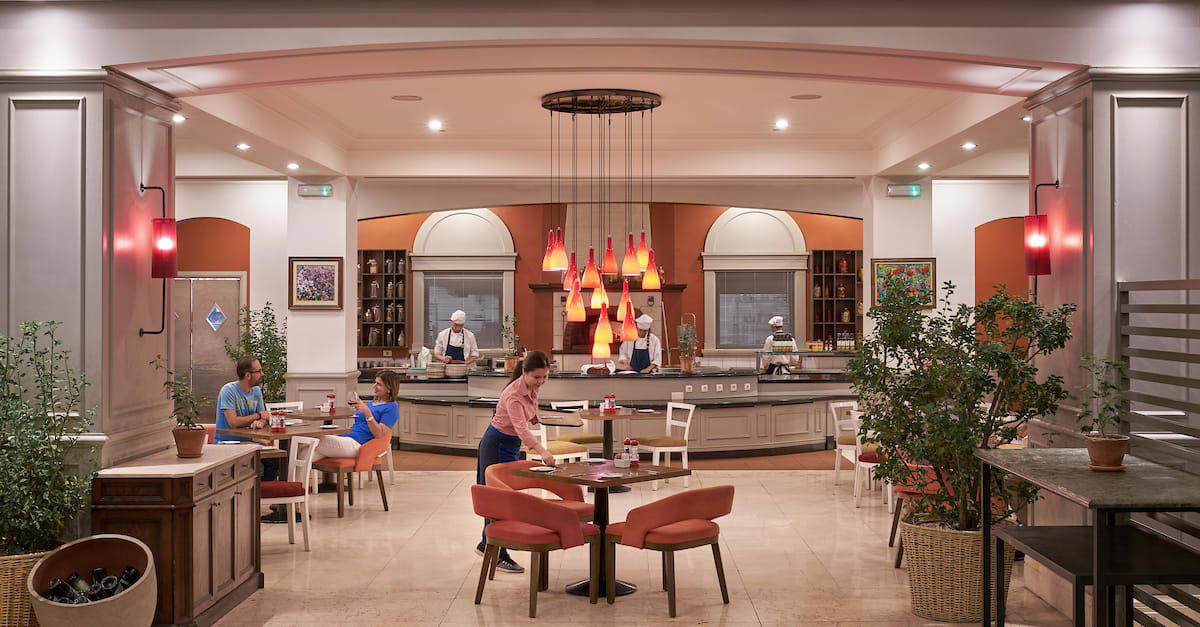
Bishkek's cafe dining rooms tend toward one of two registers: the Soviet canteen inheritance, with its utilitarian light and laminate surfaces, or the consciously designed European cafe, where warm materials and controlled lighting signal a different price point and social contract. Crostini sits in the latter category, a space that reads as intentionally composed rather than functionally assembled. The atmosphere is sociable without being loud, and the pace of service aligns with a city that still treats a long lunch as an acceptable midweek event rather than an indulgence. For visitors arriving from the airport corridor on Manas Avenue, the tone shift into this kind of interior marks a clear social boundary between transit Bishkek and residential, professional Bishkek.
The comparison set within walking distance is thin by European standards. Kim's Ramen in Bishkek operates in a different format entirely, and the traditional Kyrgyz options that give the city its culinary character, like the kind of format represented by Cafe Dastorkon in Karakol, address a completely separate appetite. Crostini's position is therefore somewhat self-defining: it occupies a niche with few direct rivals rather than a crowded competitive bracket.
How Crostini Sits Against the Global Italian Cafe Category
Italian-named restaurant formats span an enormous range globally, from three-Michelin-star dining rooms like 8½ Otto e Mezzo Bombana in Hong Kong to neighbourhood trattorias operating on thin margins and purely local sourcing. Crostini occupies the casual-to-mid end of that spectrum in a market where the category ceiling is considerably lower than in major metropolitan centres. That context matters because it recalibrates what a reader should expect: this is not a kitchen competing with Arpège in Paris or the technique-driven precision of Alinea in Chicago, nor is it attempting to. The competitive frame is Bishkek's European cafe tier, where the standard is set by consistency, sourcing transparency, and the quality of what the local supply chain makes available on a given week.
In cities with more established fine dining infrastructure, kitchens like Atelier Crenn in San Francisco or Lazy Bear have the sourcing relationships and cold-chain access to execute ingredient-led menus with precise seasonal control. In Bishkek, ingredient sourcing is a constraint to be managed rather than a marketing asset to be promoted. A European-format kitchen here earns credibility not by sourcing rare Italian imports but by working intelligently with what the Kyrgyz agricultural calendar provides.
Planning Your Visit
Bishkek's dining day runs on a schedule that leans later than Western European norms but earlier than some Middle Eastern cities: lunch service typically anchors the midday window, and evening dining peaks between seven and nine. The city's central districts are walkable, and taxis via the local app ecosystem (Yandex Go operates reliably here) are inexpensive by any international comparison. Crostini's address places it in central Bishkek, accessible from the main hotel corridor without requiring the kind of navigation that outlying restaurants in the city can demand. Booking practices in Bishkek's mid-market European tier are generally relaxed compared to high-demand cities, though weekend evenings at well-regarded spots can fill without much notice during summer, when the city's terrace season peaks.
For visitors cross-referencing what Bishkek's European cafe bracket offers against the broader international Italian restaurant category, the reference points are distant: the culinary rigour of Alain Ducasse at Louis XV in Monte Carlo or the ingredient philosophy of Atelier Moessmer Norbert Niederkofler in Brunico belong to an entirely different category conversation. Crostini is a city-specific option assessed on city-specific terms.
Frequently asked questions
Can I bring kids to Кростини / Crostini?
Bishkek's cafe-format restaurants generally run at a pace and noise level that works for families, and an Italian-named cafe in the city tends to draw a mixed local and expat crowd rather than a formal dining audience.
What should I expect atmosphere-wise at Кростини / Crostini?
Bishkek's mid-range cafe dining rooms typically occupy one of two registers: utilitarian post-Soviet interiors with practical lighting, or European-style rooms with warmer finishes aimed at the city's growing professional class. Expect a room pitched somewhere between neighbourhood cafe and casual sit-down restaurant.
Is Crostini in Bishkek suitable for a business lunch or working meal?
An Italian cafe format in a city like Bishkek, where the dining day typically peaks at midday, positions a venue like Crostini naturally within the lunch trade. Bishkek's business dining culture leans toward mid-priced cafes rather than formal dining rooms, making this category of restaurant a practical choice for working meals. Confirm current hours directly with the venue, as lunch service times can shift seasonally in Kyrgyzstan.
Comparable Spots, Quickly
| Venue | Cuisine | Price |
|---|---|---|
| Кростини / CrostiniThis venue (the venue you are viewing) | Mediterranean with Italian Influences | $10–20 |
| Kim’s Ramen | Korean Ramen & Noodles | $1–10 |
| КЁН БОГ КУН | Korean Seafood | $1–10 |
| Cafe Dastorkon | Authentic Kyrgyz and Central Asian | Not listed |
Continue exploring
More in Bishkek
Details
- Modern
- Lively
- Trendy
- Brunch
- Business Dinner
- Casual Hangout
- Open Kitchen
- Terrace
- Private Dining
- Street Scene
- A La Carte
- Buffet
- Small Plates
- Gluten Free Options
Contemporary modern style with a lively, lively atmosphere from the open kitchen and warm terrace surrounded by greenery.