
A basement-level Chinese kitchen in Shinsaibashi where a chef trained across Hong Kong and Guangzhou works through regional Chinese traditions with precision. The noon light lunch draws daily queues; evening opens into a broad à la carte that moves from Sichuan appetisers through hand-folded dim sum. Prix fixe at lunch, available for groups of two or more with reservations, adds another entry point.
Pearl is the En Primeur Club membership app — saves, bookings, and concierge access live there. Same editors, same standards.
- Address
- Japan, 〒542-0085 Osaka, Chuo Ward, Shinsaibashisuji, 1 Chome−4−14 SHINSAIBASHI ENKYO ビル B1F
- Phone
- +81 6-6252-6022
- Website
- chuuka-morimoto.foodre.jp
- Directions
- Get directions
 Saves & bookings on Pearl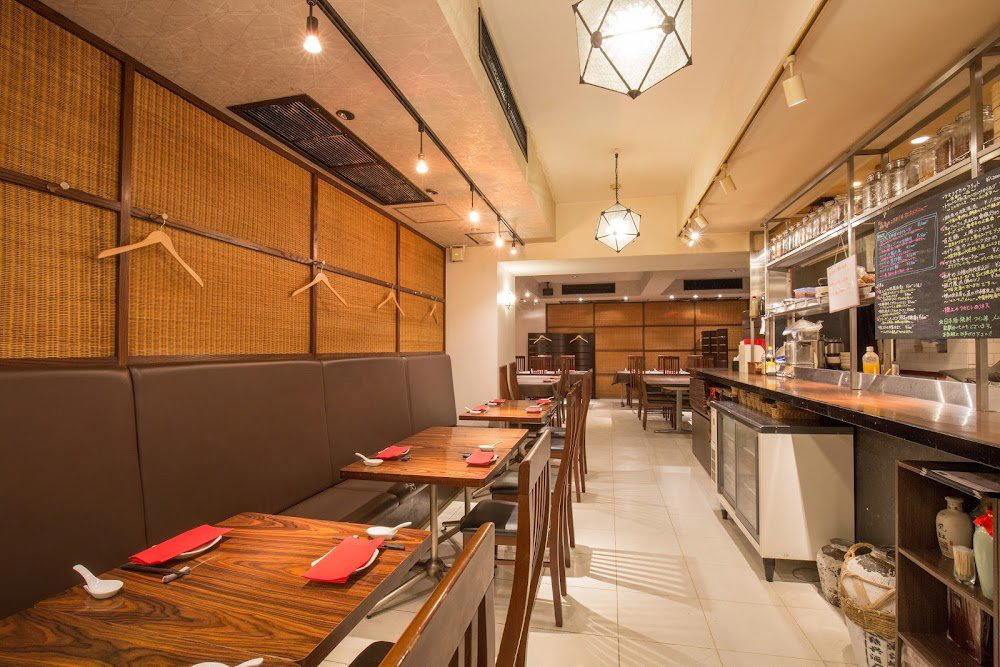
A Chinese Counter in Osaka's Grid
Shinsaibashi runs as one of Osaka's densest commercial corridors, a street-level procession of fashion, food, and foot traffic that rarely pauses. Below that surface layer, in the basement of the SHINSAIBASHI ENKYO building on Shinsaibashisuji, Chukashunsai Morimoto operates at a remove from the noise. Here, that attention is directed toward a Chinese kitchen with a specific and earned culinary biography.
Evening service runs à la carte, which means guests build their own progression through the kitchen's range. Lunchtime operates differently: a prix fixe option is available for groups of two or more who book ahead, while a lighter lunch draws daily queues without reservation.
How a Meal Takes Shape Here
À la carte service in a Chinese context invites a different kind of ordering intelligence than a kaiseki progression or an omakase counter sequence. The meal is assembled by the table, not handed down by the chef.
A sensible arc begins with the Sichuan-style chicken preparation that has become one of the kitchen's more requested appetisers. Sichuan cooking occupies a specific register within the regional Chinese traditions the kitchen draws on: it is built on numbing heat, layered aromatics, and an assertive use of preserved and fermented ingredients. When that approach is applied to a cold chicken dish, the result is a test of balance rather than volume, a calibration exercise that signals what the kitchen values. It is a useful opening move.
From there, the dim sum items represent a different layer of the kitchen's training. Steamed gyoza and pork shumai are the two most visible examples, and both carry a lineage that connects to the chef's apprentice years in Hong Kong and Guangzhou. Dim sum, at its most attentive, is a craft of dough thickness, filling ratio, and steam timing. The versions here are described as reflective of that apprenticeship rather than any shortcut derivation. In the broader context of Osaka's restaurant scene, where Michelin-starred Japanese kitchens like Taian and Kashiwaya Osaka Senriyama operate at the formal end of precision cooking, this kind of Chinese craft work occupies a complementary rather than competing position.
The broader menu moves through regional Chinese references rather than staying anchored to a single province. This is the key structural claim of the kitchen: traditional recipes from various regions, handled with a modern re-framing. That combination is common enough as a description, but in practice it requires a chef whose training actually spans those regions. The Hong Kong and Guangzhou formation is documented; it gives the kitchen a Cantonese centre of gravity from which the Sichuan and other regional departures are measured departures rather than decorative additions.
The Lunch Logic
Daily queues for a light lunch in a commercial district like Shinsaibashi reflect a price and format proposition that a regular clientele has decided is worth repeating. The prix fixe option at lunch, reserved for groups of two or more and requiring advance booking, introduces a more structured entry point for visitors who want a cleaner meal arc than the à la carte evening allows.
Osaka has historically positioned itself against Tokyo on the grounds of eating value, and restaurants that sustain daily queues at lunch tend to be doing something right on that axis.
Positioning Within Osaka's Chinese Dining Category
Osaka's Chinese restaurant scene is deeper than its international profile suggests. The city has a significant Chinese-Japanese community and a long history of Chinese cooking that predates the contemporary wave of regional Chinese concepts arriving from Tokyo or mainland China. Within that context, a kitchen with verifiable Hong Kong and Guangzhou training is not an outlier; it is operating inside a tradition the city already understands.
What distinguishes the Morimoto kitchen's positioning is the combination of regional range and the modern re-interpretation framing. This is a different mode from the Japanese-Chinese hybrid category (chuka ryori) that has deep roots in Osaka, and it is equally distinct from the high-end Chinese dining rooms that operate on tasting-menu formats. It sits in a middle register: more technically specific than a neighbourhood chuka-ya, less ceremonially structured than a formal Chinese banquet house. For visitors arriving from other Japanese cities, the comparison set extends outward: Harutaka in Tokyo and Gion Sasaki in Kyoto represent the formal Japanese end of the regional precision-cooking spectrum, against which Morimoto's Chinese craft approach reads as a distinct alternative. Further afield, akordu in Nara, Goh in Fukuoka, and 6 in Okinawa each illustrate how Japan's regional restaurant scenes handle the balance between local tradition and broader culinary reference. On an international axis, the conversation around technique-led Chinese cooking continues in rooms like Atomix in New York City, though the contexts are structurally different.
Planning a Visit
Lunch without a reservation is possible but involves accepting the queue, which forms daily. Lunch with a reservation, for two or more, unlocks the prix fixe format and a more predictable entry. Evening service runs à la carte, which suits a table that wants to move at its own pace through the menu's regional range.
Comparable Options
Comparable venues nearby, for context on price, style, and recognition.
| Venue | Cuisine | Price | Notes |
|---|---|---|---|
| Chukashunsai MorimotoThis venue — the venue you are viewing | Modern Sichuan Chinese | $$$ | Not listed |
| xiang hua | Seasonal Regional Chinese Fine Dining | $$$ | Kita |
| Brasserie RÉGINE | French Brasserie | $$$ | Chūō |
| Opus One | Seasonal Fine Chinese with Shark Fin & Seafood Courses | $$$ | Chūō |
| Bullet | Reservation-only seasonal Chinese course at an 8-seat counter | $$$ | Nishi |
| Shin Chinese HARAKAWA Kitashinchi ten | Modern Chinese (New Chinese Cuisine) | $$$ | Kita |
Recognition history
Dated appearances from independent guides and award organizations, with the underlying list record or original source where available.
Michelin Bib Gourmand
Michelin
Michelin Plate
Michelin
Continue exploring
More in Osaka
Restaurants in Osaka
Browse all →




Bars in Osaka
Browse all →


Hotels in Osaka
Browse all →




Wineries in Osaka
Browse all →
At a Glance
- Elegant
- Relaxed
- Date Night
- Group Dining
- Family
- Open Kitchen
- Sake Program
- Craft Cocktails
Current opening hours
- Monday
- 11:30 AM–3 PM, 6–10 PM
- Tuesday
- 11:30 AM–3 PM, 6–10 PM
- Wednesday
- Closed
- Thursday
- 11:30 AM–3 PM, 6–10 PM
- Friday
- 11:30 AM–3 PM, 6–10 PM
- Saturday
- 11:30 AM–3 PM, 6–10 PM
- Sunday
- 11:30 AM–3 PM, 6–10 PM
Hours can change for holidays and private events. Last verified .
Stylish and relaxing basement space with sofa seating, described as a comfortable hideout.