


1 Michelin Star · Wine Spectator Award of Excellence · Tabelog 100 #35
Our verdict
A basement-level Italian restaurant in Hiroo, BOTTEGA brings inland Italian regional cooking to one of Tokyo's quietest upscale neighbourhoods. The kitchen centres on handmade pasta shaped without fixed ratios and a main course menu built entirely around meat. Wine Director Macaulay Fernandes oversees a 1,200-bottle list weighted toward Burgundy, Bordeaux, and Tuscany, priced accessibly within the ¥¥¥ range.

Pearl is the En Primeur Club membership app, where members save venues, book tables and use the concierge.
The menu
What to order
- Pappardelle alla Bolognese
- Tajarin with Truffle
- Roasted Japanese Black Beef with Truffle
Down the stairs in Hiroo: Italian regionalism below street level
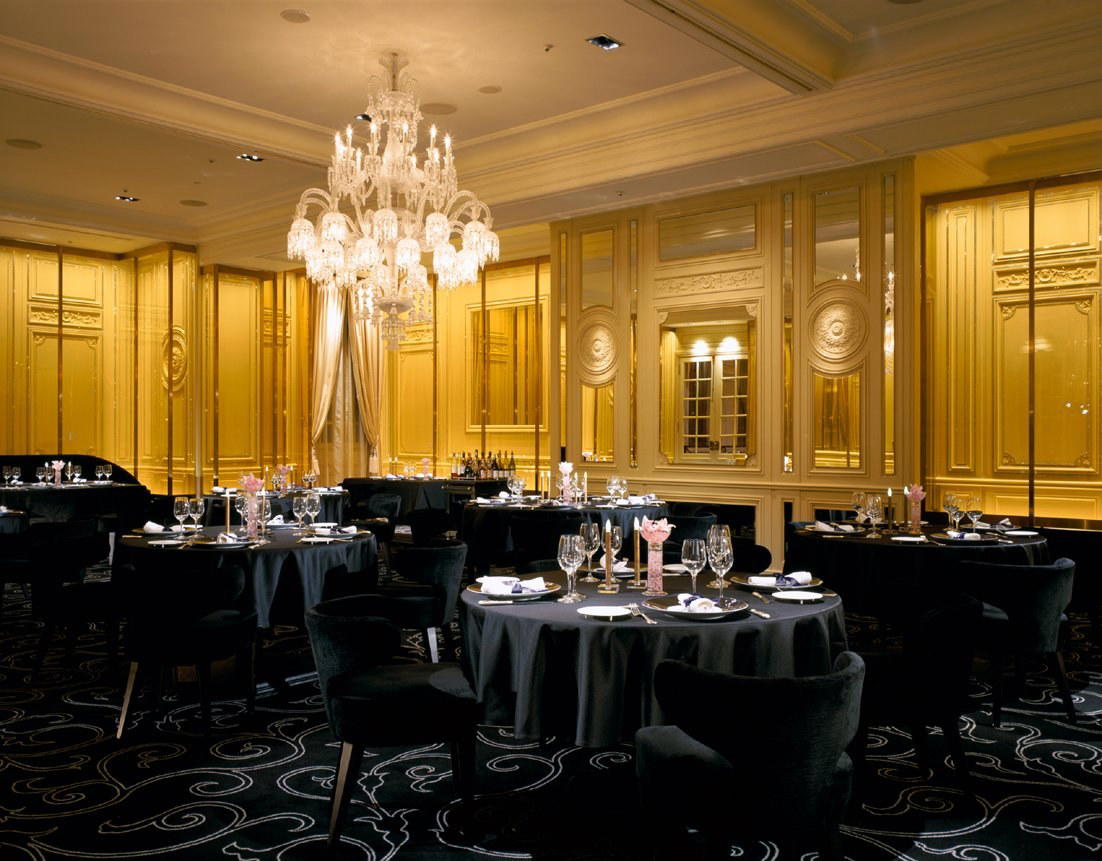
Basement dining rooms carry a particular logic in Tokyo. Removed from the street, they create a self-contained world where acoustics tighten, the light is controlled, and the outside city ceases to matter. The address in Hiroo's 5-chome puts BOTTEGA a few blocks from the embassies and the low-rise residential quiet that defines this part of Shibuya-ku. Coming down from street level into the space is a shift in register, away from the department-store Italian that populates much of central Tokyo and toward something that operates on a narrower, more considered frequency.
Hiroo has long served as a landing pad for international residents and diplomatic staff, which partly explains why the neighbourhood's restaurant scene includes a higher concentration of European kitchens than Shinjuku or Shibuya proper. Within that context, a regionally-grounded Italian operation fits without friction. This is not the glossy Milanese-inflected cooking that defined Tokyo's Italian boom of the 1990s; it sits closer to the tradition-focused inland Italian that has become more legible to Tokyo diners over the past decade as travel to Italy has deepened and as a cohort of Japanese chefs trained there have returned with specific regional knowledge.
The training ground and what it produces on the plate
Italian regional cooking in Tokyo now occupies several tiers. At the high end, restaurants like Aroma Fresca and Gucci Osteria da Massimo Bottura Tokyo operate with Michelin recognition and price structures to match. Further down the bracket, a second group works with similar ingredient discipline but in formats that stop short of the full omakase or tasting-menu architecture. BOTTEGA belongs to this second group, and its identity is shaped by where its kitchen was trained rather than by the accolades it has accumulated.
Chef Adamo Filippo Alberto trained in Italy's inland regional tradition, where the handling of local ingredients, the respect for pairing, and the patience of handmade pasta are foundational rather than decorative. That training is most visible in the pasta. Working without a fixed recipe, the kitchen calibrates flour and eggs by feel and by the conditions of a given day, a method that demands accumulated experience rather than procedure. The result is a menu built around tagliatelle with ragù and tajarin with truffle, dishes that land squarely within the northern Italian canon. These are not interpretations or modernised homages; they are careful executions of forms that have existed for generations.
The commitment to inland training carries through to the main course structure. The menu focuses exclusively on meat, a deliberate alignment with the cuisine of Italy's interior regions, where fish is a rarity and the kitchen's credibility rests on what it does with beef, pork, and game. For a city as close to the sea as Tokyo, a restaurant that does not offer fish at all makes a pointed argument about culinary geography.
Restaurants like Principio and AlCeppo also work within Tokyo's Italian dining circuit, each with its own regional emphasis. PRISMA takes a different line, operating in the more contemporary Italian register. What distinguishes BOTTEGA within that competitive set is the single-mindedness of its regional position and the absence of concession to what might sell more easily in a coastal city.
The wine program: France and Italy in depth
Wine Director Macaulay Fernandes and Sommelier Clovia David oversee a list of 280 selections from a cellar of 1,200 bottles, a depth of inventory that exceeds what most restaurants at this price point maintain. The list's stated strengths are France (Burgundy and Bordeaux) and Italy (Tuscany), with Spain as a secondary presence. The pricing sits at the mid-range mark for Tokyo wine lists, meaning there are accessible entry points alongside bottles at higher price thresholds.
The Burgundy and Tuscany weighting is not incidental. A kitchen focused on handmade egg pasta, ragù, truffle, and meat dishes creates a direct route to both Nebbiolo-based Piedmontese wines and the structured reds of Tuscany. The Burgundy depth signals that the program extends the conversation beyond strict Italian regionalism, offering the option to approach the food through French lenses as well. For diners who come primarily for the wine, the 1,200-bottle inventory and the mid-tier pricing make this a serious list inside a price bracket where many restaurants underinvest.
Format and rhythm of a meal
BOTTEGA serves dinner only, Tuesday through Saturday, closing on Sunday and Monday. The hours run from 11am to 9:30pm Tuesday through Saturday, though the kitchen's dinner-focused identity means the relevant window is the evening service. General Manager Bryce Seator runs the floor, and the team structure, with named positions for wine director, sommelier, chef, and general manager, suggests a full-service operation rather than a casual drop-in format despite the ¥¥¥ rather than ¥¥¥¥ pricing.
Within Tokyo's Italian dining scene, which stretches from neighbourhood trattorie through to three-Michelin-starred rooms like those occupied by some of the comparison venues above, BOTTEGA positions itself as a technically grounded, regionally specific option at a price point that does not require the commitment level of Tokyo's upper tier.
For a wider picture of where this fits in Tokyo's dining map, see our full Tokyo restaurants guide. Italian cooking in Japan extends well beyond the capital: cenci in Kyoto works in a contemporary Italian idiom with strong local sourcing, and 8½ Otto e Mezzo Bombana in Hong Kong represents the higher-end regional Italian model in Asia. Elsewhere in Japan, HAJIME in Osaka, Gion Sasaki in Kyoto, akordu in Nara, Goh in Fukuoka, 1000 in Yokohama, and 6 in Okinawa represent the broader range of serious dining across the country. The Tokyo hotels guide, bars guide, wineries guide, and experiences guide round out the picture for planning a full visit.
Know Before You Go
- Address: 5 Chome-17-8 B1F, Hiroo, Shibuya, Tokyo 150-0012
- Hours: Tuesday to Saturday, 11am–9:30pm; closed Sunday and Monday
- Cuisine: Italian (regional, inland tradition)
- Price range: ¥¥¥ (typical two-course meal ¥40–¥65 equivalent before drinks)
- Wine list: 280 selections, 1,200-bottle inventory; strengths in Burgundy, Bordeaux, Tuscany
- Wine pricing: Mid-range ($$)
- Team: Chef Adamo Filippo Alberto; Wine Director Macaulay Fernandes; Sommelier Clovia David; GM Bryce Seator
- Getting there: Hiroo Station (Tokyo Metro Hibiya Line) is the nearest station; the address is in the 5-chome residential block
Frequently asked questions
What's the pricing like at BOTTEGA?
Pricing at BOTTEGA is listed as ¥¥¥.
Cuisine Context
| Venue | Cuisine | Price | Awards | Notes |
|---|---|---|---|---|
| BOTTEGAThis venue (the venue you are viewing) | Authentic Italian Handmade Pasta | $150–200 | 1 Michelin Star · Wine Spectator Award of Excellence | Not listed |
| Harutaka | Edo-Style Omakase Sushi | $200–300 | 3 Michelin Stars · World's 50 Best #76 | Sushi |
| RyuGin | Modern Kaiseki | $500+ | 3 Michelin Stars · World's 50 Best #41 | Kaiseki, Japanese |
| L'Effervescence | Modern French with Japanese Influences | $200–300 | 3 Michelin Stars · World's 50 Best #69 | French |
| HOMMAGE | Modern French with Japanese Influences | $150–200 | 2 Michelin Stars · World's 50 Best #78 | Innovtive French, French |
| MAZ | Innovative Peruvian-Japanese Fusion | $150–200 | 2 Michelin Stars · World's 50 Best #28 | Innovative |
Recognition history
Dated appearances from independent guides and award organizations, with the underlying list record or original source where available.
Michelin 1 Star
Michelin
Tabelog 100 #35 · No. 35
Tabelog · Tabelog 100 - Italian - TOKYO - 2025
Wine Spectator Award of Excellence
Wine Spectator
Full recognition history (4 entries)
Michelin 1 Star
Michelin
Continue exploring
More in Tokyo
Restaurants in Tokyo
All restaurants in Tokyo →


Bars in Tokyo
All bars in Tokyo →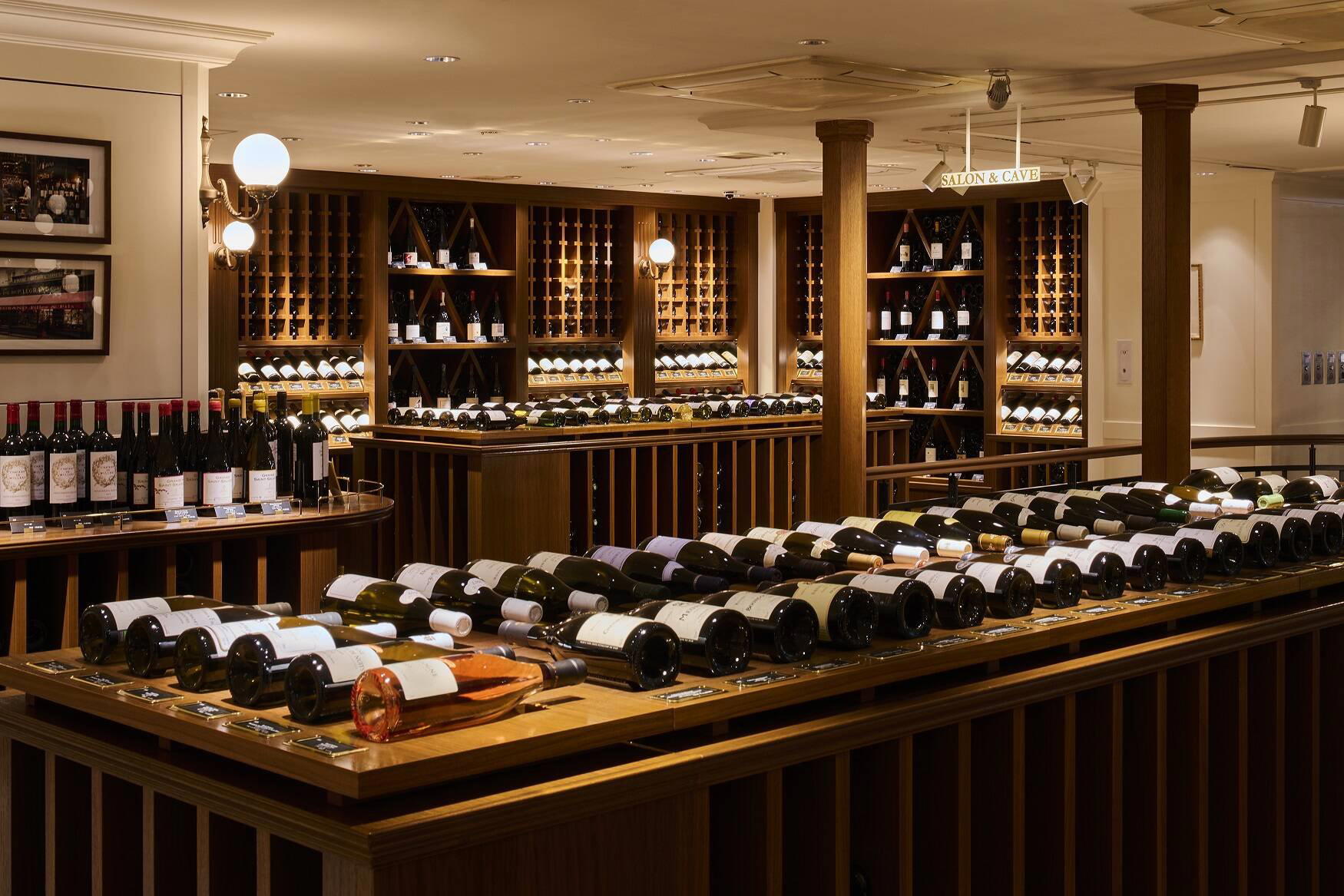







BOTTEGA
The wine
BOTTEGA holds the Wine Spectator Award of Excellence, which Wine Spectator gives to lists of usually 90 or more selections.
- Wine program
- Deep wine list
- Wine Spectator
- Wine Spectator Award of Excellence
- Selections
- 280
- Bottles in cellar
- 1,200
- List strengths
- France, Burgundy, Bordeaux, Italy, Tuscany, Spain
- Wine director
- Macaulay Fernandes
- Extensive wine list
Details
- Intimate
- Elegant
- Cozy
- Sophisticated
- Date Night
- Solo
- Special Occasion
- Chefs Counter
- Open Kitchen
- Extensive Wine List
- A La Carte
- Counter Dining
- Wine
Current opening hours
- Monday
- 5 PM–12 AM
- Tuesday
- 5 PM–12 AM
- Wednesday
- 5 PM–12 AM
- Thursday
- 5 PM–12 AM
- Friday
- 5 PM–12 AM
- Saturday
- 5 PM–12 AM
- Sunday
- Closed
Hours can change for holidays and private events. Hours as of .
Refined cozy adult hideaway with warm lighting and an elegant intimate atmosphere.