


In Rome's Flaminio district, Bistrot 64 occupies a classical dining room that gives little away before the food arrives. The kitchen draws on Lazio's culinary traditions while weaving in Japanese technique, a combination that places it in a distinct niche among the city's creative restaurants. Recognised by Michelin and ranked 388th in Opinionated About Dining's Classical Europe list for 2025, it sits comfortably in the €€€ tier.
Pearl is the En Primeur Club membership app — saves, bookings, and concierge access live there. Same editors, same standards.
- Address
- Via Guglielmo Calderini, 64, 00196 Roma RM, Italy
- Phone
- +39 06 323 5531
- Website
- bistrot64.it
- Directions
- Get directions
 Saves & bookings on Pearl
Where Flaminio's Quiet Streets Meet a Kitchen With Something to Say
The Prati and Flaminio neighbourhoods north of the Tiber occupy a different Rome than the tourist-worn centro storico. The streets here run wider, the buildings taller and more sober, and the dining options skew toward a local clientele that treats the area as a residential base rather than a sightseeing stop. Via Guglielmo Calderini sits within this quieter register, and Bistrot 64's exterior reads accordingly: restrained, classical, the kind of facade that suggests a neighbourhood room rather than a destination. That mismatch between appearance and ambition is, in fact, part of what makes this address worth understanding.
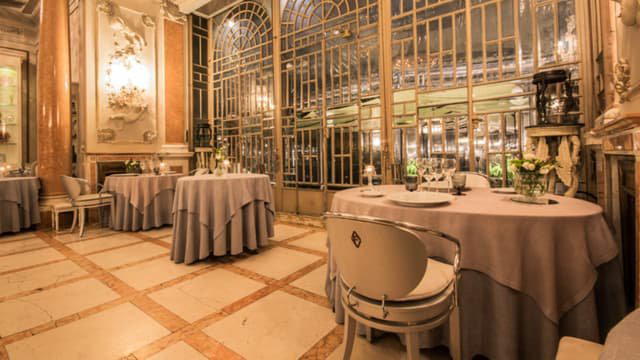
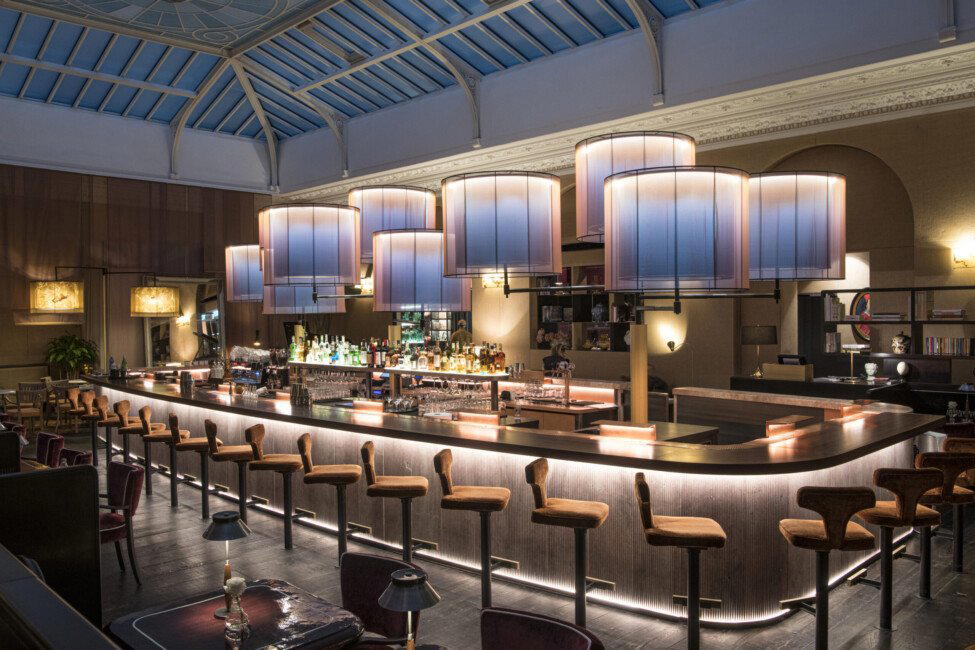
Inside, the dining room holds to the same classical idiom, the kind of room where Roman professionals have always conducted long lunches and unhurried dinners. The décor does not announce itself. What announces itself, eventually, is the cooking, which operates at a remove from both the trattoria tradition and the more theatrical end of Rome's creative dining scene.
The Sourcing Logic Behind an Italian-Japanese Kitchen
Rome's creative dining tier has expanded considerably over the past decade, but most of it remains anchored in Italian regionalism: a chef trained in Piedmont or Naples, ingredients sourced within a day's drive, a menu that references nonna without quite reproducing her. Bistrot 64 works differently. The kitchen here draws on Lazio's culinary traditions as a foundation but introduces Japanese technique and sensibility as a structural element, not a garnish.
The logic behind that pairing is less arbitrary than it might appear. Italian and Japanese cooking share certain foundational commitments: both prioritise ingredient clarity over sauce complexity, both have sophisticated vegetable cultures that precede any meeting with meat, and both carry pasta and noodle traditions that treat carbohydrate as a vehicle for precision rather than bulk. When these frameworks are applied to Roman-sourced ingredients, the legumes, the bitter greens, the cured pork that define Lazio's pantry, the results sit in a category that has almost no direct peers in the city.
That sourcing relationship matters. A kitchen operating in this register depends on ingredient quality in a way that more heavily sauced or transformed cooking does not. The vegetables that carry a Japanese-inflected preparation need to be exactly right at the moment they arrive; the pasta that bridges both traditions needs to be made from grain with genuine character. The Flaminio location, while not a market district, keeps the kitchen within the supply networks that feed Rome's more serious restaurants, and the Lazio orientation means the sourcing geography stays tight even as the culinary reference points extend eastward.
Emanuele Cozzo and Giacomo Zezza lead the kitchen. The Tokyo connection means the Japanese dimension is not decorative; it comes from someone who has operated seriously in both culinary cultures. Emanuele Cozzo and Giacomo Zezza complete the kitchen leadership, grounding the project in the Italian side of the equation.
Where Bistrot 64 Sits in Rome's Creative Dining Tier
Rome's leading creative restaurants cluster around the €€€€ price point: Enoteca La Torre, All'Oro, and Acquolina all operate in that bracket, alongside Glass Hostaria and Achilli al Parlamento. The restaurant prices at €€€, which places it a tier below those rooms in cost while carrying comparable creative ambition. For diners who find the top tier either prohibitive or over-formal, this becomes a practical argument in the restaurant's favour rather than a concession.
The restaurant holds no Michelin stars and no Michelin keys, but it does carry a Michelin Plate in 2024 and 2025. It also appears in the Opinionated About Dining Classical Europe rankings for 2025. Neither credential places it among Rome's absolute top tier, La Pergola, Il Pagliaccio, and Idylio by Apreda operate at a different level of institutional recognition, but both confirm that the cooking registers with the kind of structured critical attention that separates serious restaurants from merely competent ones. Google's aggregate score of 4.4 from 645 reviews adds a broader data point.
Looked at across Italy's creative scene, the restaurant occupies a mid-tier bracket below destinations like Osteria Francescana in Modena or Enoteca Pinchiorri in Florence, but its Italian-Japanese orientation gives it a distinct identity that those rooms do not share. The closest analogy in terms of cross-cultural approach might be found outside Italy entirely: Alléno Paris au Pavillon Ledoyen and JAN in Munich both represent European kitchens that work seriously with non-European reference points, though in entirely different configurations. Within Italy, Enrico Bartolini in Milan, Dal Pescatore in Runate, Quattro Passi in Marina del Cantone, and Atelier Moessmer Norbert Niederkofler in Brunico represent the broader field of serious creative cooking, none of which attempts the same Italian-Japanese synthesis.
Planning a Visit
The restaurant is on Via Guglielmo Calderini 64 in the Flaminio district. Reservations are recommended. The €€€ price positioning means a meal here runs about $85 per person.
The Minimal Set
Comparable venues nearby, for context on price, style, and recognition.
| Venue | Cuisine | Price | Notes |
|---|---|---|---|
| Bistrot 64This venue — the venue you are viewing | Flaminio, Modern Italian Neo-Bistro | $$$ | Not listed |
| Trattoria Pennestri | Ostiense, Modern Roman Trattoria | $$$ | Not listed |
| Sibilla | Not listed | $$$ | Tivoli, Classic Lazio Cuisine with Grilled Specialties |
| Luciano Cucina Italiana | Parione, Modern Roman Italian | $$$ | Not listed |
| Poldo e Gianna Osteria | Campo Marzio, Roman Osteria | $$$ | Not listed |
| Diana's Place | Castro Pretorio, Modern Italian Bistrot | $$$ | Not listed |
Recognition history
Dated appearances from independent guides and award organizations, with the underlying list record or original source where available.
Michelin Plate
Michelin
Michelin Plate
Michelin
Opinionated About Dining Classical in Europe Ranked #388
Opinionated About Dining
We're Smart World 2 Radishes
We're Smart World
Michelin Plate
Michelin
Continue exploring
More in Rome
Hotels in Rome
Browse all →



At a Glance
- Elegant
- Intimate
- Sophisticated
- Classic
- Date Night
- Business Dinner
- Special Occasion
- Open Kitchen
- Extensive Wine List
Current opening hours
- Monday
- Closed
- Tuesday
- 6:30–10 PM
- Wednesday
- 6:30–10 PM
- Thursday
- 6:30–10 PM
- Friday
- 12:30–2 PM, 7–10 PM
- Saturday
- 12:30–2 PM, 7–10 PM
- Sunday
- Closed
Hours can change for holidays and private events. Last verified .
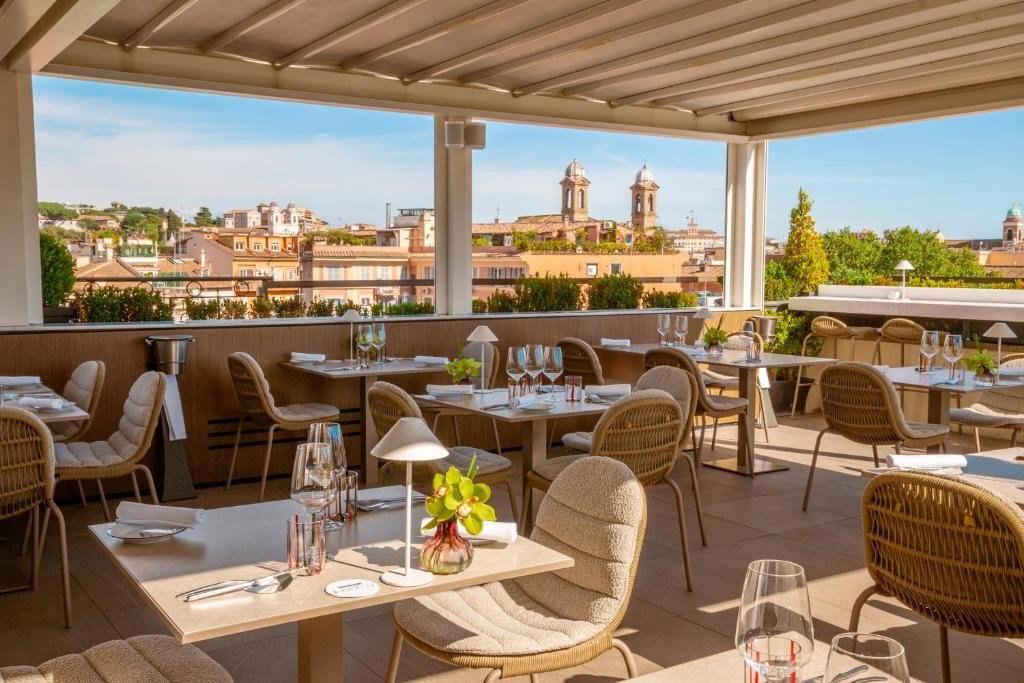
Minimally decorated classic-style dining room with subdued, elegant, and warm essential interior design.