Punta Caracol Acqua Lodge

Michelin Selected
Punta Caracol Acqua Lodge sits above the Caribbean waters of Isla Colón in Bocas del Toro, a Michelin Selected property built on stilts over the sea. The overwater bungalow format here is not imported from the Maldives but grown from the local vernacular of Caribbean stilt architecture. For travellers seeking seclusion in Panama's island archipelago, it represents the upper tier of what the region offers.

Pearl is the En Primeur Club membership app, where members save venues, book tables and use the concierge.
Where the Caribbean Meets the Floorboards
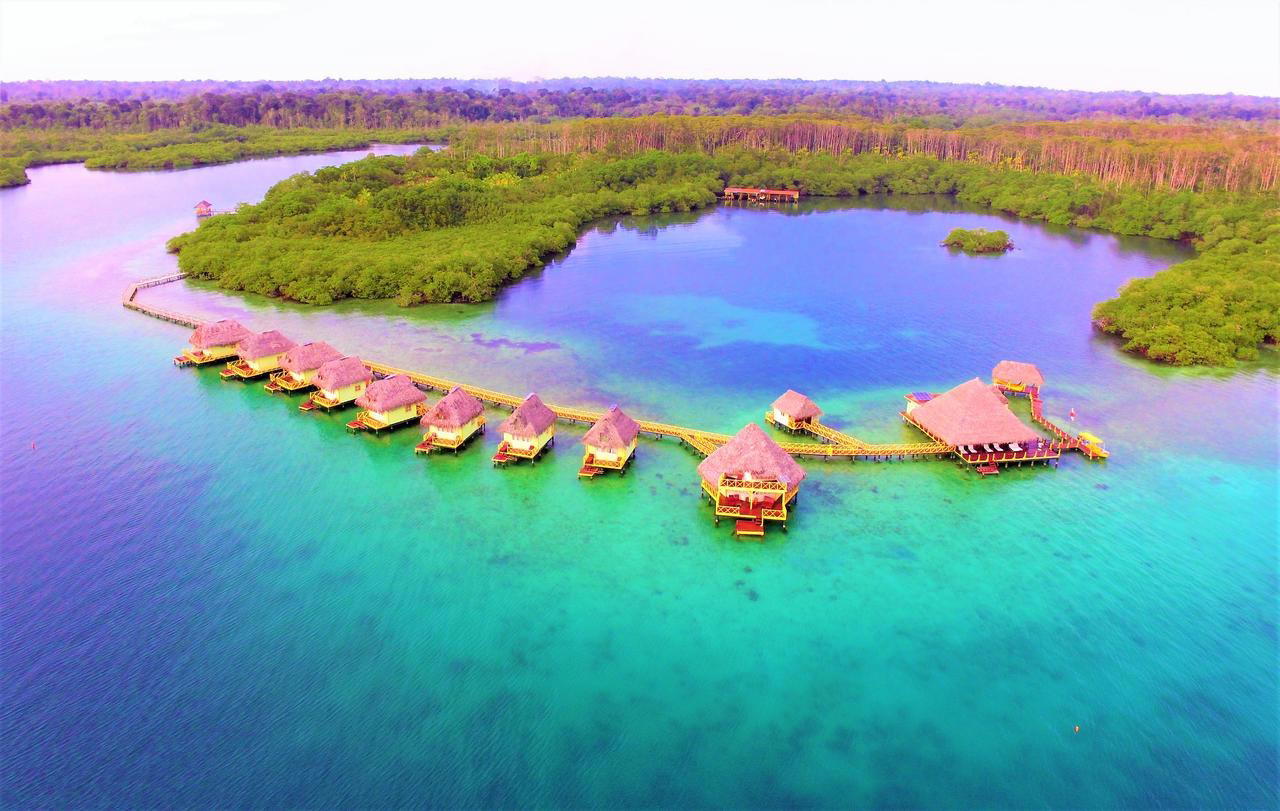
Arrive by boat, there is no other way. That single logistical fact sets the register for everything that follows at Punta Caracol Acqua Lodge. The transfer from Bocas Town across the flat Caribbean water of Isla Colón takes roughly ten minutes, and in those ten minutes the ambient noise of the town dissolves. By the time the dock comes into view, you have already understood what kind of property this is: one where the architecture is inseparable from the environment, and where that environment is the point.
The Bocas del Toro archipelago sits off Panama's Caribbean coast, closer to Costa Rica than to Panama City, and the overwater lodge format here draws from a long local tradition of stilt construction common across Caribbean coastal communities. What distinguishes properties like Punta Caracol from that vernacular is the degree of finish and the deliberate framing of the water view from every habitable surface. The bungalows extend directly above the sea on wooden platforms, so the horizon is not something you look toward from land, it is what you look across from your terrace, your bed, or wherever you happen to be standing. For our full rundown on where to stay and eat in the region, see our full Punta Caracol restaurants guide.
The Architecture of Stillness
Overwater accommodation globally now splits between two distinct approaches. The first, dominant in the Maldives and French Polynesia, tends toward large-footprint villas with plunge pools, maximum glass, and a spa-resort logic that keeps guests on property. The second, found in fewer places, prioritises structural dialogue with the local environment, materials, scale, and building methods that connect to regional tradition rather than import a standardised luxury idiom. Punta Caracol falls into the second category.
The lodge's bungalows are built in a style that reads as Caribbean coastal rather than international resort. Timber and thatched roofing materials echo the vernacular of Bocas del Toro's coastal villages, and the scale of each unit is kept deliberately modest relative to the inflated square footage that defines overwater villas in higher-volume markets. The result is a structural honesty that makes the natural setting, mangroves, open water, the low silhouette of jungle, more present, not less. Michelin's 2025 hotel selection recognised the property, placing it in a shortlist that tracks character and quality rather than star count.
Among Panama's overwater and island-adjacent properties, the architectural approach here contrasts with what you find at urban properties in Panama City, such as The Santa Maria, A Luxury Collection Hotel and Golf Resort, which operates in a wholly different register. Closer in spirit are properties that prioritise natural immersion over hotel-industry scale: Islas Secas in Boca Chica offers a comparable island-seclusion logic on Panama's Pacific side, while Isla Palenque in San Lorenzo District represents another node in the country's small ecology of serious eco-luxury properties. Bocas Bali Luxury Water Villas on Isla Frangipani occupies the same Bocas del Toro waters and provides a direct local reference point. Elsewhere in Panama, El Otro Lado in Portobelo and Los Brezos Boutique Hotel in Volcán confirm that the country's most considered small properties tend to be remote, design-led, and deliberately distanced from resort-chain conventions. Selva Terra Island Resort in San Lorenzo and Canopy Tower in Panama complete a picture of a country whose premium independent accommodation scene consistently rewards guests willing to move beyond the capital.
The Water as Amenity
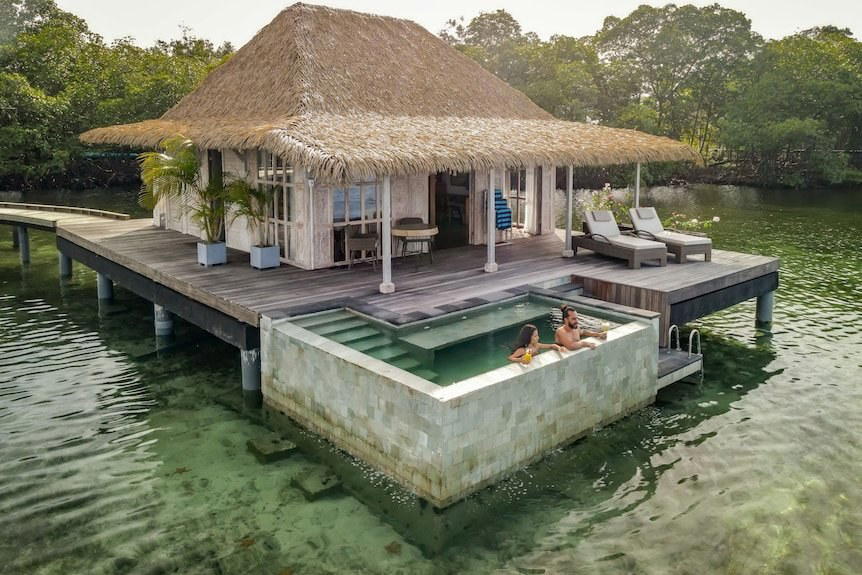
In overwater architecture, the most consequential design decision is rarely the interior finish, it is the relationship between the floor plan and the water below and around it. Properties that get this right treat transparency and access as primary, using open-deck terraces, direct ladder access to the sea, and sight lines that keep the water present from indoor spaces rather than framing it only as a postcard view. The stilt-over-sea format at Punta Caracol means the Caribbean is accessible from the private terrace of each bungalow, a design condition that no rooftop pool or beach-club arrangement can replicate at a land-based property, however well-executed.
The broader appeal of Bocas del Toro for guests arriving at this kind of property is that the surrounding marine environment provides the activity programme. Snorkelling, kayaking, and boat excursions to surrounding reefs and mangrove channels require no resort infrastructure, only proximity to the water, which the lodge provides structurally.
Planning Your Stay
Punta Caracol is reached by water taxi from Bocas Town on Isla Colón, the main island in the Bocas del Toro archipelago. Bocas Town is served by domestic flights from Panama City, with journey times that make a multi-night stay the logical minimum. The dry season in Bocas del Toro runs roughly from December through March and again from a shorter window around September and October, though the archipelago's microclimate means rain can arrive in any month. Booking directly and well in advance is advisable for peak Caribbean dry-season months. The property's Michelin Selected status in 2025 brings it into a more visible tier of international search, which typically increases booking pressure at small-capacity properties. Given the limited number of bungalows, a structural consequence of the overwater format, availability windows narrow quickly around holiday periods and school breaks.
For travellers building a broader Panama itinerary, the contrast between Punta Caracol and the country's other premium properties illustrates how geographically diverse Panama's accommodation map has become. Urban stays at city properties and eco-lodges at island or highland properties now form a coherent circuit for travellers with ten days or more. Those comparing this approach in a global context might reference small overwater properties like Hotel Esencia in Tulum for a broadly comparable scale-and-seclusion ratio in a different Caribbean-adjacent setting, or consider design-led European retreats like Castello di Reschio in Lisciano Niccone as evidence that Michelin's hotel selection consistently favours properties with an identifiable architectural or environmental character over those defined by brand or category alone.
A Quick Peer Check
Comparable venues nearby, for context on price, style, and recognition.
| Venue | Cuisine | Price | Awards | Notes |
|---|---|---|---|---|
| Punta Caracol Acqua LodgeThis venue (the venue you are viewing) | Overwater eco-lodge with thatched-roof bungalows on stilts. | $100–200 | Michelin Selected | Not listed |
| Selva Terra Island Resort | Freestanding tropical casitas and villas with dramatic outdoor terraces on a private island. | Not listed | Not listed | San Lorenzo |
| Canopy Tower | Repurposed radar tower eco-lodge in rainforest | Not listed | Not listed | Soberanía National Park |
| Las Clementinas | Restored colonial apartment-style boutique hotel blending historic architecture with contemporary design in a UNESCO World Heritage district. | $100–200 | Michelin Selected | Casco Viejo |
| Hotel la Compañia Casco Antiguo | Historic boutique luxury | $300–500 | 1 Michelin Key | Casco Antiguo |
| El Otro Lado - Private Retreat | Private villas and bungalows with Caribbean style and privacy-focused design. | $300–500 | Michelin Selected | Portobelo |
Recognition history
Dated appearances from independent guides and award organizations, with the underlying list record or original source where available.
Michelin Selected
Michelin
Continue exploring
More in Punta Caracol
Hotels in Punta Caracol
All hotels in Punta Caracol →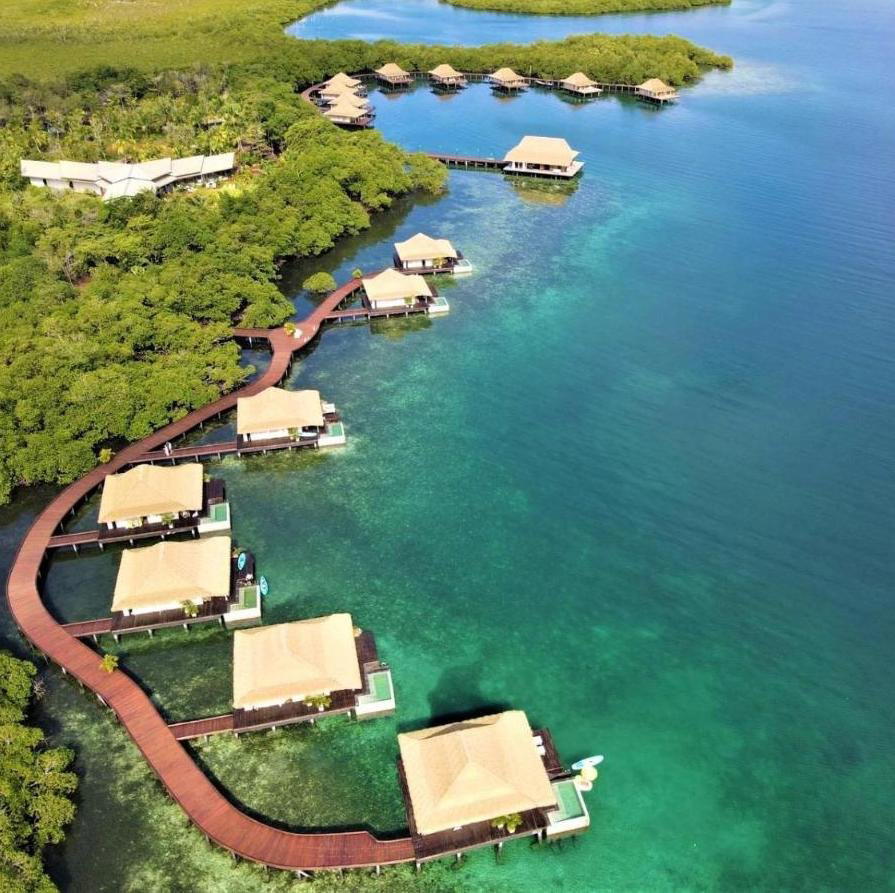
Restaurants in Punta Caracol
Browse all →
Details
- Romantic
- Scenic
- Rustic
- Intimate
- Quiet
- Romantic Getaway
- Honeymoon
- Family Vacation
- Weekend Escape
- Waterfront
- Panoramic View
- Wi Fi
- Restaurant
- Waterfront
Rustic charm with natural sounds, peaceful overwater setting, dim solar-powered lighting, and serene ocean views from private terraces.