
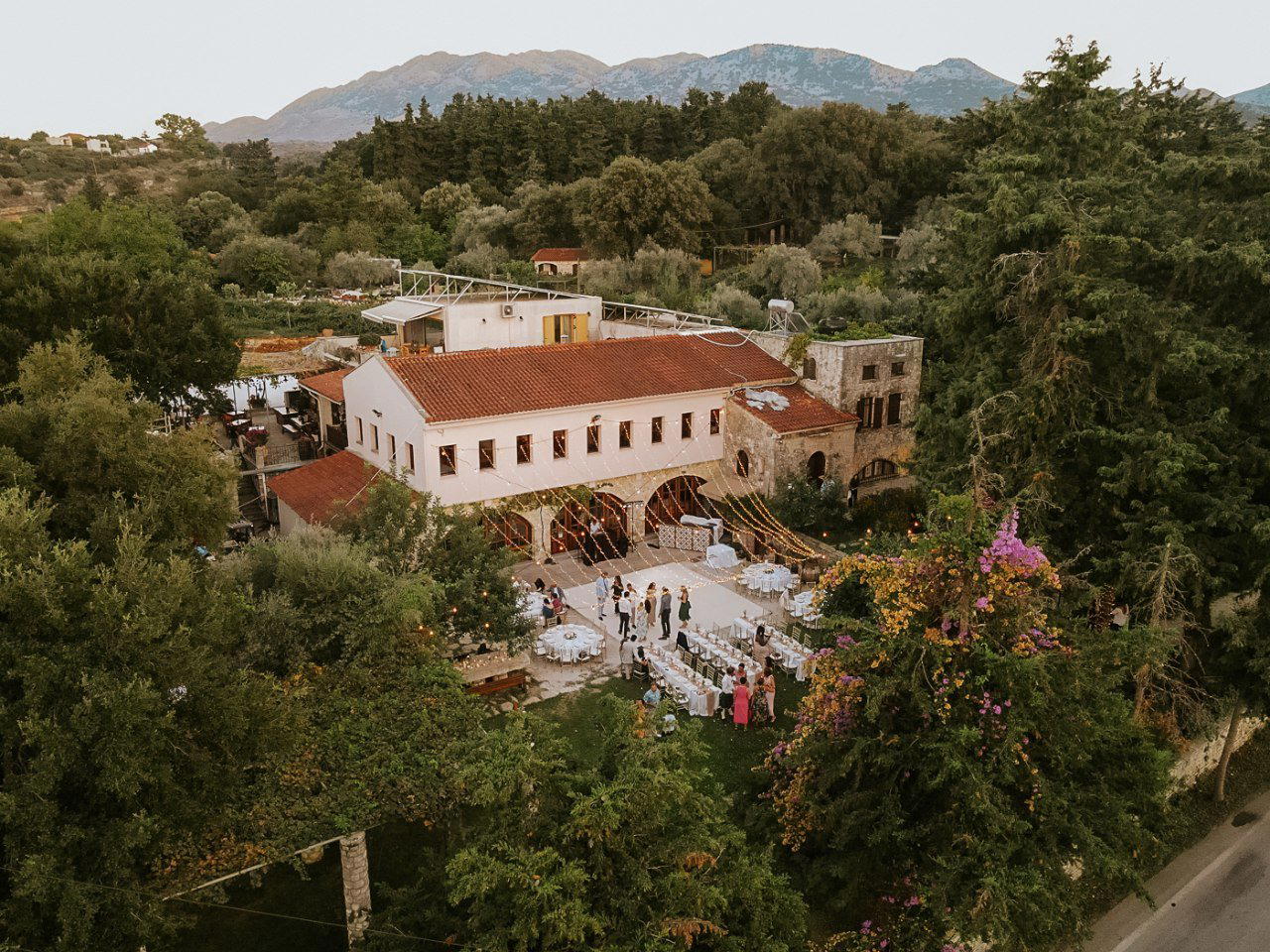
A restored 16th-century Cretan village awarded a Michelin Key in 2025, Kapsaliana Village Hotel sits in the olive-covered hills of Rethymno, where centuries-old stone buildings have been converted into guest accommodation. The property occupies a former working settlement, and that architectural authenticity places it in a distinct tier among Greek boutique hotels.
Pearl is the En Primeur Club membership app — saves, bookings, and concierge access live there. Same editors, same standards.
- Address
- Καψαλιανά 741 50, Greece
- Phone
- +30 2831 083400
- Website
- kapsalianavillage.gr
- Directions
- Get directions
 Saves & bookings on Pearl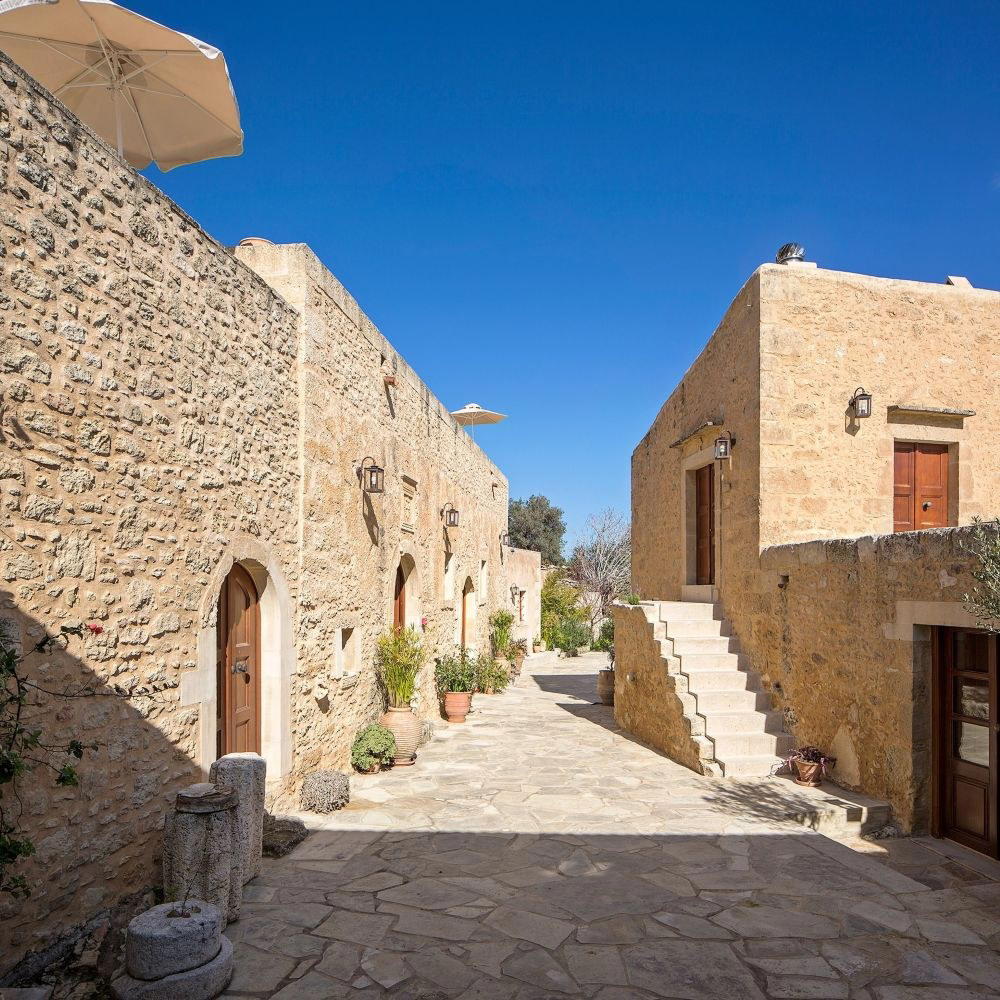
Stone Walls and Olive Groves: What Kapsaliana Represents in Cretan Hospitality
In the inland hills above Rethymno, Cretan hospitality takes a different shape than it does on the coast. Where the shoreline draws large resort complexes, the interior has produced something quieter and architecturally grounded: properties built inside existing village fabric rather than constructed alongside it. Kapsaliana Village Hotel belongs to that tradition. The hotel occupies a 16th-century settlement in the olive-growing country of central Crete, where the buildings themselves are the experience. Stone archways, vaulted ceilings, and courtyard geometries that predate modern tourism define what guests are buying into here. In 2025, the Michelin Guide awarded Kapsaliana a Michelin Key, placing it among a small cohort of Greek properties recognized for architecture, character, and hosting quality. Kapsaliana Village Hotel has 25 rooms.
That recognition matters not just as a credential but as a locator. The Michelin Key programme tends to favour properties with a legible sense of place over those with generic luxury features. Kapsaliana's inclusion signals where it sits in the competitive hierarchy: closer to Amanzoe in Porto Heli in its architectural ambition than to the large beachfront resorts that dominate Crete's coastline.
The Setting: A Village That Still Reads Like One
Greek boutique hotels in the premium tier have split into two broad camps over the past decade. One group occupies purpose-built structures designed to evoke local vernacular through imported stone and terracotta finishes. The other group works inside genuinely old buildings, accepting the constraints that come with them in exchange for authenticity that cannot be replicated. Kapsaliana sits firmly in the second camp.
The property is a former agricultural settlement, which means the spatial logic of the place follows olive-farming priorities rather than hotelier ones. Rooms are distributed across separate buildings rather than arranged in a single block. Corridors are outdoor pathways. The communal areas have the proportions of working spaces adapted for leisure, not purpose-designed lobbies. For guests accustomed to resort conventions, this requires a recalibration. For those who travel specifically to encounter places with historical density, it is precisely the point.
The olive groves surrounding the village are not decorative. This part of Rethymno has produced olive oil for centuries, and the landscape reflects that economy. The trees are old enough to have trunk forms that look sculptural, and they set the visual tone for the entire property. Comparable properties in this mode, such as Domus Blanc Boutique Hotel elsewhere on the island, work with stone and traditional materials, but few can claim a setting with this depth of agricultural history.
Where the Team Dynamic Shapes the Stay
In small heritage properties of this type, the quality of hospitality depends less on brand standards and more on the specific people running day-to-day operations. Without the staffing infrastructure of a large resort, the relationship between those managing accommodation, food service, and guest experience becomes highly visible. When that collaboration is well-calibrated, stays at properties like Kapsaliana feel personal in a way that 300-room hotels structurally cannot replicate. When it is not, the absence of resort-scale systems is exposed.
The Michelin Key, awarded for the first time in 2025 across a selective list of global properties, functions partly as an assessment of this dynamic. The guide's hotel criteria include service attentiveness and the coherence of the overall guest experience, not just physical infrastructure. Receiving a Key suggests that Kapsaliana's operational team presents a consistent and considered front to guests, across the accommodation, the food programme, and the broader village experience. Properties recognised in the same 2025 cycle in Greece, including larger operations like Domes of Elounda and Daios Cove, tend to have the advantage of scale in staffing. That Kapsaliana holds the same recognition with a fraction of the capacity says something about the efficiency and attentiveness of its smaller team.
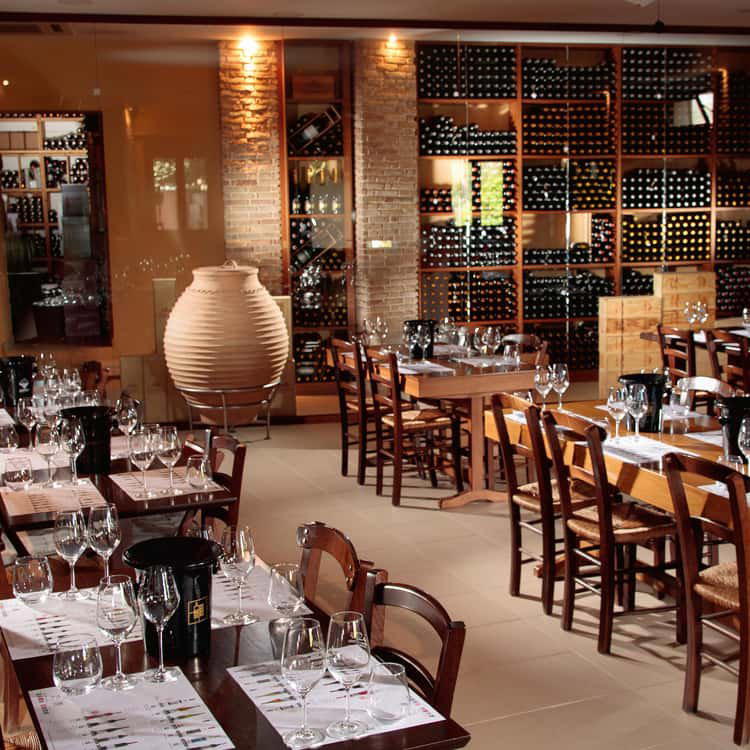
On the food side, inland Cretan properties at this level tend to draw on the island's agricultural depth rather than attempting the kind of fine-dining abstraction you find in a coastal resort with a branded restaurant. Crete has one of the Mediterranean's most coherent local food cultures, built around olive oil, legumes, wild greens, and local cheeses, and particularly effective properties in the hills serve as a direct expression of that culture rather than a departure from it. For guests arriving from island-wide comparisons, the broader Crete context helps frame where Kapsaliana's food programme sits.
Placing Kapsaliana in the Greek Boutique Hotel Field
Greece's premium boutique hotel sector has expanded considerably since 2015, with new entries in Santorini, Mykonos, and the Peloponnese attracting investment and international press attention. Crete has developed a parallel story, but the island's interior properties have remained less visible than the coastal showpieces. Kapsaliana represents the interior approach at a recognised level of quality, which is still relatively rare even by Greek standards.
Elsewhere in Greece, the properties that occupy a comparable position, defined by architectural specificity and a deliberate resistance to resort scale, include Astra Suites in Santorini and Kivotos Mykonos on Mykonos Island. Both work with vernacular architecture and keep their key counts low. The difference is geography: those properties sell Aegean views. Kapsaliana sells range of a different kind, where the value proposition is depth of setting rather than expansiveness of outlook.
For context on what Michelin Key recognition signals at the international level, the 2025 programme recognised properties as varied as Badrutt's Palace Hotel in St. Moritz and Hôtel de Paris Monte-Carlo in Monte Carlo. Kapsaliana sits in that programme not because it competes on the same terms as those properties, but because it met a separate set of criteria tied to character and place-specificity. That distinction is what makes the award legible rather than inflating.
On Crete itself, the range of recognised options is now broad enough that guests need to make considered choices about what kind of experience they are after. Properties like Asterion Suites and Spa, Cayo Exclusive Resort and Spa, Domes Noruz Chania, and Domes Zeen Chania offer the island's coastal and spa-led luxury in polished form. Akrogiali Beach Hotel and Apartments and Acro Suites in Agia Pelagia represent the smaller end of the coastal offer. Kapsaliana is the option for those who want none of those reference points.
Planning a Stay
Kapsaliana sits in the Rethymno regional unit, roughly equidistant from Heraklion and Chania airports, both of which serve international routes during the summer season and reduced schedules in shoulder months. The property's inland position means access is by car rather than resort transfer, and that practical reality shapes who books it: guests who are comfortable self-directing rather than those who want a managed arrival experience. The Cretan season runs roughly from late April through October, and the interior hills are leading visited in the shoulder months when the heat is less aggressive and the olive groves are most active.
Guests comparing options across the Greek islands can review what the mainland and other islands offer. Mandarin Oriental Costa Navarino in Pylos, Olea All Suite Hotel in Zakynthos, Anemos Luxury Grand Resort in Chania, Elix by Mar-Bella Collection in Perdika, Myconian Ambassador in Mykonos, Eagles Palace in Halkidiki, Rodos Park in Rhodes, The Met Hotel in Thessaloniki, and Four Seasons Astir Palace Hotel Athens in Athens. For broader European comparisons, The Fifth Avenue Hotel in New York City represents a different but instructive parallel in heritage-property restoration at the premium tier.
Reputation Context
Comparable venues nearby, for context on price, style, and recognition.
| Venue | Cuisine | Price | Awards | Notes |
|---|---|---|---|---|
| Kapsaliana Village HotelThis venue — the venue you are viewing | Restored 18th-century Cretan village with modern minimalist interiors | $$$$ | 4-Star | Not listed |
| The Royal Blue Resort | luxurious beachfront resort with cascading tiers embedded in natural stone | $$$$ | 5-Star | Panormos |
| Daios Cove | Contemporary architecture blending into rugged Cretan cliffs and cove. | $$$$ | 5-Star | Vathi |
| Elounda Beach Hotel & Villas | Classic Mediterranean resort with modern minimalist villas | $$$$ | 5-Star | Elounda |
| Phāea Cretan Malia | Contemporary Cretan design blending modernist architecture with traditional island heritage, emphasizing sustainable luxury and conscious hospitality. | $$$ | 4-Star | Malia |
| Elounda Stories Boutique Hotel | Contemporary luxury boutique retreat | $$$$ | 4-Star | Elounda |
Recognition history
Dated appearances from independent guides and award organizations, with the underlying list record or original source where available.
Michelin 1 Key
Michelin
Continue exploring
More in Crete
Hotels in Crete
Browse all →
Bars in Crete
Browse all →
Restaurants in Crete
Browse all →
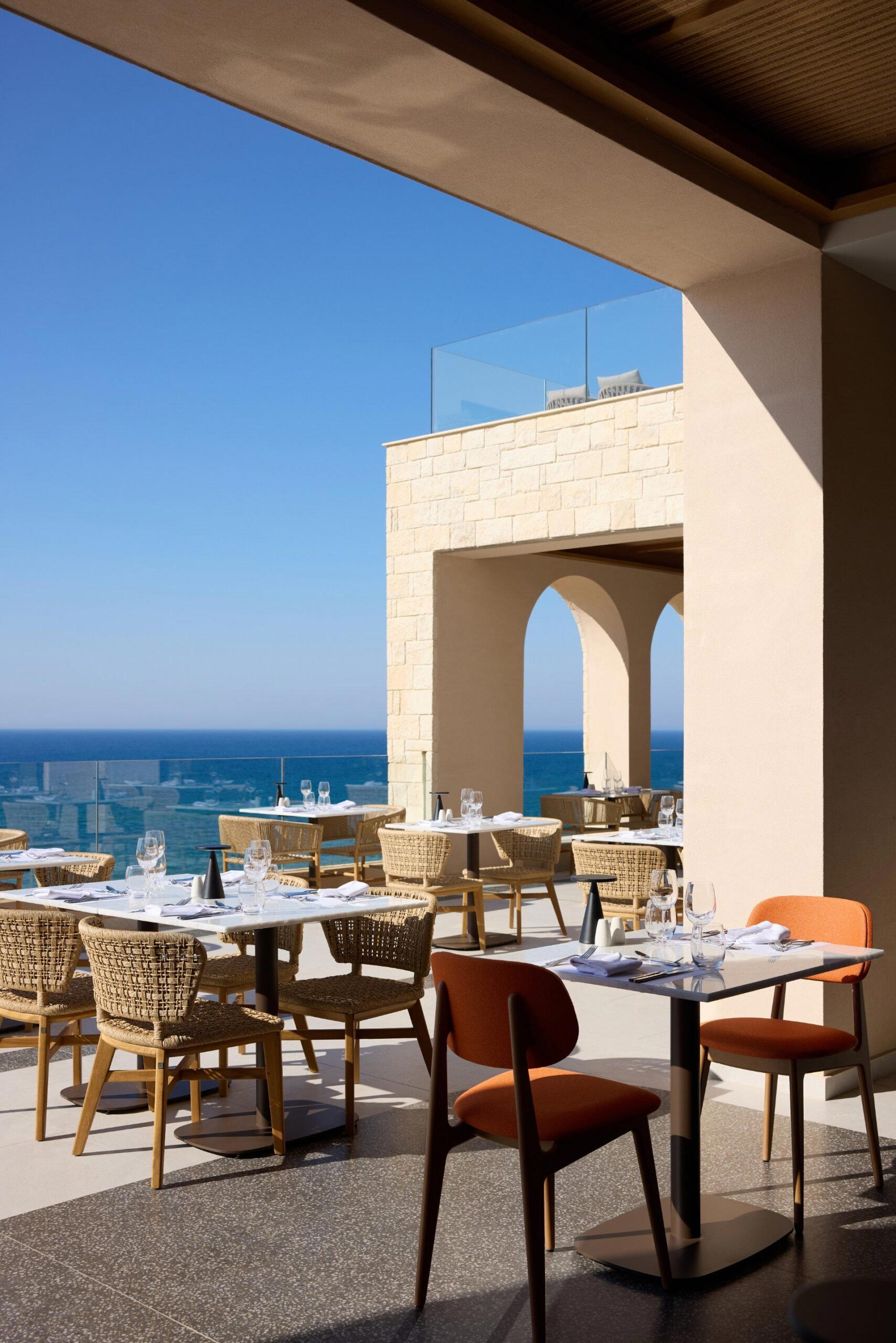
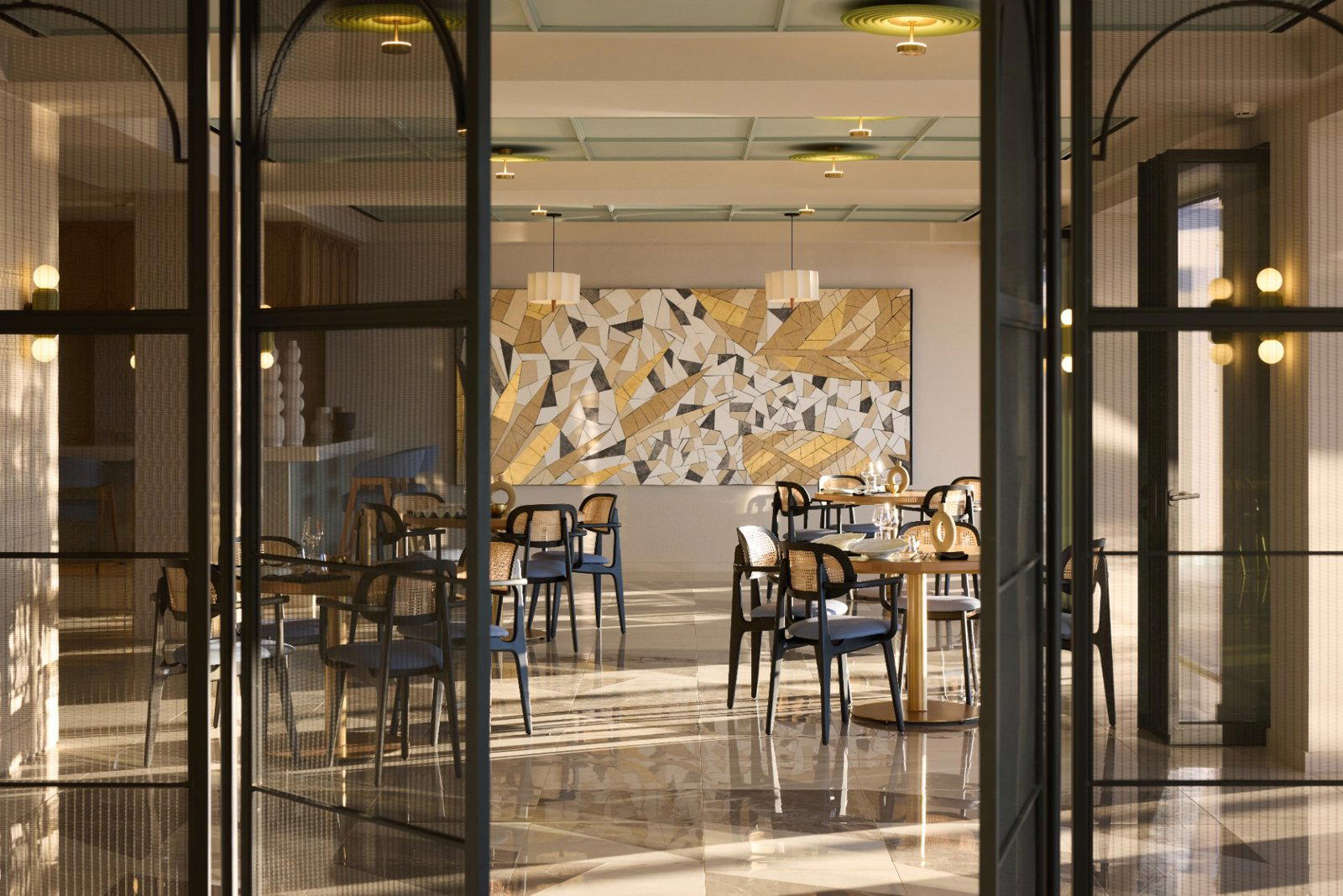
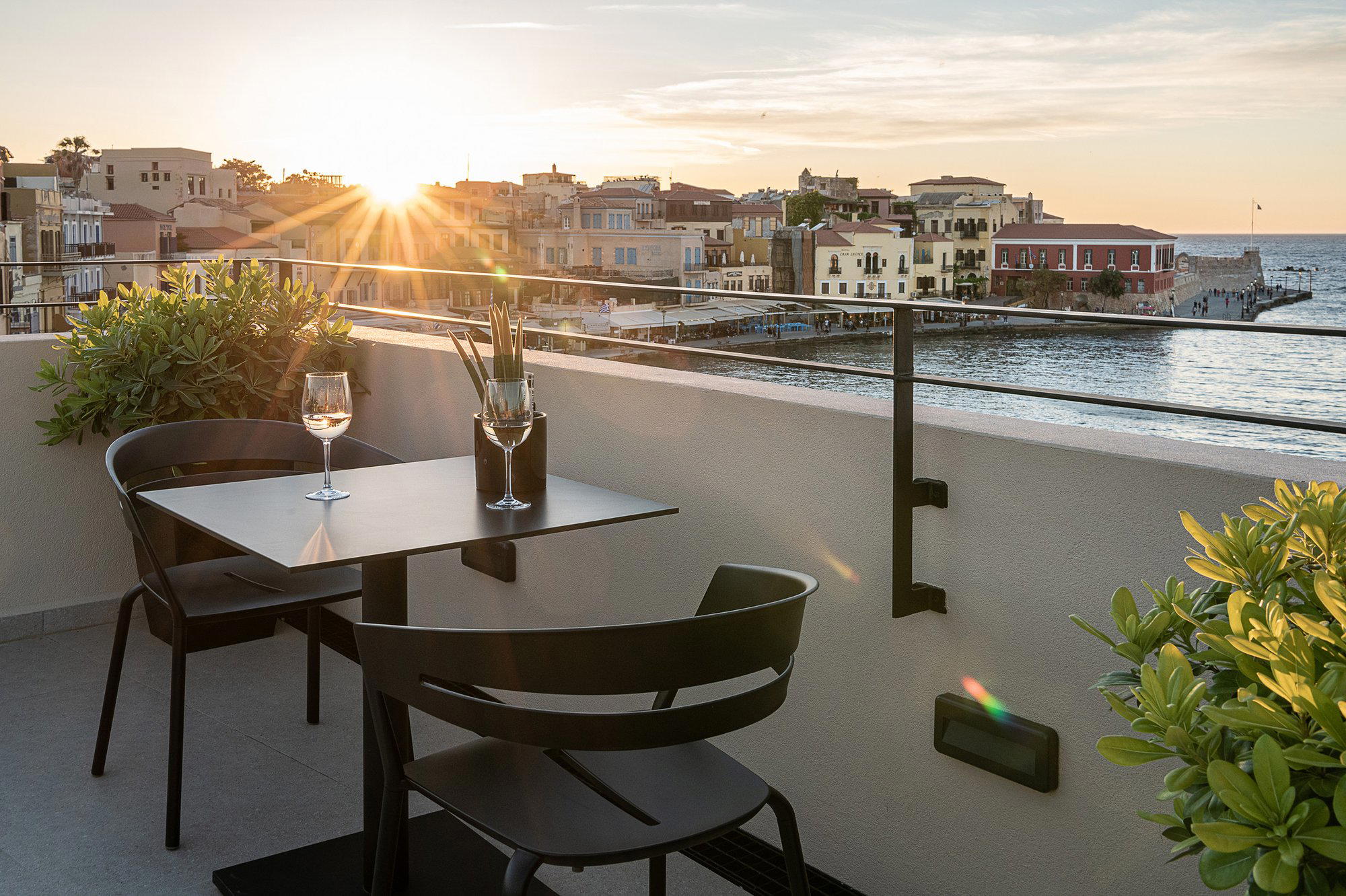
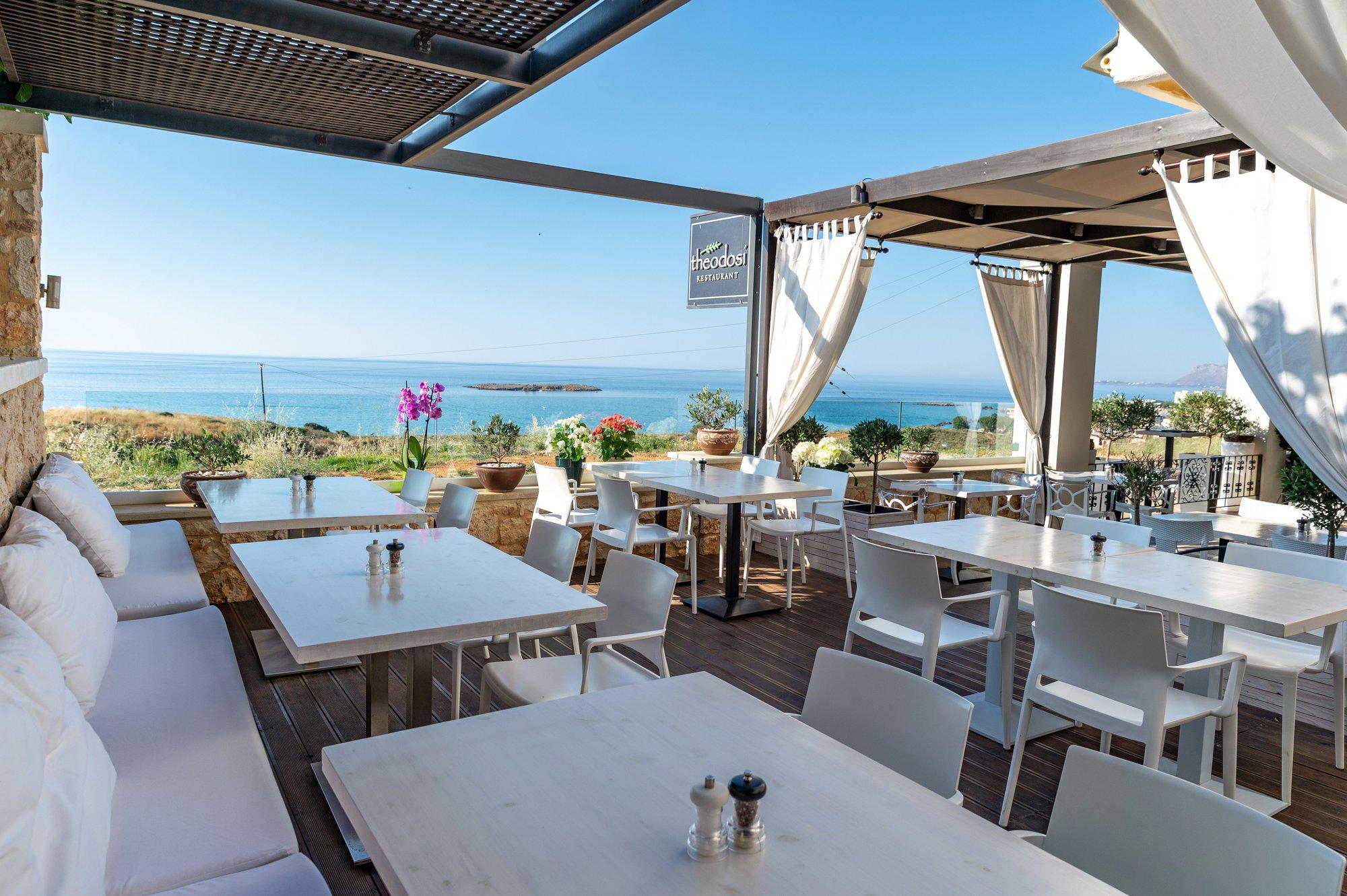

At a Glance
- Quiet
- Rustic
- Elegant
- Scenic
- Intimate
- Minimalist
- Romantic Getaway
- Wellness Retreat
- Family Vacation
- Weekend Escape
- Historic Building
- Garden
- Terrace
- Panoramic View
- Pool
- Spa
- Fitness Center
- Wi Fi
- Restaurant
- Room Service
- Concierge
- Parking
- Garden
- Garden
- Pool
- Spa
- Fitness Center
- Wi Fi
- Restaurant
- Room Service
- Concierge
- Parking
- Garden
Tranquil and relaxing with stone architecture, minimalist design, fireplaces, and natural surroundings.